
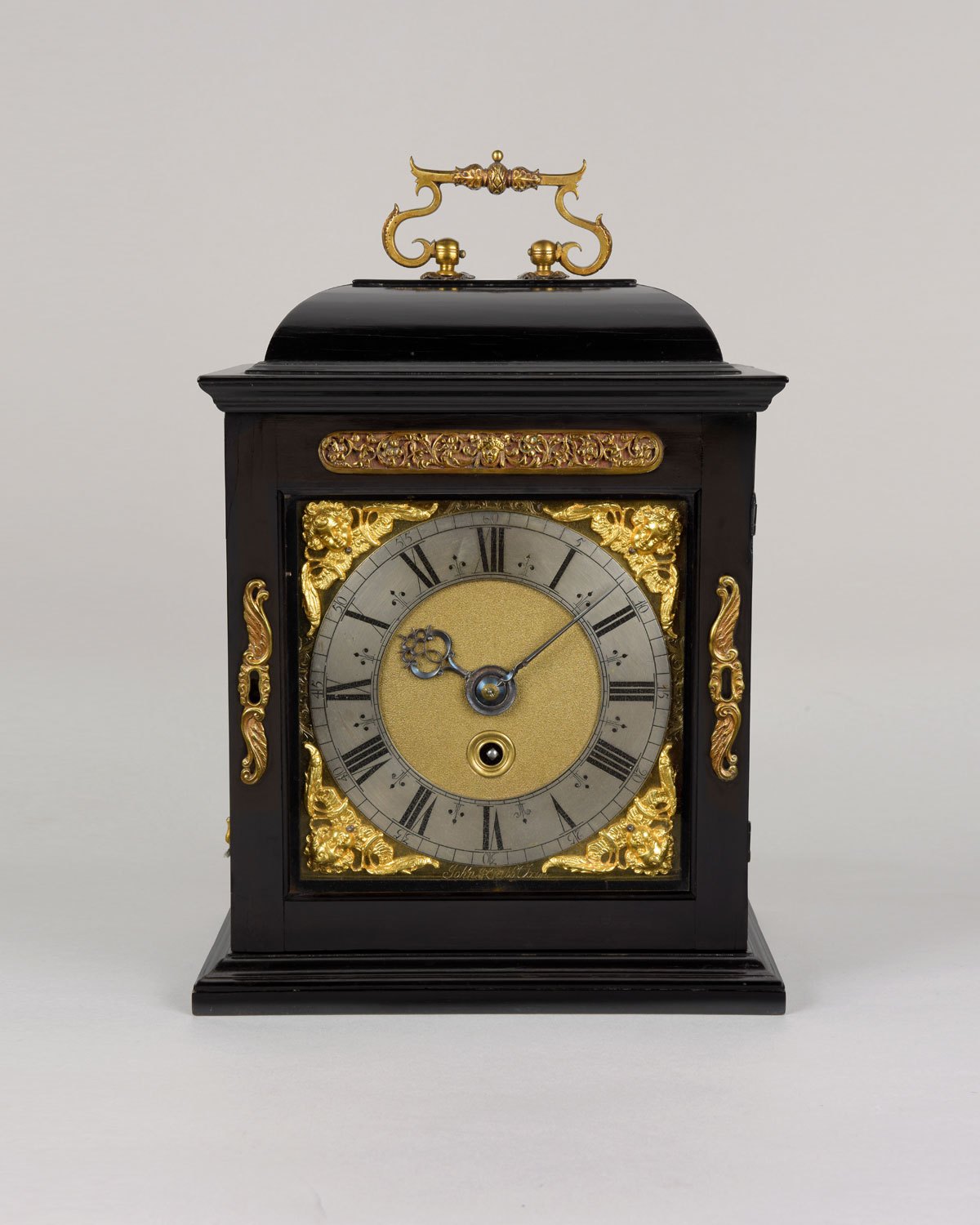
Clocks · Bracket clock
Bracket clock by John Knibb, Oxford, c. 1695–1700
- Maker / attribution
- John Knibb (maker)
- Date
- c. 1695–1700
- Historical period
- Early Modern Horology (1600 – 1750)
- Country of origin
- United Kingdom
- Place
- Oxford
- Object type
- Bracket clock
- Dimensions
- Height 30 cm
- Stock no.
- SKU 290
- Credit line
- Dealer listing, Howard Walwyn (SKU 290)
- Catalogue title (original)
- JOHN KNIBB, OXON. A fine small spring driven table clock by this eminent maker. (English)
View the source record (dealer listing) ↗ (opens another website in a new tab)Suggest a correction
Record summary
Catalogued by Howard Walwyn Fine Antique Clocks (dealer), London (stock number SKU 290), this is a bracket clock by John Knibb, made in Oxford, United Kingdom, dated c. 1695–1700. The Atlas places it in the Early Modern Horology period (1600 – 1750) of its Clocks collection. Recorded dimensions: Height 30 cm. The record is illustrated with 3 photographs.
Assembled from the source record's structured fields. Dates and attributions are given as the source states them; where a field is missing the Atlas leaves it blank rather than estimating.
Catalogue description
Dealer description — Howard Walwyn
A fine small spring-driven table clock by eminent maker John Knibb. The 6 inch square brass dial is mounted with a silvered chapter ring and winged cherub spandrels to the four corners. The centre is finely matted with elegant pierced and faceted pointers and the dial plate is signed by the maker beneath the chapter ring. Between the spandrels there is delicate foliate engraving. The fully restored verge movement runs for 8 days and has a pear shaped pendulum bob. There is also pull repeatwork for sounding the hours and quarters on two separate bells. The backplate is beautifully engraved with foliate scrolls and is signed John Knibb Oxoniae Fecit in an arc. The elegant oak case , veneered with ebony, stands only 11 ¾ inches high and is of typical Knibb form. It is surmounted by a “double S” carrying handle to the top and has a fine gilt brass foliate fret with a cherub’s head in the central frieze. To each side of the front door there are also the typical ‘Knibb’ elongated scroll escutcheons. Date : circa 1695-1700 Height : 11 ¾ in (30 cm) excluding handle Width : 9 ½ in (24 cm) Depth : 6 in (15 cm) * Small ebony veneered bracket clocks by either Joseph or John Knibb are extremely rare and hard to find. The delicacy of their movements and the finesse of their case design make them amongst the most desirable of any ‘ Golden Age ‘ clocks for the serious horological collector. John Knibb was a member of the eminent Knibb family. He was born in 1650, a brother of Joseph, for whom he worked from about 1664. He was free of the Clockmakers’ Company in 1673 and continued to work in Oxford after Joseph had moved to London. He had a varied clientele and his finest work was equal to that of his brother. He became Mayor of Oxford in 1700.
Historical context
Early Modern Horology (1600 – 1750)
Huygens' pendulum and balance spring transform accuracy; English makers develop the anchor and deadbeat escapements.
Huygens's pendulum (1656–57) improved clock accuracy from about a quarter of an hour to under a minute a day. The anchor escapement (c. 1670) and the long seconds pendulum created the longcase clock; London makers such as Fromanteel, Knibb, Tompion and Quare led European clockmaking, and French makers created the Boulle pendule.
Read the period in the timelineMore clocks from this periodEarlier: Renaissance Horology
Atlas type guide
Bracket, table and spring-driven clocks
Spring-driven clocks freed timekeeping from the hanging weight. The coiled mainspring, documented from the fifteenth century, made portable table clocks possible; to even out its declining force, makers used the fusee, a conical pulley connected to the barrel by a gut line or chain. Renaissance table clocks from Augsburg and Nuremberg — drum-shaped, square or tower-shaped in gilt brass — were luxury scientific objects, often with astronomical dials and alarms.
After the pendulum, English makers developed the bracket clock: a wooden case with a carrying handle, a short pendulum with a verge escapement, and often repeating work to sound the hours on demand at night. Later examples use the anchor escapement. In the nineteenth century, 'table clock' became a broad term for spring clocks of every nationality.
What to look for
- A fusee in the movement (cone-shaped pulley) and the type of line — gut or chain.
- Verge escapement with a short bob pendulum, often with a decoratively engraved backplate.
- Repeat cords or buttons that make the clock strike again on demand.
- Gilt-brass engraved cases and horizontal dials on Renaissance pieces.
- Case shapes: inverted bell, bell top, break-arch, lancet or balloon.
Dating clues
- Drum and tower table clocks: c. 1520–1650.
- Ebony veneered English bracket clocks with verge escapements: c. 1670–1800.
- Engraved backplates were usual on English clocks until c. 1800, then generally plain.
General guidance written by the Atlas editors about this kind of object. It is not a statement about this particular piece; for that, rely on the source record above and on physical examination.
Read next:FuseeAnchor (recoil) escapement
Related records
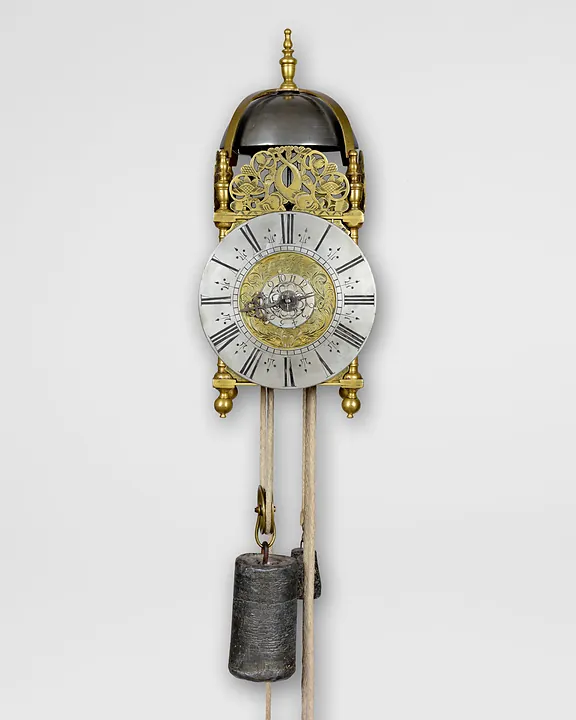
Clocks · c. 1695–1700
Lantern clock by John Knibb, Oxford, c. 1695–1700
Howard Walwyn Fine Antique Clocks (dealer), London
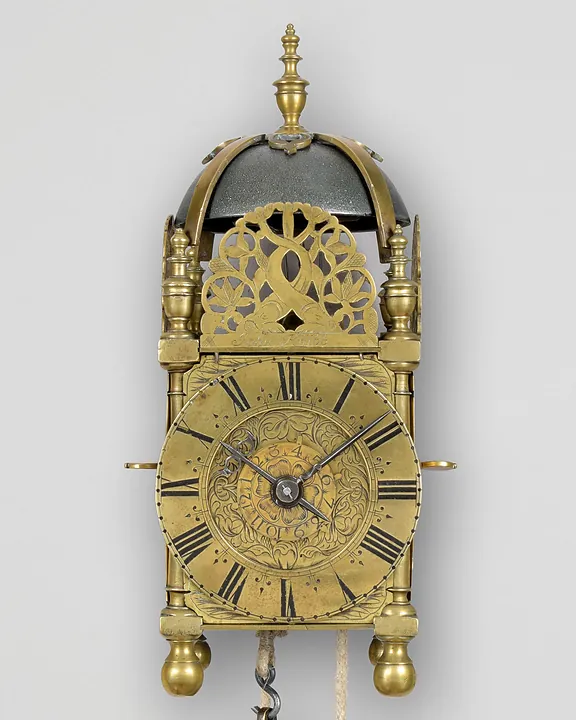
Clocks · c. 1680–1685
Lantern clock by John Knibb, Oxford, c. 1680–1685
Howard Walwyn Fine Antique Clocks (dealer), London
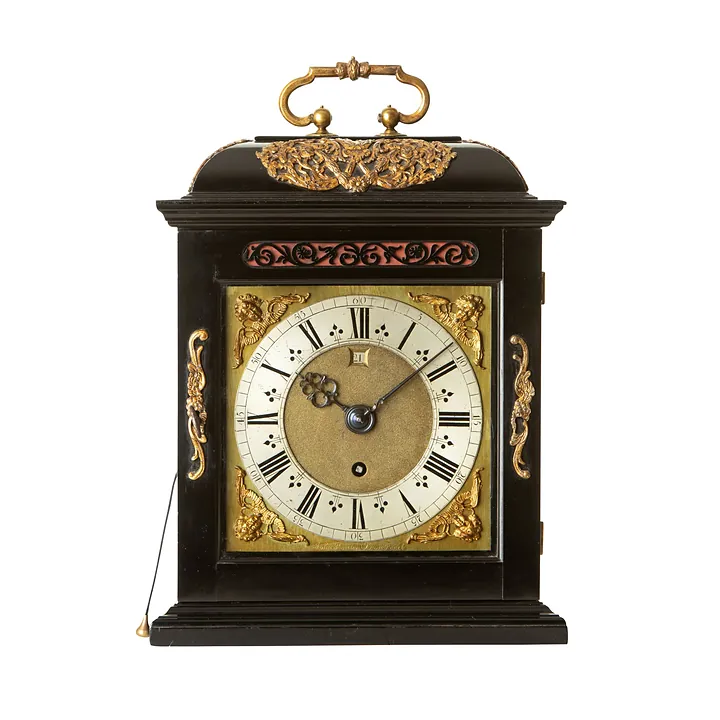
Clocks · c. 1690
Early ebony timepiece with quarter repeat table clock by John Knibb, Oxford
The Antique Clock Company (dealer), Dorset
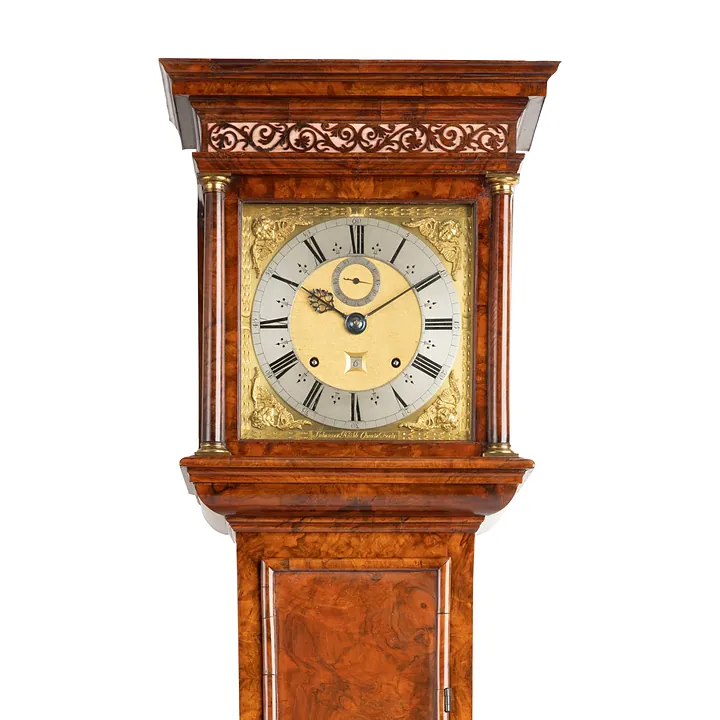
Clocks · c. 1685
Month duration walnut longcase clock by John Knibb, Oxford
The Antique Clock Company (dealer), Dorset
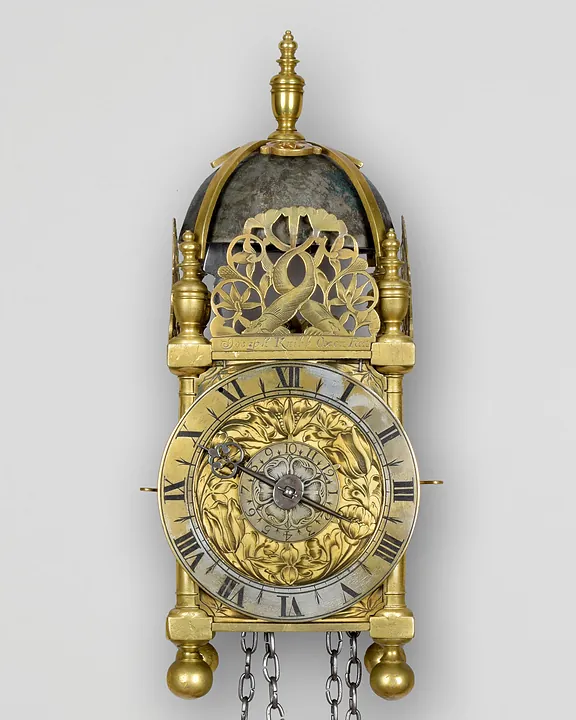
Clocks · c. 1670
Lantern clock by Joseph Knibb, Oxford, c. 1670
Howard Walwyn Fine Antique Clocks (dealer), London
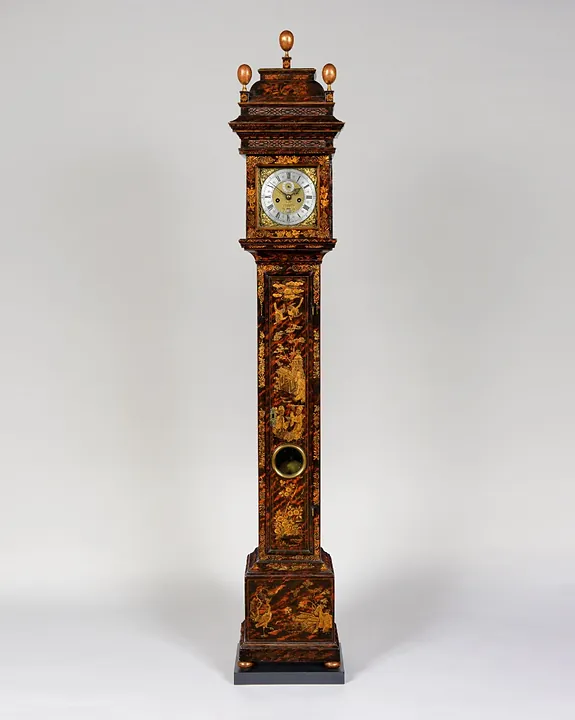
Clocks · c. 1715
Longcase clock by Manley, Norwich
Howard Walwyn Fine Antique Clocks (dealer), London
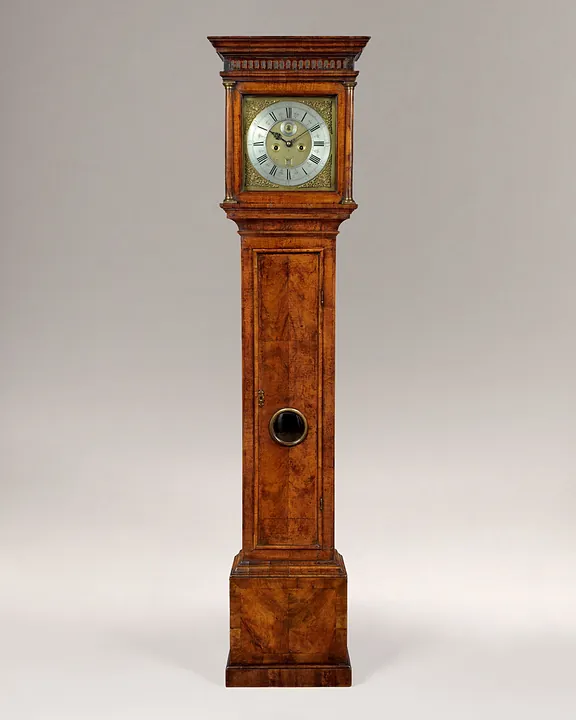
Clocks · c. 1710
Longcase clock by John Witherston, Hereford, c. 1710
Howard Walwyn Fine Antique Clocks (dealer), London
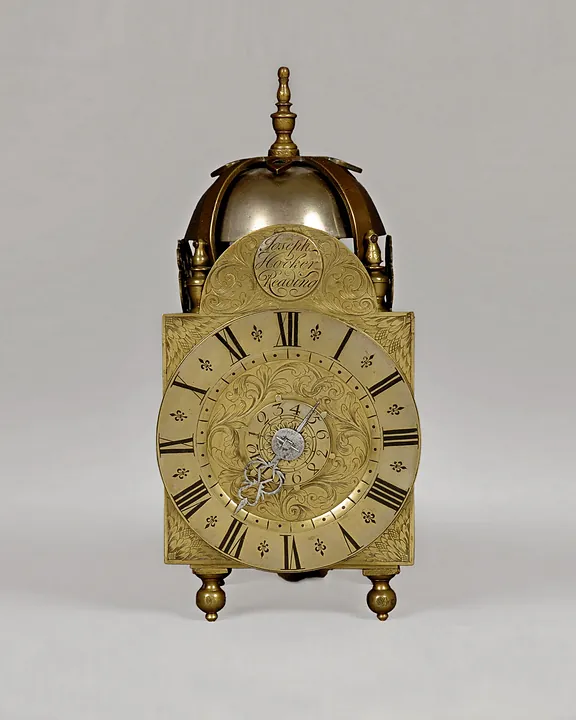
Clocks · c. 1710
Lantern clock by Joseph Hocker, Reading, c. 1710
Howard Walwyn Fine Antique Clocks (dealer), London