
Clocks · Longcase clock
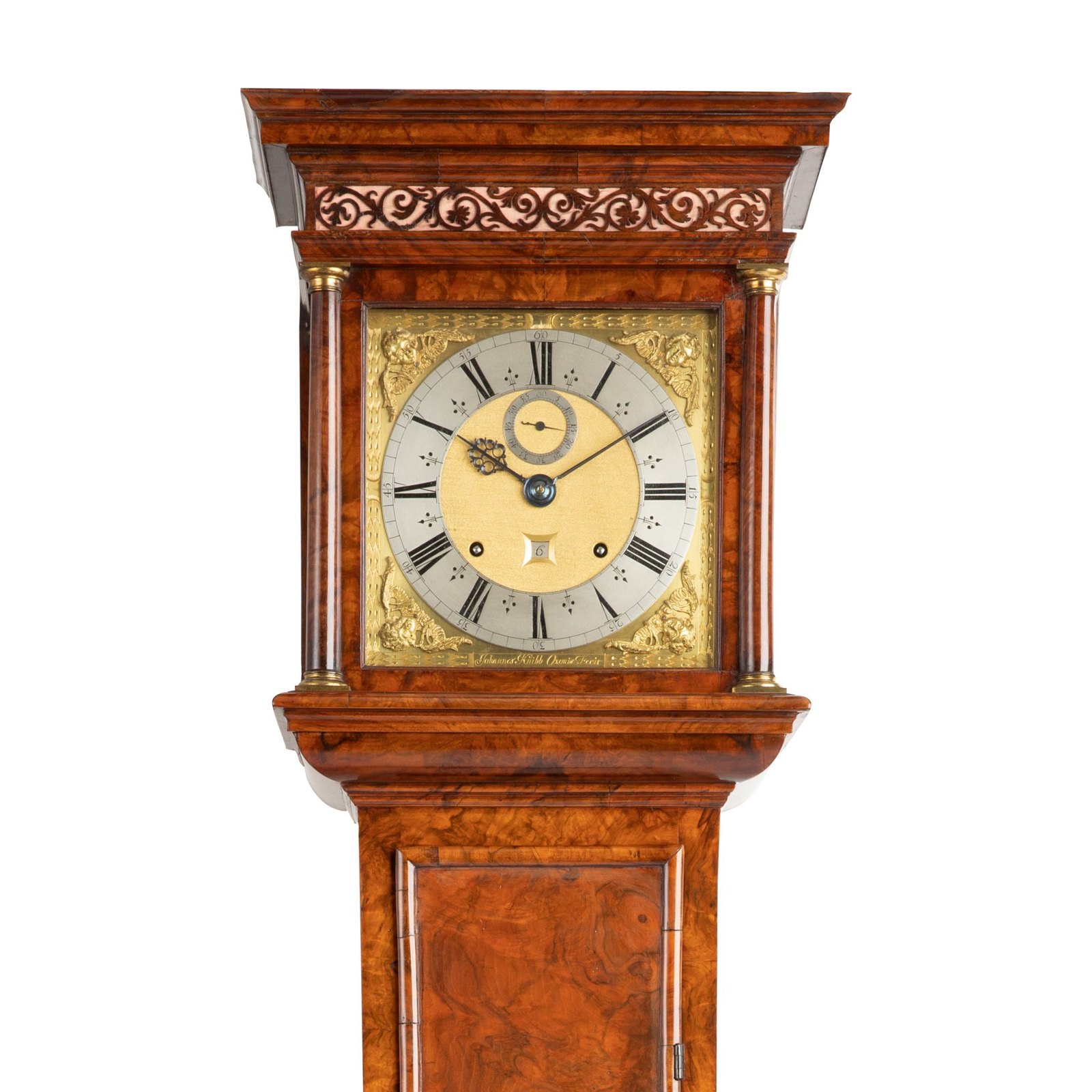
Month duration walnut longcase clock by John Knibb, Oxford
- Maker / attribution
- John Knibb (maker)
- Date
- c. 1685
- Historical period
- Early Modern Horology (1600 – 1750)
- Country of origin
- England
- Place
- Oxford
- Object type
- Longcase clock
- Materials / technique
- walnut
- Stock no.
- Product 2619
- Credit line
- Dealer listing, The Antique Clock Company (product 2619)
- Catalogue title (original)
- A MONTH DURATION WALNUT LONGCASE CLOCK – JOHN KNIBB – OXFORD (English)
View the source record (dealer listing) ↗ (opens another website in a new tab)Suggest a correction
Record summary
Catalogued by The Antique Clock Company (dealer), Dorset (stock number Product 2619), this is a longcase clock by John Knibb, made in Oxford, England, dated c. 1685. The Atlas places it in the Early Modern Horology period (1600 – 1750) of its Clocks collection. Materials and techniques recorded by the source: walnut. The record is illustrated with 6 photographs.
Assembled from the source record's structured fields. Dates and attributions are given as the source states them; where a field is missing the Atlas leaves it blank rather than estimating.
Catalogue description
Dealer description — The Antique Clock Company
This wonderfully original Walnut veneered clock is one of the earlier 10” longcases of the highly distinguished John Knibb. To find such a good, original and un-touched clock is rare to find, many of these cases suffer greatly over the years from over restoration. This clock has been looked after extremely well over the years and it is advised to be kept in such a pristine untouched condition for years to come. Movement : The movement of month duration, a heavy weight driven clock movement held together by five latched baluster pillars with anchor escapement, seconds pendulum and regulated with the distinctive Knibb butterfly rating nut. The strike train uses a count wheel outside of the back plate to know which hour to strike the bell on the hour. Particular interest should be shown to the quality of the steelwork, the workmanship is beautifully finished, and is totally unnecessary, but a sign of such quality. Case : As with most Knibb cases, this one follows suit being the perfect lesson in proportion of design, restrained decoration and quality of execution. The stunningly slender original burr walnut veneered case of perfect proportions, really does show off Knibb’s eye for perfection. The carcass of the case being oak, with choice cut veneers to both sides of the trunk, where the lockable door is finely veneered with further choice cuts. The base is also veneered to match, standing upon walnut bun feet. The rising hood has at some point been very well converted to a sliding hood for ease of use. It boasts elaborate frets in the side windows and frieze, accompanied by two plain walnut columns to either side with gilt metal cappings. So often these cases can be wholly ruined by over restoration. This particular case has been looked after very well and has not suffered such fatal detriment. Dial : The 10” square gilt brass dial is simply elegant and understated with fine matting to the centre, seconds subsidiary dial below XII and date aperture above VI. A silvered chapter ring surrounds the matting with Roman numerals depicting the hours, Arabic five minute markers and trident half hour markers, Knibbs fat-head cherub spandrels to each four corners of the dial plate with an engraved boarder and signed “Johannes Knibb Oxonia Fecit” to the lower edge. Finished with the original beautifully sculpted finely blued steel hands Currently – Private collection, UK Comparative Literature : The Knibb Family Clockmakers by R. A. Lee Height: 77 ¾ ″ (6′ 6″) or 197 ½ cm *This clock is delivered and set up for free within the UK. We regularly ship clocks all over the world with our approved and well-established Antiques and Fine Art Packers & Shippers. Please ask for a quote should you require this service.
Provenance
Provenance :
Historical context
Early Modern Horology (1600 – 1750)
Huygens' pendulum and balance spring transform accuracy; English makers develop the anchor and deadbeat escapements.
Huygens's pendulum (1656–57) improved clock accuracy from about a quarter of an hour to under a minute a day. The anchor escapement (c. 1670) and the long seconds pendulum created the longcase clock; London makers such as Fromanteel, Knibb, Tompion and Quare led European clockmaking, and French makers created the Boulle pendule.
Read the period in the timelineMore clocks from this periodEarlier: Renaissance Horology
Atlas type guide
Longcase (tall-case or grandfather) clocks
The longcase clock was born from two seventeenth-century innovations: Christiaan Huygens's pendulum (1656–57) and the anchor escapement (c. 1670). A long seconds pendulum, nearly a metre long, swings with a small arc, and enclosing it together with the driving weights in a tall wooden case protected the mechanism and created a new piece of furniture. London makers such as Ahasuerus Fromanteel, Thomas Tompion and Joseph Knibb set the pattern.
By the eighteenth century longcase clocks were made throughout Britain, the Netherlands, Scandinavia (the Swedish Mora clock), France (the Comtoise from the Franche-Comté), Germany and colonial America. Eight-day movements with two weights became standard in better clocks; thirty-hour clocks with one weight and a rope or chain were cheaper alternatives.
What to look for
- Winding holes in the dial: two (eight-day, going and striking) or none (thirty-hour, pulled up by a chain).
- Brass dials with applied chapter rings (earlier) versus painted iron 'white' dials (after c. 1770 in Britain).
- Moon-phase arches, date apertures, seconds dials and maker's name on the dial.
- Case woods and style: ebonised, walnut marquetry, lacquer, oak or mahogany; regional styles from London, Lancashire, Scotland or America.
- Whether the movement and dial match the case — 'marriages' are common.
Dating clues
- Square brass dials suggest c. 1670–1720; arched brass dials c. 1715–1790.
- Painted (white) dials were made by Birmingham dial-makers from about 1772.
- Comtoise clocks with repoussé pendulums are mostly nineteenth century.
General guidance written by the Atlas editors about this kind of object. It is not a statement about this particular piece; for that, rely on the source record above and on physical examination.
Read next:Deadbeat escapementAnchor escapement
Related records
Clocks · c. 1695–1700
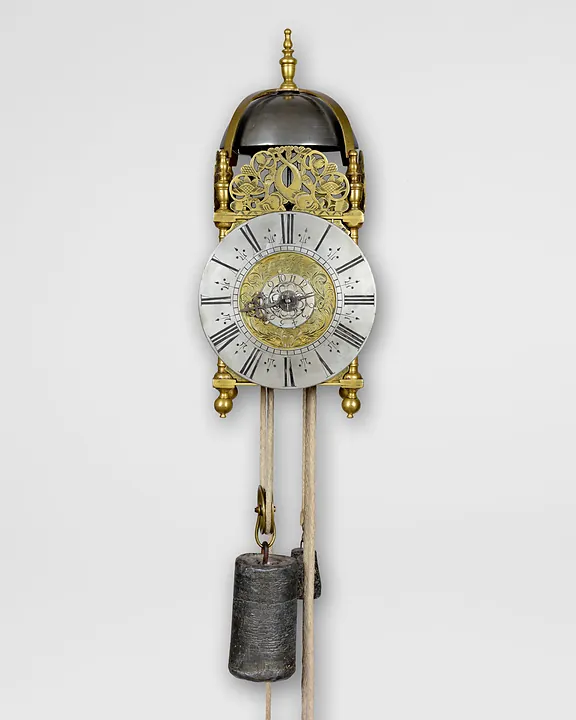
Lantern clock by John Knibb, Oxford, c. 1695–1700
Howard Walwyn Fine Antique Clocks (dealer), London
Clocks · c. 1680–1685
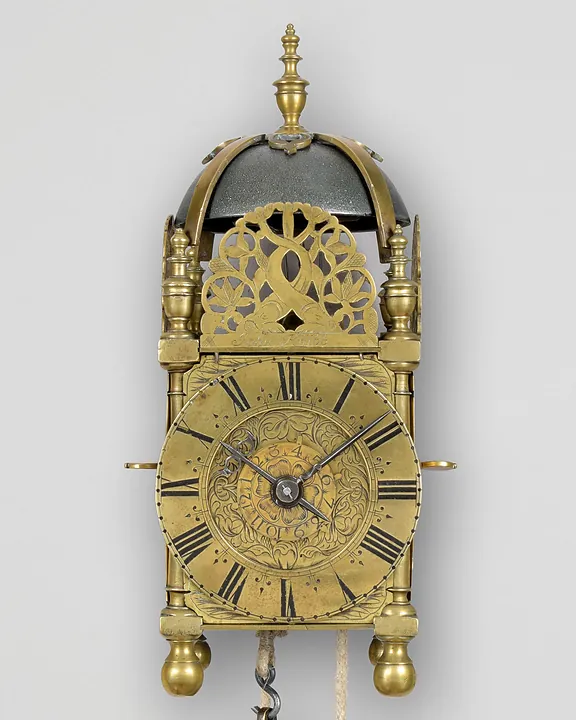
Lantern clock by John Knibb, Oxford, c. 1680–1685
Howard Walwyn Fine Antique Clocks (dealer), London
Clocks · c. 1695–1700
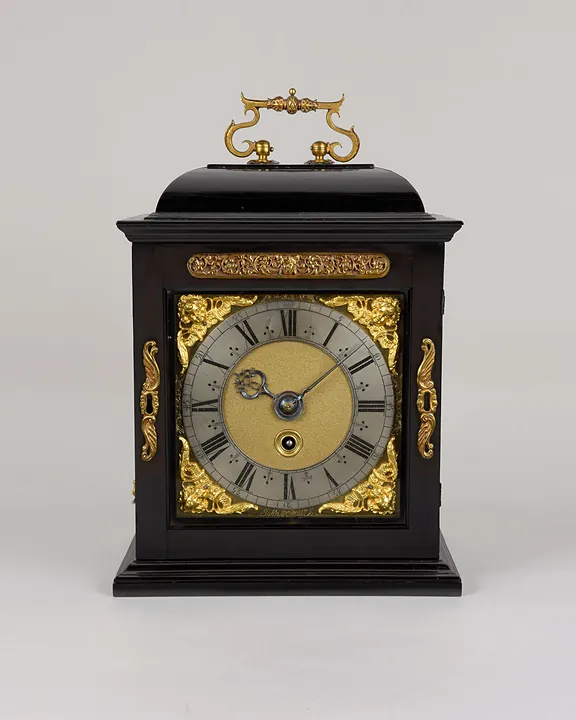
Bracket clock by John Knibb, Oxford, c. 1695–1700
Howard Walwyn Fine Antique Clocks (dealer), London
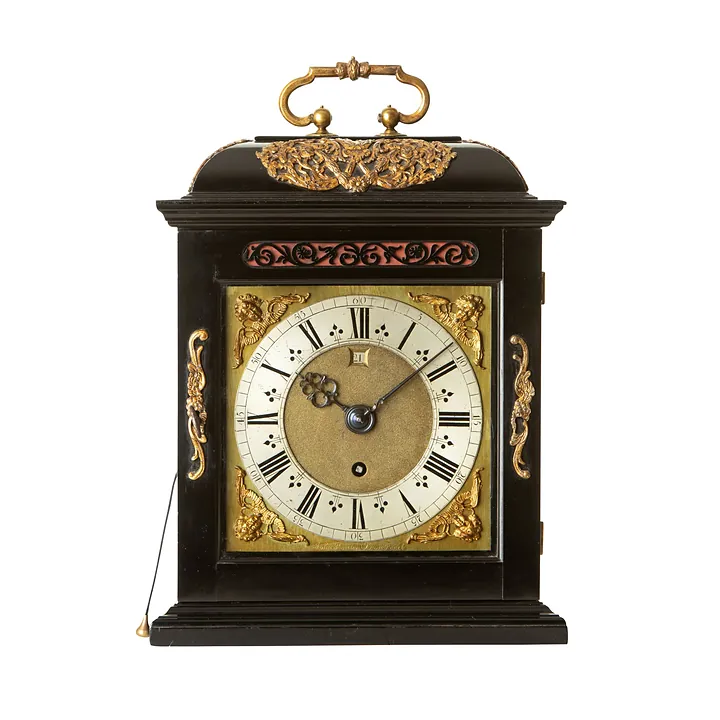
Clocks · c. 1690
Early ebony timepiece with quarter repeat table clock by John Knibb, Oxford
The Antique Clock Company (dealer), Dorset
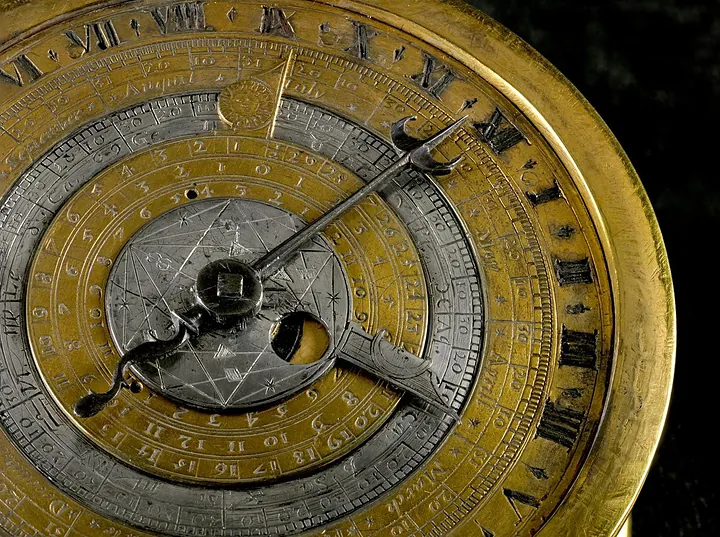
Clocks · 1598–1603
Circular table-clock with calendrical and lunar indications made by Nicholas Vallin in London between 1598 and 1603.
Science Museum Group, London
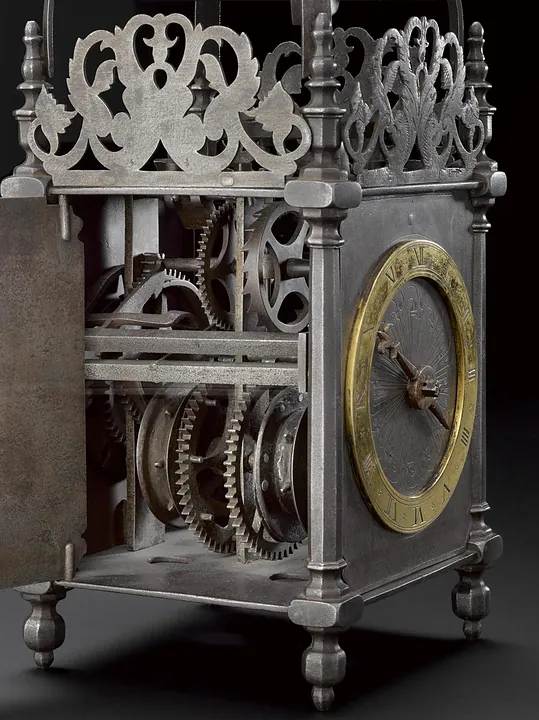
Clocks · 1611
English iron lantern clock, with wheel balance, by John Holloway, Market Lavington, Wiltshire, England, 1611.
Science Museum Group, London
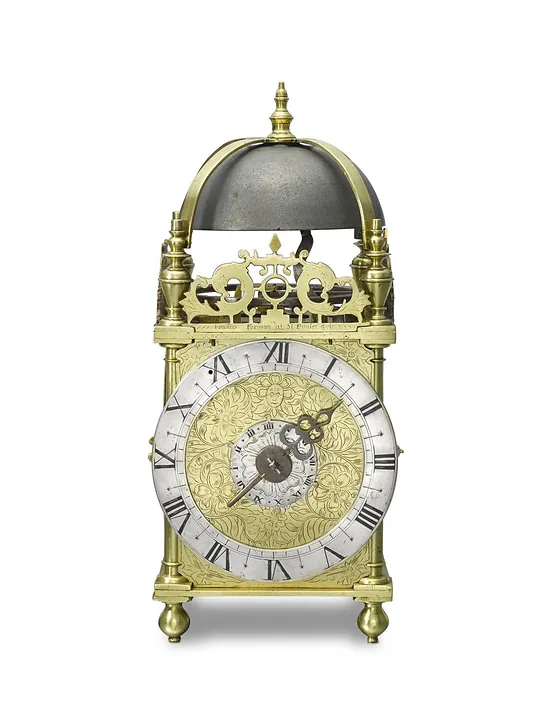
Clocks · 1630
Lantern clock by Francis Forman, England, 1630
Science Museum Group, London
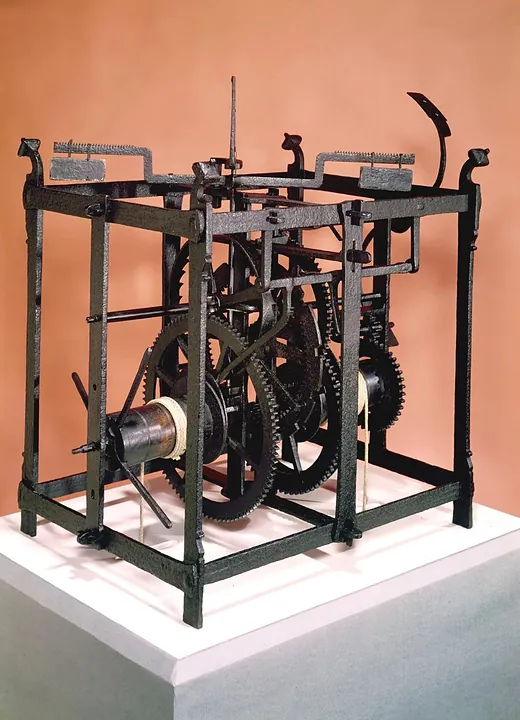
Clocks · 1632–1640
Turret clock, England, 1632–1640
Science Museum Group, London