
Clocks · Lantern clock
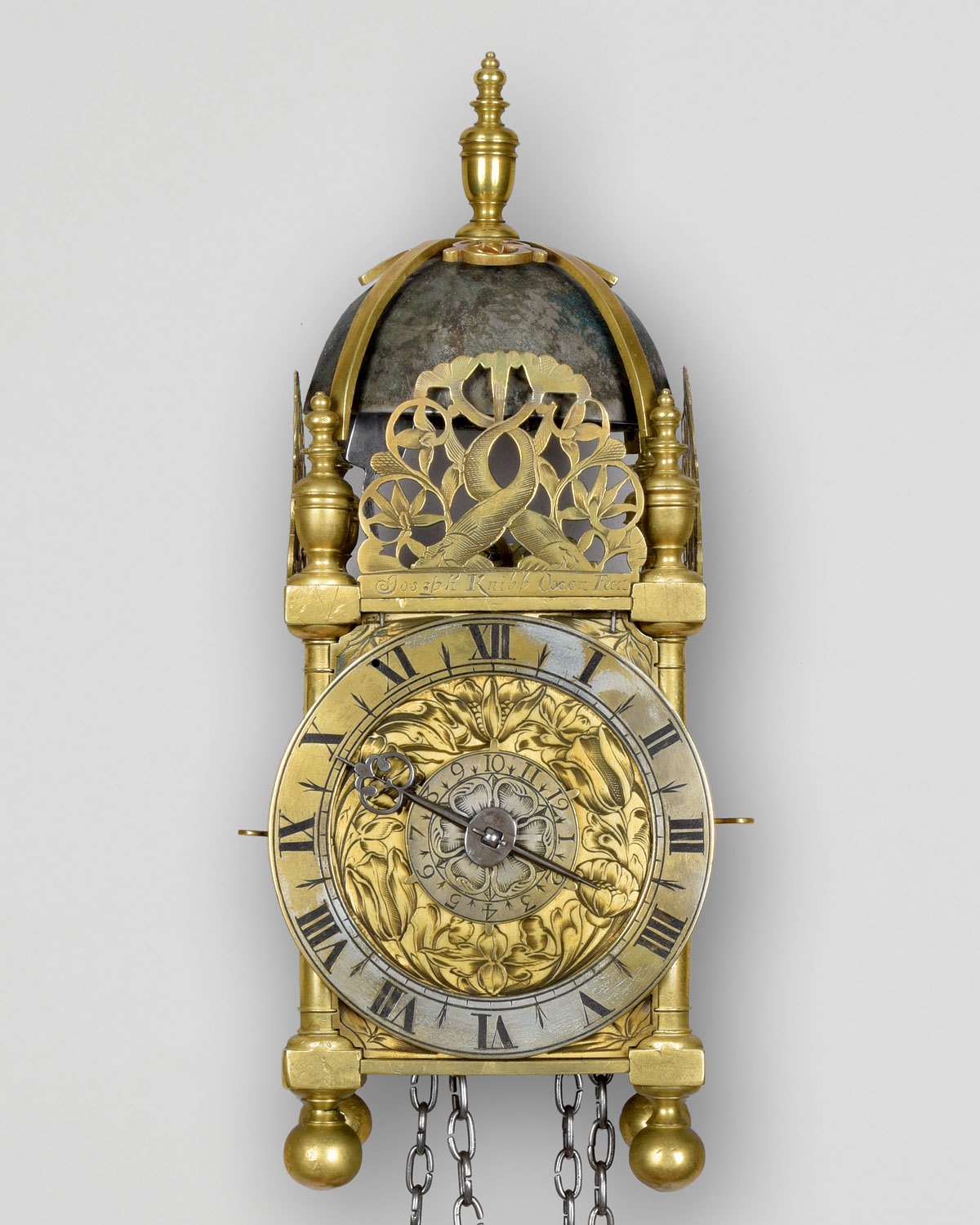
Lantern clock by Joseph Knibb, Oxford, c. 1670
- Maker / attribution
- Joseph Knibb (maker)
- Date
- c. 1670
- Historical period
- Early Modern Horology (1600 – 1750)
- Country of origin
- United Kingdom
- Place
- Oxford
- Object type
- Lantern clock
- Materials / technique
- brass
- Dimensions
- Height 19 cm
- Stock no.
- SKU 466
- Credit line
- Dealer listing, Howard Walwyn (SKU 466)
- Catalogue title (original)
- JOSEPH KNIBB OXON FECIT. A beautiful Charles II period miniature brass lantern clock by this famous clockmaker. (English)
View the source record (dealer listing) ↗ (opens another website in a new tab)Suggest a correction
Record summary
Catalogued by Howard Walwyn Fine Antique Clocks (dealer), London (stock number SKU 466), this is a lantern clock by Joseph Knibb, made in Oxford, United Kingdom, dated c. 1670. The Atlas places it in the Early Modern Horology period (1600 – 1750) of its Clocks collection. Materials and techniques recorded by the source: brass. Recorded dimensions: Height 19 cm. The record is illustrated with 3 photographs.
Assembled from the source record's structured fields. Dates and attributions are given as the source states them; where a field is missing the Atlas leaves it blank rather than estimating.
Catalogue description
Dealer description — Howard Walwyn
A beautiful Charles II period miniature brass lantern clock by this famous clockmaker. This little clock has very pleasing proportions and retains both its original doors, backplate, hoop and spurs. It is a very early example of a miniature lantern clock and was made just before Joseph Knibb moved from Oxford to London. With its narrow chapter ring and sparse sword hilt half-hour markers this would probably have been one of the first lantern clocks he made. The dial centre is filled with exquisitely engraved tulip flowers and leaves and the alarm setting disc is engraved with a central Tudor Rose and an outer band of Arabic hour numerals. The well patinated brass case has flower and dolphin frets and an original bell strap with pierced foliate shaped ‘arms’ or ‘leaves’ . The maker’s signature Joseph Knibb Oxon Fecit is engraved along the bottom of the front intertwining foliate and dolphin fret. The short duration movement retains its original knife edge verge escapement and has a striking train for the hours on a countwheel in place of the original alarm train, a change probably made early on in the 18 th century. Height: 7 ½ in (19 cm) excluding finial 8 ⅞ in (22.5 cm) including finial Width : 3 ½ in (8.75 cm) Depth : 4 in (10.25 cm) * Joseph Knibb is widely regarded as one of England’s most innovative and finest clockmakers. He made very few lantern clocks as they were probably not cost effective in terms of time and value relative to his more important productions. Such clocks were mostly destined for the servants’ quarters or pantries. Today they have great folkloric appeal and they are very easy to accommodate given their miniature proportions. This clock is both rare and early and was made just prior to Joseph Knibb leaving Oxford to set up his new business in London in 1671 HW6244
Historical context
Early Modern Horology (1600 – 1750)
Huygens' pendulum and balance spring transform accuracy; English makers develop the anchor and deadbeat escapements.
Huygens's pendulum (1656–57) improved clock accuracy from about a quarter of an hour to under a minute a day. The anchor escapement (c. 1670) and the long seconds pendulum created the longcase clock; London makers such as Fromanteel, Knibb, Tompion and Quare led European clockmaking, and French makers created the Boulle pendule.
Read the period in the timelineMore clocks from this periodEarlier: Renaissance Horology
Atlas type guide
Lantern, chamber and Gothic clocks
Domestic weight-driven clocks were made in southern Germany, Switzerland, Italy and Flanders from the fifteenth century. These 'Gothic' or chamber clocks have an open iron frame with corner posts, a verge escapement controlled by a foliot or balance wheel, and often an alarm or hour striking on a bell mounted above.
In England the lantern clock appeared around 1600: a brass posted-frame clock with a bell on top under decorative frets, hung on a hook or set on a wall bracket. After about 1658 many were converted to pendulum control, so originality of the escapement is a key question for any surviving example.
What to look for
- Iron (continental) or brass (English) posted frames with turned corner pillars and finials.
- A single hour hand — minute hands are rare before the pendulum era.
- Evidence of conversion: plugged holes, replaced escapement wheels or later pendulums.
- Fret designs and engraving on the dial centre, which help date English lantern clocks.
Dating clues
- Continental Gothic chamber clocks: c. 1450–1650.
- English lantern clocks: c. 1600–1720, with provincial examples later.
- Short 'bob' pendulum conversions after 1658; long pendulums with anchor escapement after c. 1670.
General guidance written by the Atlas editors about this kind of object. It is not a statement about this particular piece; for that, rely on the source record above and on physical examination.
Read next:FoliotAnchor (recoil) escapement
Related records
Clocks · c. 1680–85
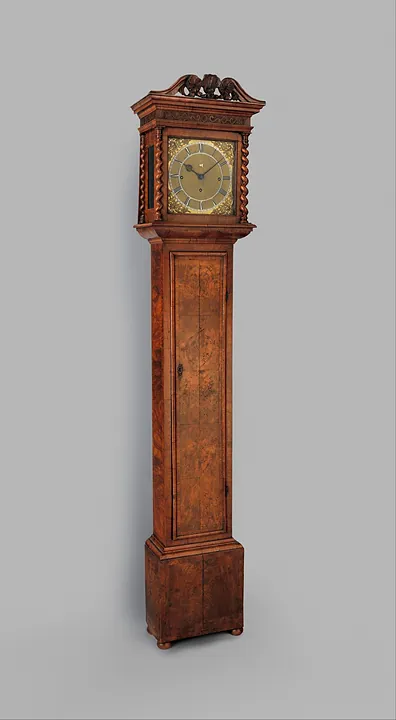
Longcase clock with calendar by Joseph Knibb, England, c. 1680–85
The Metropolitan Museum of Art, New York
Clocks · c.1690
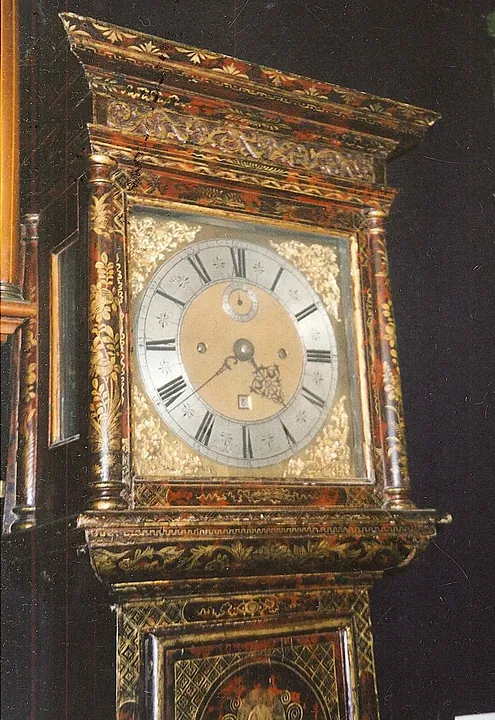
Longcase clock by Joseph Knibb, England, c.1690
Victoria and Albert Museum, London
Pocket Watches · 1670-5
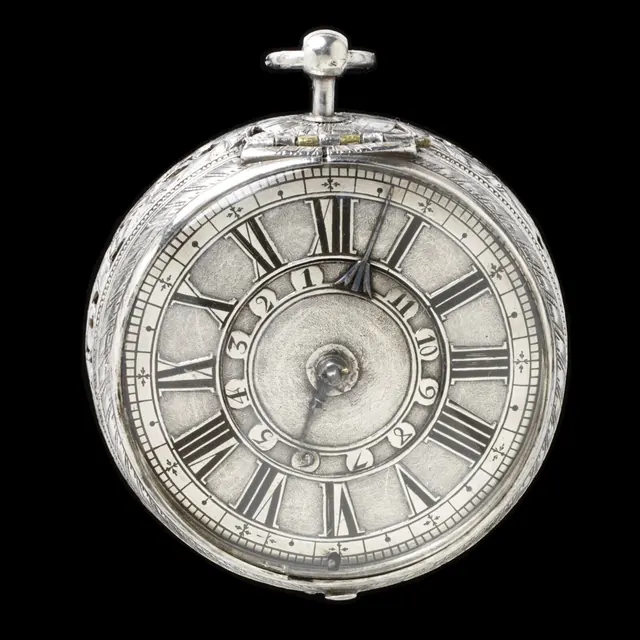
Watch by Joseph Knibb, England, 1670-5
Victoria and Albert Museum, London
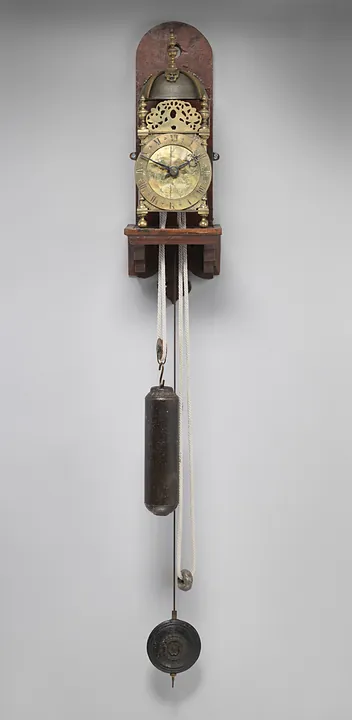
Clocks · c. 1675
Lantern clock
The Metropolitan Museum of Art, New York
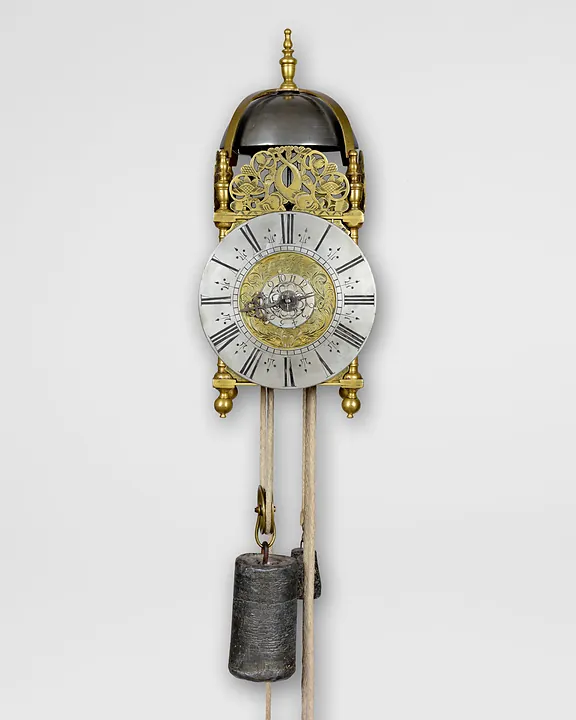
Clocks · c. 1695–1700
Lantern clock by John Knibb, Oxford, c. 1695–1700
Howard Walwyn Fine Antique Clocks (dealer), London
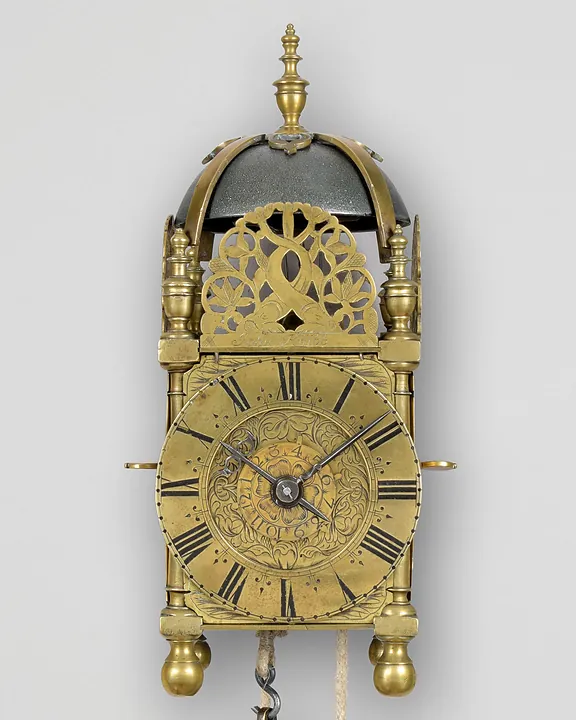
Clocks · c. 1680–1685
Lantern clock by John Knibb, Oxford, c. 1680–1685
Howard Walwyn Fine Antique Clocks (dealer), London
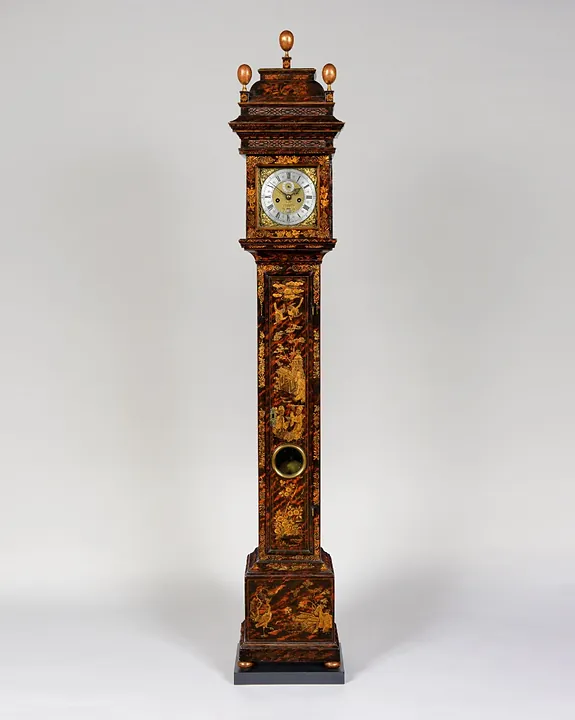
Clocks · c. 1715
Longcase clock by Manley, Norwich
Howard Walwyn Fine Antique Clocks (dealer), London
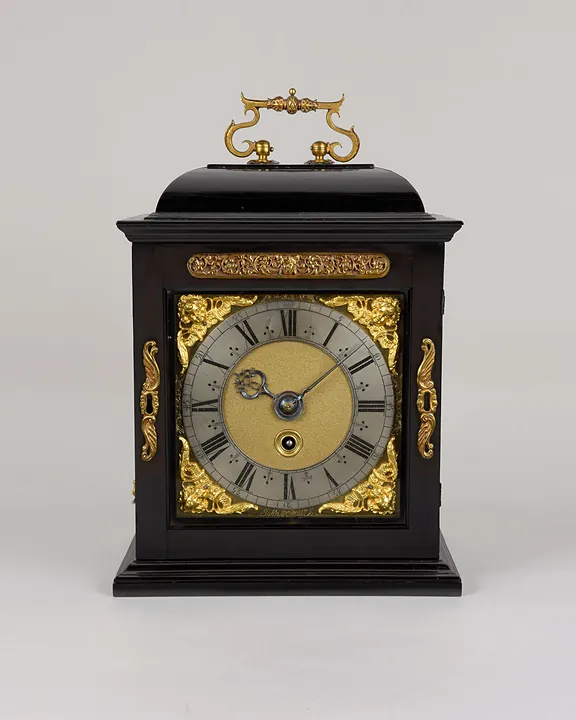
Clocks · c. 1695–1700
Bracket clock by John Knibb, Oxford, c. 1695–1700
Howard Walwyn Fine Antique Clocks (dealer), London