
Clocks · Longcase clock
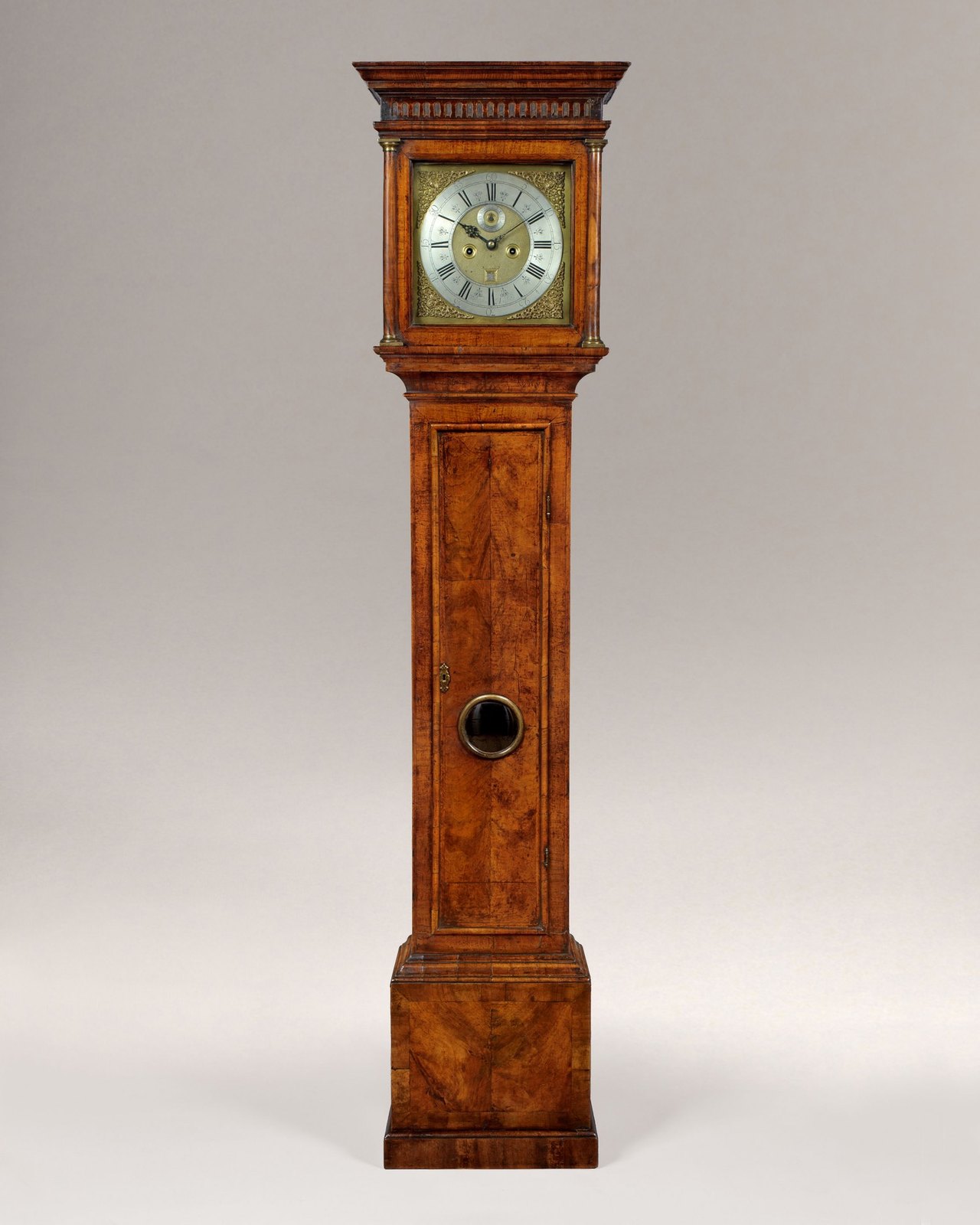
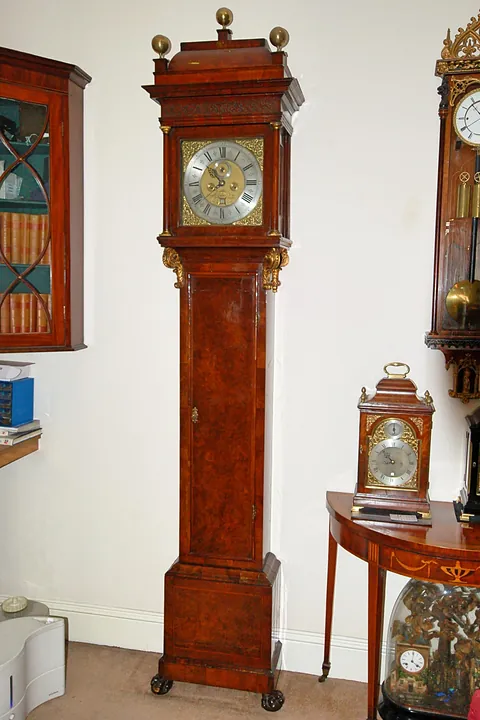
Longcase clock by John Witherston, Hereford, c. 1710
- Maker / attribution
- John Witherston (maker)
- Date
- c. 1710
- Historical period
- Early Modern Horology (1600 – 1750)
- Country of origin
- United Kingdom
- Place
- Hereford
- Object type
- Longcase clock
- Materials / technique
- walnut
- Dimensions
- Height 218 cm
- Stock no.
- SKU 82
- Credit line
- Dealer listing, Howard Walwyn (SKU 82)
- Catalogue title (original)
- JOHN WITHERSTON. A RARE QUEEN ANNE PERIOD PROVINCIAL SQUARE DIAL WALNUT LONGCASE CLOCK. (English)
View the source record (dealer listing) ↗ (opens another website in a new tab)Suggest a correction
Record summary
Catalogued by Howard Walwyn Fine Antique Clocks (dealer), London (stock number SKU 82), this is a longcase clock by John Witherston, made in Hereford, United Kingdom, dated c. 1710. The Atlas places it in the Early Modern Horology period (1600 – 1750) of its Clocks collection. Materials and techniques recorded by the source: walnut. Recorded dimensions: Height 218 cm. The record is illustrated with 2 photographs.
Assembled from the source record's structured fields. Dates and attributions are given as the source states them; where a field is missing the Atlas leaves it blank rather than estimating.
Catalogue description
Dealer description — Howard Walwyn
A rare Queen Anne period provincial square dial walnut longcase clock with 8-day movement striking the hours on a bell via an inside countwheel . The 12 inch brass dial has a raised brass chapter ring with Roman hour numerals, subsidiary seconds dial below XII, finely cast Indian head and leaf corner spandrels and engraved decoration around the inset datework with the maker’s signature on the chapter ring. The well proportioned case has highly patinated book matched walnut veneers and a square hood with an unusual fluted walnut sound fret and original turned walnut columns with patinated brass capitals and bases. Height: 85 ¾ in (218 cm) Width: 17 ¼ in (43.5 cm) Depth: 9 ¼ in (23.5 cm) * John Witherston on page 852 of Brian Loomes’s ‘ Clockmakers of the World: 21st Century Edition’ as working in Hereford from circa 1690 until the early part of the 18th century. Very few provincial walnut clocks from this early period have survived. HW5360 Signed / Inscribed Witherston Hereford
Historical context
Early Modern Horology (1600 – 1750)
Huygens' pendulum and balance spring transform accuracy; English makers develop the anchor and deadbeat escapements.
Huygens's pendulum (1656–57) improved clock accuracy from about a quarter of an hour to under a minute a day. The anchor escapement (c. 1670) and the long seconds pendulum created the longcase clock; London makers such as Fromanteel, Knibb, Tompion and Quare led European clockmaking, and French makers created the Boulle pendule.
Read the period in the timelineMore clocks from this periodEarlier: Renaissance Horology
Atlas type guide
Longcase (tall-case or grandfather) clocks
The longcase clock was born from two seventeenth-century innovations: Christiaan Huygens's pendulum (1656–57) and the anchor escapement (c. 1670). A long seconds pendulum, nearly a metre long, swings with a small arc, and enclosing it together with the driving weights in a tall wooden case protected the mechanism and created a new piece of furniture. London makers such as Ahasuerus Fromanteel, Thomas Tompion and Joseph Knibb set the pattern.
By the eighteenth century longcase clocks were made throughout Britain, the Netherlands, Scandinavia (the Swedish Mora clock), France (the Comtoise from the Franche-Comté), Germany and colonial America. Eight-day movements with two weights became standard in better clocks; thirty-hour clocks with one weight and a rope or chain were cheaper alternatives.
What to look for
- Winding holes in the dial: two (eight-day, going and striking) or none (thirty-hour, pulled up by a chain).
- Brass dials with applied chapter rings (earlier) versus painted iron 'white' dials (after c. 1770 in Britain).
- Moon-phase arches, date apertures, seconds dials and maker's name on the dial.
- Case woods and style: ebonised, walnut marquetry, lacquer, oak or mahogany; regional styles from London, Lancashire, Scotland or America.
- Whether the movement and dial match the case — 'marriages' are common.
Dating clues
- Square brass dials suggest c. 1670–1720; arched brass dials c. 1715–1790.
- Painted (white) dials were made by Birmingham dial-makers from about 1772.
- Comtoise clocks with repoussé pendulums are mostly nineteenth century.
General guidance written by the Atlas editors about this kind of object. It is not a statement about this particular piece; for that, rely on the source record above and on physical examination.
Read next:Anchor (recoil) escapementDeadbeat escapementAnchor escapement
Related records
Clocks · c. 1695–1700
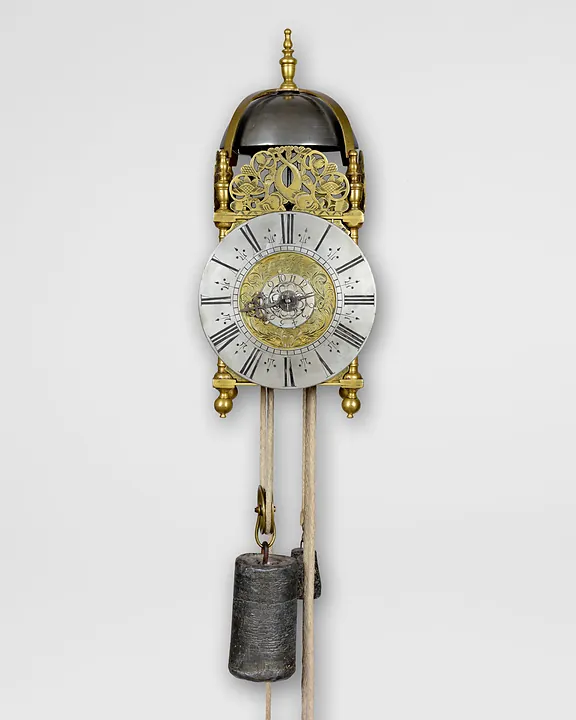
Lantern clock by John Knibb, Oxford, c. 1695–1700
Howard Walwyn Fine Antique Clocks (dealer), London
Clocks · c. 1680–1685
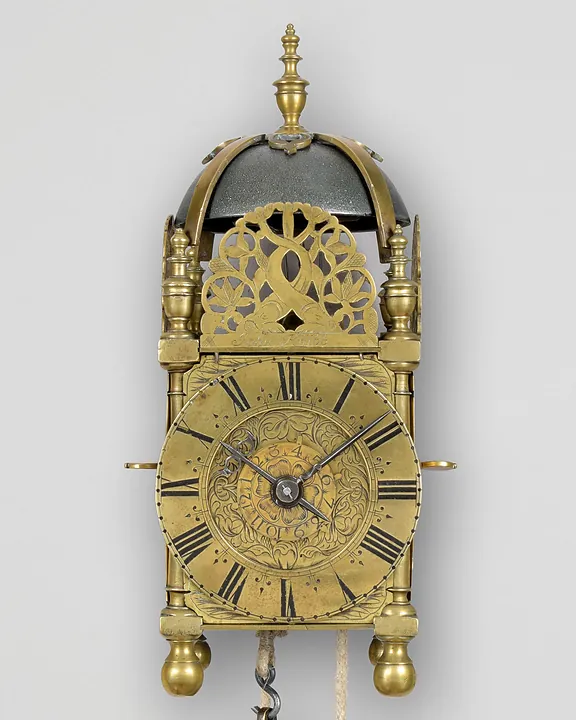
Lantern clock by John Knibb, Oxford, c. 1680–1685
Howard Walwyn Fine Antique Clocks (dealer), London
Clocks · c. 1670
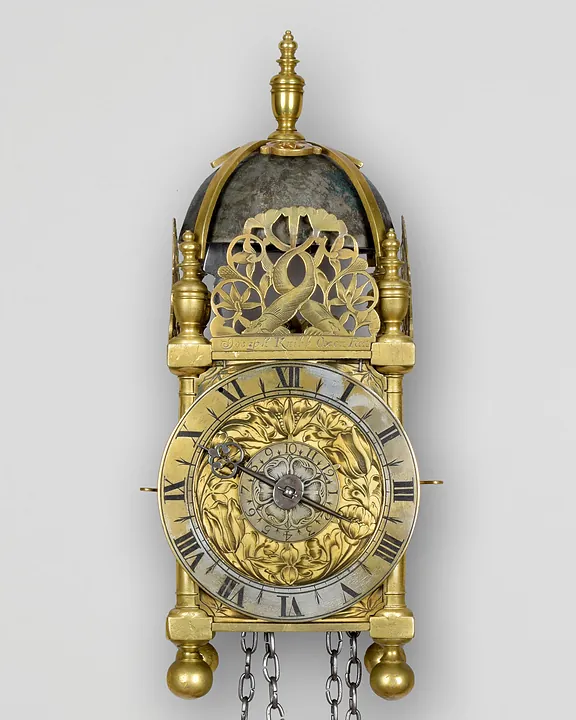
Lantern clock by Joseph Knibb, Oxford, c. 1670
Howard Walwyn Fine Antique Clocks (dealer), London
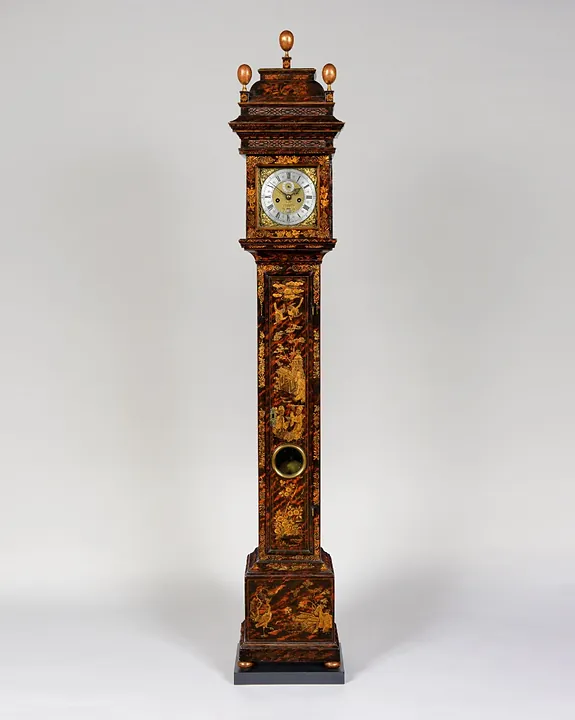
Clocks · c. 1715
Longcase clock by Manley, Norwich
Howard Walwyn Fine Antique Clocks (dealer), London
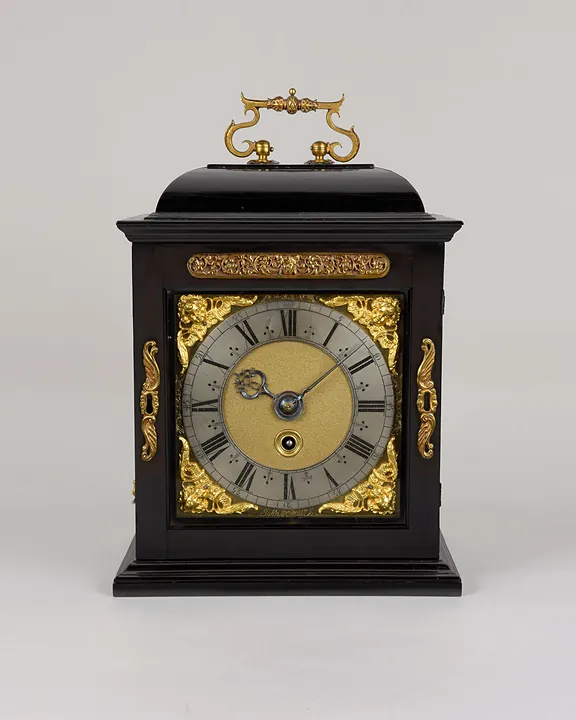
Clocks · c. 1695–1700
Bracket clock by John Knibb, Oxford, c. 1695–1700
Howard Walwyn Fine Antique Clocks (dealer), London
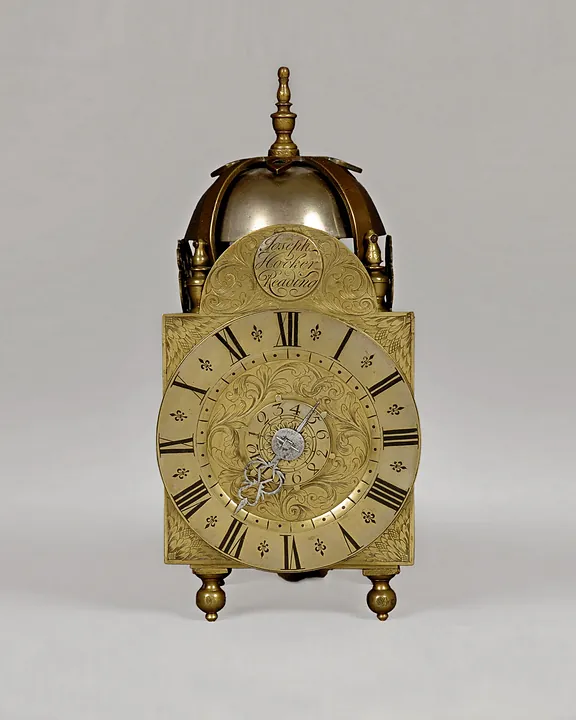
Clocks · c. 1710
Lantern clock by Joseph Hocker, Reading, c. 1710
Howard Walwyn Fine Antique Clocks (dealer), London
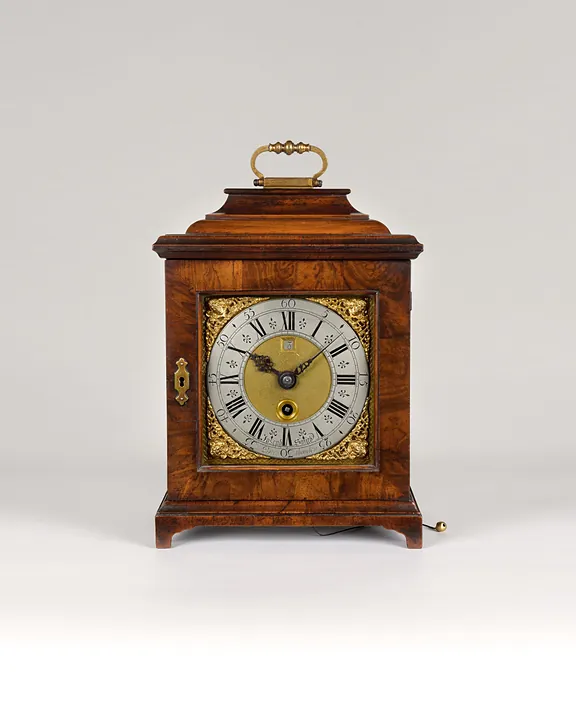
Clocks · c. 1720–1725
Clock by Joseph Smith, Chester, c. 1720–1725
Howard Walwyn Fine Antique Clocks (dealer), London
Clocks · c. 1740
Grandfather Clock by John Wainwright, Wellingborough, c. 1740
Pendulum of Mayfair (dealer), London