
Horological History · Historical feature
Glashütte: The History of German Fine Watchmaking, from Lange to Today
How a poor mining town in the Ore Mountains became Germany's watchmaking capital: Ferdinand Adolph Lange's workshop of 1845, the three-quarter plate, the watchmaking school, the observation watches of the Second World War, forty years as the state-owned GUB, and the revival of Lange, Glashütte Original and Nomos after 1990 — told through the watches themselves.
Atlas Editorial · · 18 min read
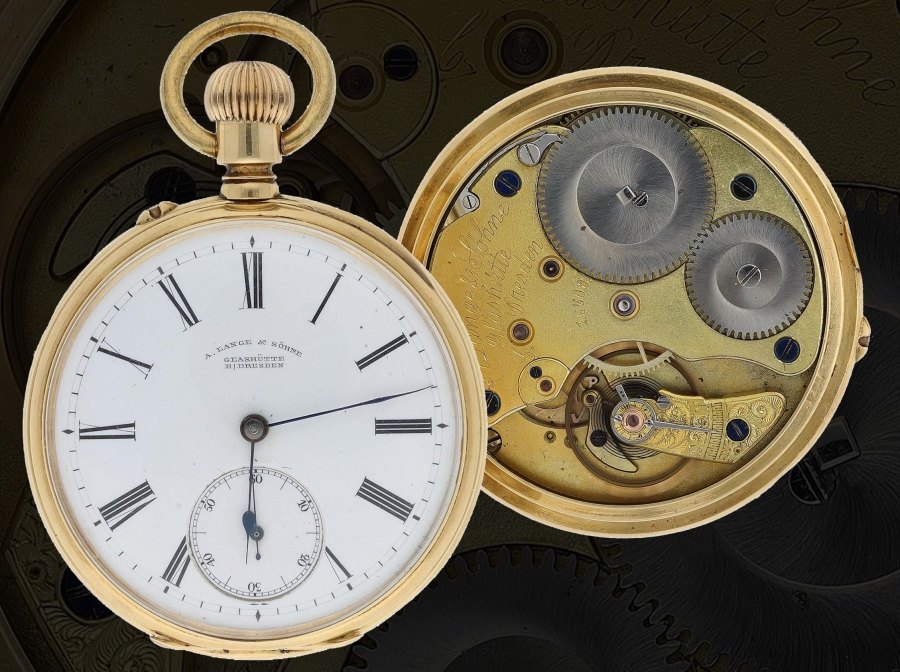
Gardiner Houlgate (auction house), Corsham · © Gardiner Houlgate — auction photographs; permission required · source (opens another website in a new tab)
Glashütte is a small town about 30 kilometres south of Dresden, in the valley of the Müglitz in the eastern Ore Mountains (Osterzgebirge) of Saxony. Its name means 'glassworks', but for most of its history it lived from silver mining, and by the early 19th century the mines were exhausted and the valley was poor. Today the town of a few thousand people is home to A. Lange & Söhne, Glashütte Original, Nomos, Moritz Grossmann, Mühle, Tutima and a string of smaller workshops, and 'Glashütte' on a dial is the German equivalent of 'Genève' or 'Swiss Made'.
This feature tells the story of how that happened, from the founding of Ferdinand Adolph Lange's workshop in December 1845 to the present, and explains the features that let a collector recognise a Glashütte watch. Each period is illustrated with watches and clocks from museum collections, auction archives and dealers in the Atlas catalogue.
Before 1845: a mining town in crisis
Watchmaking came to Glashütte as a deliberate act of regional policy. The Kingdom of Saxony had a long tradition of fine mechanics at the Dresden court — the Mathematisch-Physikalischer Salon, the court clockmakers — but none in the mountain villages. When the silver gave out, the government looked for an industry that needed skill rather than raw materials and could employ the families of former miners. Ferdinand Adolph Lange offered one.
Lange was born in Dresden in 1815 and grew up with foster parents. He studied at the Dresden technical school and was apprenticed to the court clockmaker Johann Christian Friedrich Gutkaes, the maker of the five-minute digital clock in Dresden's Semperoper. From 1837 he travelled as a journeyman to France, England and Switzerland; in Paris he worked for several years in the workshop of the Austrian-born watchmaker Joseph Thaddäus Winnerl, a specialist in chronographs and precision watches, and attended lectures by the astronomer François Arago. He kept a detailed notebook of what he saw. Returning to Dresden in 1841, he became Gutkaes's partner, and in letters to the Saxon government he proposed founding a watch manufactory in the Ore Mountains that would train local young people.
The government agreed. Lange received a repayable loan of about 7,800 thaler and undertook to train apprentices. On 7 December 1845 he opened his workshop in Glashütte with his later brother-in-law, the watchmaker Adolf Schneider, and a first group of apprentices from the valley. The firm traded at first as 'A. Lange, Dresden' or A. Lange & Cie, and from 1868, when Lange's son Richard became a partner, as A. Lange & Söhne.
Lange's system: training, specialisation and the metric system
What made Glashütte different from a single maker's workshop was Lange's plan for a whole industry. He trained apprentices in the basics of watchmaking and then encouraged the best of them to set up as independent specialists making particular parts — escapements, balances, cases, springs, jewels, hands, tools — which they sold back to him and to each other. German historians call this the Glashütte Verlagssystem. Within a generation the town had dozens of small suppliers and several complete watch firms, and the specialised craftsmen meant that Glashütte could make nearly every part of a watch itself.
Lange also brought the metric system into the workshop. In France he had seen watchmakers still measuring in lignes, the old Paris inch divided into twelfths; he worked out the dimensions of his wheels in millimetres instead, and built measuring tools graduated in tenths and hundredths of a millimetre, including the 'Zehntelmaß' (tenth gauge) that became a standard Glashütte tool. Precise, interchangeable dimensions were what allowed parts made by different workshops to fit together.
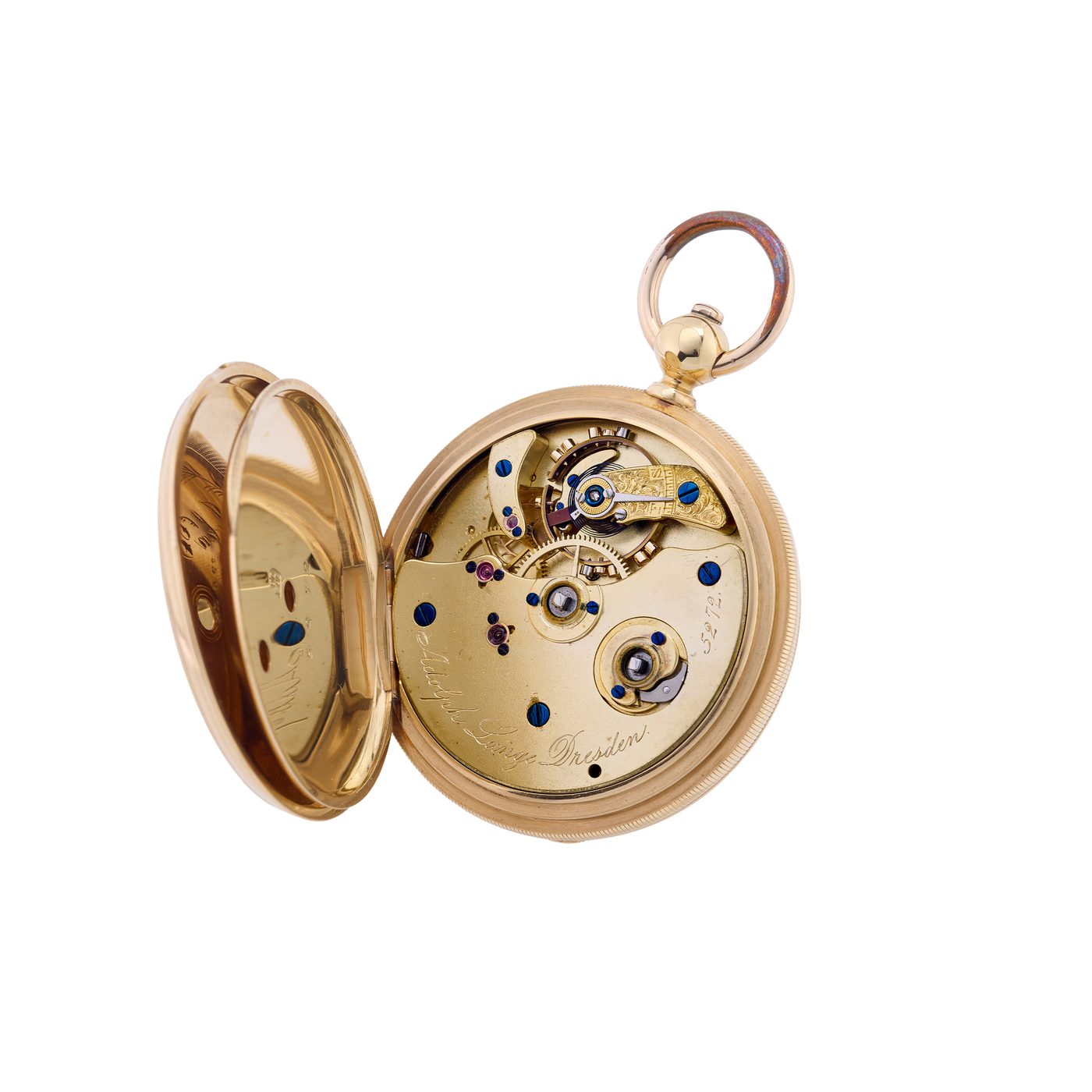
Other founders followed Lange's encouragement. Julius Assmann, born in Stettin in 1827 and trained in Berlin, worked for Lange before setting up his own factory in 1852, the J. Assmann Deutsche Anker-Uhren-Fabrik ('German lever watch factory'). Assmann made watches of the same quality as Lange's, sold many of them in North and South America, and supplied movements to the Gruen firm in Columbus, Ohio. Moritz Grossmann, born in Dresden in 1826, had worked for Lange in 1848–49 and then travelled to Munich, La Chaux-de-Fonds, London and Scandinavia; he married in Glashütte in January 1855 and founded his own factory, which he ran until his death in 1885. Grossmann was the theoretician of the group: his essay on the construction of a simple and mechanically perfect watch won the British Horological Institute's prize and was published in London in 1880.
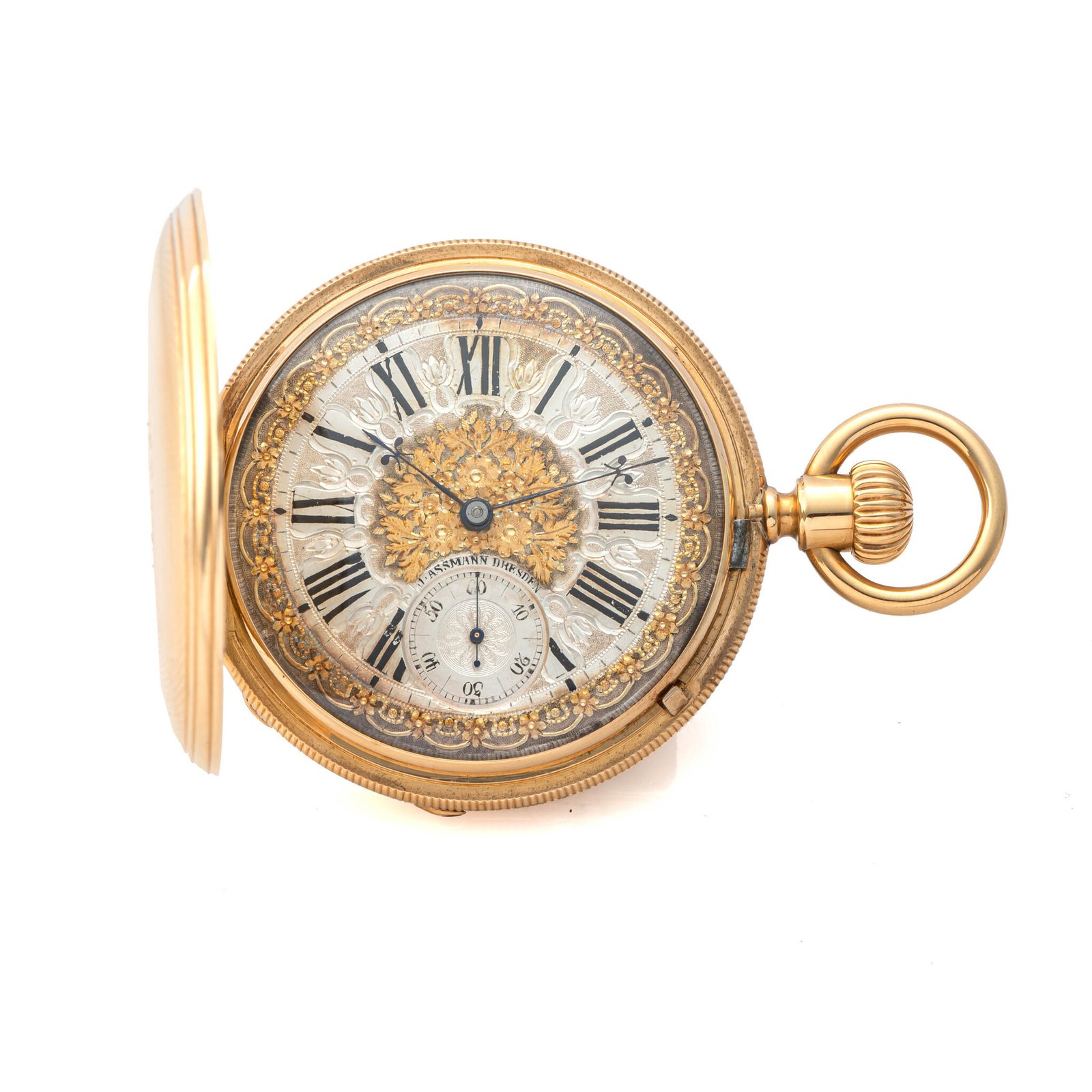
The Glashütte precision pocket watch
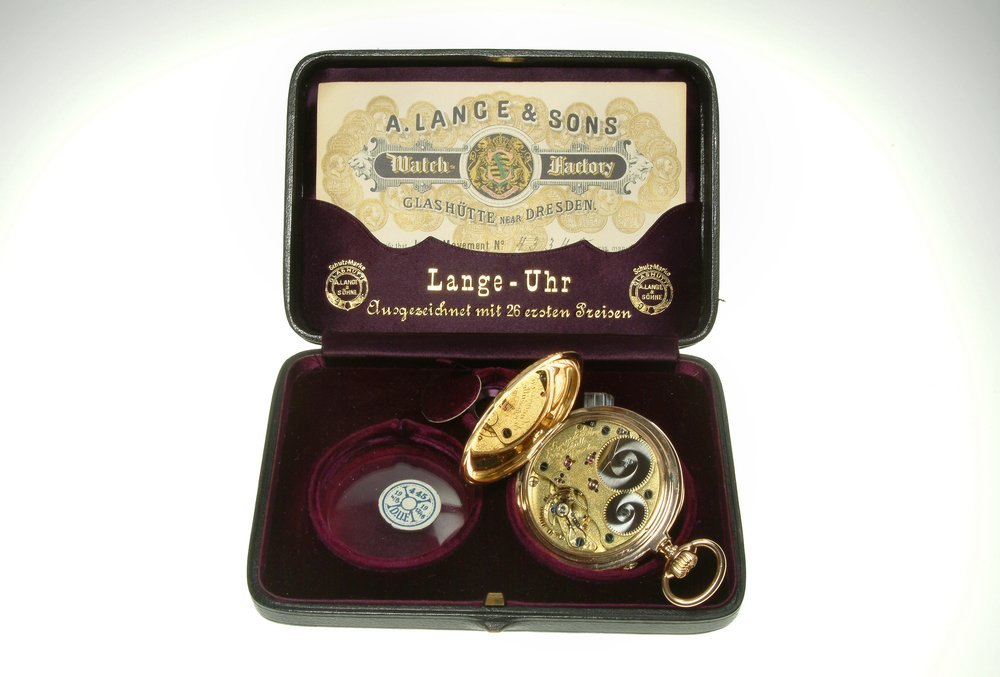
Between about 1845 and 1867 Lange, Schneider, Assmann and Grossmann developed the design that became known as the Glashütte precision pocket watch. Its best-known feature, the three-quarter plate, appeared in Lange's watches in 1864. Instead of holding each wheel of the going train under a separate bridge, as in many Swiss movements, a single plate covers about three-quarters of the movement and carries the upper pivots of the train, leaving only the balance under its own cock. The plate is harder to assemble — every pivot has to be guided into its hole at once — but it makes the movement rigid and protects the train from dust.
Around the plate grew a set of other features: a straight-line lever escapement, in which the escape wheel, pallet arbor and balance staff lie on one line, usually with a gold escape wheel and gold pallet fork; jewels set in gold chatons held by blued screws; a compensation balance and later a Guillaume balance; a swan-neck micrometer regulator to adjust the rate; and a balance cock engraved by hand with foliage, so that no two are exactly alike. The plates were made of German silver (Neusilber or maillechort, an alloy of copper, nickel and zinc), often left without gilding, or of frosted gilt brass. The same principles were applied to keyless winding, jumping seconds, repeaters and chronographs, several of which the Lange family patented.
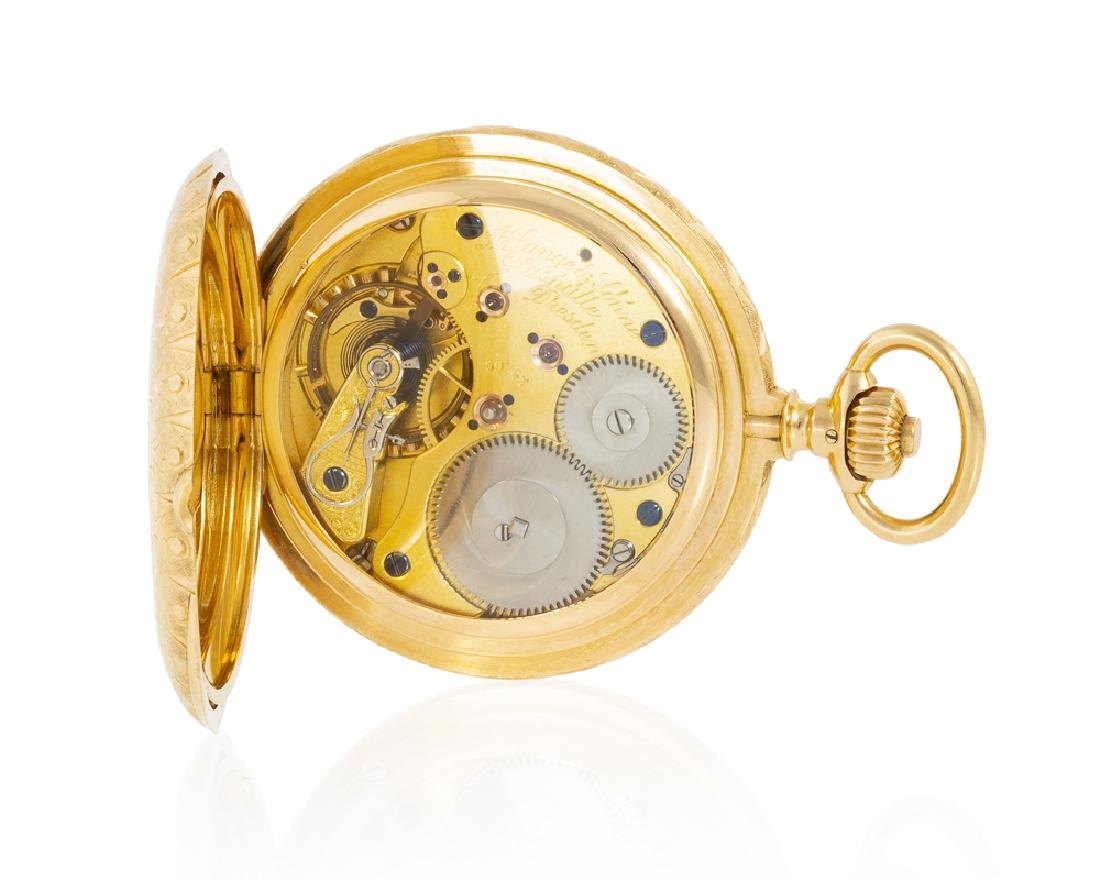
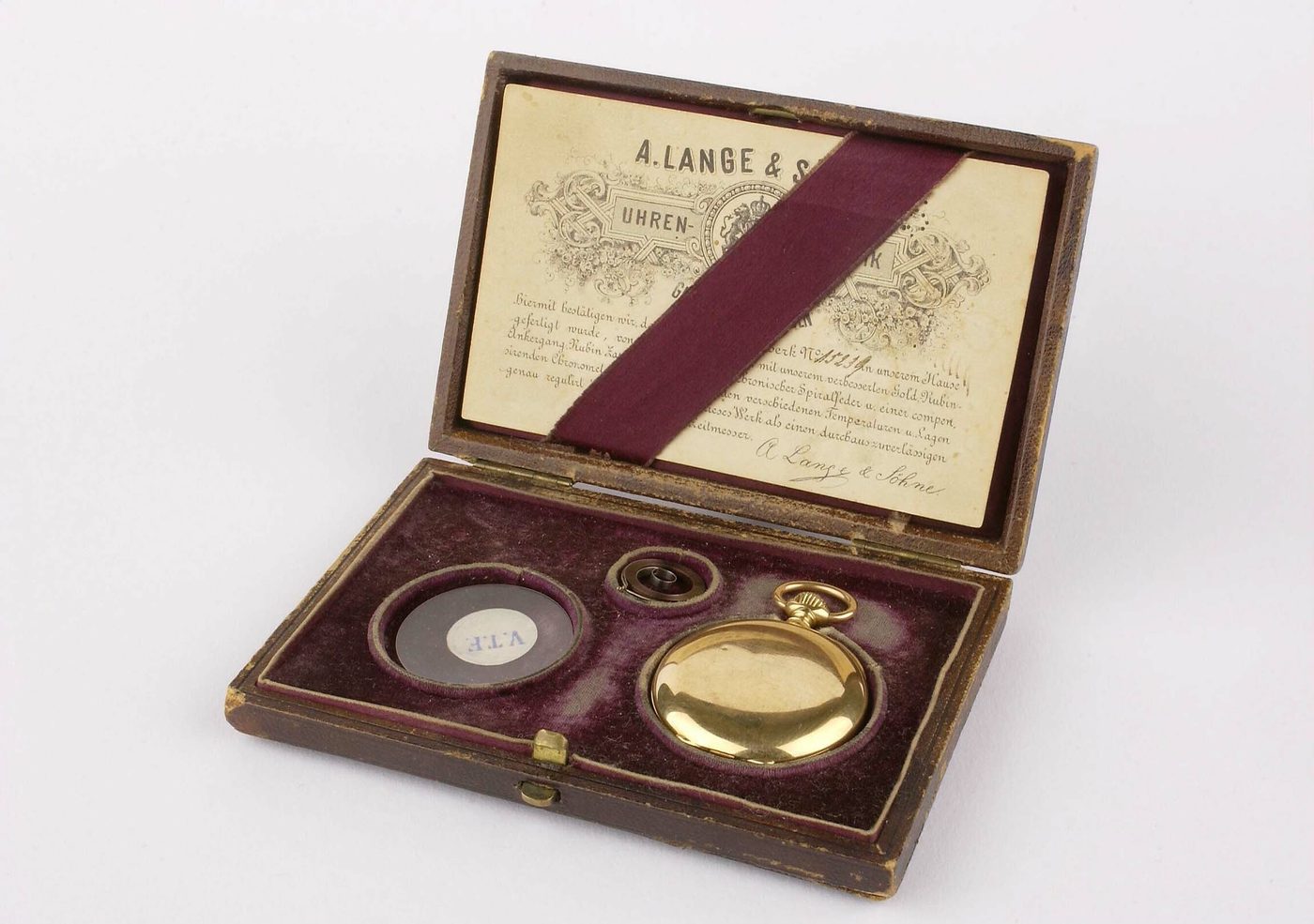
Lange's watches were expensive and made in small numbers. Their buyers included German and foreign rulers; in 1898 Emperor Wilhelm II commissioned a Lange pocket watch as a gift for the Ottoman sultan Abdülhamid II, which is now in the Topkapı Palace. Lange watches were sold through jewellers in Germany and abroad, and the dial signature changed over time: 'A. Lange & Söhne Glashütte b/Dresden' (near Dresden) is typical of the decades around 1900.
The watchmaking school and the precision clockmakers
By the 1870s the town needed a steady supply of trained watchmakers. At Grossmann's initiative the German watchmakers' associations met at Bad Harzburg in 1876 and at Wiesbaden in 1877 and decided to found a German watchmaking school at Glashütte. A local committee led by Grossmann — with Adolf Schneider, Julius Assmann, Richard Lange, August Gläser, Ludwig Strasser and the schoolmaster Carl Schaarschmidt — prepared it, and Grossmann toured the watch schools of Geneva, La Chaux-de-Fonds, Le Locle, Biel, Paris, Besançon and Cluses for ideas. The Deutsche Uhrmacherschule Glashütte opened on 1 May 1878.
Every pupil made a set of tools, a working model of the lever escapement, a contact micrometer and at least one lever watch, and students came from all over Germany and beyond. The school's most famous teacher, Alfred Helwig, devised the flying tourbillon — a tourbillon carriage supported only from below, with no bridge above it — in 1920. The school continued after 1951 as an engineering college for precision technology until 1992, and since 2008 its building has housed the Deutsches Uhrenmuseum Glashütte.
Glashütte was not only a watch town. In 1875 Ludwig Strasser, a former pupil and later teacher at the school, founded the workshop Strasser & Rohde with the mechanic Gustav Rohde. It made measuring instruments, precision pendulum clocks for observatories and laboratories, and marine chronometers, and Strasser patented a free spring-force escapement for precision pendulum clocks, one of the last developments in mechanical precision timekeeping before quartz. Robert Mühle, who had trained as a toolmaker with Grossmann, founded Robert Mühle & Sohn in 1868 to make the tenth and hundredth gauges, micrometers, wheel gauges and balance-poising tools the town's workshops needed; in the 1920s the firm added speedometers and car clocks.
1900–1945: competition, crisis and war
Around 1900 fashion turned to thinner men's watches, and new firms began to compete with the old craft workshops. The Glashütter Präzisions-Uhrenfabrik AG was set up in 1904, and in 1906 a company called the Nomos-Uhr-Gesellschaft began selling Swiss-made watches with 'Glashütte' on the dial. Lange took it to court, and by 1910 the Nomos company had stopped trading. The episode established the principle that a 'Glashütte' watch had to be substantially made in the town; in Glashütte today the rule of thumb is that at least half of the value of the movement must be created there.
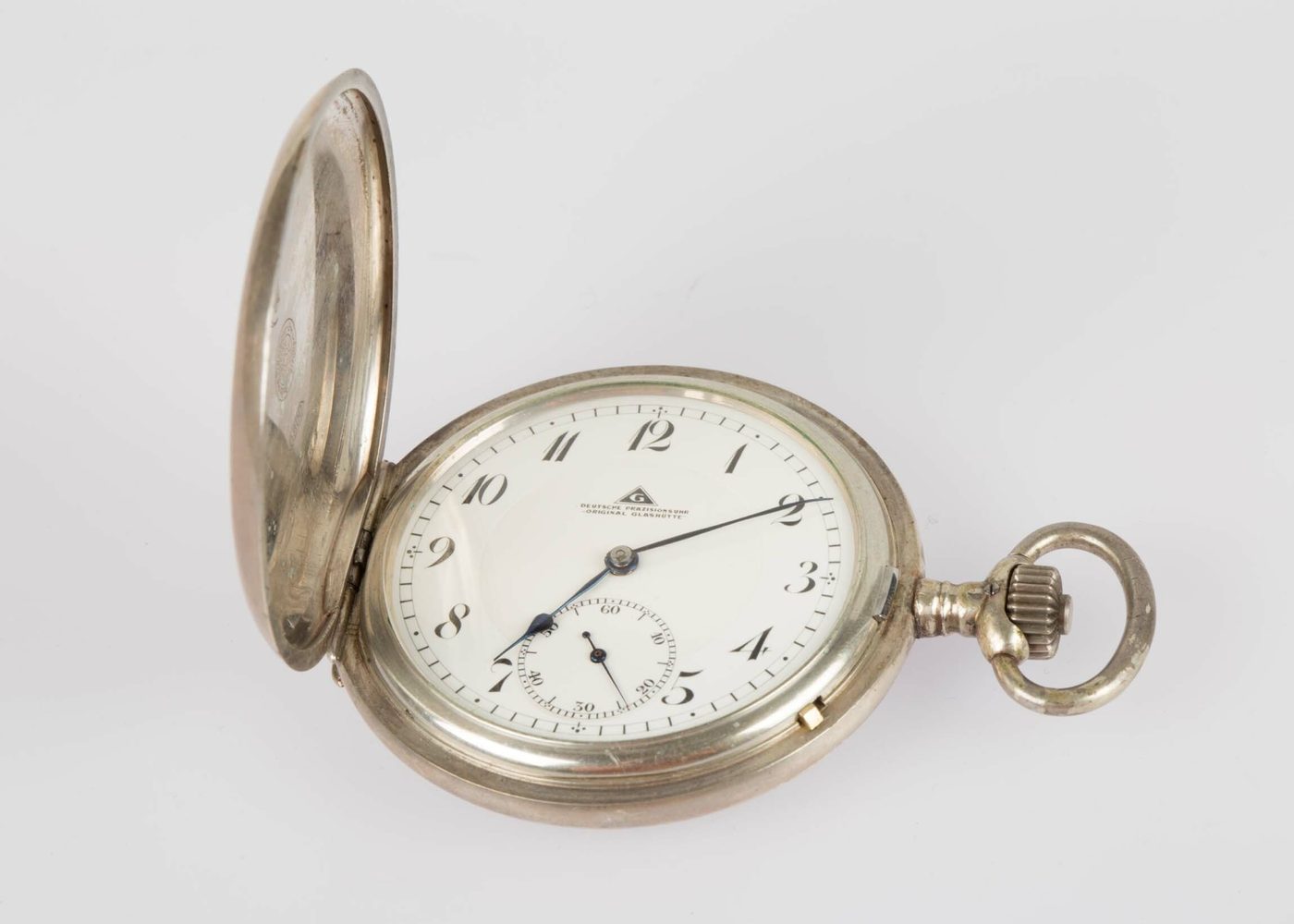
The First World War cut off Swiss parts and collapsed the market for gold watches. In 1918 the Deutsche Präzisions-Uhrenfabrik Glashütte (DPUG) was founded as a co-operative to make watches in quantity with modern machines. Glashütte makers, DPUG among them, began to mark their work 'Original Glashütte' to distinguish it from cheaper watches made elsewhere and sold as 'System Glashütte'. Lange stayed with hand-finished work; under Emil Lange's sons the firm also launched the OLIW ('Original Lange Internationales Werk') to compete at lower prices, without great success. Hyperinflation in 1922–23 hit the town hard, and DPUG went bankrupt in 1925.
In December 1926 the Saxon state bank, DPUG's main creditor, set up two successor companies: UROFA (Uhren-Rohwerke-Fabrik AG), which made movements, and UFAG (Uhrenfabrik AG), which turned some of them into finished wristwatches under the name Tutima. Their manager, Ernst Kurtz, bought the machinery of the bankrupt Biel firm Emile Judith and built a modern wristwatch-movement factory with about 1,000 workers by the 1930s. Only about a tenth of UROFA's movements were finished at Glashütte; most were bought by watchmakers around Pforzheim. In 1938 UROFA was classed as a defence works and developed a pilot's chronograph movement, calibre 59, which UFAG fitted from 1941 into Tutima chronographs for the Luftwaffe.
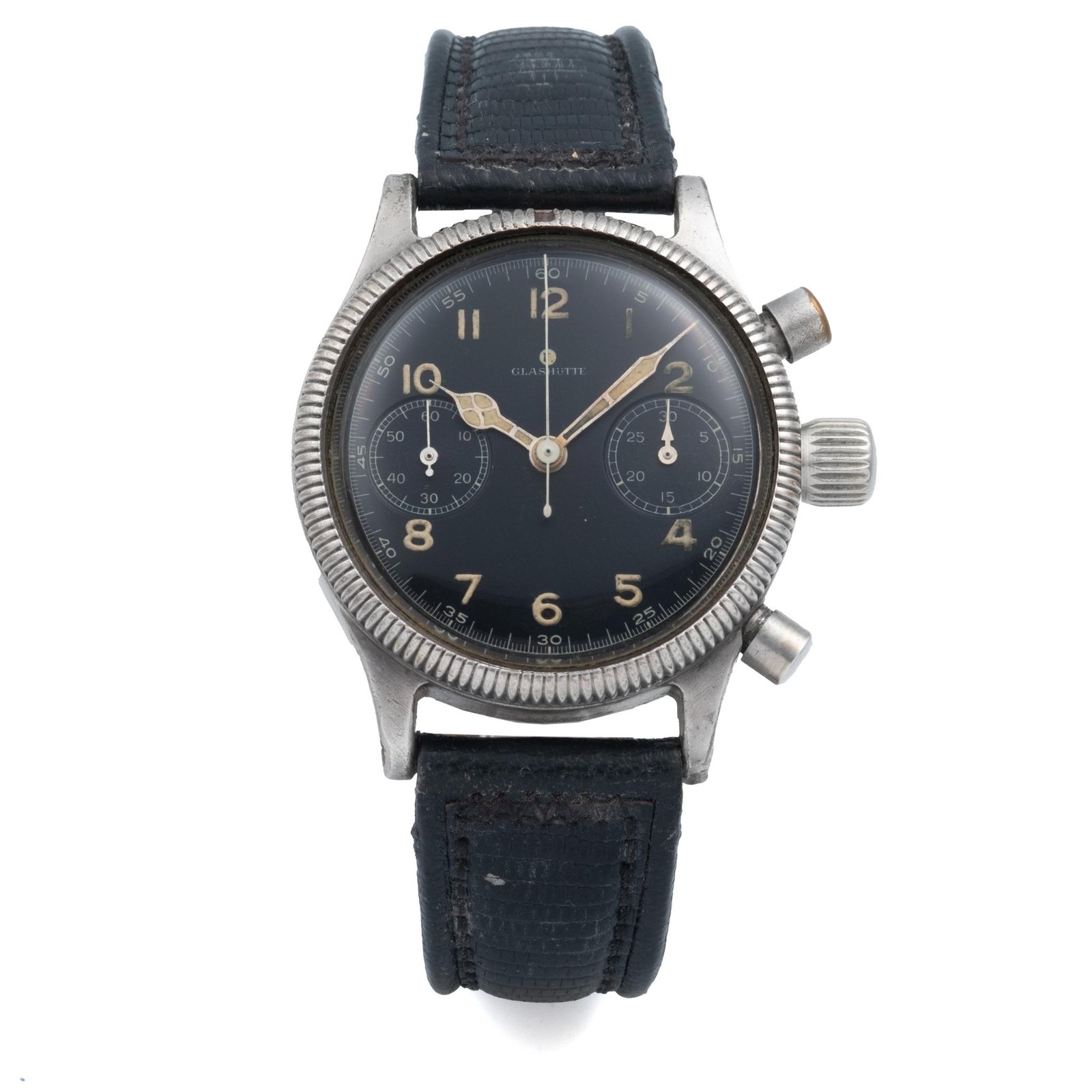
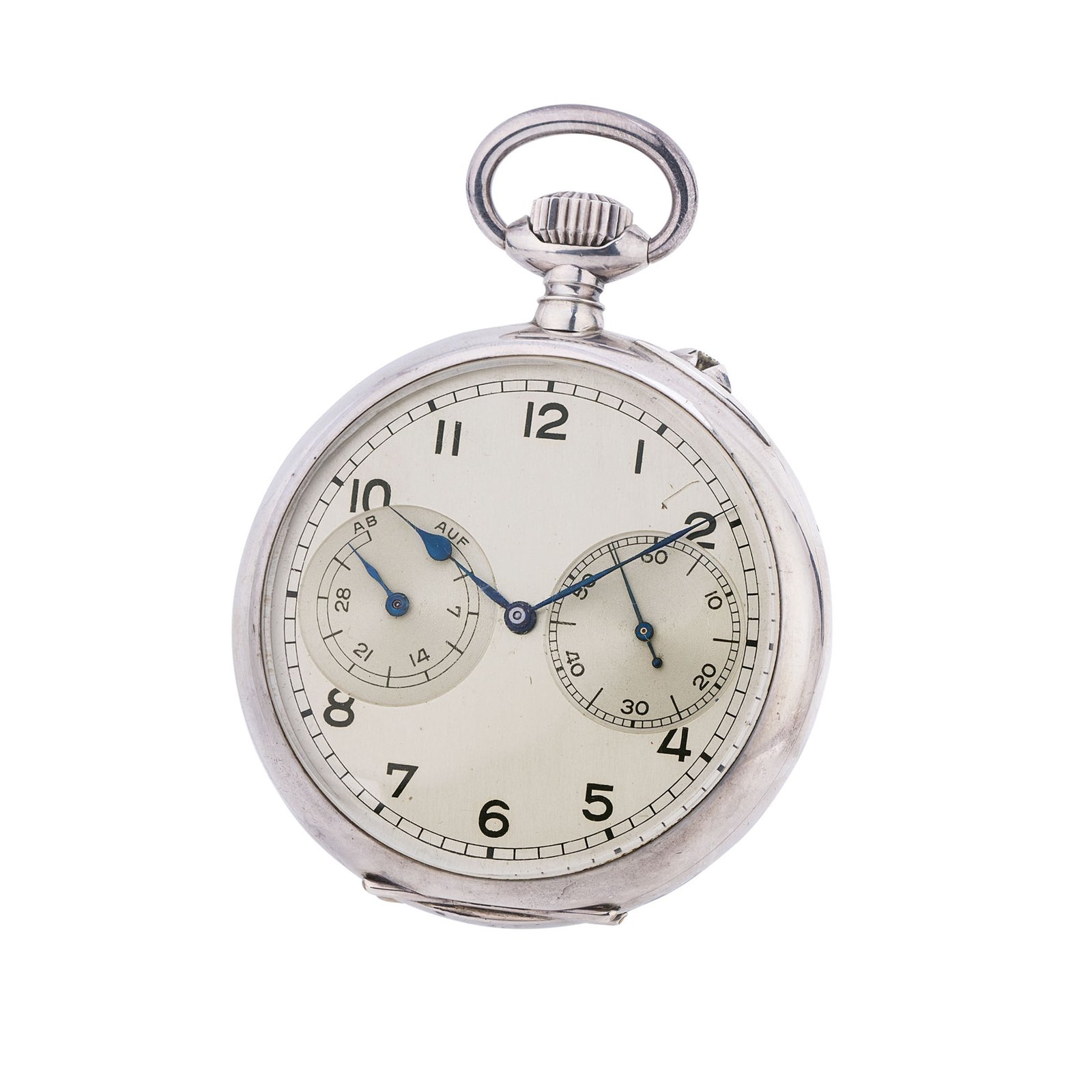
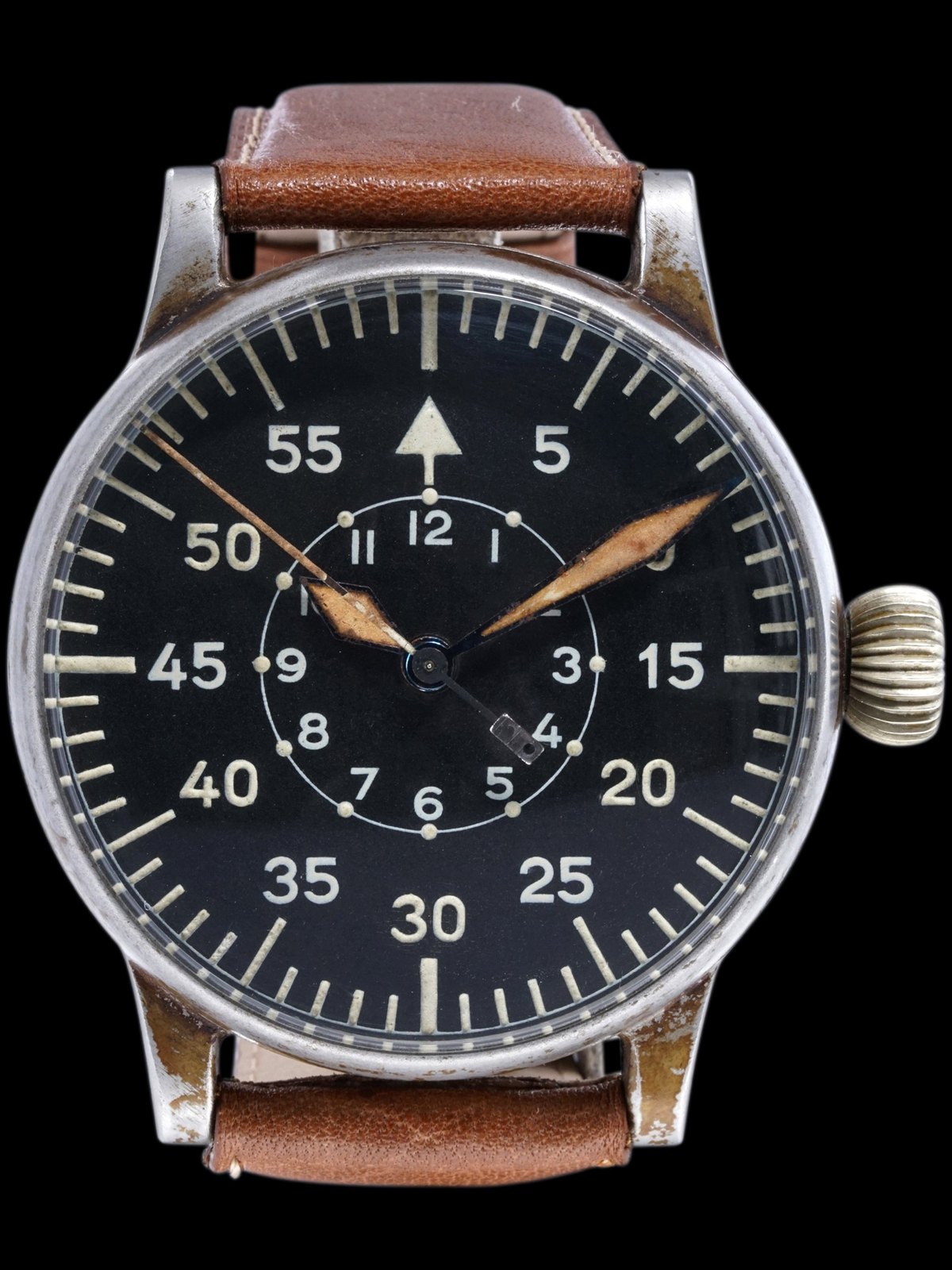
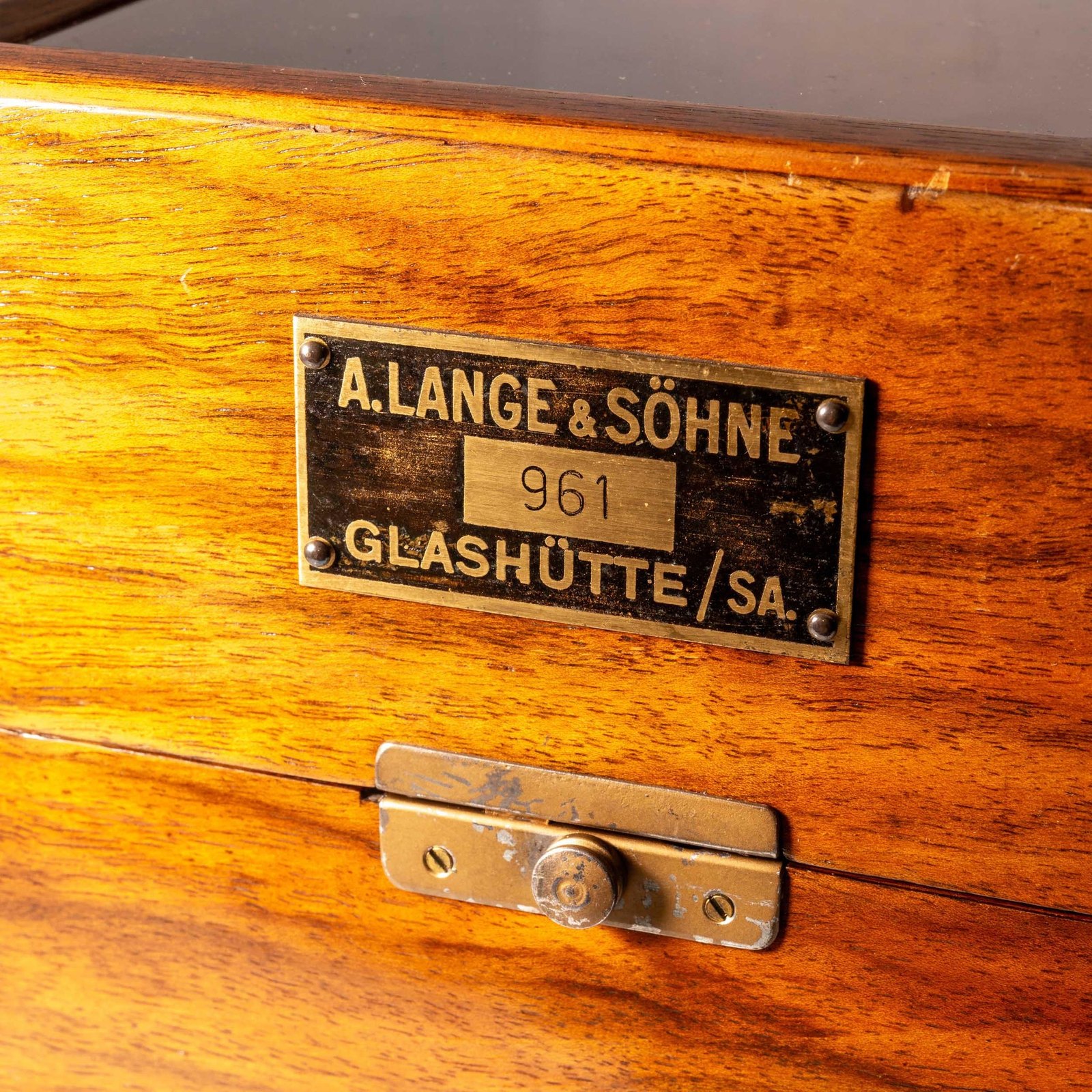
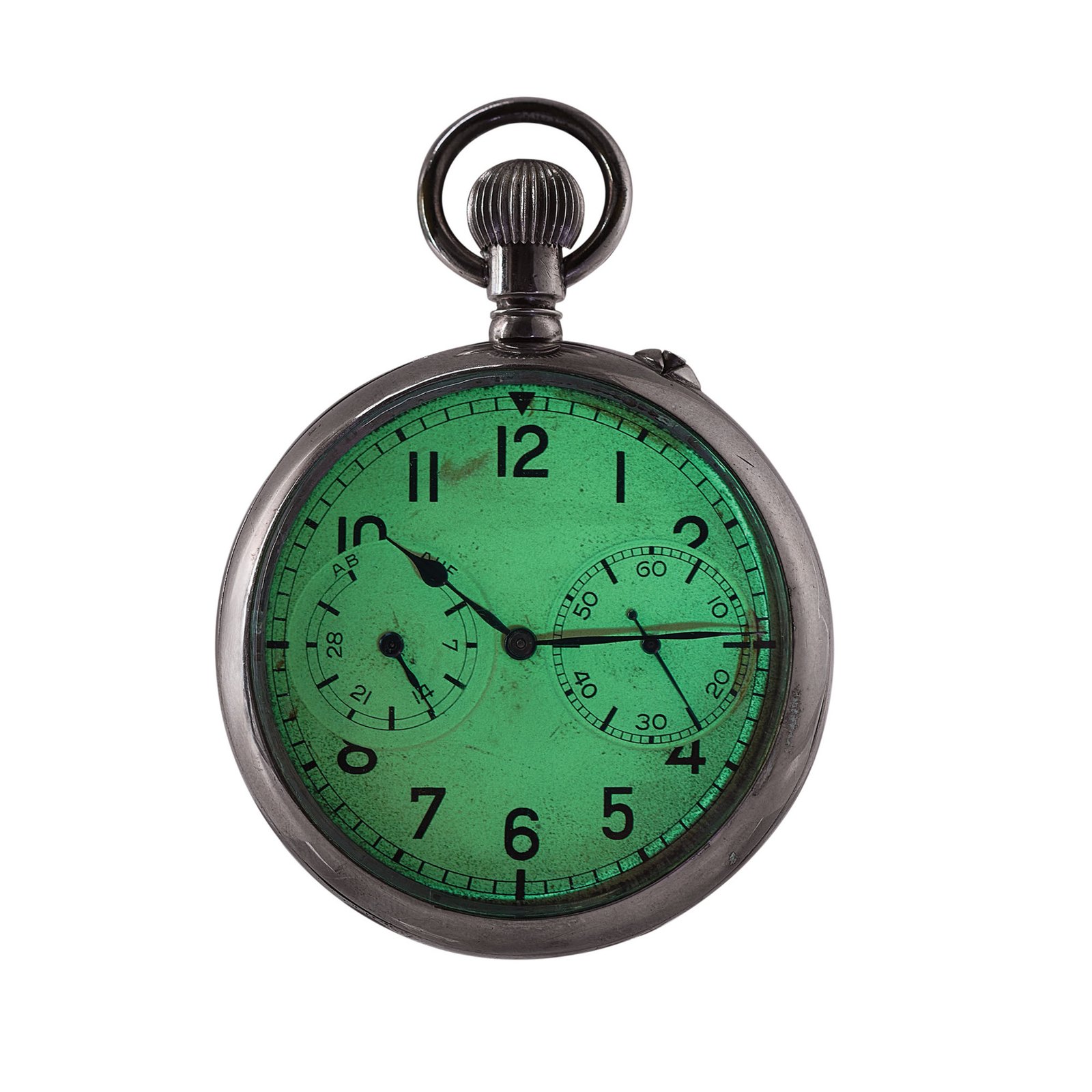
Lange, too, worked for the armed forces. From the late 1930s it was one of five makers — with Stowa, Laco, Wempe and IWC — of the large Beobachtungsuhren ('observation watches', B-Uhren) worn by Luftwaffe navigators over their flying suits, using its calibre 48 pocket-watch movement, and it made deck watches and marine chronometers. As elsewhere in German industry, the Glashütte firms used forced labour in the war years to make chronometers, timers and fuses; most of the workers were women brought from occupied countries.
8 May 1945 and the Soviet occupation
On 8 May 1945, the last day of the war in Europe, Soviet aircraft bombed Glashütte, and Lange's main building was almost completely destroyed. The occupying power then dismantled much of what was left: machinery, tools, finished and half-finished parts and drawings from UROFA, UFAG, Mühle and other firms were taken to the Soviet Union as reparations, and UROFA's equipment went to the First Moscow Watch Factory. Ernst Kurtz left for the American zone and set up a new watch firm in the west, which later moved to Ganderkesee near Bremen; the Tutima name was carried on there.
Watch production was allowed to restart in 1945–46, and the firms rebuilt with what they could find. UROFA quickly produced a simple new three-quarter-plate wristwatch calibre, the 61. Lange went on delivering calibre 48 observation watches and developed a wristwatch version of calibre 48, calibre 28, which went into production in 1949 as the last Lange movement. The firms were expropriated in stages: Lange in 1948, when watches began to be signed 'Lange VEB', and UROFA in 1951.
1951–1990: VEB Glashütter Uhrenbetriebe (GUB)
In 1951 the East German state merged Lange, UROFA, UFAG and the other Glashütte watch and component makers into one state enterprise, VEB Glashütter Uhrenbetriebe, known as GUB. The old brand names disappeared from dials, which now read simply 'Glashütte', often with the GUB mark. GUB's task was to supply the German Democratic Republic and the other Comecon countries with watches and timekeepers, and it also exported large numbers of wristwatches to West Germany. It made military watches, diving watches, cockpit clocks and pilots' watches for the East German air force, and mechanical marine chronometers until 1976. By the end of the GDR it employed about 2,500 people.
Its mechanical men's wristwatches were industrial products, but they kept Glashütte principles such as the three-quarter plate, and in East Germany they were valued above the cheaper watches of the Ruhla factory in Thuringia. The main men's calibres are listed below; dates follow the German reference histories.
| Family | Calibres | Made | Notes |
|---|---|---|---|
| Shaped (Formwerk) | GUB 62, 62.2 | 1951–1956 | Developed from UROFA's pre-war 'space-saving' movement |
| Round hand-wound | GUB 60, 60.1, 60.2, 60.3; date 66, 66.1 | 1951–1961 | The workhorse of the 1950s; 60.2 and 60.3 were higher grades |
| Automat | GUB 67, 68 | 1960–1968 | GUB's first self-winding calibres |
| Spezimatic | GUB 74, 75 | 1965–1979 | Thin automatic; the Glashütte men's watch made in the greatest numbers |
| Spezichron | GUB 11-26, 11-27 | 1979–1985 | Automatic; after it, quartz took over most production |
| Spezimat | GUB 10-30 | early 1990s | The last GDR-designed automatic, finished after reunification |
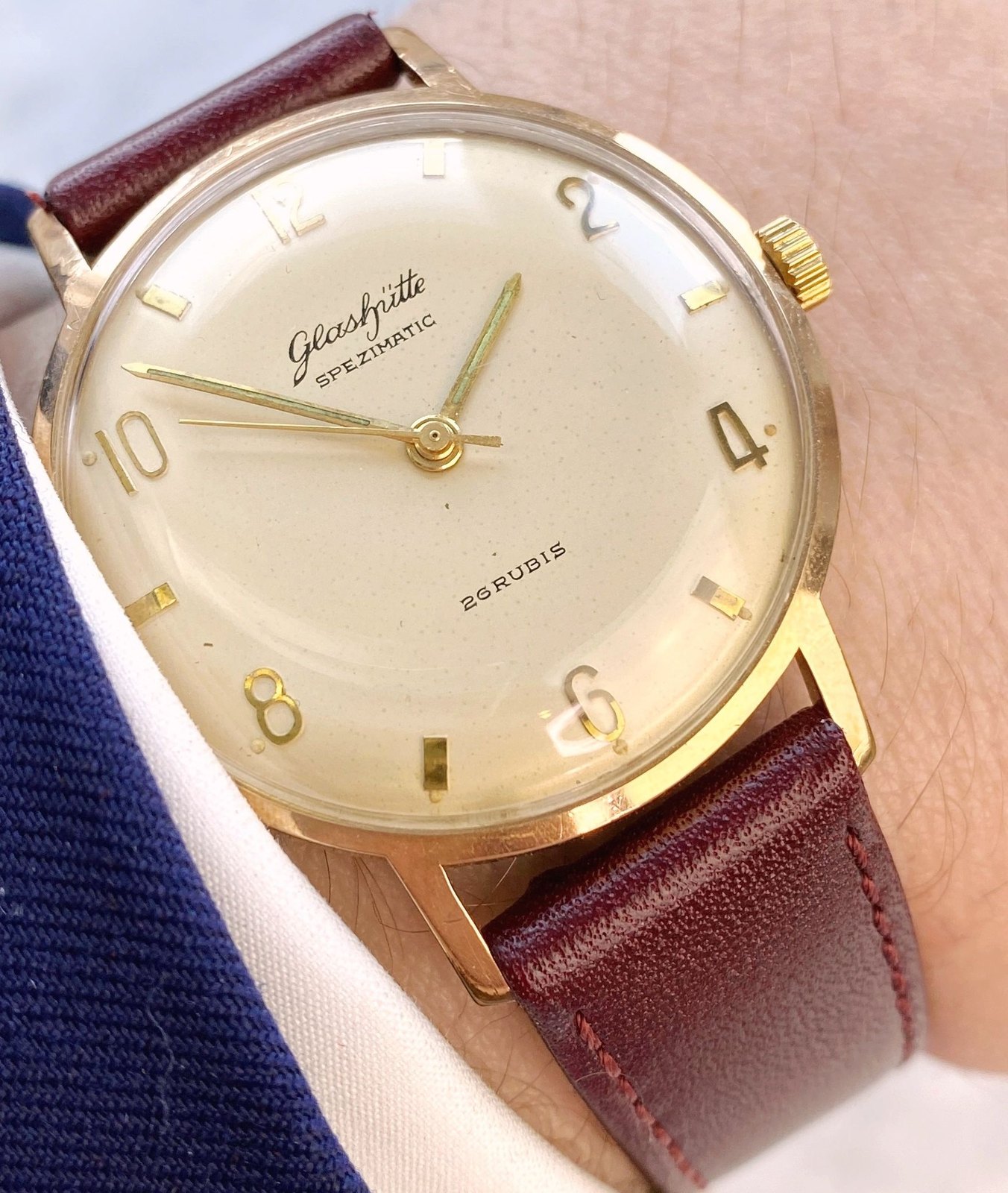
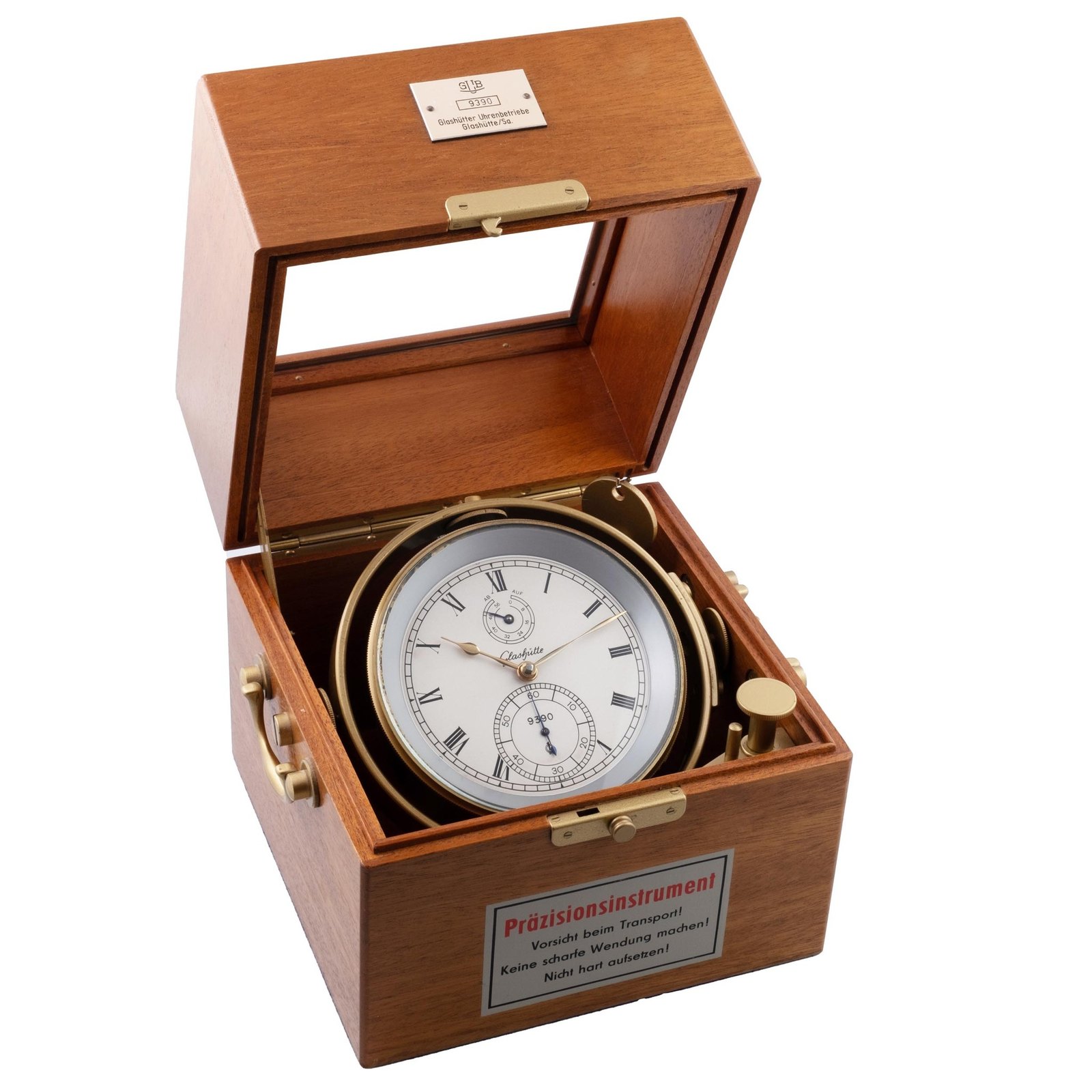
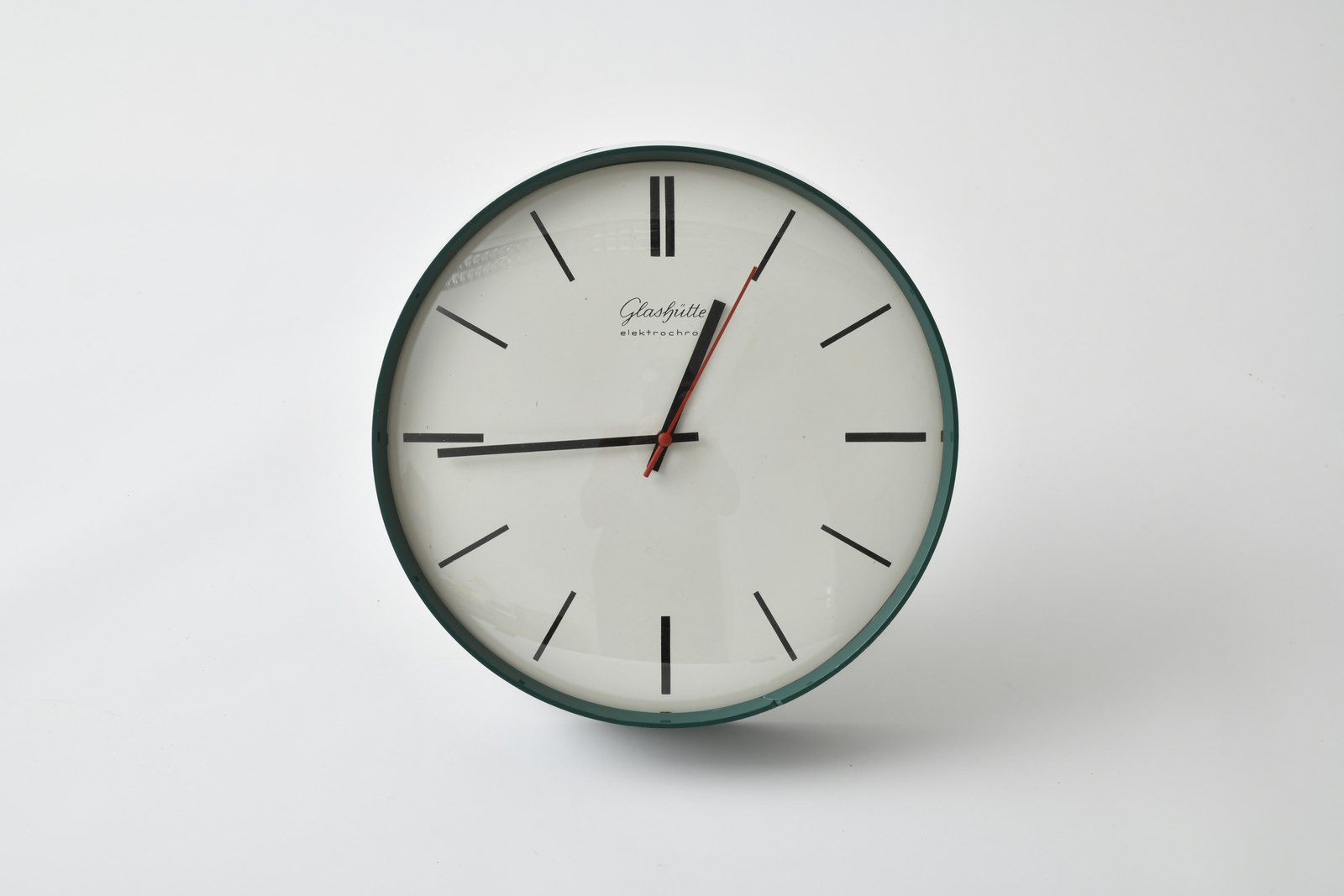
While Swiss and Japanese makers fought the quartz crisis of the 1970s and 1980s, GUB, protected from Western markets, went on making mechanical watches longer than most, but by the 1980s it too had turned mainly to quartz. The archives, tools and many old watches survived, partly thanks to a works collection, the Technisches Kabinett, assembled by GUB staff after the war; it included Lange's workshop and sales records from 1867 and the registers of the watchmaking school's pupils.
After 1990: the revival
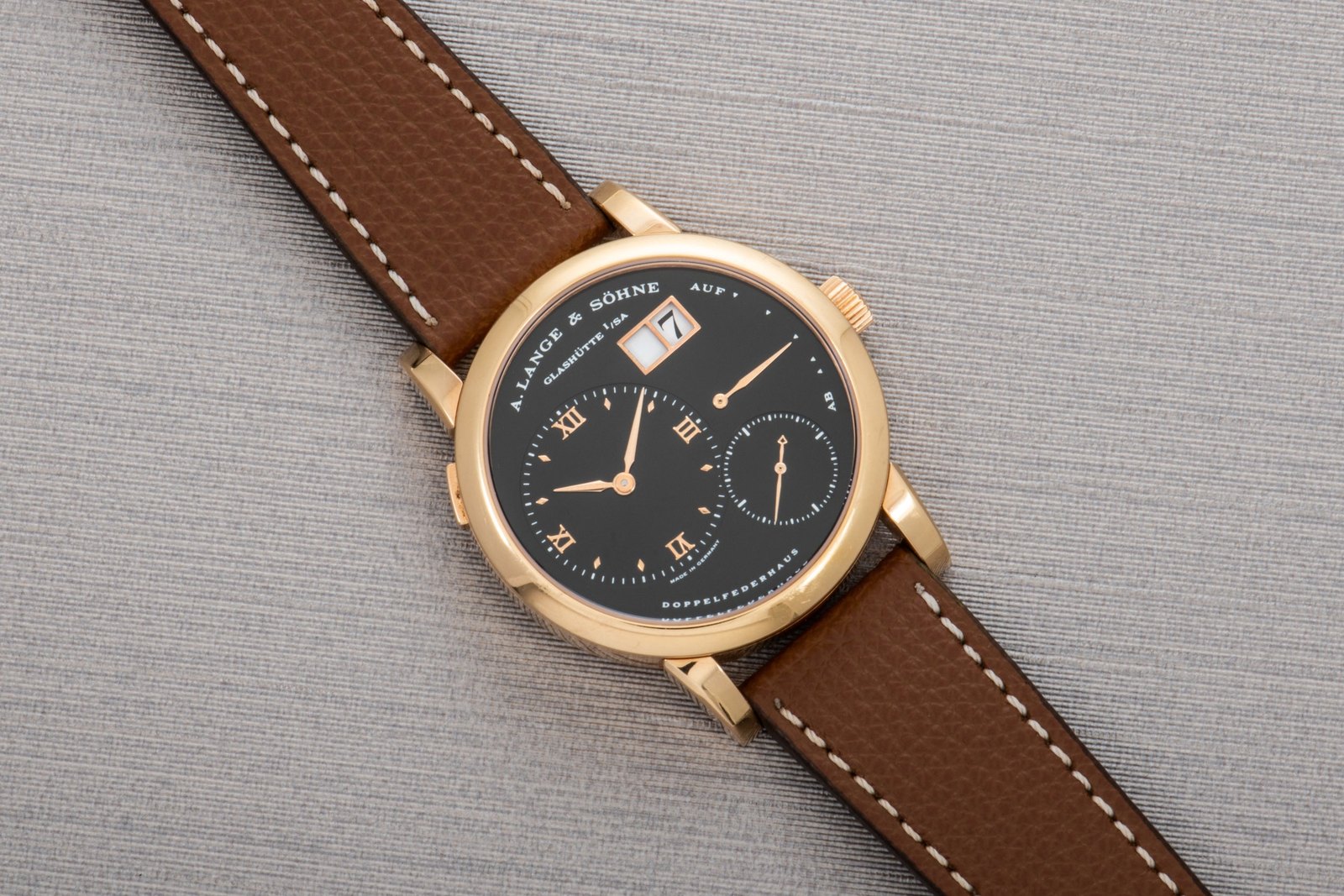
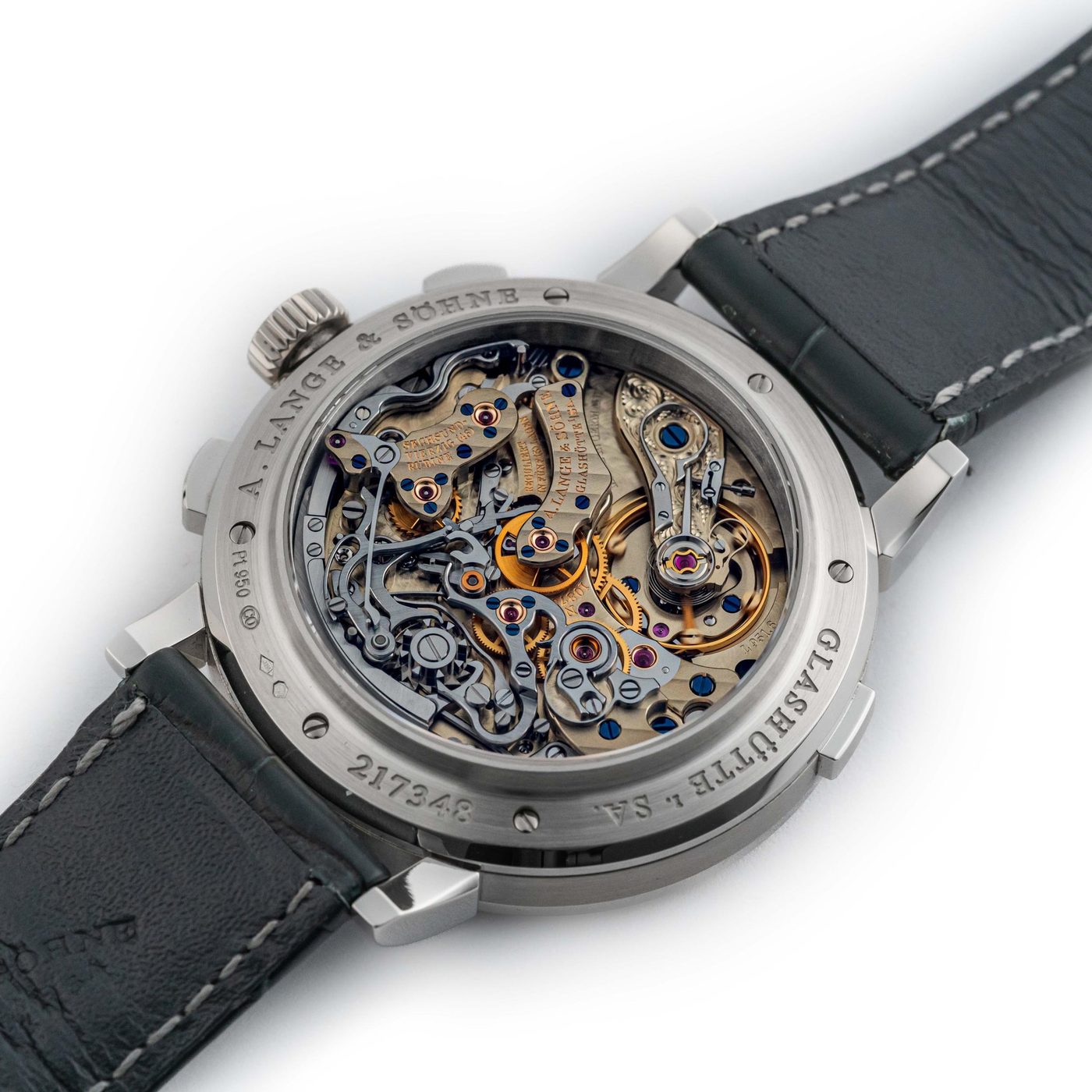
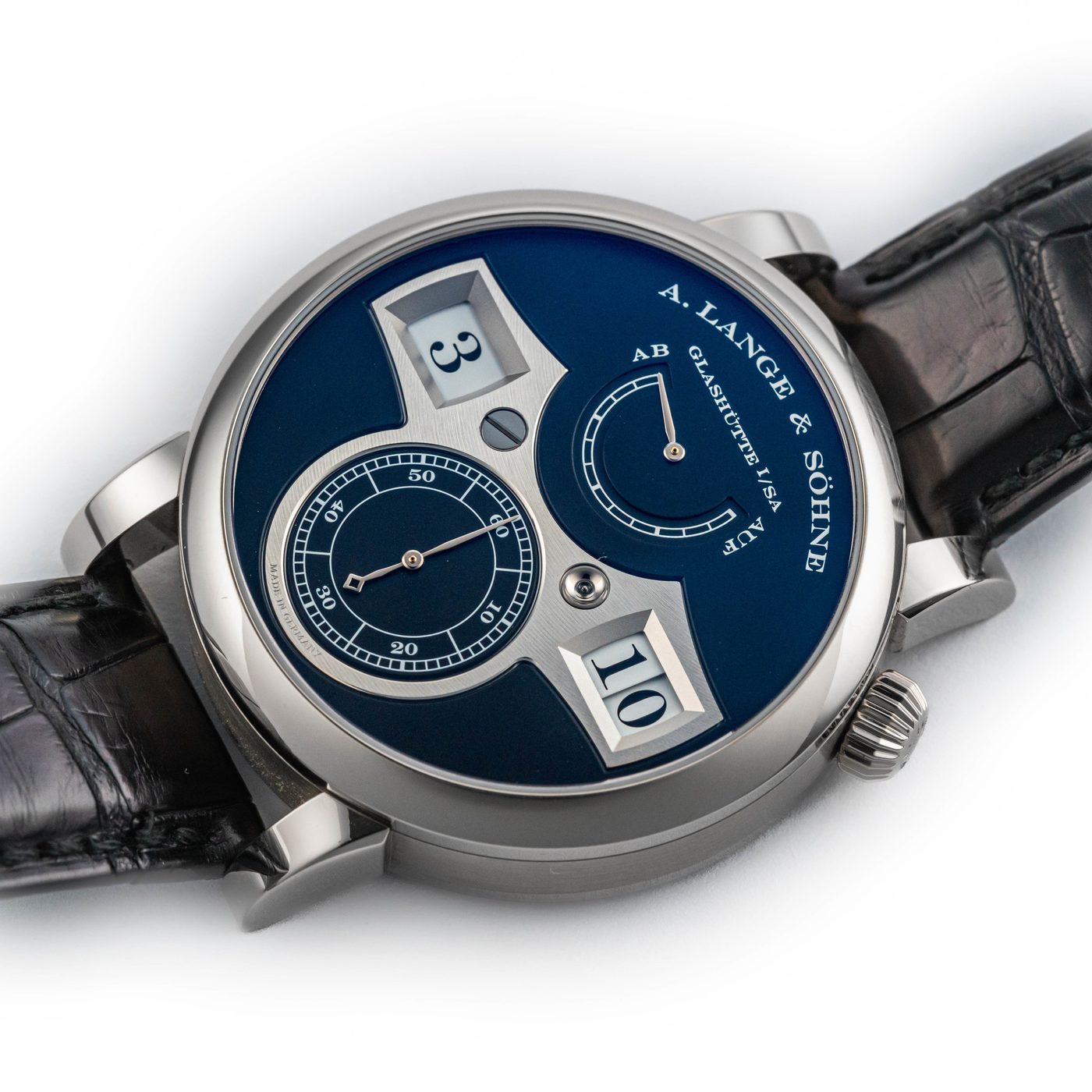
German reunification in 1990 opened Glashütte to private enterprise again, and within a few years the town had several new or refounded firms. On 7 December 1990 — exactly 145 years after his great-grandfather opened the first workshop — Walter Lange, the founder's great-grandson, refounded the family firm as Lange Uhren GmbH with the watch-industry executive Günter Blümlein, with help from Swiss makers including IWC and Jaeger-LeCoultre. The new A. Lange & Söhne presented its first four wristwatches in October 1994: the Lange 1, the Saxonia, the Arkade and the Tourbillon 'Pour le Mérite'. Since 2000 the firm has belonged to the Swiss Richemont group.
The Lange 1, with its off-centre dial and an outsize date in two windows inspired by the five-minute clock in the Semperoper, became the emblem of the revival. It was followed by the Datograph flyback chronograph in 1999 and the Zeitwerk of 2009, which shows the hours and minutes in jumping numerals. Lange makes all its movements itself, finishes them by hand, and still engraves every balance cock individually.
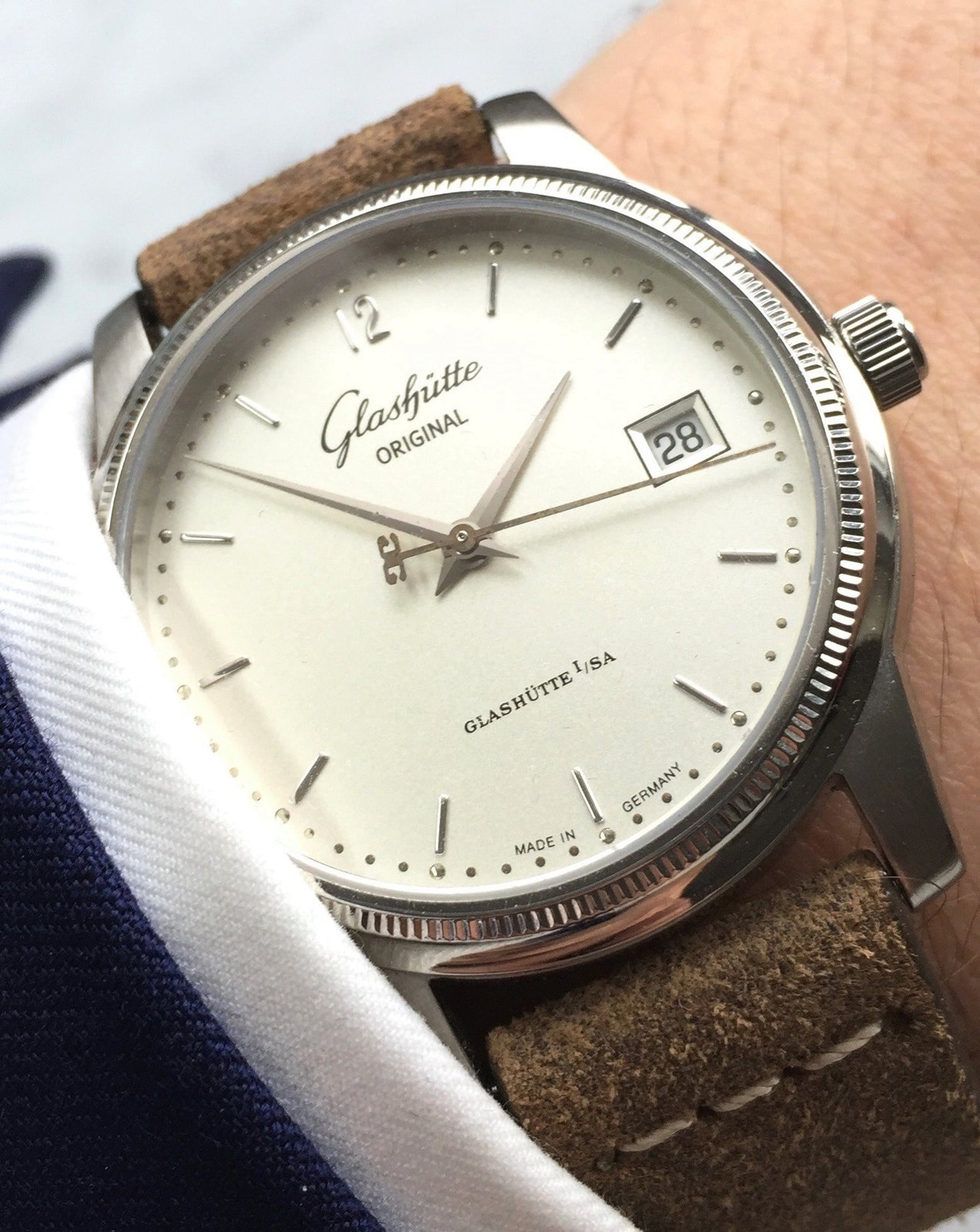
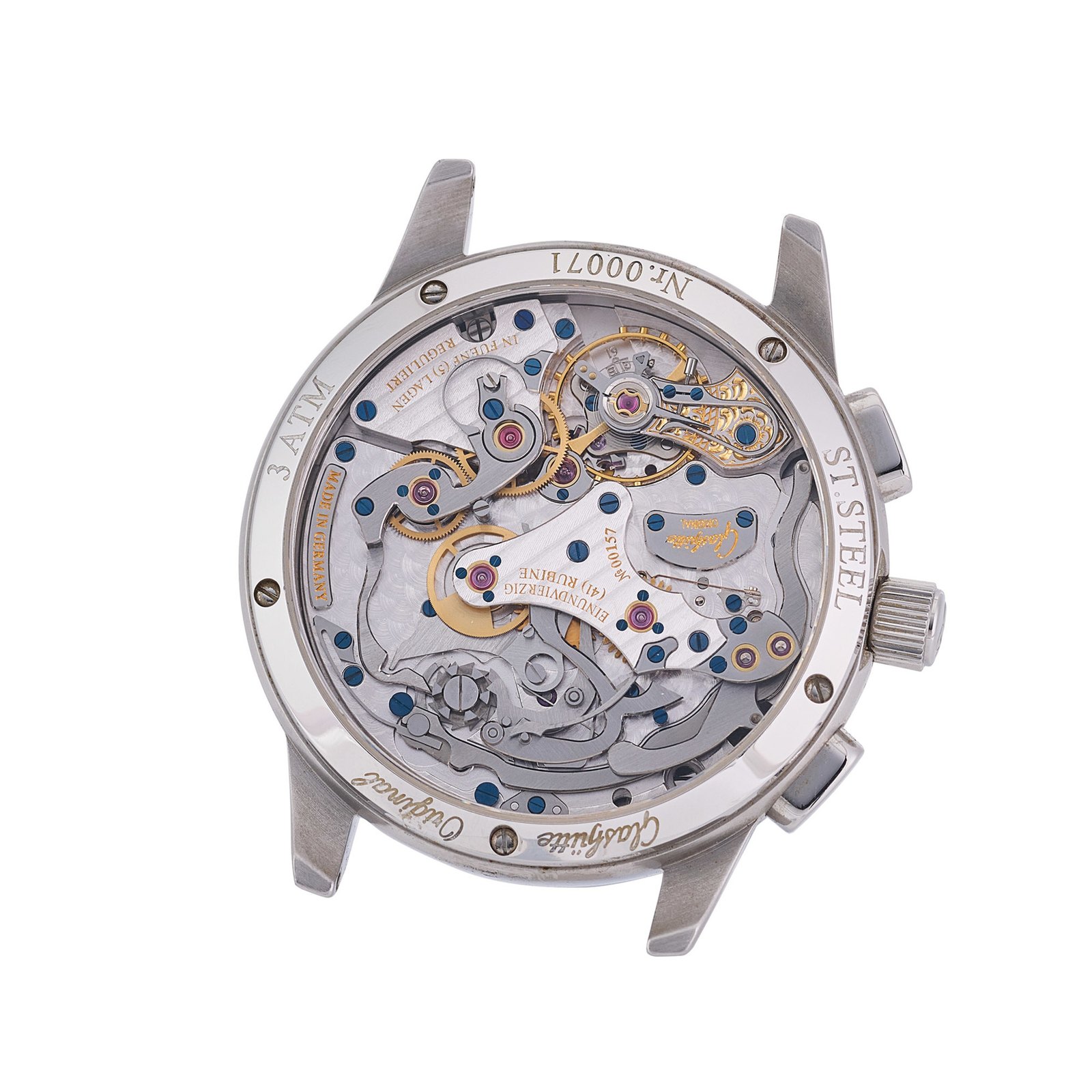
The rest of GUB was privatised as Glashütter Uhrenbetrieb GmbH. In 1994 the entrepreneur Heinz W. Pfeifer bought what was by then a small company of about 70 employees and relaunched it as Glashütte Original, which revived traditional high-grade watchmaking; the Swatch Group bought it in 2000. Glashütte Original makes most of its components itself and runs a watchmaking school named after Alfred Helwig. The Union name, first used by a Glashütte watch factory in the 1890s, was revived as a second brand and also belongs to the Swatch Group.
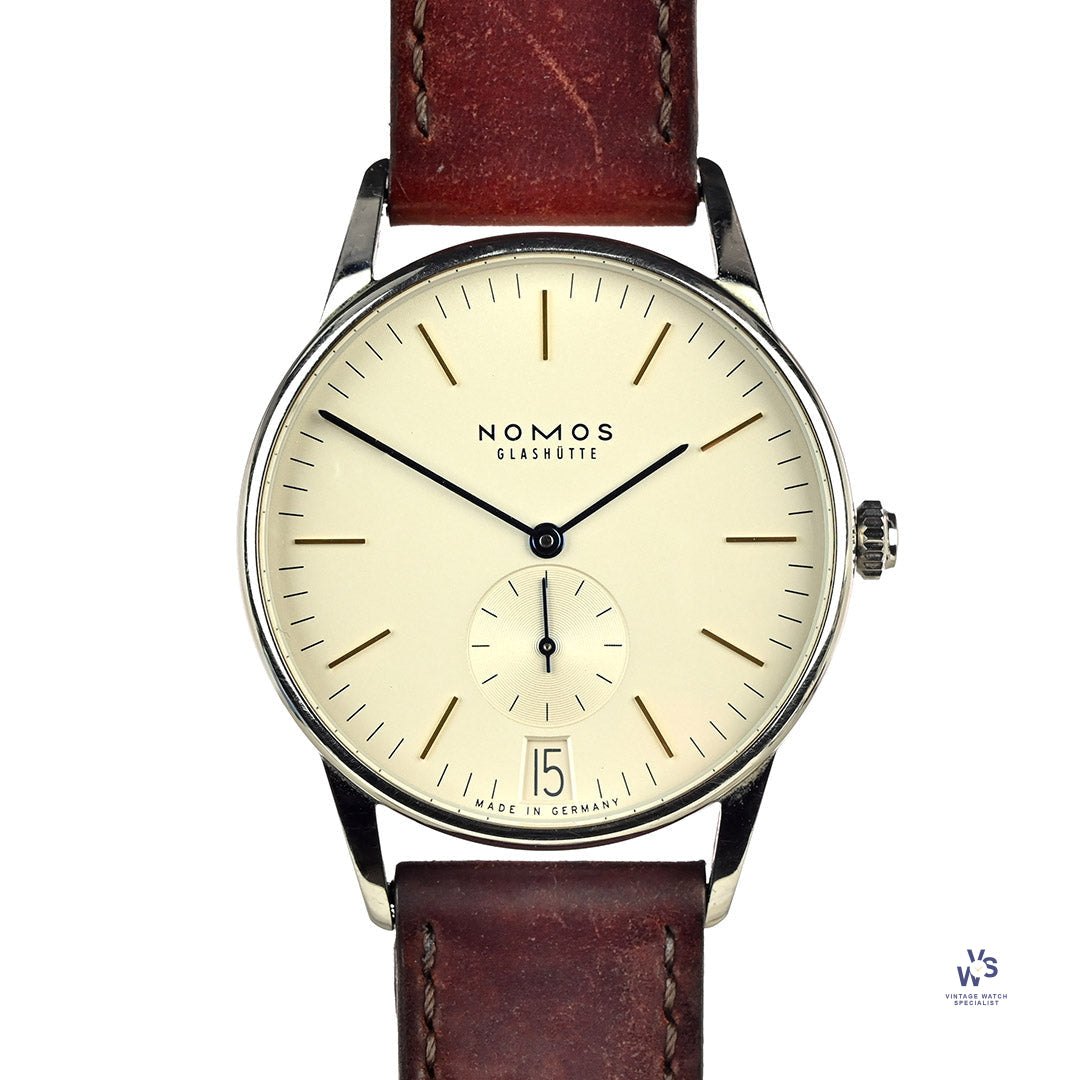
Nomos Glashütte was founded in January 1990, two months after the fall of the Berlin Wall, by Roland Schwertner, a photographer and computer specialist from Düsseldorf, who took the name of the short-lived company of 1906. Its first four models of 1992 — Tangente, Orion, Ludwig and Tetra — were designed by Susanne Günther in a spare, Bauhaus-influenced style. Until 2005 its hand-wound movements were based on the Swiss Peseux 7001; since then Nomos has used its own calibres, and in 2014 it introduced its own balance and escapement assembly, the 'swing system'. It makes around 20,000 watches a year.
Other names returned too. Hans-Jürgen Mühle, whose family firm had been nationalised in 1972 and absorbed into GUB in 1980, re-registered it in 1994 as Mühle-Glashütte, making marine chronometers and nautical instruments and, from 1996, wristwatches. Tutima opened a Glashütte branch in 2011, returning to the town its predecessors had left in 1945. Moritz Grossmann was revived as a brand in 2008, and several smaller workshops have opened since. Wempe, the Hamburg jeweller, runs a chronometer testing station in the former Glashütte observatory.
Timeline
| Year | Event |
|---|---|
| 1845 | Ferdinand Adolph Lange opens his workshop in Glashütte on 7 December with a Saxon government loan |
| 1852 | Julius Assmann founds his lever-watch factory |
| 1855 | Moritz Grossmann founds his factory after returning from London and Scandinavia |
| 1864 | The three-quarter plate appears in Lange's watches |
| 1868 | Richard Lange joins his father; the firm becomes A. Lange & Söhne. Robert Mühle founds his tool works |
| 1875 | Ludwig Strasser and Gustav Rohde found Strasser & Rohde for precision clocks and instruments |
| 1878 | The German watchmaking school opens on 1 May |
| 1906–1910 | Lange's lawsuit ends the first Nomos company's sale of Swiss watches as 'Glashütte' |
| 1918 | DPUG founded for machine production; bankrupt in 1925 |
| 1920 | Alfred Helwig devises the flying tourbillon |
| 1926 | UROFA and UFAG founded; UFAG later sells wristwatches as Tutima |
| 1941 | UROFA calibre 59 pilot's chronographs delivered to the Luftwaffe |
| 1945 | Glashütte bombed on 8 May; machinery taken to the Soviet Union |
| 1951 | The firms are merged into VEB Glashütter Uhrenbetriebe (GUB) |
| 1965–1979 | GUB makes the Spezimatic, its most numerous men's watch |
| 1990 | Nomos founded in January; Lange refounded on 7 December |
| 1994 | First new Lange wristwatches; GUB relaunched as Glashütte Original; Mühle re-registered |
| 2000 | Lange joins Richemont; Glashütte Original joins the Swatch Group |
| 2008 | The German Watch Museum Glashütte opens in the old school building; Moritz Grossmann revived |
Questions collectors ask
Is an old 'Glashütte' watch always a Lange?
No. Before 1951 the town had many makers — Lange, Assmann, Grossmann, Union, DPUG, UROFA and UFAG among them — and from 1951 to 1990 every watch made there came from GUB. Read the signature on the movement as well as the dial, and compare it with the firm's known calibres. A dial reading 'System Glashütte' indicates a watch made elsewhere in imitation of the Glashütte style.
How can I date a Lange pocket watch?
Lange movements and cases are numbered, and the firm's archive, which survives in Glashütte, records when many of them were made and sold. A. Lange & Söhne offers archive extracts for historic watches, and several of the watches above come with one. The dial signature — 'Adolph Lange, Dresden', 'A. Lange & Söhne Glashütte b/Dresden', later 'Glashütte i/Sa.' — gives a first indication.
Why are German watches so often three-quarter plate?
Because the three-quarter plate became the defining Glashütte construction in the 1860s and was kept as a mark of the town's identity, even in GUB's industrial calibres. Modern Glashütte firms use it as a deliberate link with that tradition, together with German-silver plates, gold chatons and engraved balance cocks.
- Explore the Atlas profiles of A. Lange & Söhne, Glashütte Original and the German watchmaking school.
- See how the lever escapement and the tourbillon work in the Atlas encyclopedia and simulation lab.
- Search the catalogue for 'Glashütte' to browse pocket watches, observation watches and GUB wristwatches.
Sources & further reading
- A. Lange & Söhne: Eine Uhrmacher-Dynastie aus Dresden — Reinhard Meis, Callwey (Munich), 1997; 3rd ed. 2001.
- Die ersten 25 Jahre Glashütter Uhrenindustrie 1845–1870 — Jürgen Peter, Self-published, 2020.
- Lexikon der Deutschen Uhrenindustrie 1850–1980 — Hans-Heinrich Schmid, Deutsche Gesellschaft für Chronometrie, 3rd ed. 2017.
- Ludwig Strasser: Ein Uhrenfachmann aus Glashütte. Präzisionsuhren aus Sachsen — Hans-Jochen Kummer, Callwey (Munich), 1998.
- Prize Essay on the Construction of a Simple and Mechanically Perfect Watch — Moritz Grossmann, British Horological Institute (London), 1880 (prize); later editions.