
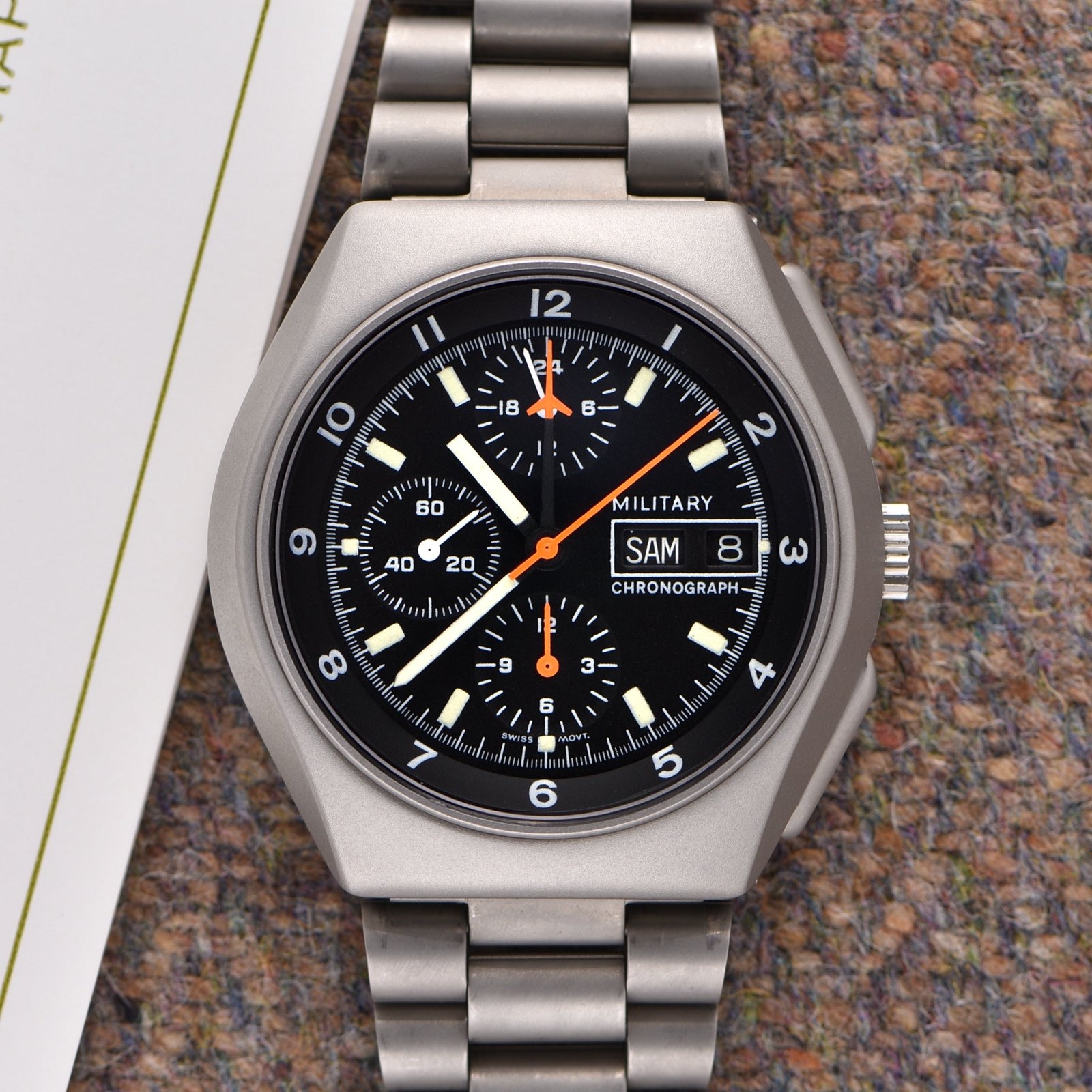
Wristwatches · Wristwatch
Tutima Military Chronograph - Papers & Manual **MINT**, 1985
- Maker / attribution
- Tutima (maker)
- Date
- 1985
- Historical period
- Quartz Revolution (1969 – 1990)
- Country of origin
- Germany
- Object type
- Wristwatch
- Dimensions
- Case 42.7 mm
- Stock no.
- Product 7388675276983
- Credit line
- Dealer listing, Huntington Company (product 7388675276983)
- Catalogue title (original)
- 1985 Tutima Military Chronograph - Papers & Manual **MINT** (English)
View the source record (dealer listing) ↗ (opens another website in a new tab)Suggest a correction
Record summary
Catalogued by Huntington Company (dealer) (stock number Product 7388675276983), this is a wristwatch by Tutima, made in Germany, dated 1985. The Atlas places it in the Quartz Revolution period (1969 – 1990) of its Wristwatches collection. Recorded dimensions: Case 42.7 mm. The record is illustrated with 6 photographs.
Assembled from the source record's structured fields. Dates and attributions are given as the source states them; where a field is missing the Atlas leaves it blank rather than estimating.
Catalogue description
Dealer description — Huntington Company
Reference 798-01 Papers, Manual Specifications Year: 1985 Model: Military Chronograph Case Diameter: 42.7mm Lug to Lug: 44mm Case: Stainless Steel Condition: No significant wear as seen Dial: Black Movement: Automatic Condition The case has almost zero signs of wear. The bracelet has all its links and is in just as good of condition. The dial is perfect with very little aging to the lume. The watch houses the Lemania 5100 which is fully functional. The Story In 1982, the West German Luftwaffe needed to equip its pilots for NATO's containment policy to prevent communism. The Air Force developed criteria for the perfect pilot's chronograph and awarded the contract to German watchmakers, including Tutima, Arctos, and Tengler. Tutima debuted the reference 798 chronograph in 1984 and quickly won another contract to supply not only the German air force but also other NATO members, making it the "NATO" chronograph. The 798 was the last true purpose-built mechanical pilot's watch, likely chosen due to battery life concerns. The 798 was designed to be an extension of cockpit instrumentation, with a minimalist dial and short lugs influenced by the Orfina Porsche Design Chronograph 1. The watch was water resistant to 100 m and had integrated pushers for easier operation with gloves. Although not a revolutionary innovation, the 798 represents the pinnacle of mechanical pilot's watch design and functionality. The Lemania 5100 is a legendary automatic chronograph with a vertical clutch and stamped column wheel, designed for mass production, reliability, and durability. Introduced in 1974, it has been used by numerous brands, including Omega, Heuer, Tutima, Sinn, Orfina, Fortis, Paul Picot, and Alain Silberstein. The Lemania 5100 is the mechanical equivalent of the Casio G-Shock, with wider tolerances and Delrin components for shock absorption. It was the first Swiss vertical clutch chronograph in almost 40 years, and it was the first Swiss-made, automatic vertical clutch chronograph movement ever. The end of the 798 came when Lemania stopped making the cal. 5100 entirely in the early 2000s. The market for mechanical luxury watches began to take shape, and Lemania started to concentrate on the manufacture of tourbillons and other high-end mechanical movements. In 1992, Lemania was acquired by Breguet, accelerating the company's move upmarket. In the early 2000s, Lemania decided to cease production of the cal. 5100 entirely, as quartz watches had become reliable and inexpensive, making it no longer necessary for military and police units to continue issuing mechanical chronographs. The Brand Tutima, a company founded in 1927 by Ernst Kurtz, was initially known for its high-grade timepieces made by UROFA and UFAG. The company began by producing pocket watches but quickly switched to wristwatches, eventually competing with Swiss counterparts. By the end of WW II, Tutima had produced around 30,000 Flieger Chronographs, which are highly prized by collectors today. The Glashütte watch industry was nationalized when the German Democratic Republic (now East Germany) came into being in 1949. The former independent watch companies were combined into a "state combine," based mainly around the factories of UROFA and UFAG. Under Delecate's direction, Tutima survived the quartz crisis by making instrument watches using Swiss movements, a practice that served the company well up to the present day. In 1983, Tutima won a contract with the German Air Force and began working on the NATO, famously using the Lemania 5100 as the base caliber. The NATO was launched two years later and formed the basis of Tutima's Military line. The Military chronograph has been available in various configurations during the intervening years, including with and without rotating bezel, various inner bezel markings, with gold bezel and center bracelet links, and in a unique "Commando" form featuring only one sub-dial, the 12-hour totalizer. During this time, Tutima manufactured the Classic line, inspired by the original Tutima Flieger Chronograph from the WW II era. The new Grand Flieger line introduced at BASELWORLD last spring continues this tradition. Tutima also manufactured the FX line of watches, inspired by flight but in an elegant, updated modern style. The new Grand Flieger line introduced at BASELWORLD last spring continues this tradition. After German reunification in the early 1990s, Delecate went back to Glashütte to investigate moving the company back. In 2005, Tutima signed an agreement to purchase a building there and began full manufacturing operations back in Glashütte.
Historical context
Quartz Revolution (1969 – 1990)
Seiko's Astron begins mass quartz timekeeping; traditional industries contract sharply.
Quartz and digital watches transformed the market after 1969. Swiss employment collapsed, Japanese and Hong Kong production soared, and the Swatch (1983) helped the Swiss industry recover; mechanical watches survived as luxury goods.
Read the period in the timelineMore wristwatches from this periodEarlier: Modern Mechanical Horology
Atlas type guide
Chronographs and split-seconds watches
A chronograph is a watch with an additional seconds hand that can be started, stopped and returned to zero independently of the timekeeping. Louis Moinet built an early example in 1816 and Nicolas Rieussec a recording 'chronographe' in 1821; Adolphe Nicole's heart-shaped reset cam (patented 1862) made the modern return-to-zero possible. Split-seconds (rattrapante) chronographs add a second hand that can be stopped for intermediate times; flyback chronographs restart instantly.
Chronographs were essential tools for doctors (pulsometer scales), artillery (telemeter), engineers and sport. In wristwatches, Valjoux, Venus, Lemania and later the automatic chronographs of 1969 (Zenith El Primero, the Chronomatic Calibre 11 group and Seiko 6139) are milestones.
What to look for
- Push-pieces on the case band or a single button in the crown (monopusher).
- Subsidiary registers for minutes and hours; tachymeter, telemeter or pulsometer scales.
- Column wheel versus cam control visible in the movement.
- Calibre markings of specialist makers (Valjoux, Lemania, Venus, Landeron).
Dating clues
- Pocket chronographs with heart cam reset: after 1862.
- Wrist chronographs: from c. 1910; two-button designs from the 1930s.
- Automatic chronographs: from 1969.
General guidance written by the Atlas editors about this kind of object. It is not a statement about this particular piece; for that, rely on the source record above and on physical examination.
Read next:Flyback chronographChronograph
Related records
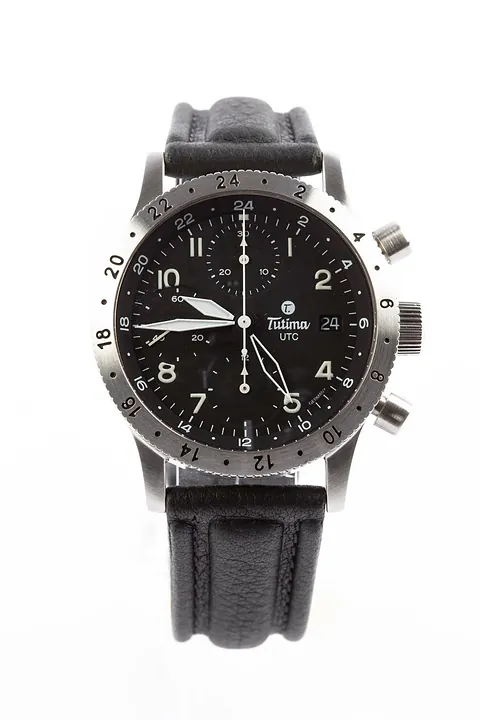
Wristwatches · 2001
Wristwatch by Tutima, Germany, 2001
German Clock Museum
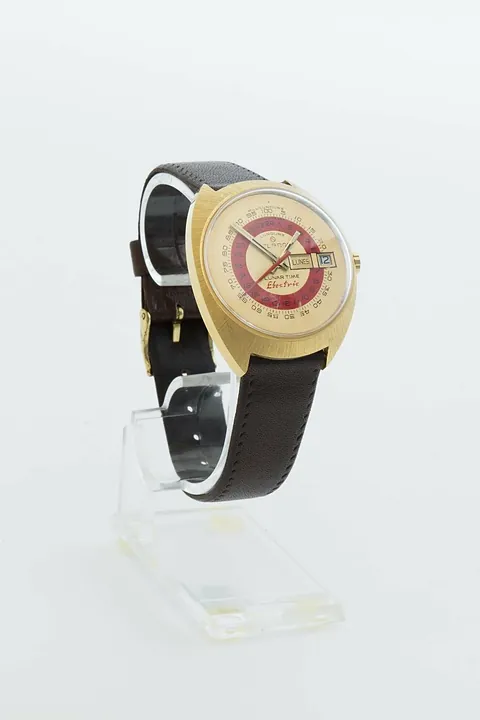
Wristwatches · 1970
Wristwatch by Helbros, Germany, 1970
German Clock Museum
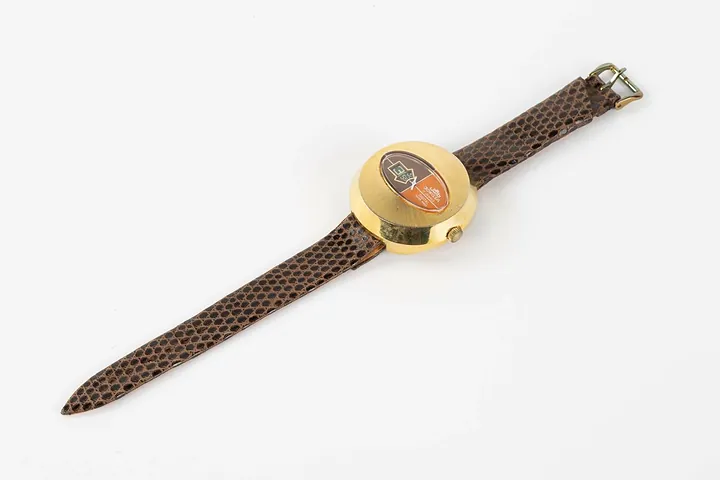
Wristwatches · c. 1970
Wristwatch by JWB (Josef Wyss Bettlach), Germany, c. 1970
German Clock Museum
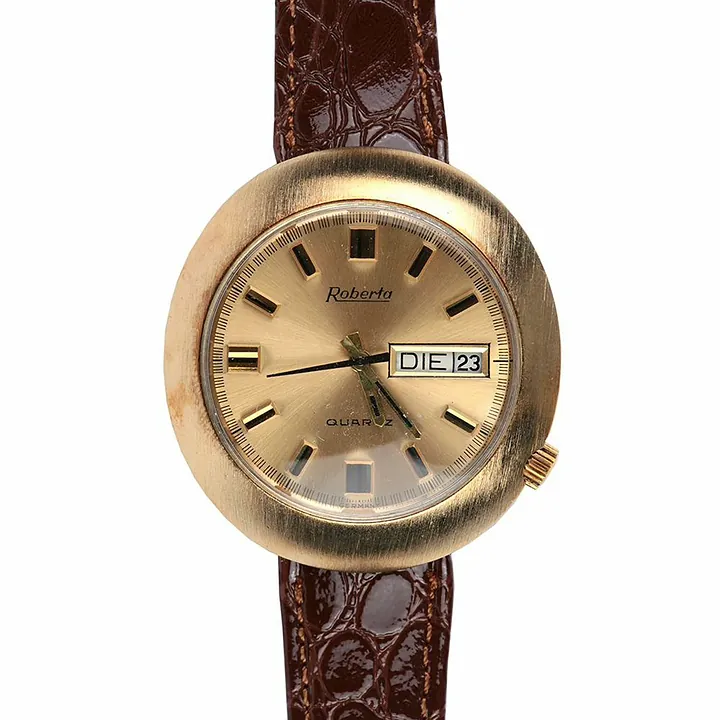
Wristwatches · 1972
Wristwatch by PUW Pforzheimer Uhrenrohwerke, Germany, 1972
German Clock Museum
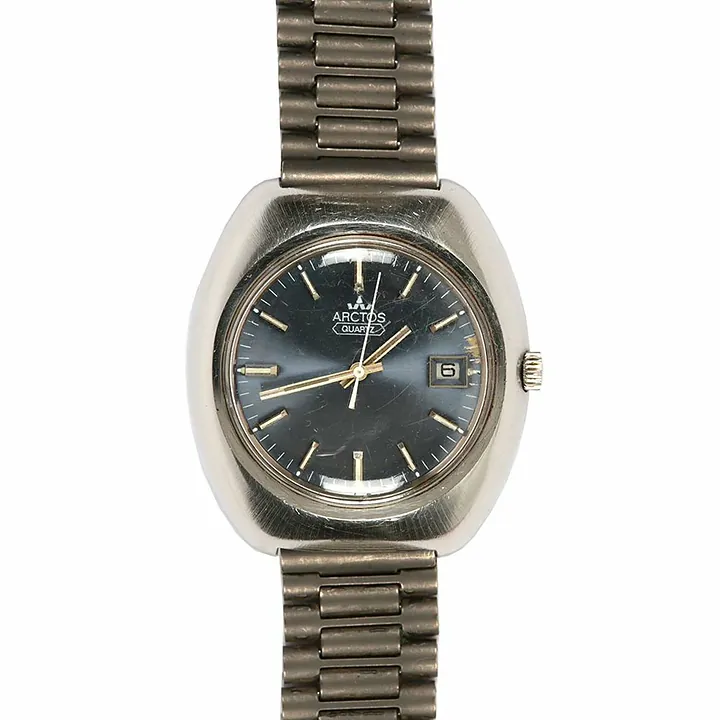
Wristwatches · 1972
Wristwatch by Weber und Aeschbach, Germany, 1972
German Clock Museum
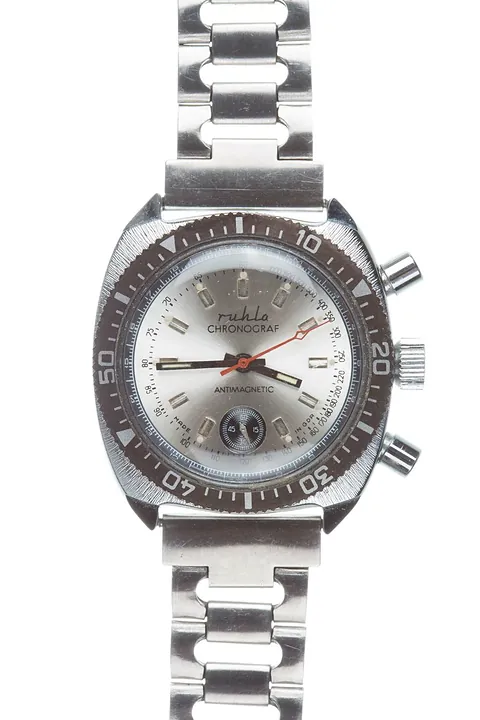
Wristwatches · c. 1975
Wristwatch, Germany, c. 1975
German Clock Museum
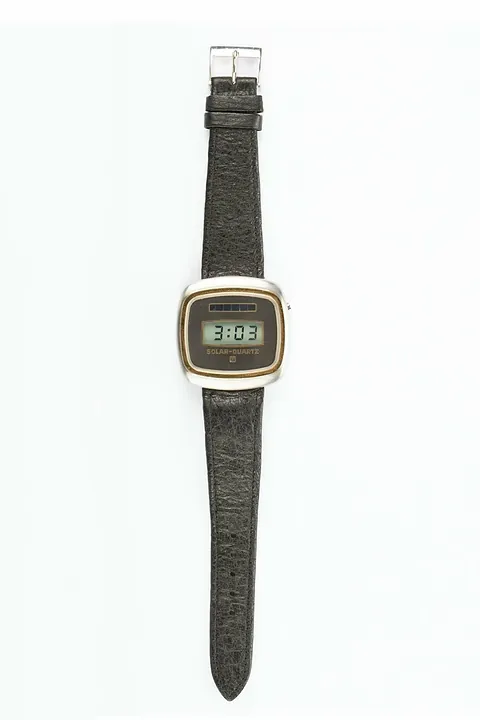
Wristwatches · 1976
Wristwatch by Cristalonic, Germany, 1976
German Clock Museum
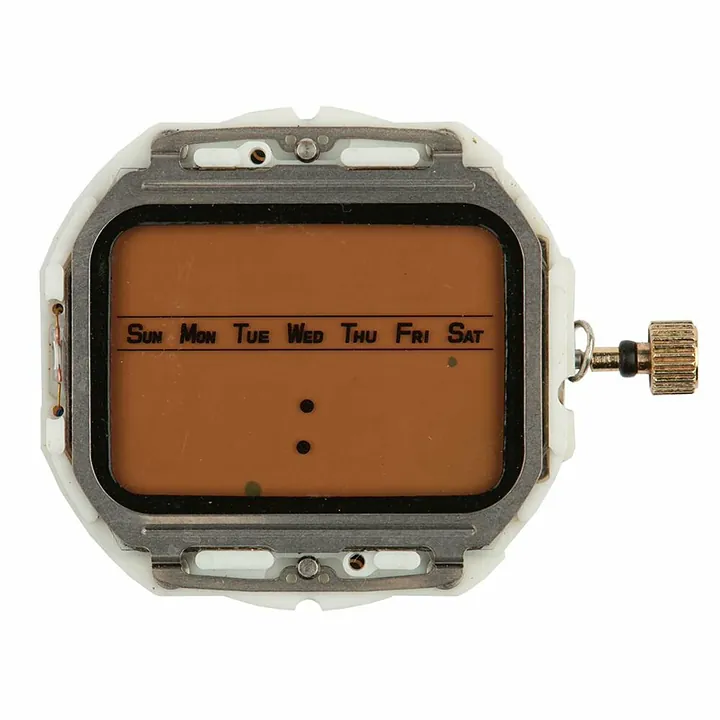
Wristwatches · 1977
Wristwatch by Fixoflex, Germany, 1977
German Clock Museum