Manufacturer
Tutima
Also recorded as: Tutima Glashütte · Tutima Glashutte · Tutima Uhrenfabrik · Tutima Ganderkesee
The brand name of Glashütte's interwar wristwatch makers UROFA and UFAG, best known for the 1941 pilot's chronograph; continued in West Germany after the war and back in Glashütte since 2008–2011.
In 1927, after the collapse of an earlier Glashütte watch company in the inflation crisis, two new firms were founded in the town: Uhren-Rohwerke-Fabrik Glashütte AG (UROFA), which made movements, and Uhrenfabrik Glashütte AG (UFAG), which made finished watches. Their chairman and managing director, the lawyer Dr Ernst Kurtz, saw that the future lay with the wristwatch rather than the pocket watch. The best of their watches were given the name Tutima, from the Latin 'tutus', safe or secure.
The most famous of them is the pilot's chronograph of 1941, built around the UROFA calibre 59 — a robust flyback chronograph movement — and supplied to German air-force crews. In the closing days of the Second World War the Glashütte factories were bombed, and after the war the firms were expropriated and merged into the state watch combine GUB. Kurtz went west and continued making watches; the Tutima name was carried on in West Germany, and from about 1960 the company was run by the Delecate family in Ganderkesee, near Bremen.
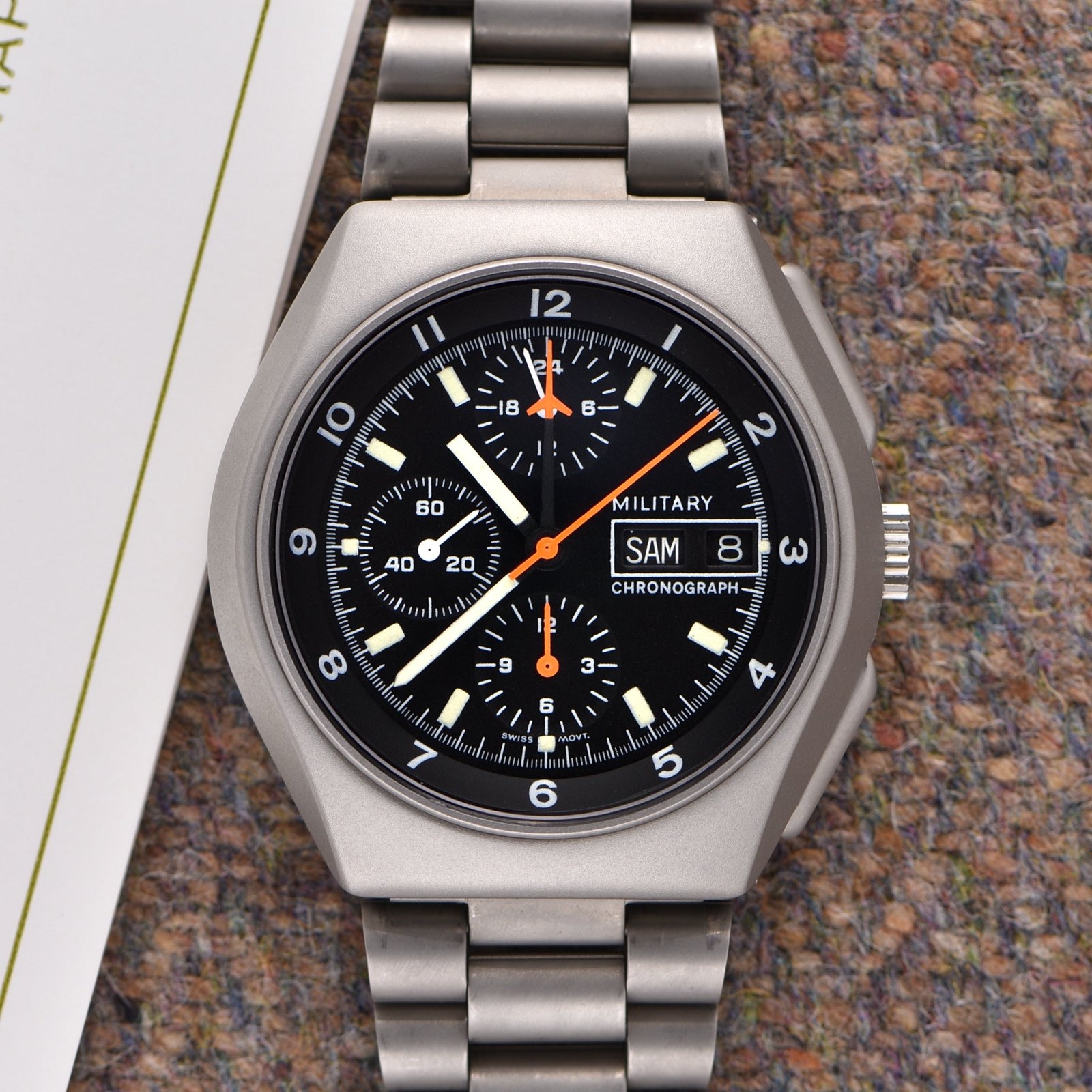
In the 1980s Tutima supplied a military chronograph using the Lemania 5100 movement — robust, with a central minute counter and day-date — which was adopted by German armed-forces pilots and is the best known of its modern watches; the catalogue's reference 798 example dates from 1985. From 2008 the company began setting up again in Glashütte, opening its manufacture there in 2011, the year it presented the Hommage minute repeater, which it describes as the first minute repeater developed and made entirely in Glashütte. Since 2013 its collections (Saxon One, Grand Flieger, M2 and Patria) have again been made there.
- Country
- Germany
- City / centre
- Glashütte, Saxony (Ganderkesee, Lower Saxony, c. 1960–2011)
- Founded
- 1927 (as a brand of UROFA/UFAG)
- Status
- Active (independent)
- Key people
- Dr Ernst Kurtz (chairman of UROFA and UFAG); Delecate family (owners from c. 1960)
Innovations & specialities
- Pilot's flyback chronograph with UROFA calibre 59 (1941)
- Military chronograph with Lemania 5100 for German armed-forces pilots (1980s)
- Hommage minute repeater (2011), described by the maker as the first developed and made entirely in Glashütte
Timeline
- 1927UROFA and UFAG founded in Glashütte; Tutima name for the best watches
- 1941Pilot's chronograph with UROFA calibre 59
- 1945Glashütte factories bombed; firms later merged into GUB
- c. 1960Delecate family runs the company in Ganderkesee
- 1985Military chronograph ref. 798 (Lemania 5100) in production
- 2008Return to Glashütte begins
- 2011Glashütte manufacture opens; Hommage minute repeater
- 2013Saxon One, Grand Flieger, M2 and Patria collections
Catalogue records naming Tutima
Open in the catalogue →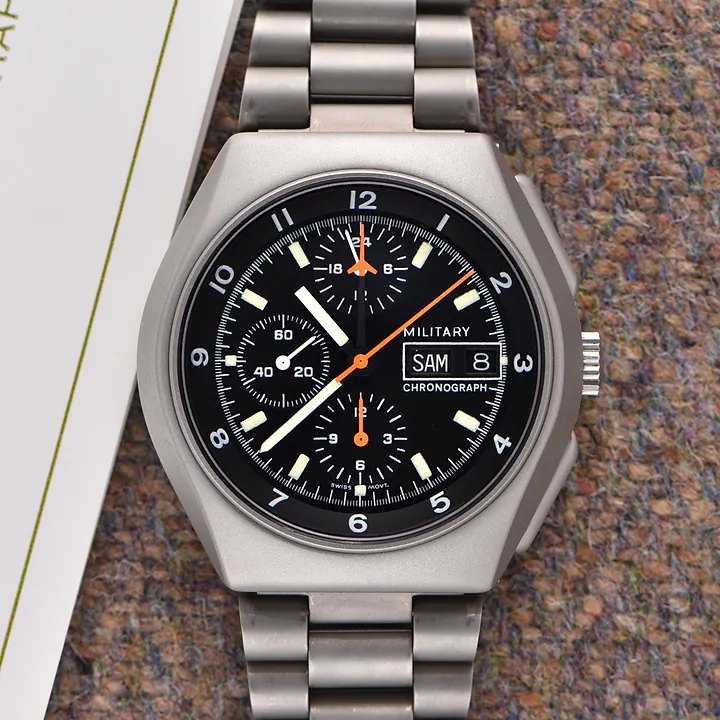
Wristwatches · 1985
Tutima Military Chronograph - Papers & Manual **MINT**, 1985
Huntington Company (dealer)
Wristwatches · 2001
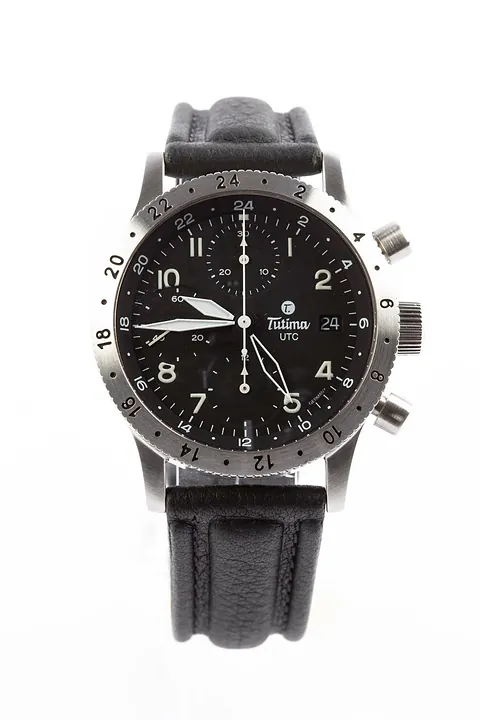
Wristwatch by Tutima, Germany, 2001
German Clock Museum
Matched by name in the source catalogues. Attributions are as stated by each holding institution or auction house.
Read and see more
Magazine features
- Glashütte: The History of German Fine Watchmaking, from Lange to Today
How a poor mining town in the Ore Mountains became Germany's watchmaking capital: Ferdinand Adolph Lange's workshop of 1845, the three-quarter plate, the watchmaking school, the observation watches of the Second World War, forty years as the state-owned GUB, and the revival of Lange, Glashütte Original and Nomos after 1990 — told through the watches themselves.
Where to see related work
- Deutsches Uhrenmuseum Glashütte
Glashütte, Germany
Listed because the directory entry names Tutima; displays change, so check with the institution before visiting.