
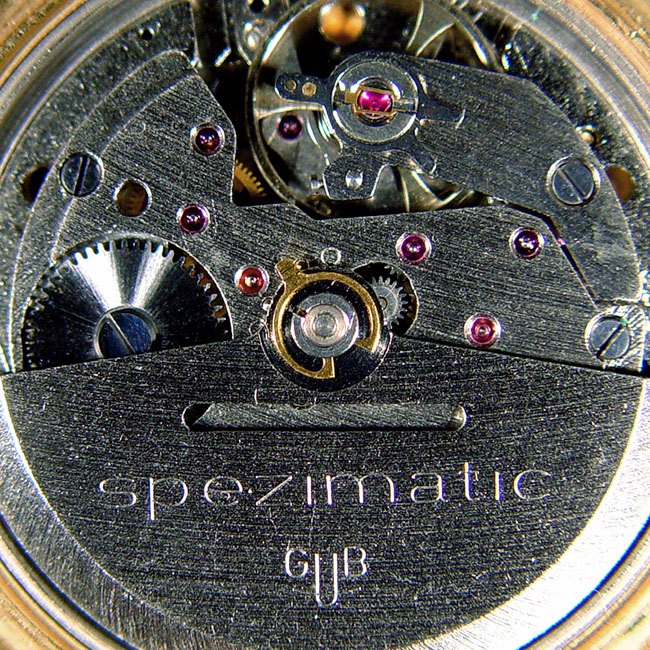
Calibre record · Automatic
GUB Spezimatic (calibres 74 and 75)
East Germany's standard automatic: almost three million calibre 74 (no date) and 75 (date) movements were made at Glashütte, the most numerous Glashütte men's watch.
- Manufacturer
- Glashütte Original
- Type
- Automatic
- Winding
- Automatic (rotor)
- Production
- c. 1964/65–1979/80 (sources differ)
- Country
- Germany (GDR)
- Diameter
- 28 mm (12½ lignes)
- Height
- c. 5.1–5.6 mm (sources differ)
- Jewels
- 26
- Frequency
- 18,000 vph (2.5 Hz)
- Power reserve
- Undocumented here
- Oscillator / escapement
- Detached lever escapement
- Complications
- Centre seconds; date (calibre 75)
Figures are those commonly published for the standard version; individual versions and grades differ. “Undocumented here” means the value has not yet been confirmed for this record.
How it is built
A thin automatic calibre (12½ lignes, 28 mm) in which a large three-quarter plate carries both the going train and the automatic winding — typical of Glashütte, though not the easiest arrangement to service. The minute wheel and centre seconds are driven indirectly, leaving room for a large Glucydur balance beating at 18,000 vibrations per hour.
The barrel can be taken out without dismantling the movement, and the balance sits in GUB's own shock-protection settings. On the date version, calibre 75, the calendar works lie under a plastic cover on the dial side.
History
GUB developed the Spezimatic to succeed its first automatic calibres, the 67 and 68 of the 1960s. It was flat for its time yet kept the Glashütte habit of a large three-quarter plate, here carrying both the going train and the automatic winding. Calibre 75 was later renumbered 06-26. Spezimatic watches were sold in East Germany and exported to the West, including through the Quelle mail-order catalogue under the 'Meister-Anker' name; the Spezichron calibres replaced it from about 1979.
Watches fitted with it
- Glashütte Spezimatic men's wristwatches of the 1960s and 1970s
- 'Meister-Anker' watches sold by the West German mail-order house Quelle
The numbers explained
- 18,000 vibrations per hour means the balance makes 5 beats (ticks) every second — 2.5 complete back-and-forth oscillations, or 2.5 Hz.
- A sweeping seconds hand therefore advances in 5 small steps per second.
- That is 432,000 beats a day. A watch that gains one second a day is out by about 1 part in 86,400 — roughly 11.6 parts per million.
- Faster balances resist knocks and changes of position better but wear their pivots and need fresh oil sooner.
Convert beat rates and daily error with the Atlas tools · See a balance and escapement in the lab
How to recognise it
- 'Spezimatic' on the dial, often with 'Glashütte' and '26 Rubis'; GUB marks on the movement and rotor.
- A three-digit production code on the main plate: the first two digits give the year and the third the quarter.
- Early movements, to about 1968, have a two-arm balance; later ones a three-arm balance.
- Date normally at 3 o'clock on calibre 75; a small number have the date at 6.
For collectors
Spezimatics are plentiful and inexpensive, so condition is everything. Check the production code against the claimed date, ask whether the dial has been refinished (many have), and be aware that the plastic date cover becomes brittle with age and is a common failure on calibre 75.
Versions and derivatives
| Calibre | Difference |
|---|---|
| GUB 74 | Without date. |
| GUB 75 (later 06-26) | With date; the same base calibre. |
Compared with related calibres
| Calibre | Type | Frequency | Jewels | Power reserve | Diameter | Production |
|---|---|---|---|---|---|---|
| GUB Spezimatic (calibres 74 and 75) | Automatic | 18,000 vph (2.5 Hz) | 26 | Undocumented here | 28 mm (12½ lignes) | c. 1964/65–1979/80 (sources differ) |
| ETA 2824-2 | Automatic | 28,800 vph (4 Hz) | 25 | c. 38 h (longer in later versions) | 25.6 mm (11½ lignes) | 1971 (2824), 2824-2 revision later |
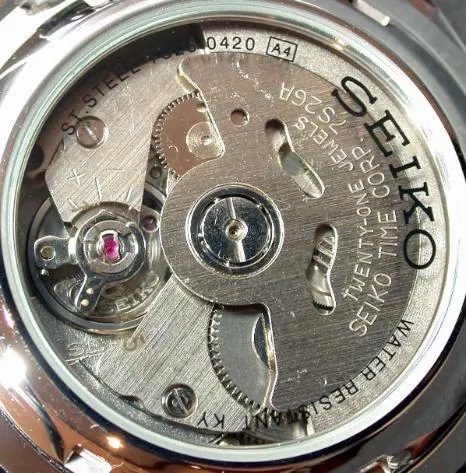
| Seiko calibre 7S26 | Automatic | 21,600 vph (3 Hz) | 21 | c. 41 h | 27.4 mm | 1996–2010s |
Mechanisms in this calibre
Related calibres
Related records in the catalogue
Records whose titles name this calibre or a model family that used it. Earlier or later examples of a model may contain a different calibre, so check each record's description for the movement actually fitted.
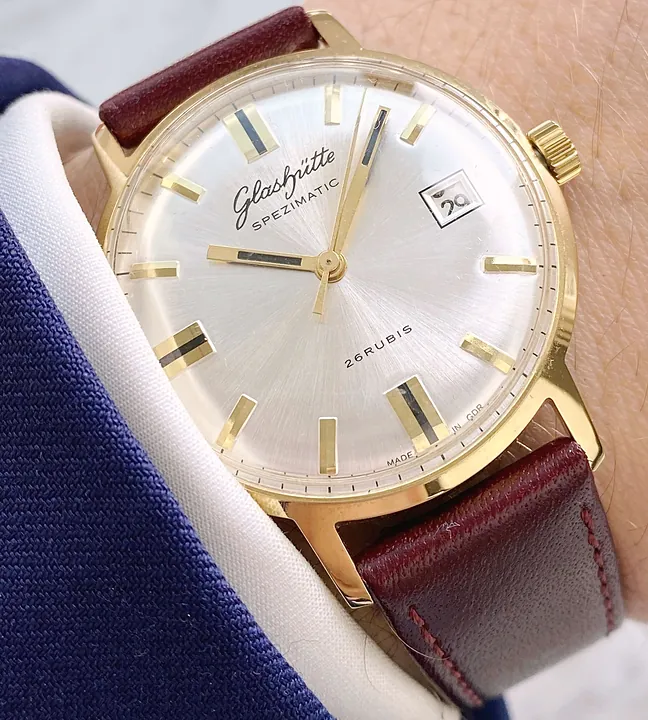
Wristwatches · 1965
GUB Glashütte Automatic Fully Restored Spezimatic Date, 1965
Vintage Portfolio (dealer), Vienna
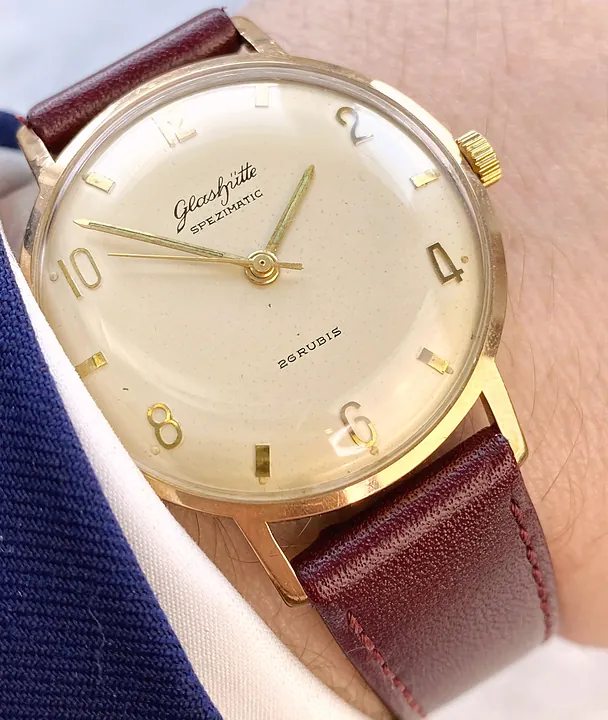
Wristwatches · 1968
GUB Glashütte Spezimatic Automatic Gold Plated, 1968
Vintage Portfolio (dealer), Vienna
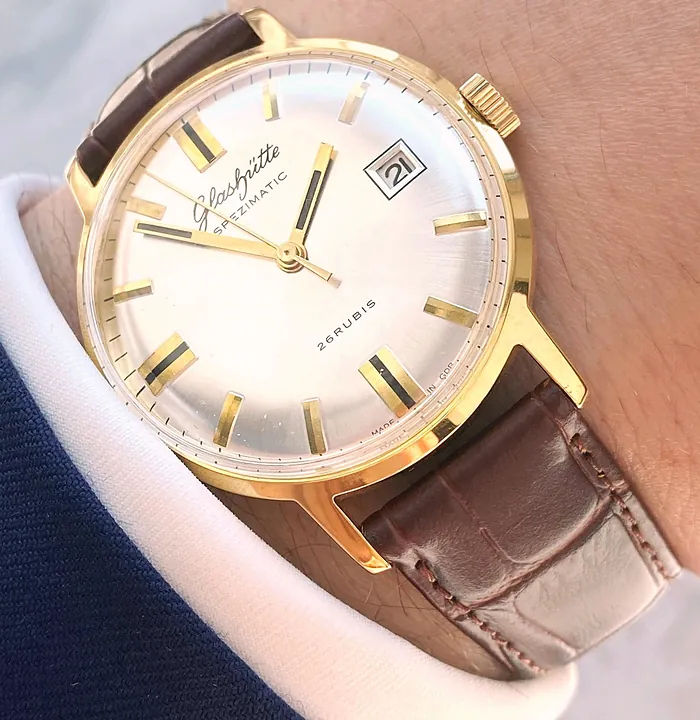
Wristwatches · 1969
Glashütte Spezimatic Automatic, 1969
Vintage Portfolio (dealer), Vienna
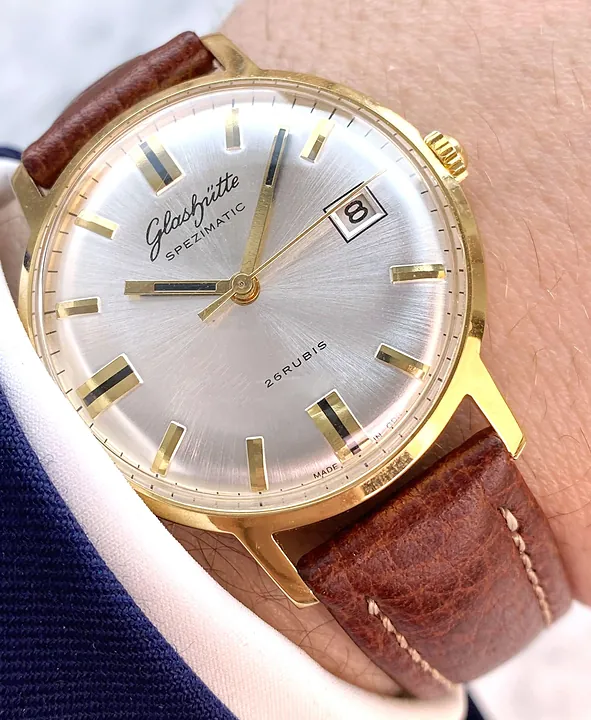
Wristwatches · 1969
Glashütte Spezimatic Automatic, 1969
Vintage Portfolio (dealer), Vienna
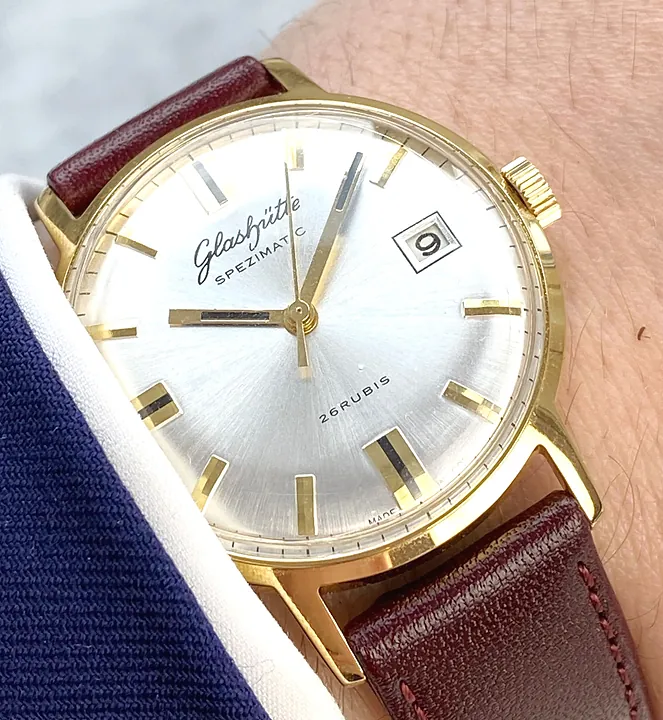
Wristwatches · 1969
Glashütte GUB Spezimatic Automatic, 1969
Vintage Portfolio (dealer), Vienna
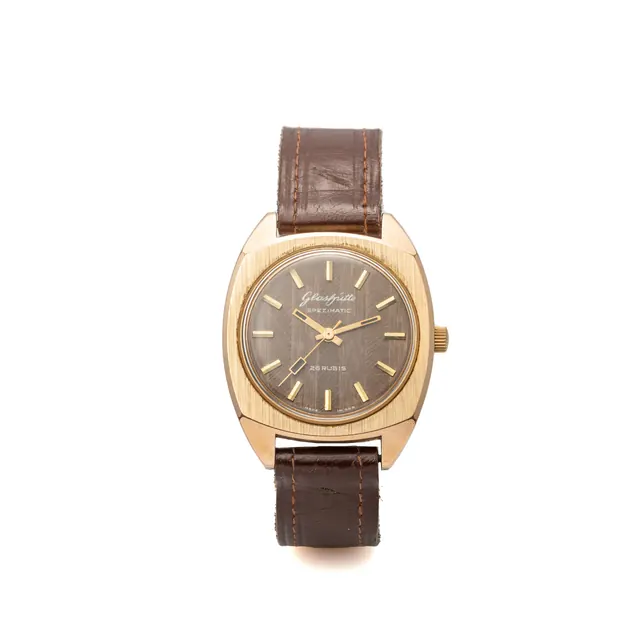
Wristwatches · c. 1970s
Glashütte wristwatch, Spezimatic, circa 1970's
Antiquorum auction archive, Geneva
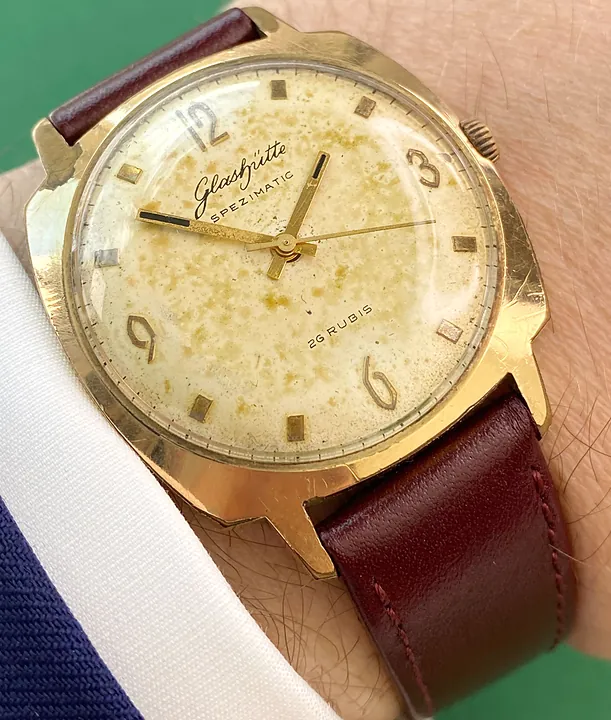
Wristwatches · 1970
GUB Glashütte Spezimatic Automatic, 1970
Vintage Portfolio (dealer), Vienna
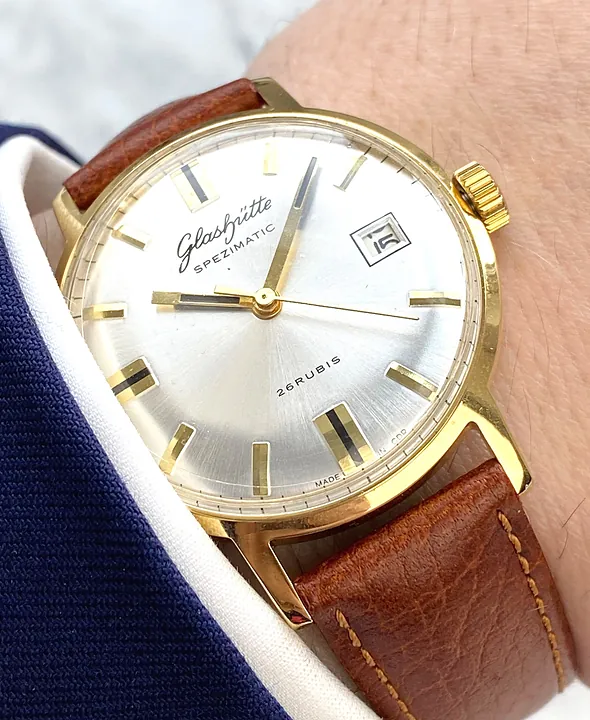
Wristwatches · 1970
GUB Glashütte Spezimatic Fully Restored Automatic, 1970
Vintage Portfolio (dealer), Vienna