
Wristwatches · Wristwatch
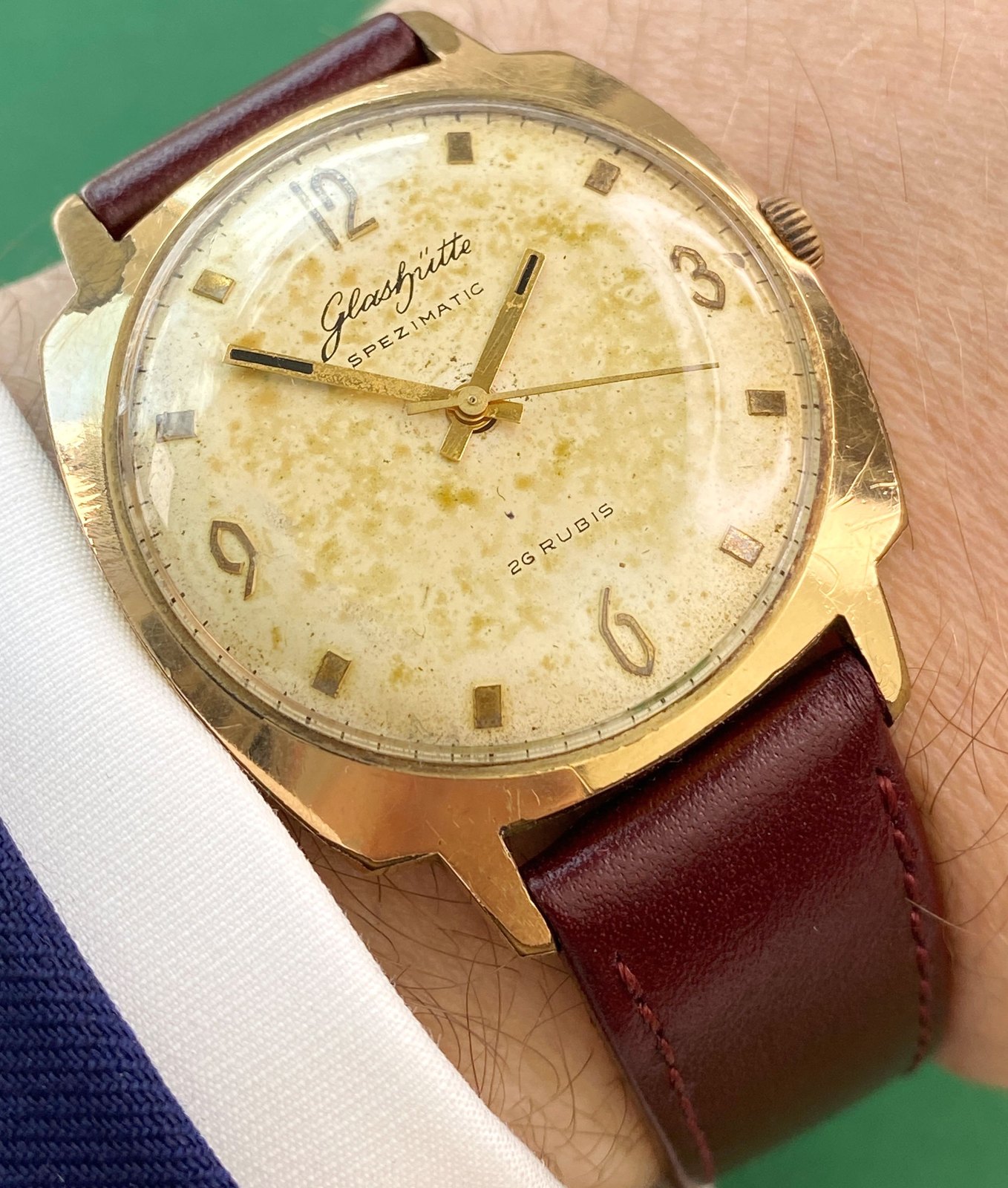
GUB Glashütte Spezimatic Automatic, 1970
- Maker / attribution
- GUB (maker)
- Date
- 1970
- Historical period
- Quartz Revolution (1969 – 1990)
- Country of origin
- Germany
- Object type
- Wristwatch
- Materials / technique
- Gold plated
- Dimensions
- Diameter 35 mm (without crown)
- Stock no.
- gm1528
- Credit line
- Dealer listing, Vintage Portfolio (gm1528)
- Catalogue title (original)
- Vintage GUB Glashütte Spezimatic Automatik Automatic Vintage (English)
View the source record (dealer listing) ↗ (opens another website in a new tab)Suggest a correction
Record summary
Catalogued by Vintage Portfolio (dealer), Vienna (stock number gm1528), this is a wristwatch by GUB, made in Germany, dated 1970. The Atlas places it in the Quartz Revolution period (1969 – 1990) of its Wristwatches collection. Materials and techniques recorded by the source: Gold plated. Recorded dimensions: Diameter 35 mm (without crown). The record is illustrated with 6 photographs.
Assembled from the source record's structured fields. Dates and attributions are given as the source states them; where a field is missing the Atlas leaves it blank rather than estimating.
Catalogue description
Dealer specification — Vintage Portfolio
Movement: automatic with centre seconds; Dial: gold-colored; Case: gold plated; Crown: Service (plain); Diameter: 35 mm (without crown); Strap: real leather (brown); Dial condition, as described by the dealer: The still factory original (non-refurbished) dial has slight patina.
Historical context
Quartz Revolution (1969 – 1990)
Seiko's Astron begins mass quartz timekeeping; traditional industries contract sharply.
Quartz and digital watches transformed the market after 1969. Swiss employment collapsed, Japanese and Hong Kong production soared, and the Swatch (1983) helped the Swiss industry recover; mechanical watches survived as luxury goods.
Read the period in the timelineMore wristwatches from this periodEarlier: Modern Mechanical Horology
Atlas type guide
Automatic (self-winding) watches
Self-winding watches use the wearer's motion to wind the mainspring. Abraham-Louis Perrelet and Breguet made 'perpétuelle' pocket watches with oscillating weights in the late eighteenth century, but the principle only became practical in the wristwatch. John Harwood patented a bumper automatic in 1923; Rolex's Perpetual rotor (1931) winding in one direction, and later bidirectional rotors (Eterna, Felsa Bidynator), established the modern form. Micro-rotors (Universal Genève, Buren) and peripheral rotors made automatic watches thinner.
What to look for
- A semicircular rotor turning 360° over the movement, or a 'bumper' weight that rebounds between springs.
- 'Automatic', 'Perpetual' or 'Self-winding' on the dial.
- A sealed screw-back case, since automatic watches are wound less often by the crown.
Dating clues
- Bumper automatics: 1923–c. 1955.
- Full rotors: from 1931 (Rolex); widespread after c. 1950.
- Micro-rotors: from 1954–1958.
General guidance written by the Atlas editors about this kind of object. It is not a statement about this particular piece; for that, rely on the source record above and on physical examination.
Related records
Wristwatches · 1970
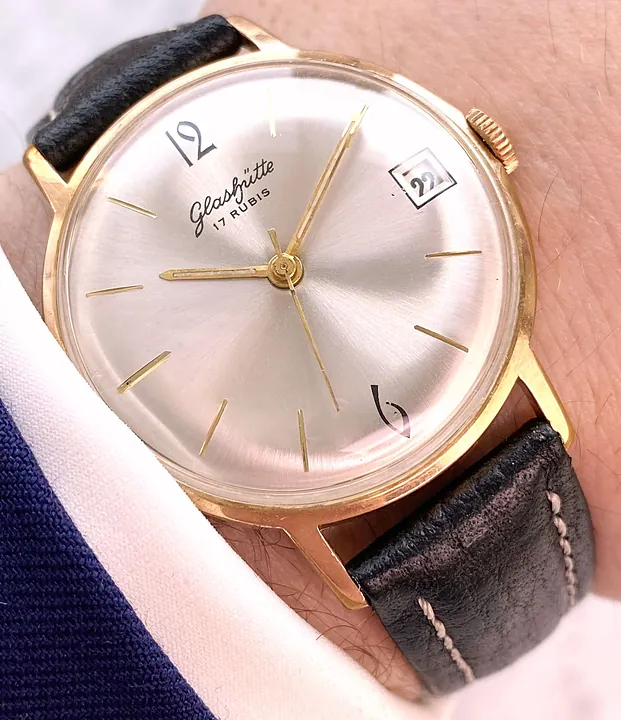
GUB Glashütte Handwinding, 1970
Vintage Portfolio (dealer), Vienna
Wristwatches · 1967
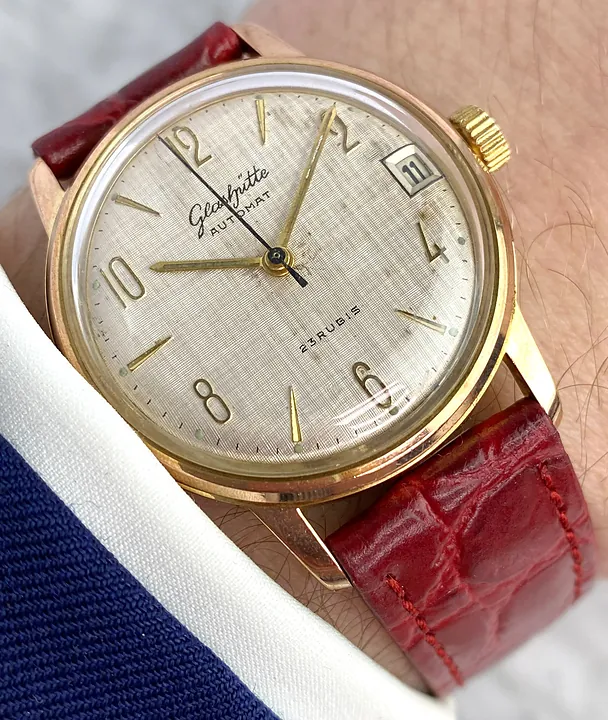
GUB Glashütte Automatic Unrestored Linen Dial, 1967
Vintage Portfolio (dealer), Vienna
Wristwatches · 1960
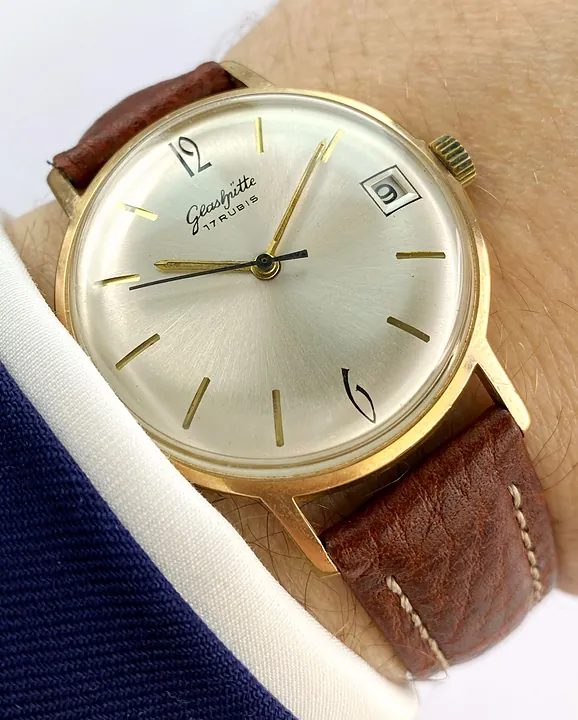
GUB Glashütte Handwinding Date, 1960
Vintage Portfolio (dealer), Vienna
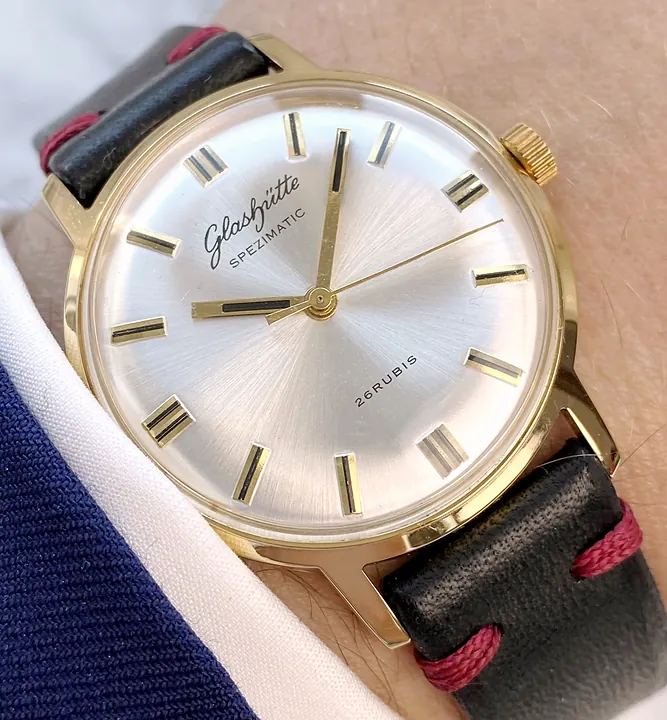
Wristwatches · 1966
GUB Glashütte Automatic Silver Dial, 1966
Vintage Portfolio (dealer), Vienna
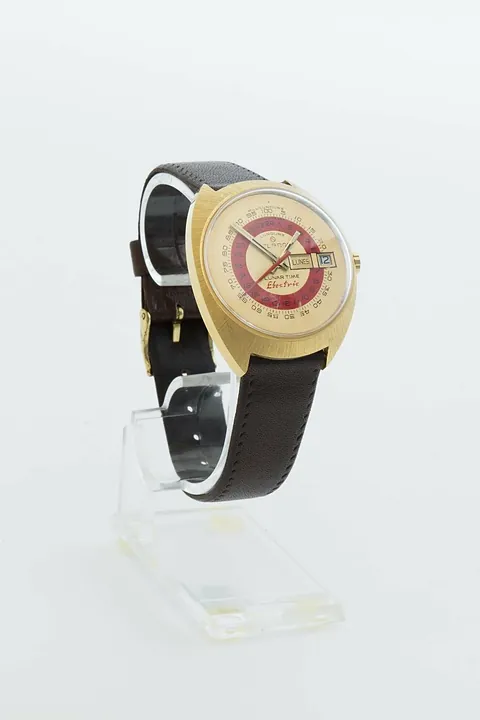
Wristwatches · 1970
Wristwatch by Helbros, Germany, 1970
German Clock Museum
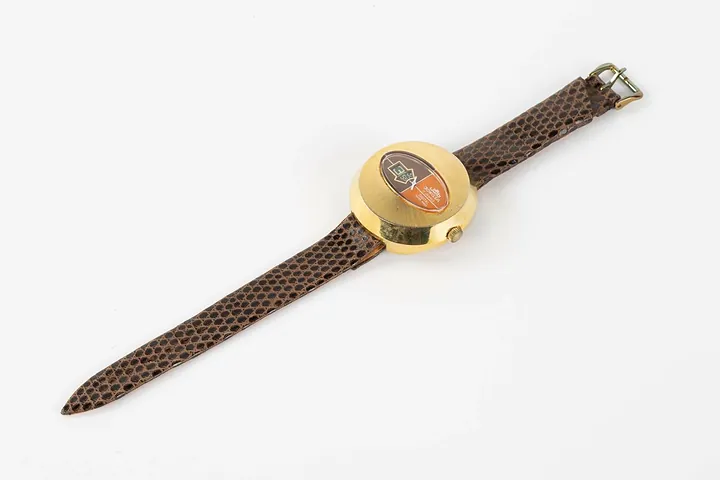
Wristwatches · c. 1970
Wristwatch by JWB (Josef Wyss Bettlach), Germany, c. 1970
German Clock Museum
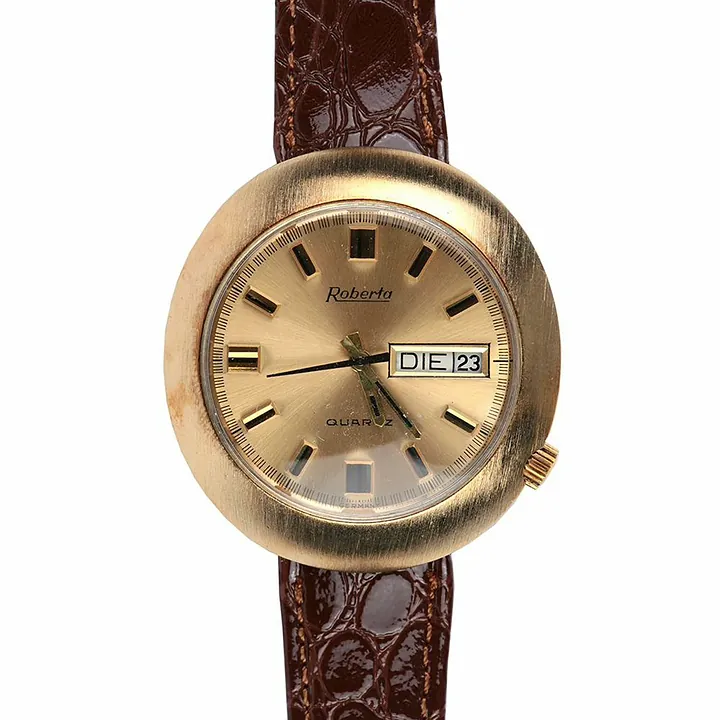
Wristwatches · 1972
Wristwatch by PUW Pforzheimer Uhrenrohwerke, Germany, 1972
German Clock Museum
Wristwatches · 1972
Wristwatch by Weber und Aeschbach, Germany, 1972
German Clock Museum