
Clocks · Clock
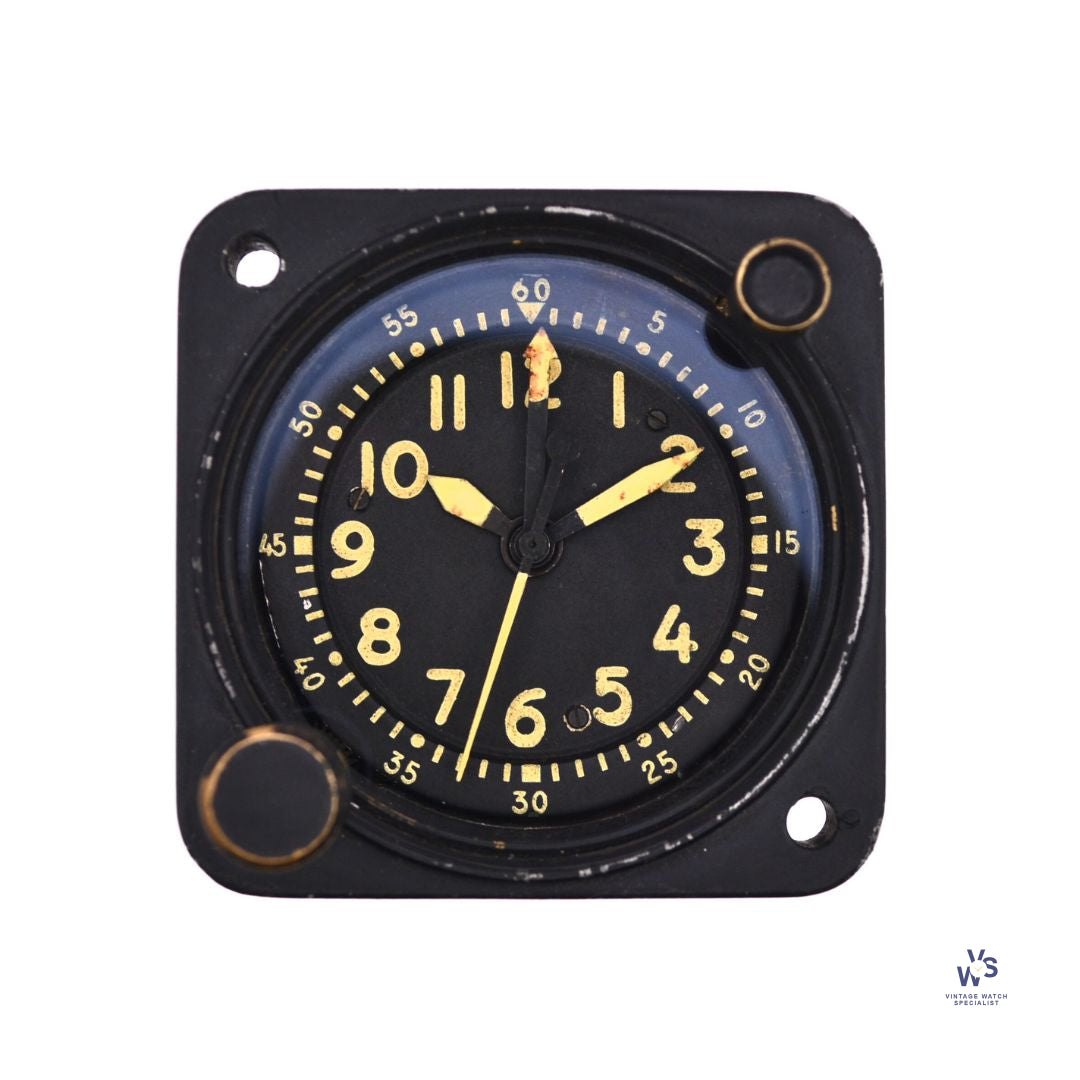
Waltham Aircraft Clock, ref. A-13A-1, circa 1960s
- Maker / attribution
- Waltham (maker)
- Date
- c. 1960s
- Historical period
- Modern Mechanical Horology (1945 – 1969)
- Country of origin
- United States
- Object type
- Clock
- Stock no.
- vws2066
- Credit line
- Dealer listing, Vintage Watch Specialist (vws2066)
- Catalogue title (original)
- Waltham Aircraft Clock - Model Ref: A-13A-1 - c.1960s (English)
View the source record (dealer listing) ↗ (opens another website in a new tab)Suggest a correction
Record summary
Catalogued by Vintage Watch Specialist (dealer), United Kingdom (stock number vws2066), this is a clock by Waltham, made in United States, dated c. 1960s. The Atlas places it in the Modern Mechanical Horology period (1945 – 1969) of its Clocks collection. The record is illustrated with 6 photographs.
Assembled from the source record's structured fields. Dates and attributions are given as the source states them; where a field is missing the Atlas leaves it blank rather than estimating.
Catalogue description
Dealer description — Vintage Watch Specialist
A Superb Waltham Aircraft A-13A Clock and Timer. In Nice Antique Condition with Beautifully Aged Vanilla Lume The various forms of the Waltham Clock and Waltham Watch Companies enjoyed a solid reputation for making quality clocks. It was first established in January 1897 as the Waltham Clock Company in Waltham, Massachusetts. What’s On Offer The Waltham A-13A aircraft clock and stopwatch has been manufactured continuously since about 1960. The case of this Waltham dashboard clock is manufactured in dust and moisture-proof aluminium and finished in a satin black colour. It operates an 8-day, 20 jewels, keyless, self-starting movement. The stark black dial with luminous Arabic numerals and hands is synonymous with military-issued clocks, and the lume on this particular example is a beautiful vanilla colour. To the outer perimeter, the Chapter ring is marked in increments from 5 - 60 for the one-hour elapsed time feature. Pressing the upper right knob will start, stop and activate the flyback of second and minute hands and does not disturb the time of day. There are four hands that run on the same coaxial shafts, the two fat hands are the clock's hour and minute and the two thin hands are the stopwatch's minute and seconds. When reset, they both point to 60. These clocks contain an unbreakable, anti-magnetic cobalt alloy mainspring and an anti-magnetic temperature compensated hairspring to ensure accuracy. These clocks have flown on just about every US military aircraft made since the 1960s. This clock has recently been serviced by our master watchmaker and is sold in excellent condition.
Historical context
Modern Mechanical Horology (1945 – 1969)
Tool watches for divers, pilots and astronauts; electric watches anticipate the electronic age.
Post-war clocks combined new materials and industrial design: plastic and metal cases, battery-powered transistor movements from the late 1950s, and design classics by George Nelson, Max Bill and others. The first caesium atomic clock (1955) moved the definition of time from astronomy to physics.
Read the period in the timelineMore clocks from this periodEarlier: Golden Age of Mechanical Watchmaking
Atlas type guide
Domestic clocks
A clock combines four systems: a source of power (falling weight, coiled spring, or later electricity), a gear train that divides time, an escapement and oscillator that regulate it (foliot, pendulum or balance), and an indicating system of dial and hands or a bell. Its history runs from the large iron weight-driven clocks of the late thirteenth century to Renaissance spring-driven table clocks, the pendulum revolution of 1656, the factory clocks of the nineteenth century and electric and quartz clocks of the twentieth.
Domestic clocks also reflect regional furniture and decorative traditions — English longcase and bracket clocks, French pendules, Viennese regulators, Black Forest and American shelf clocks — and therefore record changing tastes as much as technical progress.
What to look for
- How the clock is powered: weights, spring barrel, fusee, electric coil.
- The oscillator: foliot, short pendulum, long seconds pendulum or balance.
- Whether it strikes: hour only (count wheel) or hours and quarters (rack striking).
- The maker or retailer's name on dial and movement, and any factory trademarks.
- Signs of alteration — replaced dials, converted escapements, 'married' cases.
Dating clues
- Before 1656 clocks used foliots or balances; after, most domestic clocks have pendulums.
- Anchor escapements spread after c. 1670; minute hands became common at the same time.
- Factory production in America and Germany transformed prices after c. 1840.
General guidance written by the Atlas editors about this kind of object. It is not a statement about this particular piece; for that, rely on the source record above and on physical examination.
Related records
Pocket Watches · 1910s
Pocket watch by Waltham, United States, 1910s
Suomen Urheilumuseo
Pocket Watches · 1902
Pocket watch by Waltham, United States, 1902
Turun kaupunginmuseo
Instruments · c.1938
Marine chronometer watch no. 30683313 by Waltham
Royal Museums Greenwich
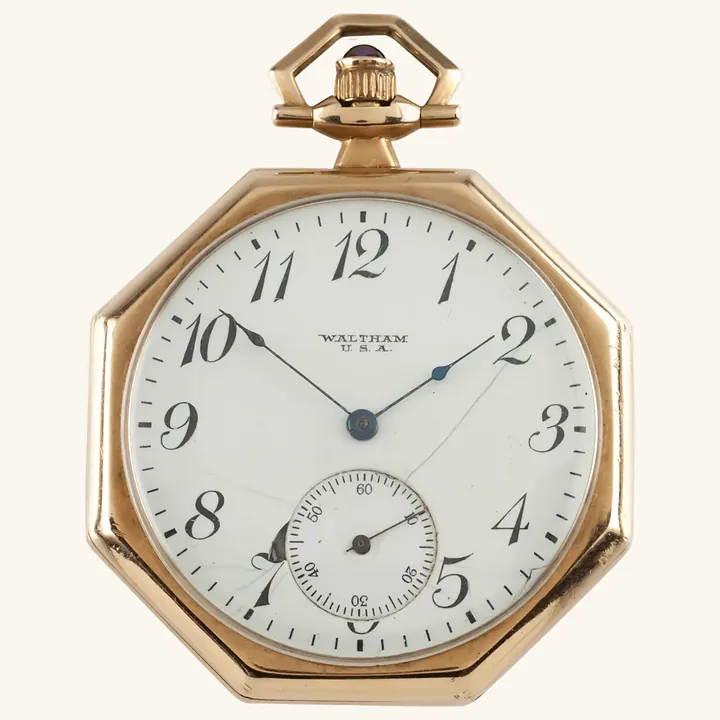
Pocket Watches · 1917
Waltham Octagon14 Karat Pocket Watch Jewel, 1917
WatchMuseum.org shop
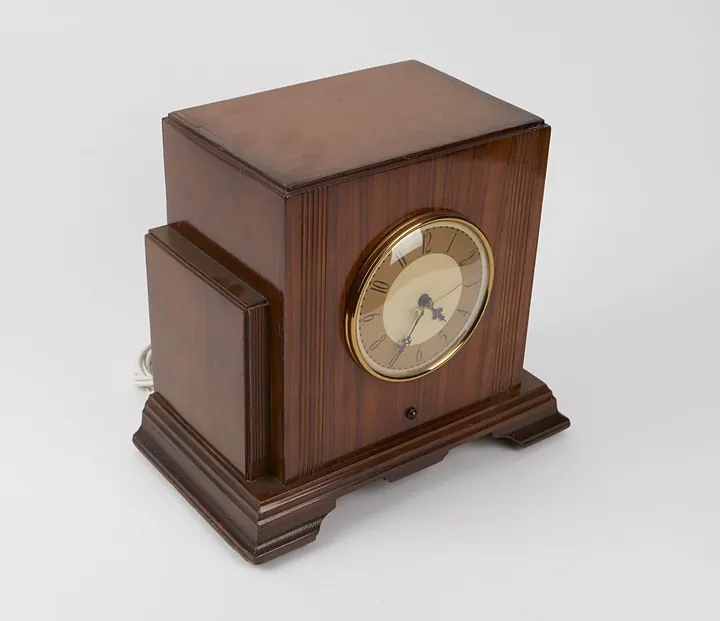
Clocks · 1937; 1980
Clock by Bestone and Hammond, United States, 1937; 1980
Science Museum Group, London
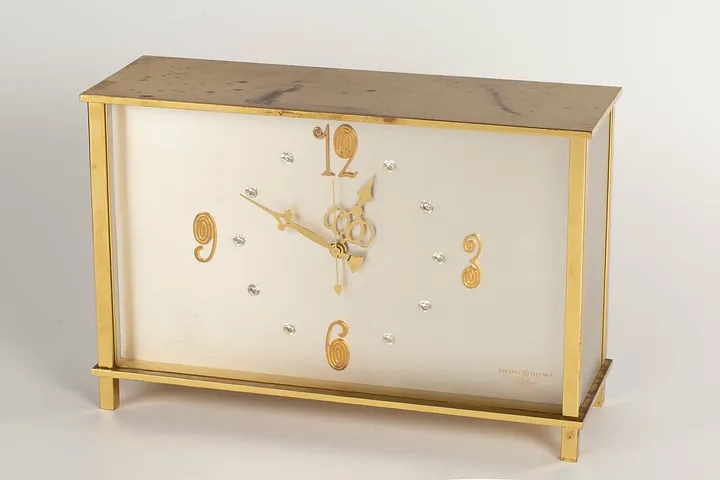
Clocks · c. 1968
Table clock, United States, c. 1968
German Clock Museum
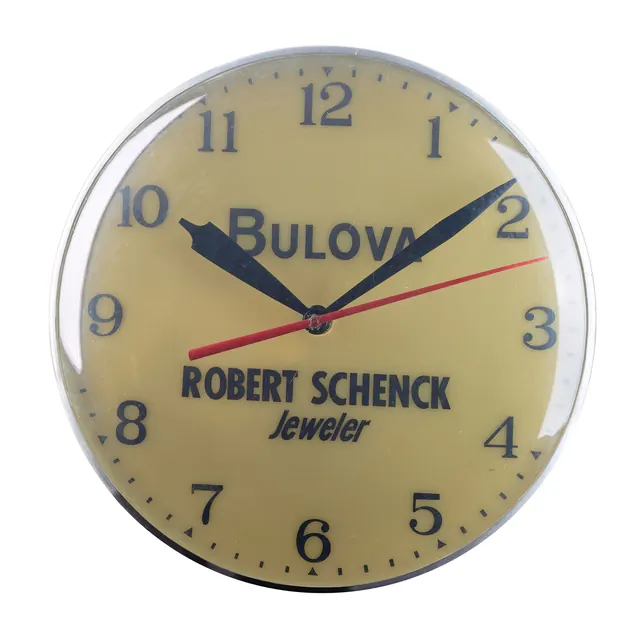
Clocks · c. 1960s
Bulova wall clock, Lighted Advertising Wall Clock for Robert Schenck Jeweler, circa 1960s
Antiquorum auction archive, Geneva
Clocks · designed 1947; manufactured by 1948–69
Ball Wall Clock, Model no. 4755 by George Nelson & Co., Inc
Yale University Art Gallery, New Haven