Clocks · Table clock
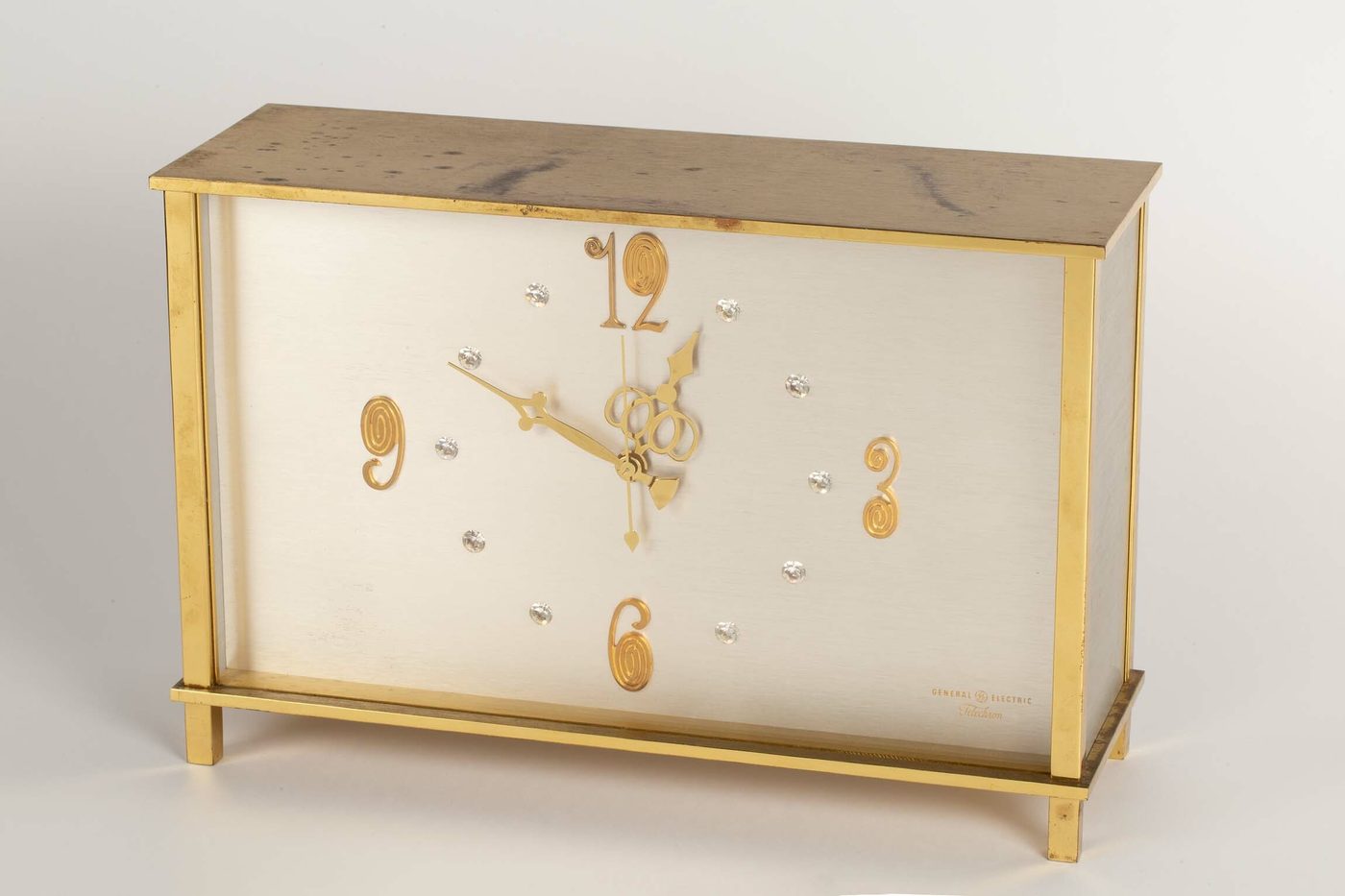
Table clock, United States, 1968
- Maker / attribution
- Unrecorded in source
- Date
- 1968
- Historical period
- Modern Mechanical Horology (1945 – 1969)
- Country of origin
- United States
- Object type
- Table clock
- Holding institution
- German Clock Museum
- Accession / object no.
- Museu_ProvidedCHO_museum_digital_65324__technical_number_
- Catalogue title (original)
- Funkgesteuerte Tischuhr, Telechron, Ashland (Massachusetts), USA, um 1968 (German)
Record summary
Held and catalogued by German Clock Museum (object number Museu_ProvidedCHO_museum_digital_65324__technical_number_), this is a table clock, made in United States, dated 1968. The Atlas places it in the Modern Mechanical Horology period (1945 – 1969) of its Clocks collection. The record is illustrated with 1 photograph.
Assembled from the source record's structured fields. Dates and attributions are given as the source states them; where a field is missing the Atlas leaves it blank rather than estimating.
Catalogue description
Catalogue description from German Clock Museum (German)
Synchronuhren waren in den Vereinigten Staaten bereits während der 1920er Jahre topaktuell. Einmal mit dem Stromnetz verbunden, holen sie sich die Energie, die sie brauchen. Anstatt der Schwingungen eines Pendels "zählt" eine Synchronuhr, wie häufig der Strom im Stromnetz seine Richtung ändert. Allerdings darf man bei einer Synchronuhr nicht den Stecker ziehen, denn sonst bleibt sie stehen. Als in den 1960er-Jahren batteriebetriebene Uhren auf den Markt kamen, erwuchs den Synchronuhren eine übermächtige Konkurrenz. Die Konstrukteure bei Telechron entwickelten deshalb batteriebetriebene Synchronuhren. Eine kleine Funkantenne sendete die Frequenz des Wechselstroms an die Uhr. Einen wirklichen Vorteil brachte diese Erfindung aber nicht: Weder liefen die Uhren genauer, noch wurden sie günstiger. 1979 wurde die Produktion eingestellt. (Deutsches Uhrenmuseum Furtwangen)
Shown in the original language of the source catalogue. An editor-reviewed English translation has not yet been published; we do not publish machine translations as authoritative text.
Historical context
Modern Mechanical Horology (1945 – 1969)
Tool watches for divers, pilots and astronauts; electric watches anticipate the electronic age.
Post-war clocks combined new materials and industrial design: plastic and metal cases, battery-powered transistor movements from the late 1950s, and design classics by George Nelson, Max Bill and others. The first caesium atomic clock (1955) moved the definition of time from astronomy to physics.
Read the period in the timelineMore clocks from this periodEarlier: Golden Age of Mechanical Watchmaking
Atlas type guide
Bracket, table and spring-driven clocks
Spring-driven clocks freed timekeeping from the hanging weight. The coiled mainspring, documented from the fifteenth century, made portable table clocks possible; to even out its declining force, makers used the fusee, a conical pulley connected to the barrel by a gut line or chain. Renaissance table clocks from Augsburg and Nuremberg — drum-shaped, square or tower-shaped in gilt brass — were luxury scientific objects, often with astronomical dials and alarms.
After the pendulum, English makers developed the bracket clock: a wooden case with a carrying handle, a short pendulum with a verge escapement, and often repeating work to sound the hours on demand at night. Later examples use the anchor escapement. In the nineteenth century, 'table clock' became a broad term for spring clocks of every nationality.
What to look for
- A fusee in the movement (cone-shaped pulley) and the type of line — gut or chain.
- Verge escapement with a short bob pendulum, often with a decoratively engraved backplate.
- Repeat cords or buttons that make the clock strike again on demand.
- Gilt-brass engraved cases and horizontal dials on Renaissance pieces.
- Case shapes: inverted bell, bell top, break-arch, lancet or balloon.
Dating clues
- Drum and tower table clocks: c. 1520–1650.
- Ebony veneered English bracket clocks with verge escapements: c. 1670–1800.
- Engraved backplates were usual on English clocks until c. 1800, then generally plain.
General guidance written by the Atlas editors about this kind of object. It is not a statement about this particular piece; for that, rely on the source record above and on physical examination.
Related records
Clocks · 1920-2013
Clocks by Unidentified, United States, 1920-2013
National Museum of African American History and Culture, Smithsonian Institution, Washington DC
Clocks · 1937; 1980
Clock by Bestone; Hammond, United States, 1937; 1980
Science Museum Group, London

Clocks · 1873–2021
Clock, Poland, 1873–2021
The International Center for Information Management Systems and Services
Clocks · 20th century
Base Metal, 20th c. Bronze, marble and ivory clock by Chiparus
Victoria and Albert Museum, London
Clocks · 1900–1999
Clock by Erik Holmén, 1900–1999
Nordic Museum Foundation
Clocks · 1900–1999
Clock by Französisch (Schule), 1900–1999
Fine Arts Museum Vienna
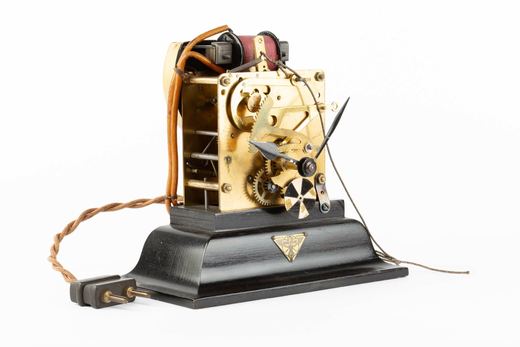
Clocks · 1900–1999
Clock by Friedrich Mauthe, Germany, 1900–1999 (German Clock Museum Museu_ProvidedCHO_museum_digital_59468__technical_number_)
German Clock Museum
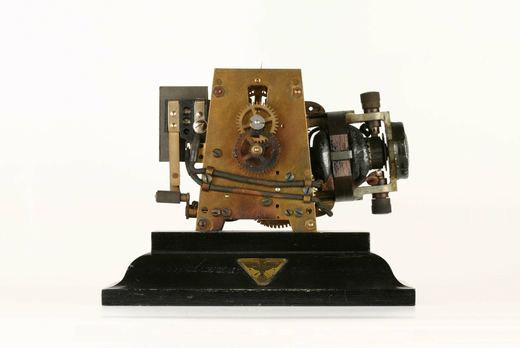
Clocks · 1900–1999
Clock by Friedrich Mauthe, Germany, 1900–1999 (German Clock Museum Museu_ProvidedCHO_museum_digital_59469__technical_number_)
German Clock Museum