Clocks · Clock
Clock, Poland, 1873–2021
- Maker / attribution
- Unrecorded in source
- Date
- 1873–2021
- Historical period
- Modern Mechanical Horology (1945 – 1969)
- Country of origin
- Poland
- Place
- Włocławek
- Object type
- Clock
- Holding institution
- The International Center for Information Management Systems and Services
- Accession / object no.
- Pb_100935
- Catalogue title (original)
- Ceramic clock and vases (English)
Record summary
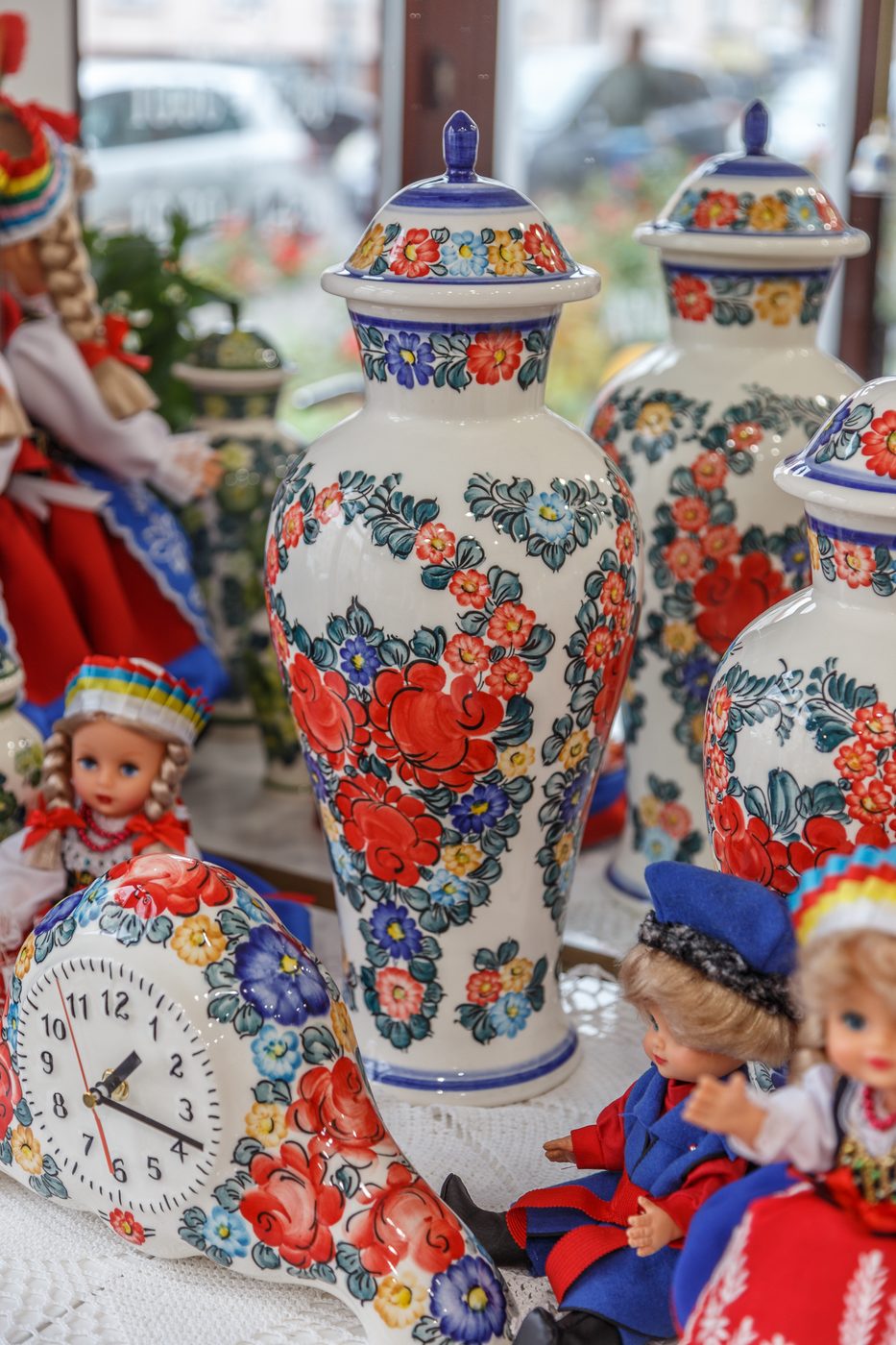
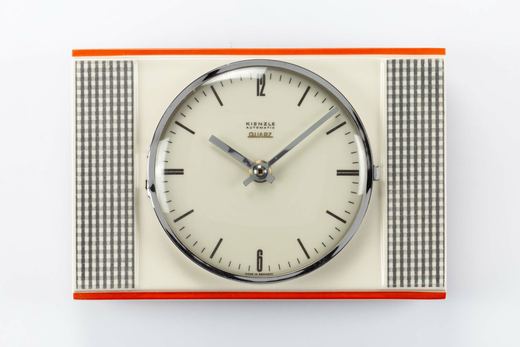
Held and catalogued by The International Center for Information Management Systems and Services (object number Pb_100935), this is a clock, made in Włocławek, Poland, dated 1873–2021. The Atlas places it in the Modern Mechanical Horology period (1945 – 1969) of its Clocks collection. The record is illustrated with 1 photograph.
Assembled from the source record's structured fields. Dates and attributions are given as the source states them; where a field is missing the Atlas leaves it blank rather than estimating.
Catalogue description
Catalogue description from The International Center for Information Management Systems and Services (English)
Ceramic clock, vases and dolls on display in the shop at Chopina 57 Street in Włocławek, offering, among others, traditional Wloclawek faience.Hand-decorated ceramics according to original, recognizable designs by artists from Włocławek was especially popular in Poland in the 1970s. The faience factory in Włocławek was opened in 1873. It mainly produced kitchen utensils. At that time, the first attempts to decorate products with multi-colored floral motifs were introduced.After the Second World War, the factory renewed the production of hand-made and painted fine tin-glazed pottery, which became extremely fashionable in the seventies. The artists employed there created original designs. At that time, series in cobalt, brown and purple were created. This production was closed in 1990.After years of break, the new owners, Ewa and Jerzy Szanowski, started this activity in 2002, returning to the traditional production and manual painting of faience products, introducing new forms and decorative motifs. In 2021, after the collapse caused by the lockdowns related to the COVID-19 pandemic, they decided to shut down. In June 2021, the company was taken over by the new owner, Tyberiusz Rajs, who decided to maintain the tradition and develop the production of Wloclawek faience. In July 2021, production was resumed.The style of hand-made and decorated faience products is also continued by local craftsmen.
Historical context
Modern Mechanical Horology (1945 – 1969)
Tool watches for divers, pilots and astronauts; electric watches anticipate the electronic age.
Post-war clocks combined new materials and industrial design: plastic and metal cases, battery-powered transistor movements from the late 1950s, and design classics by George Nelson, Max Bill and others. The first caesium atomic clock (1955) moved the definition of time from astronomy to physics.
Read the period in the timelineMore clocks from this periodEarlier: Golden Age of Mechanical Watchmaking
Atlas type guide
Domestic clocks
A clock combines four systems: a source of power (falling weight, coiled spring, or later electricity), a gear train that divides time, an escapement and oscillator that regulate it (foliot, pendulum or balance), and an indicating system of dial and hands or a bell. Its history runs from the large iron weight-driven clocks of the late thirteenth century to Renaissance spring-driven table clocks, the pendulum revolution of 1656, the factory clocks of the nineteenth century and electric and quartz clocks of the twentieth.
Domestic clocks also reflect regional furniture and decorative traditions — English longcase and bracket clocks, French pendules, Viennese regulators, Black Forest and American shelf clocks — and therefore record changing tastes as much as technical progress.
What to look for
- How the clock is powered: weights, spring barrel, fusee, electric coil.
- The oscillator: foliot, short pendulum, long seconds pendulum or balance.
- Whether it strikes: hour only (count wheel) or hours and quarters (rack striking).
- The maker or retailer's name on dial and movement, and any factory trademarks.
- Signs of alteration — replaced dials, converted escapements, 'married' cases.
Dating clues
- Before 1656 clocks used foliots or balances; after, most domestic clocks have pendulums.
- Anchor escapements spread after c. 1670; minute hands became common at the same time.
- Factory production in America and Germany transformed prices after c. 1840.
General guidance written by the Atlas editors about this kind of object. It is not a statement about this particular piece; for that, rely on the source record above and on physical examination.
Related records
Clocks · 20th century
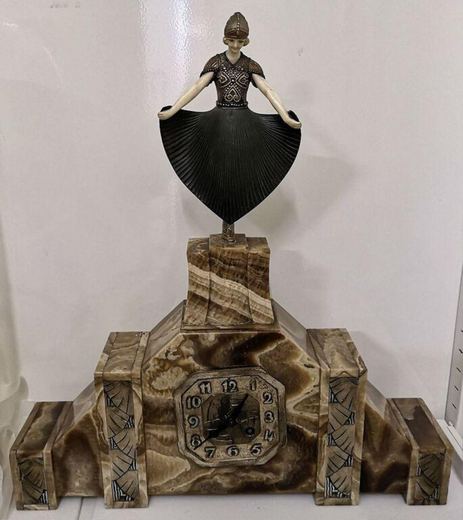
Base Metal, 20th c. Bronze, marble and ivory clock by Chiparus
Victoria and Albert Museum, London
Clocks · 1900–1999
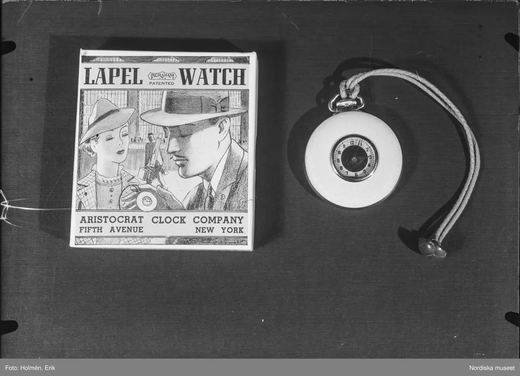
Clock by Erik Holmén, 1900–1999
Nordic Museum Foundation
Clocks · 1900–1999
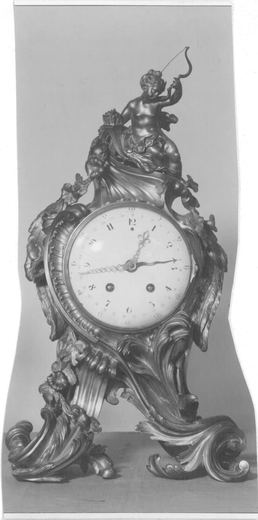
Clock by Französisch (Schule), 1900–1999
Fine Arts Museum Vienna
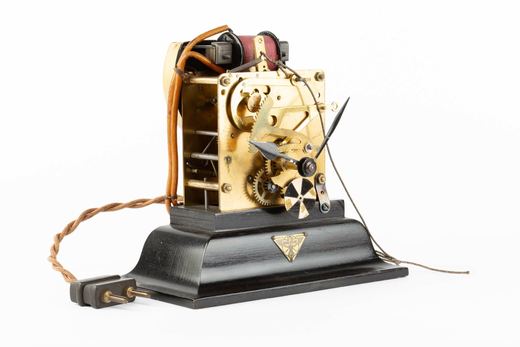
Clocks · 1900–1999
Clock by Friedrich Mauthe, Germany, 1900–1999 (German Clock Museum Museu_ProvidedCHO_museum_digital_59468__technical_number_)
German Clock Museum
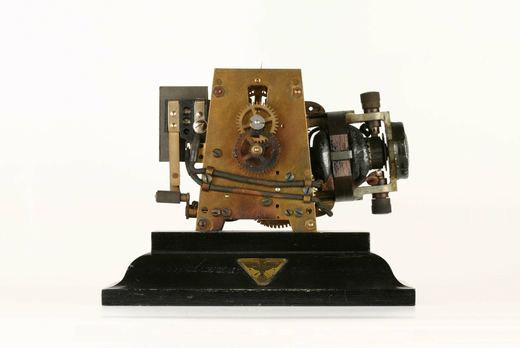
Clocks · 1900–1999
Clock by Friedrich Mauthe, Germany, 1900–1999 (German Clock Museum Museu_ProvidedCHO_museum_digital_59469__technical_number_)
German Clock Museum
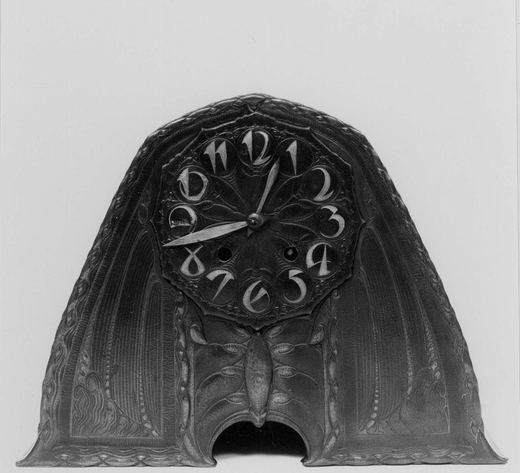
Clocks · 1900–1999
Clock by G. H. Lantman, Netherlands, 1900–1999
Royal Institute for Cultural Heritage
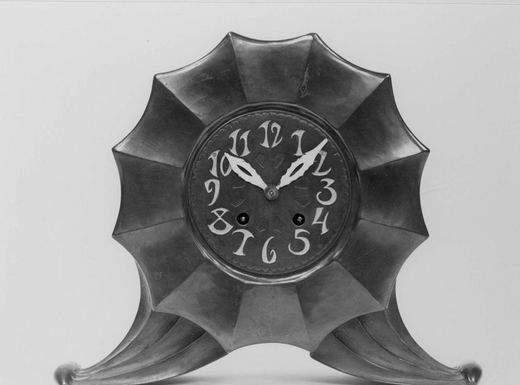
Clocks · 1900–1999
Clock by J. Winkelman, Belgium, 1900–1999
Royal Institute for Cultural Heritage
Clocks · 1900–1999
Clock by Kienzle - Uhrenfabrik, Switzerland, 1900–1999
German Clock Museum