
Clocks · Wall clock
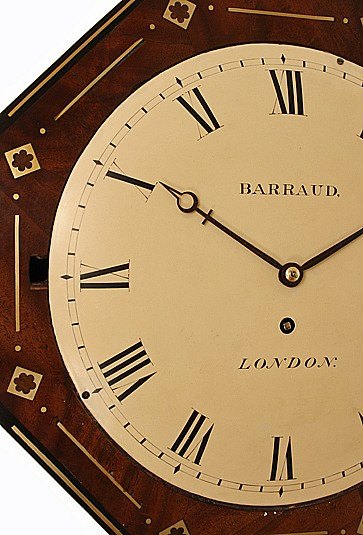
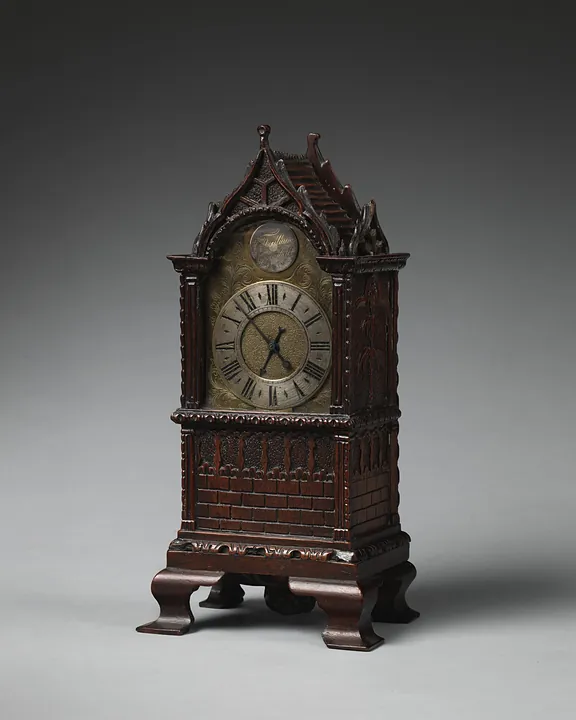
Wall clock by Barraud, London, c. 1815
- Maker / attribution
- Barraud (maker)
- Date
- c. 1815
- Historical period
- Precision & Scientific Horology (1750 – 1850)
- Country of origin
- England
- Place
- London
- Object type
- Wall clock
- Materials / technique
- mahogany, ebony
- Dimensions
- Height 12 in (30 cm)
- Stock no.
- Product 238
- Credit line
- Dealer listing, P A Oxley (product 238)
- Catalogue title (original)
- Antique wall clock by Barraud of London (English)
View the source record (dealer listing) ↗ (opens another website in a new tab)Suggest a correction
Record summary
Catalogued by P A Oxley (dealer), Wiltshire (stock number Product 238), this is a wall clock by Barraud, made in London, England, dated c. 1815. The Atlas places it in the Precision & Scientific Horology period (1750 – 1850) of its Clocks collection. Materials and techniques recorded by the source: mahogany, ebony. Recorded dimensions: Height 12 in (30 cm). The record is illustrated with 1 photograph.
Assembled from the source record's structured fields. Dates and attributions are given as the source states them; where a field is missing the Atlas leaves it blank rather than estimating.
Catalogue description
Dealer description — P A Oxley
An excellent antique wall clock of octagonal design and of small proportions. The 8 day duration single fusee movement with anchor escapement. The small 10" convex round white dial with Roman numerals, well cut blued steel hands, makers name and place of work. The desirable and unusual octagonal mahogany case with access door to the base of the case and with extensive brass and ebony inlay. There is also a larger door to the rear of the case to allow for in beat adjustment and to hang the pendulum. The glazed brass bezel with a convex glass secured by a lock to the side. A fine example of early 19th century Clockmaking by this well known maker Note: The Barrauds family were prolific Clock & Watchmakers, particularly specialising in Chronometers. Paul Philip Barraud was Master of Clockmakers Company in 1810 & 1811. He partnered Howells & Jamison in the late 18th century to make Mudges Timekeepers. He died in 1820, his two sons continued the business into the late 19th century. Maker Barraud of London
Historical context
Precision & Scientific Horology (1750 – 1850)
Harrison solves longitude; Mudge invents the lever; Breguet's Paris workshop defines the modern watch.
The age of the deadbeat escapement, compensated pendulums and observatory regulators. Domestic clocks spread through the middle classes: English longcase and bracket clocks, French gilt-bronze mantel clocks, Viennese Biedermeier wall clocks, Black Forest painted-shield clocks, and the first American shelf clocks.
Read the period in the timelineMore clocks from this periodEarlier: Early Modern Horology
Atlas type guide
Regulators, wall and Vienna clocks
A regulator is a precision pendulum clock used as a time standard in observatories, workshops and railway offices. Typical features are a deadbeat or Graham escapement, a temperature-compensated pendulum (mercury jar, gridiron or later invar), maintaining power and a regulator dial that separates hours, minutes and seconds. George Graham's deadbeat escapement (c. 1715) and his mercury pendulum, together with Harrison's gridiron, set the pattern for two centuries.
Wall clocks span a much wider range: the elegant Viennese Laterndluhr and Dachluhr of the Biedermeier period, the Dutch stoelklok and staartklok, English 'dial' clocks used in schools, offices and railway stations, and mass-produced spring and weight wall clocks from Germany (Gustav Becker, Junghans, Kienzle) and America.
What to look for
- Deadbeat escapement and compensated pendulum (gridiron rods, mercury jar or wood rod).
- A regulator dial with a large central minute hand and separate hour and seconds dials.
- Vienna regulators: glazed cases, slender pendulum, small weights, enamel two-piece dials.
- German factory trademarks stamped on the backplate (e.g. Gustav Becker anchor and crown, Junghans star).
Dating clues
- Graham-type deadbeat regulators: from c. 1720.
- Viennese Laterndluhr: c. 1800–1850.
- German factory 'Vienna-style' regulators: c. 1870–1930; Gustav Becker serial numbers allow close dating.
General guidance written by the Atlas editors about this kind of object. It is not a statement about this particular piece; for that, rely on the source record above and on physical examination.
Related records
Pocket Watches · c. 1800
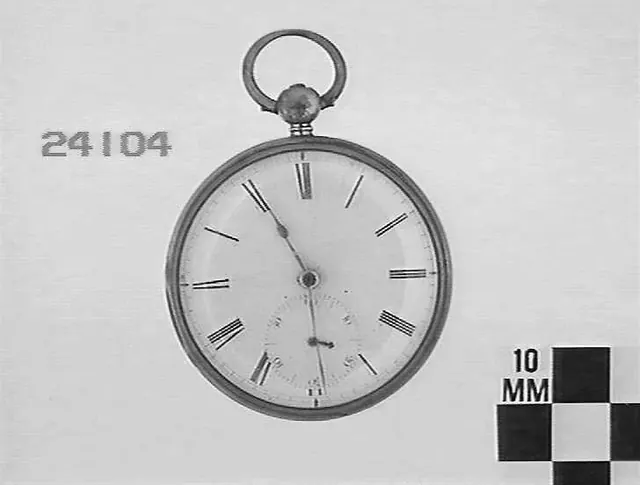
Pocket Watch - Barraud, London, c. 1800
Museums Victoria, Melbourne
Pocket Watches · 1897
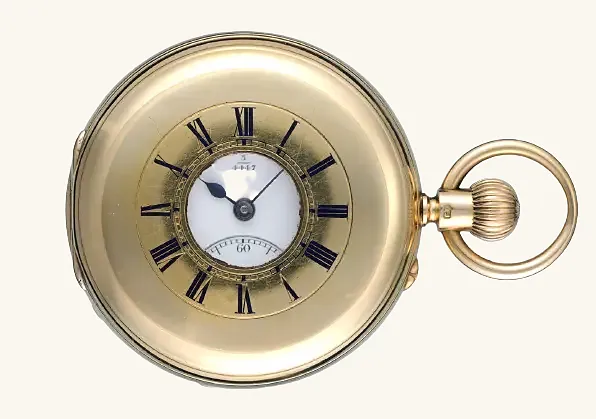
Gold Half Hunter by Barraud Pocket Watch, 1897
WatchMuseum.org shop
Instruments · c. 1825–1830
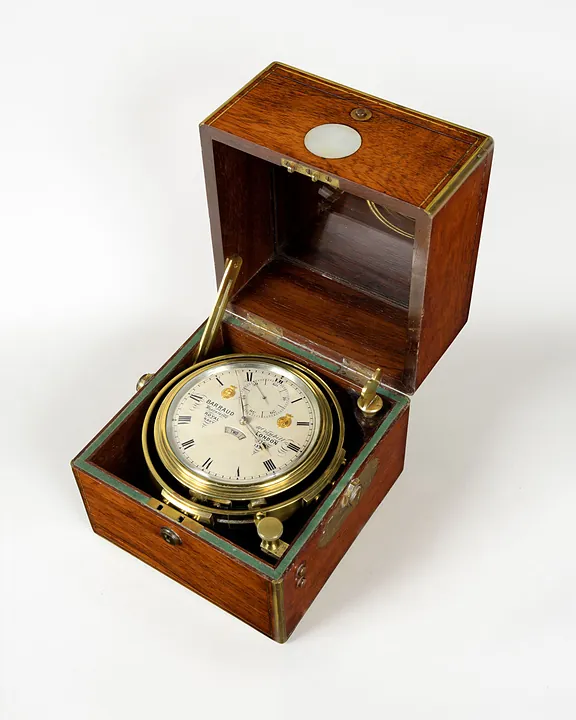
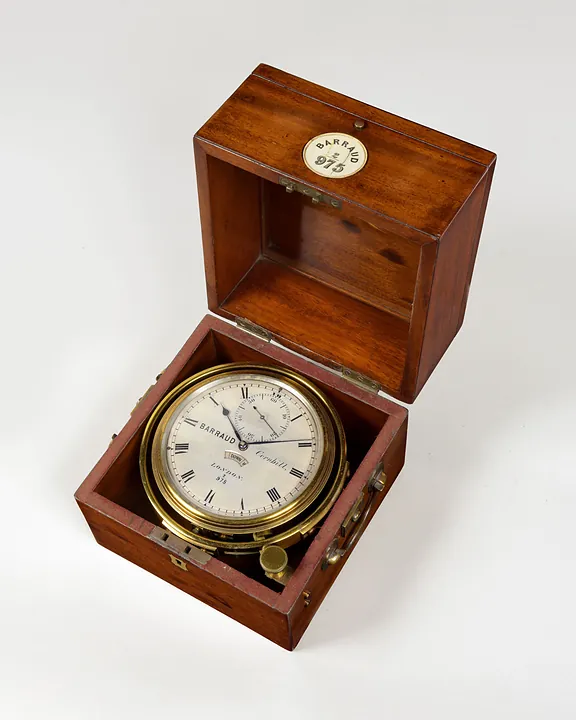
Marine chronometer by Barraud, Cornhill, London, c. 1825–1830
Howard Walwyn Fine Antique Clocks (dealer), London
Instruments · c. 1840–1850
Marine chronometer by Barraud, c. 1840–1850
Howard Walwyn Fine Antique Clocks (dealer), London
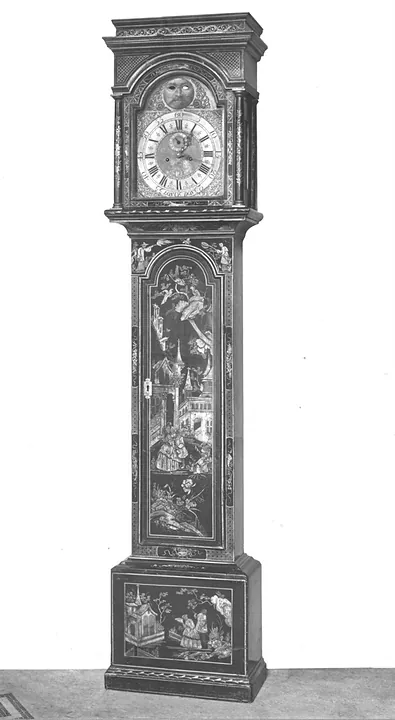
Clocks · 1740–1760
Longcase clock, English, 1740–1760, japanned wood, John Ellicott
Victoria and Albert Museum, London
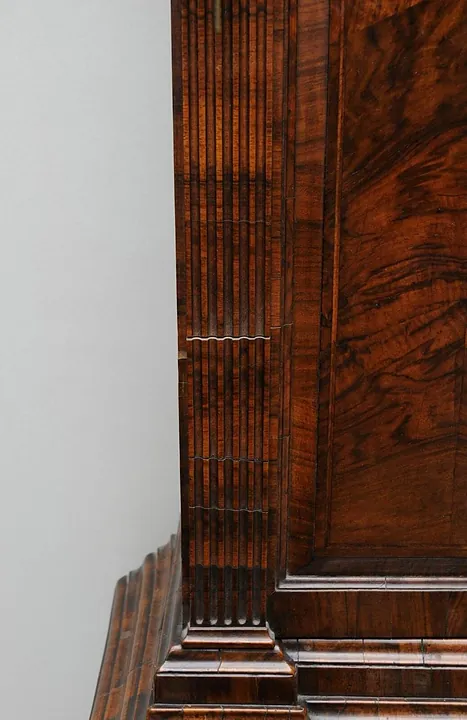
Clocks · c.1750
Long-case clock, English, ca. 1750, by Richard Peyton of Gloucester
Victoria and Albert Museum, London
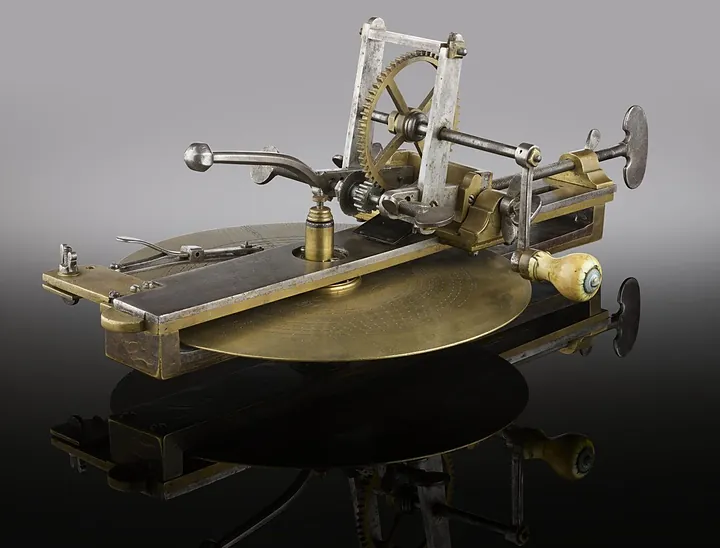
Clocks · 1751
Large wheel engine, signed and dated "John Tipping, Whildon Green, 1751".
Science Museum Group, London
Clocks · 1755
Bracket clock by John Fordham, England, 1755
The Metropolitan Museum of Art, New York