
Instruments · Marine chronometer
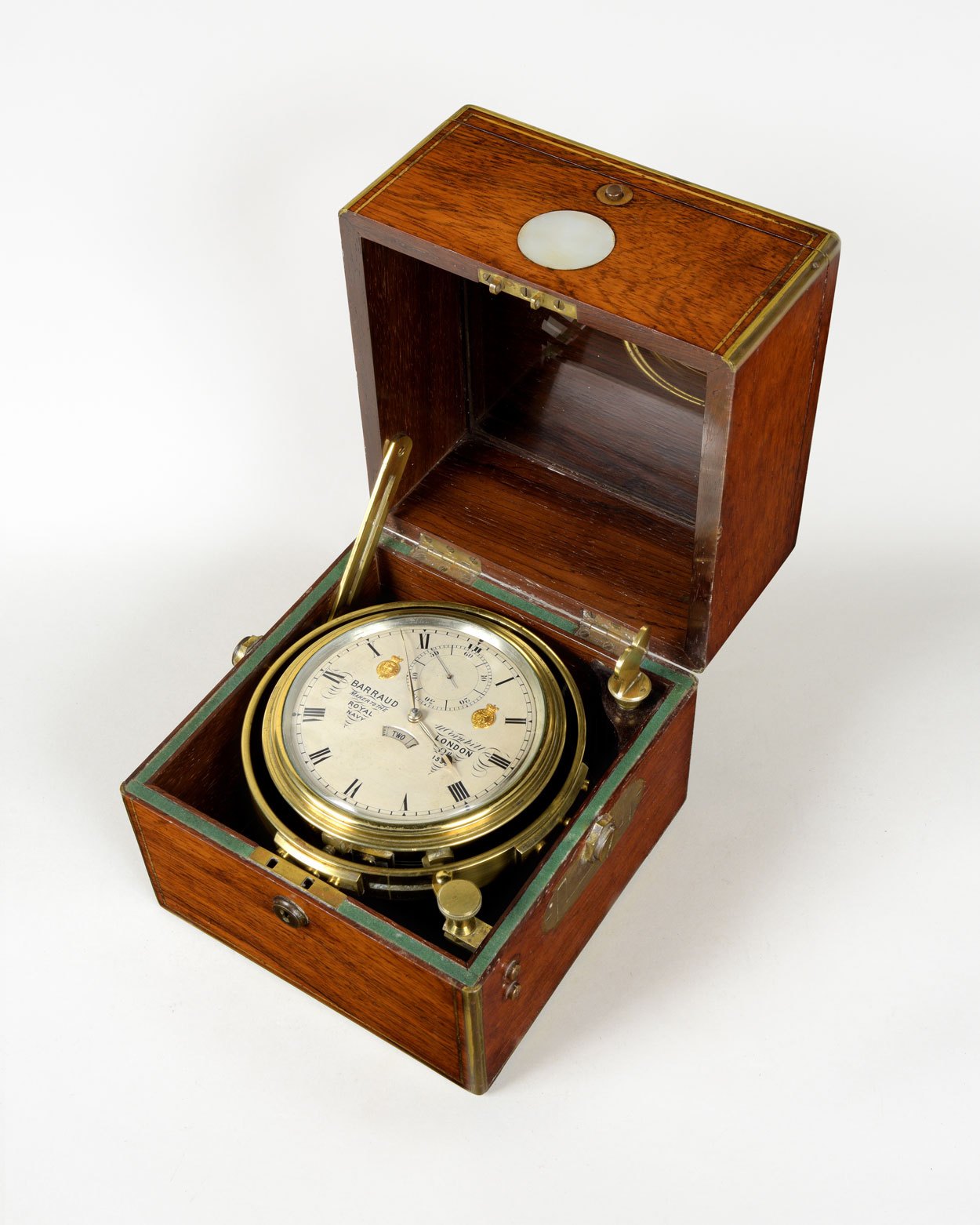
Marine chronometer by Barraud, Cornhill, London, c. 1825–1830
- Maker / attribution
- Barraud (maker)
- Date
- c. 1825–1830
- Historical period
- Precision & Scientific Horology (1750 – 1850)
- Country of origin
- England
- Place
- Cornhill, London
- Object type
- Marine chronometer
- Dimensions
- Height 20.5 cm
- Stock no.
- Product 5119
- Credit line
- Dealer listing, Howard Walwyn (product 5119)
- Catalogue title (original)
- BARRAUD N° 1555. A rare and historically interesting 8-day marine chronometer. (English)
View the source record (dealer listing) ↗ (opens another website in a new tab)Suggest a correction
Record summary
Catalogued by Howard Walwyn Fine Antique Clocks (dealer), London (stock number Product 5119), this is a marine chronometer by Barraud, made in Cornhill, London, England, dated c. 1825–1830. The Atlas places it in the Precision & Scientific Horology period (1750 – 1850) of its Instruments collection. Recorded dimensions: Height 20.5 cm. The record is illustrated with 3 photographs.
Assembled from the source record's structured fields. Dates and attributions are given as the source states them; where a field is missing the Atlas leaves it blank rather than estimating.
Catalogue description
Dealer description — Howard Walwyn
A rare and historically interesting rosewood 8-day marine chronometer by this eminent London maker to the Royal Navy. The silvered brass dial is engraved with Roman numerals and signed Barraud, Maker to the Royal Navy, 41 Cornhill, London and numbered 1555. There is a subsidiary seconds dial below XII and Barraud’s typical inset power reserve below the centre. The dial also has two gilt brass applied crests. One shows the Royal Coat of Arms and the other the fouled anchor for the British Admiralty. It also retains its original tapered white gold spade hands. The high-quality 8-day chain fusee movement has Harrison’s maintaining power, an Earnshaw-type spring detent escapement, and a free-sprung split bimetallic compensated balance with cylindrical weights, timing screws and blued steel helical hairspring with diamond endstone. It also features a special middle temperature compensation balance, invented by Lund, which was probably fitted in the 1840’s. The chronometer movement is housed in its numbered brass bowl and held in its brass gimbal within the box. The exhibition quality three-tier rosewood case is neatly bound in brass with reinforced corners and brass stringing. The lid has an inset brass cartouche engraved H. Thurburn Esq and a glazed observation panel to the inner section. The front of the middle tier has an unsigned mother-of-pearl name plaque, and the sides are fitted with concealed brass carrying handles. The interior is lined in green felt and arranged to house the chronometer bowl which is numbered 1555 , within its brass gimbal ring. Height: 8 in (20.5 cm) Width: 7 ¾ in (19.5 cm) Depth: 7 ¾ in (19.5 cm) *The firm of Barraud was founded by Paul Philip Barraud (1752–1820), a distinguished maker of chronometers who became Master of the Clockmakers’ Company in 1810-11. Associated with Arnold and Earnshaw, his marine chronometers were notable for their durability and dependability. His three sons followed him into the business, and the firm continued at 41 Cornhill as Barraud & Sons. In 1838 the chronometer-maker John Richard Lund was taken into partnership and the firm was subsequently styled Barraud & Lund, remaining in business until the early 20th century. A major part of the firm’s trade was the exportation of clocks and watches to China and India. Barraud chronometers were supplied to the Royal Navy and are represented in the collection of the National Maritime Museum, Greenwich. Paul Philip Barraud is recorded on page 43 of Brian Loomes’s Watchmakers & Clockmakers of the World: Complete 21st Century Edition . The present chronometer bears the inscription H. Thurburn Esq on a brass cartouche to the lid and can be identified with the instrument described by Hugh Thurburn in his paper ‘Notice of a Meteorological Journal kept at Alexandria’, published in The Journal of the Royal Geographical Society of London , Volume 22, 1852, pp. 128–131. Hugh Thurburn was a member of the prominent Scottish Thurburn family, long established as merchants in Alexandria, Egypt, where his kinsman Robert Thurburn had served as British Consul. Between 1847 and 1849 Hugh Thurburn conducted three uninterrupted years of daily meteorological observations from a private observatory at his dwelling-house on the great square of Alexandria. In the absence of any public clocks in the city, he obtained precise solar time using a Dent dipleidoscope and transferred this to his Barraud chronometer, which served as the sole reliable time standard for the entire programme of observations. The results were communicated to the Royal Geographical Society in February 1852 by Captain the Hon. H. A. Murray, R.N., F.R.G.S., and the original manuscript journal is preserved in the archives of the Society.
Historical context
Precision & Scientific Horology (1750 – 1850)
Harrison solves longitude; Mudge invents the lever; Breguet's Paris workshop defines the modern watch.
The longitude problem was solved by the marine chronometer and lunar distance methods; dividing engines made precision scales possible, and observatories set time by transit instruments.
Read the period in the timelineMore instruments from this periodEarlier: Early Modern Horology
Atlas type guide
Marine chronometers
A marine chronometer is a precision timekeeper carried at sea to find longitude: the navigator compares local noon, observed with a sextant, with the time at a reference meridian kept by the chronometer. Each hour of difference corresponds to fifteen degrees of longitude. John Harrison proved the method in the 1760s; Pierre Le Roy, Ferdinand Berthoud, John Arnold and Thomas Earnshaw then developed the detent escapement and the compensation balance that made chronometers practical to manufacture.
By the nineteenth century London, Liverpool, Le Locle and Glashütte supplied navies and merchant fleets. A typical box chronometer has a spring-detent escapement, a fusee to equalise mainspring torque, a bimetallic compensation balance with a helical balance spring, and is mounted in gimbals inside a wooden box so that it stays level.
What to look for
- Gimbals and a three-tier wooden box with a glazed inner lid.
- A power-reserve ('up and down') indicator on the dial, usually showing 56 hours on two-day instruments.
- Spring-detent escapement and a cylindrical (helical) balance spring visible through the movement.
- Admiralty or navy marks (broad arrow), and rating certificates from observatories.
- The maker's number on the dial and movement; many makers' registers survive, allowing dating.
Dating clues
- Earnshaw-type spring-detent chronometers became standard after about 1800.
- Auxiliary compensation devices on the balance appear from the mid-nineteenth century.
- Quartz and radio time signals ended routine use of mechanical chronometers in the 1970s and 1980s.
General guidance written by the Atlas editors about this kind of object. It is not a statement about this particular piece; for that, rely on the source record above and on physical examination.
Read next:Detent escapement
Related records
Pocket Watches · c. 1800
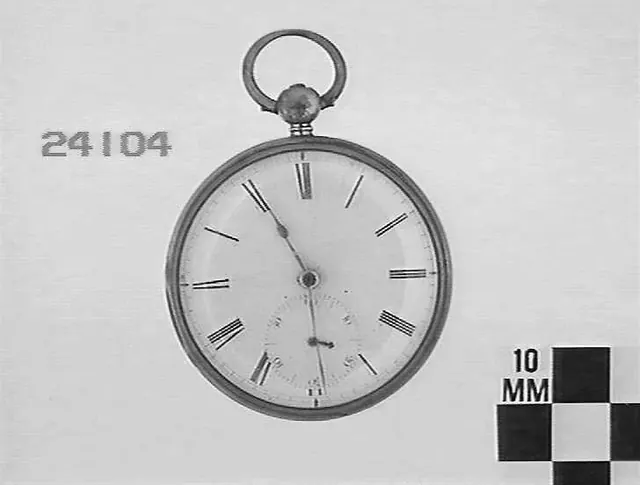
Pocket Watch - Barraud, London, c. 1800
Museums Victoria, Melbourne
Pocket Watches · 1897
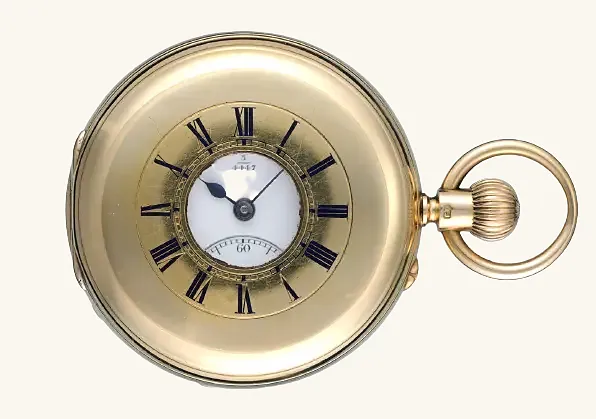
Gold Half Hunter by Barraud Pocket Watch, 1897
WatchMuseum.org shop
Instruments · c. 1840–1850
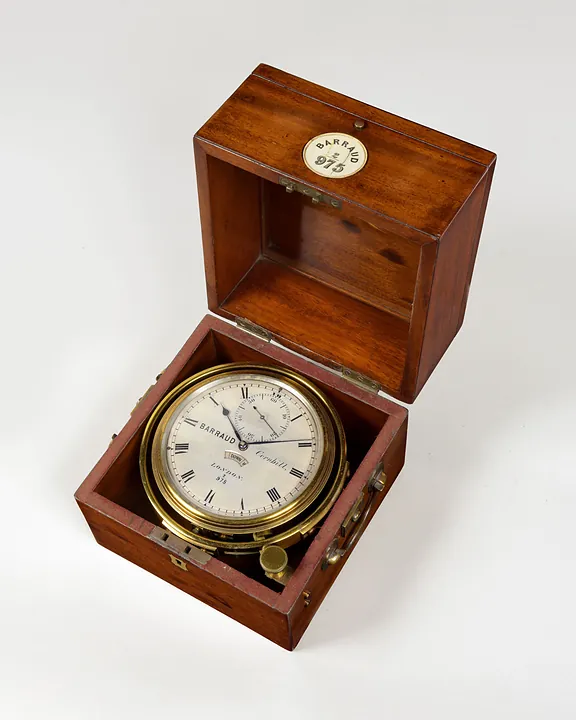
Marine chronometer by Barraud, c. 1840–1850
Howard Walwyn Fine Antique Clocks (dealer), London
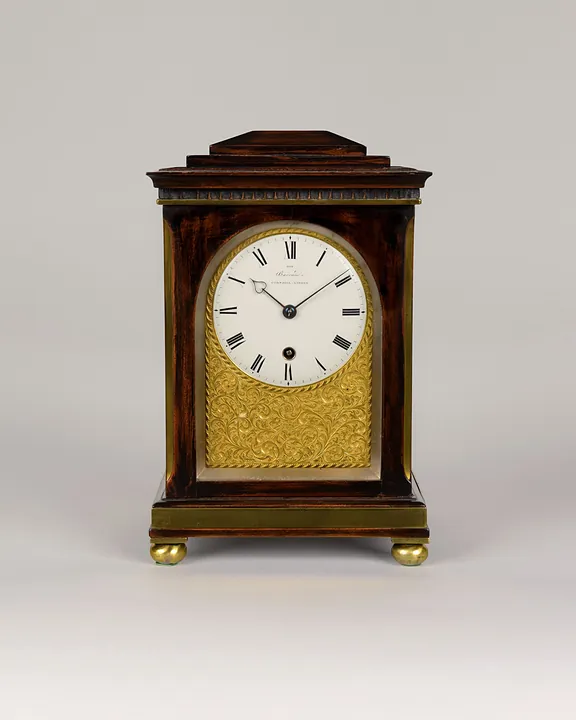
Clocks · c. 1820
Bracket clock by Barraud, Cornhill, London, c. 1820
Howard Walwyn Fine Antique Clocks (dealer), London
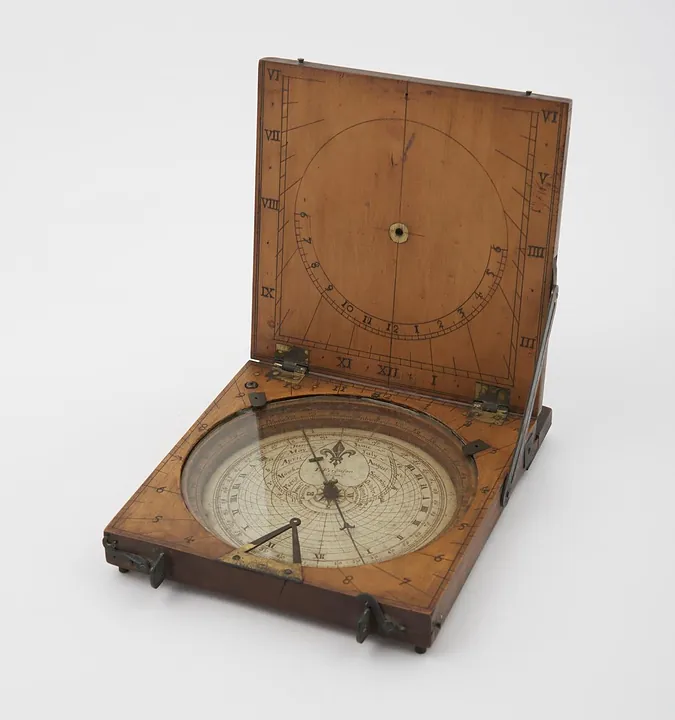
Instruments · 1731–1776
Azimuth compass sundial by James Ferguson, London, England, 1731–1776. Could also be used as a tablet sundial - string gnomon is missing (see note).
Science Museum Group, London
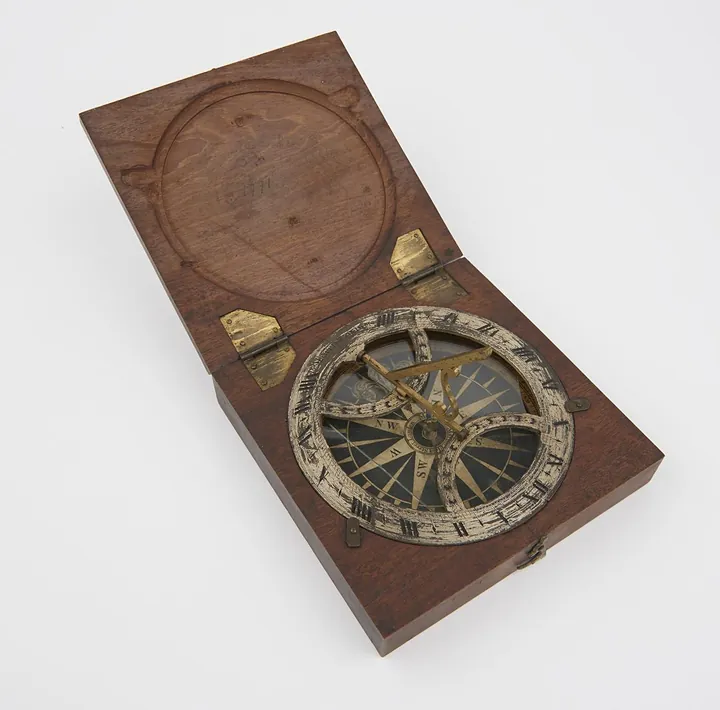
Instruments · 1738–1777
Azimuth sundial 4 3/8" diam, with folding gnomon fitted in mahogany case, made by B. Martin
Science Museum Group, London
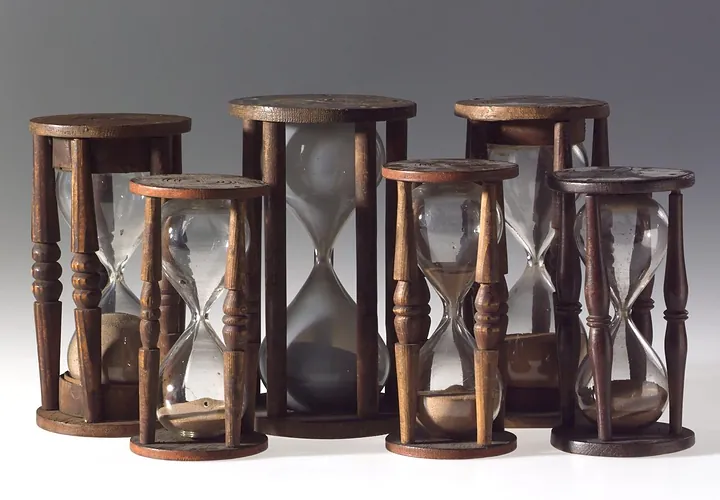
Instruments · 1750–1800
Single sand glass in four pillared wooden mount. 17 minutes. Horne Type B. Second half of the 18th century
Science Museum Group, London
Instruments · 1751–1825
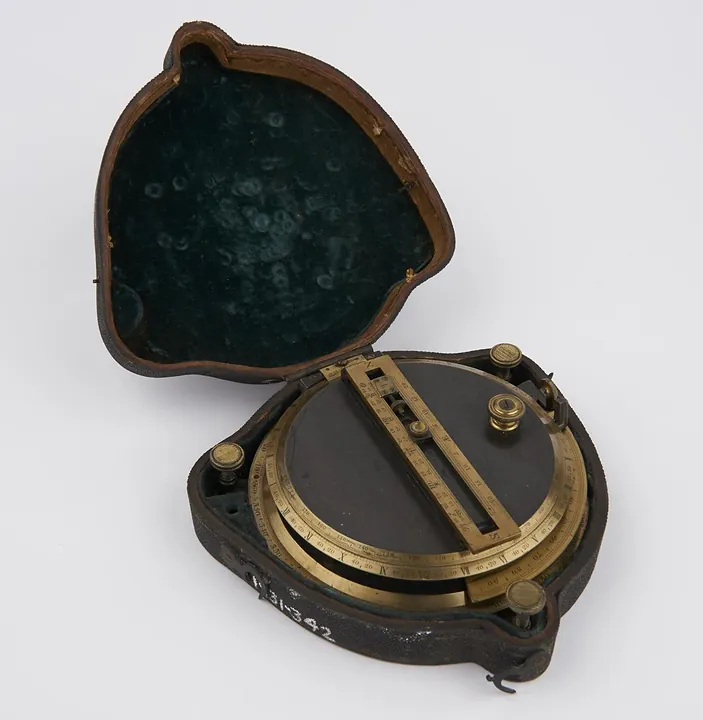
Sundial, by Troughton, in case. Invented and made by Troughton
Science Museum Group, London