
Pocket Watches · Alarm watch
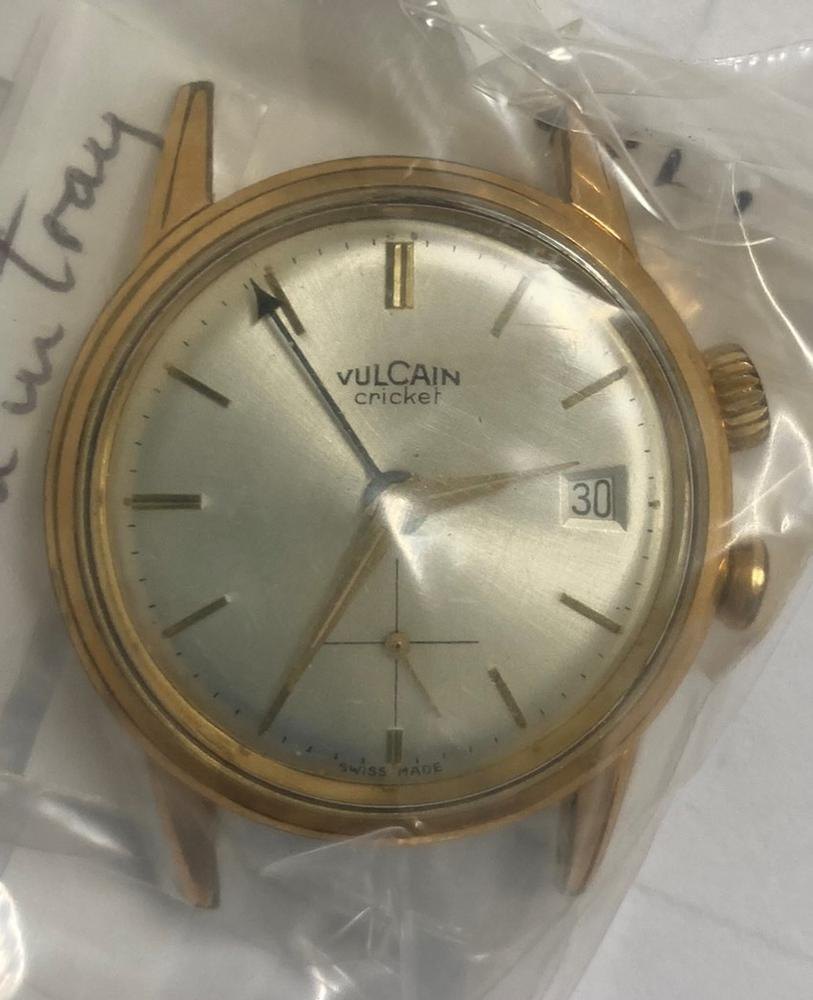
Gold-plated cased jewelled club-tooth lever alarm watch with date mechanism
- Maker / attribution
- Vulcain Watch Company (Made by)
- Date
- 1957–1963
- Historical period
- Modern Mechanical Horology (1945 – 1969)
- Country of origin
- Switzerland
- Place
- Switzerland
- Object type
- Alarm watch
- Materials / technique
- gold, steel
- Dimensions
- Diameter: 34 millimetres
- Holding institution
- British Museum
- Accession / object no.
- 1989,0407.2
- Credit line
- British Museum, London
- Catalogue title (original)
- Gold-plated cased jewelled club-tooth lever alarm watch with date mechanism (English)
View the source record ↗ (opens another website in a new tab)Suggest a correction
Record summary
Held and catalogued by British Museum (object number 1989,0407.2), this is an alarm watch by Vulcain Watch Company, made in Switzerland, dated 1957–1963. The Atlas places it in the Modern Mechanical Horology period (1945 – 1969) of its Pocket Watches collection. Materials and techniques recorded by the source: gold, steel. Recorded dimensions: Diameter: 34 millimetres. The record is illustrated with 1 photograph.
Assembled from the source record's structured fields. Dates and attributions are given as the source states them; where a field is missing the Atlas leaves it blank rather than estimating.
Catalogue description
Description — British Museum
17-jewel movement with club-tooth lever escapement and alarm mechanism. Silver-coloured metal dial with raised gold-plated baton hour marks; subsidiary seconds; date aperture at 3 o'clock. Gold-plated hour, minute and seconds hands; stainless-steel alarm-setting hand with arrow-head pointer. Gold-plated case with snap-in stainless-steel back.
Curator's comments — British Museum
Comment from Richard Good, Catalogue of Watches in the British Museum. Vol. V (Unpublished manuscript) Made by Vulcain Switzerland, c. 1945 Wrist Watch with alarm and date work with a club tooth lever escapement. Signature: On the dial VULCAIN CRICKET SWISS MADE. Case: A three part case with the bezel and band gilt and a stainless steel snap on double back which also acts as the bell. The back is marked 'VULCAIN WATCH CO - SWISS', the Vulcain trade mark with the date 1858, 'STAINLESS STEEL BACK WATERPROOF SHOCK PROTECTED U.S. PAT. 2644294 -SWISS PATENTS D.B.P. 820958'. Also the number S 1511 A. Two buttons, one for winding and hand setting. The other when pressed in enables the alarm hand to be set. Dial & Hands: A brushed silvered dial with gilt batons at the hours and double batons at 12, 6 and 9 o'clock. No baton at 3 o'clock since the date aperture is in this position. Gilt hour and minute hands, a rhodium plated alarm hand with a black painted arrow tip. A subsidiary seconds dial with a gilt seconds hand. Movement: A nickel silver movement. Ebauche Marks: V 405.1 on the inside of the front plate. Frame: A bridge for the barrel and keyless work. A bridge for the alarm train engraved 'U.S. PAT. 2644294 -SWISS PATENTS D.B.P. 820958'. A bridge for the going train engraved 'VULCAIN WATCH Fy SWITZERLAND 17 SEVENTEEN JEWELS'. Cocks for the balance and pallets. On the balance cock is an import mark PWP. Barrel and Mainspring: The going barrel with a recessed escape wheel. Barrel: I diameter 11.45 mm., height 1.4 mm. Mainspring: height 1.4 mm., thickness 0.115 mm. Barrel Arbor: diameter 2.4 mm., snailed. Hooking: Milled from the barrel wall. Train: All the wheels gilded, the centre wheel, third and fourth wheels with five crossings. The steel escape wheel with four. Jewelling: Jewelled bearings from the third wheel onwards, all the jewels pressed in. Shock protected bearings to the balance. Escapement: A straight line layout club tooth lever escapement with short lever, double roller and D-shaped impulse pin. The exposed pallet stones have flat acting faces. A steel escape wheel with four crossings. Solid banking provided by extensions to the pallet cock. An equidistant locking escapement. No. of teeth embraced 3½. Balance & Spring: A monometallic balance with brass screws. Balance diameter 9.45 mm., thickness 0.55 mm. A 'self compensating' flat spiral spring with 14 turns. Means of Regulation: An index on the balance cock registers against a divided scale with 'Fast' and 'Slow' engraved on the balance cock table. Train Counts and Beat Rate: Great wheel 80 (barrel) Centre wheel 64 pinion 10 Third wheel 60 pinion 8 Fourth wheel 60 pinion 8 Escape wheel 15 pinion 6 Beat rate 18,000 Motion work: cannon pinion 10 minute wheel 36, minute pinion 12 hour wheel 40 Winding System: Conventional positive stem set keyless work. Alarm Work: The alarm train is driven by a secondary wheel which is mounted on the barrel arbor and linked to the barrel ratchet wheel by a face ratchet acting with an armed disc whose nibs penetrate holes in another disc which is mounted beneath. Alarm setting wheel 52. Alarm train: Second wheel 56 pinion 16, Escape wheel 13 pinion 8. The escapement is pin wheel. Date work: Second 'minute' wheel 36 pinion 8, date wheel 48. The date wheel carries a pin which indexes the date disc. Dimensions: Case: diameter 34.0 mm., height 11 mm., over the glass Movement: diameter 28.5 mm, height 7.5 mm. Provenance: Purchased in 1989.
Inscriptions & marks
signature; VULCAIN CRICKET [dial]; trade mark; VULCAIN WATCH CO. SWISS S1511A [case-back]; signature; VULCAIN WATCH Fy SWITZERLAND 17 SEVENTEEN JEWELS [rear bridges]; inscription; PWP [rear bridges]; inscription; U.S. PAT 2644294 DPB 920958 SWISS PATENTS UNADJUSTED [rear bridges]
Provenance
Purchased from:, James Dowling
Historical context
Modern Mechanical Horology (1945 – 1969)
Tool watches for divers, pilots and astronauts; electric watches anticipate the electronic age.
After 1945 the pocket watch became a niche product — presentation and railway watches, inexpensive pin-lever watches, and commemorative pieces — while most innovation moved to the wrist.
Read the period in the timelineMore pocket watches from this periodEarlier: Golden Age of Mechanical Watchmaking
Atlas type guide
Pocket watches
The pocket watch was the dominant personal timekeeper from the late seventeenth century until the First World War. Its development tracks the history of the escapement: verge watches with fusees until the late eighteenth century; Thomas Mudge's lever escapement (c. 1755) and the cylinder escapement popularised by George Graham and later by Swiss makers; and the Swiss and English lever watches of the nineteenth century. Lépine's bar-bridge calibre and keyless winding made watches thinner and easier to use.
Industrialisation transformed the trade: American factories such as Waltham (from 1850) and Elgin produced interchangeable parts by machine, and Swiss makers responded with their own mechanisation after the 1876 Philadelphia Exhibition. By 1900 a reliable watch was affordable to millions; the finest makers continued to produce complications and precision watches.
What to look for
- The escapement: verge (crown wheel), cylinder, duplex, English or Swiss lever.
- Key winding (a square arbor in dial or back) or keyless crown winding.
- Signatures and serial numbers on the movement, dial and inside case back.
- Hallmarks, case maker's marks and gold or silver standards stamped in the case.
- Dial material: enamel, silver, gold, later printed metal.
Dating clues
- Verge watches dominate before c. 1800; cylinder watches c. 1770–1900; lever watches after c. 1820.
- Keyless winding: increasingly common after c. 1860.
- Manufacturer serial number lists exist for Waltham, Elgin, Longines, Omega, Patek Philippe and others.
General guidance written by the Atlas editors about this kind of object. It is not a statement about this particular piece; for that, rely on the source record above and on physical examination.
Related records
Pocket Watches · c. 1945
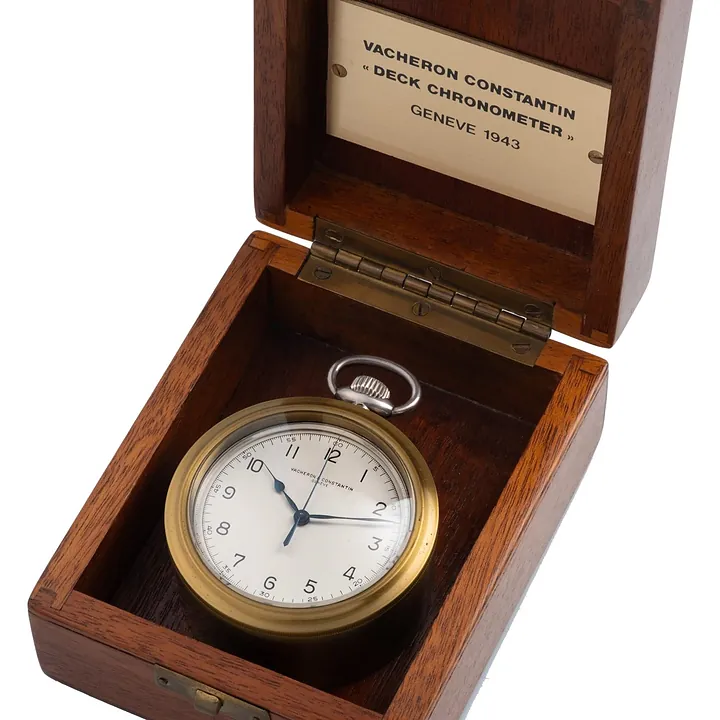
Vacheron Constantin pocket chronometer, c. 1945
Antiquorum auction archive, Geneva
Pocket Watches · c. 1945
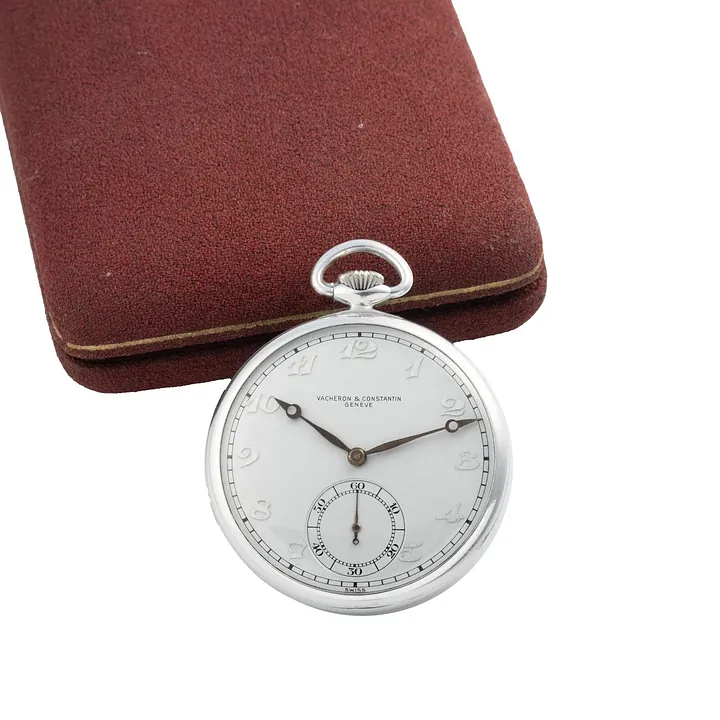
Vacheron Constantin watch, c. 1945
Antiquorum auction archive, Geneva
Pocket Watches · Sold to Longines France in January 1946
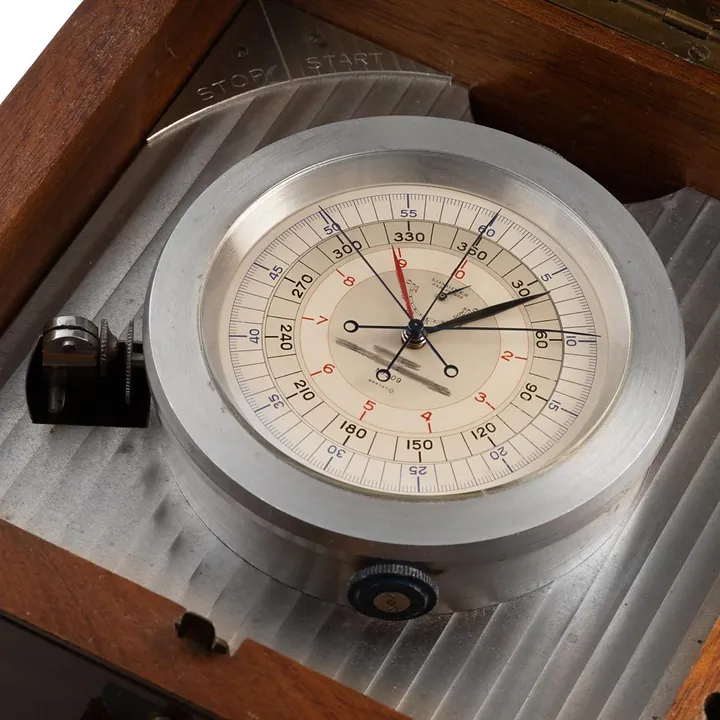
Longines Siderograph, ref. 5397, Sold to Longines France in January 1946
Antiquorum auction archive, Geneva
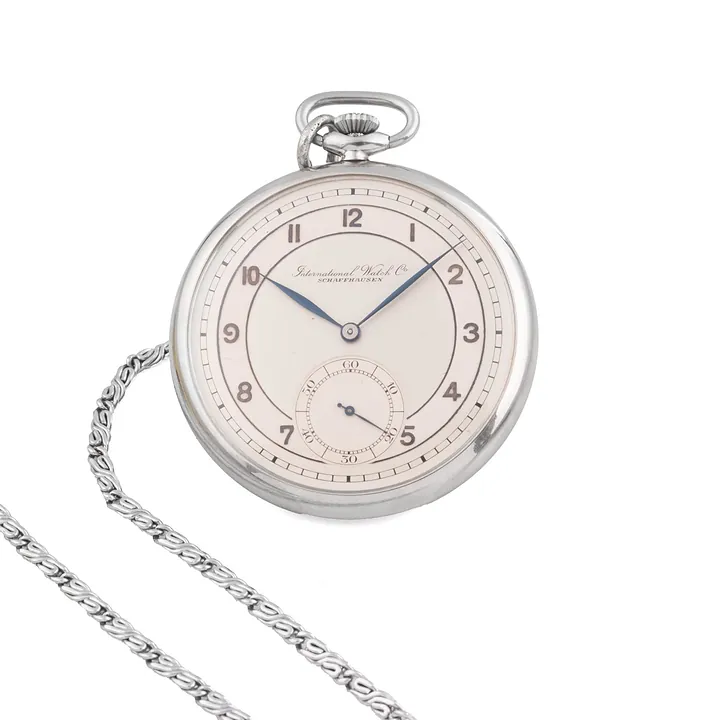
Pocket Watches · c. 1950
IWC Pocket Watch, c. 1950
Antiquorum auction archive, Geneva
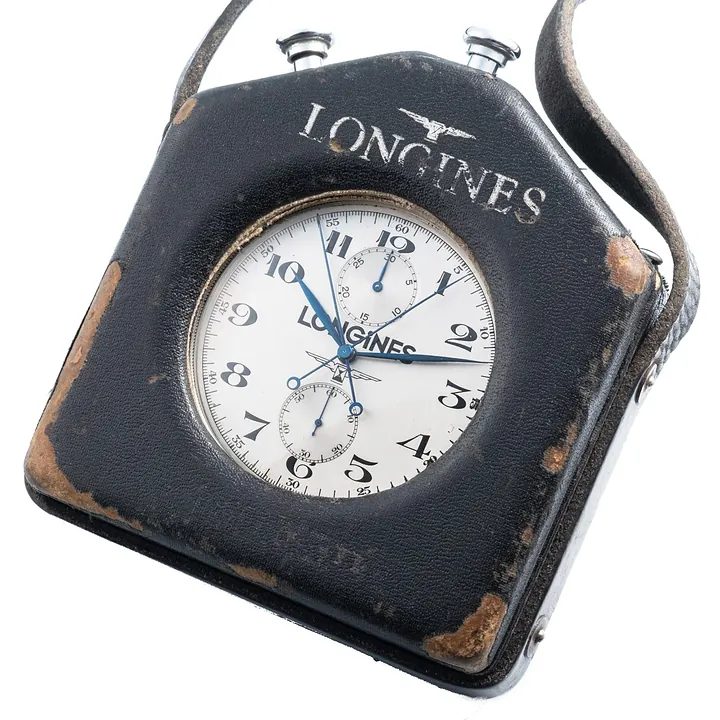
Pocket Watches · c. 1950
Longines pocket watch, ref. 4507, c. 1950
Antiquorum auction archive, Geneva
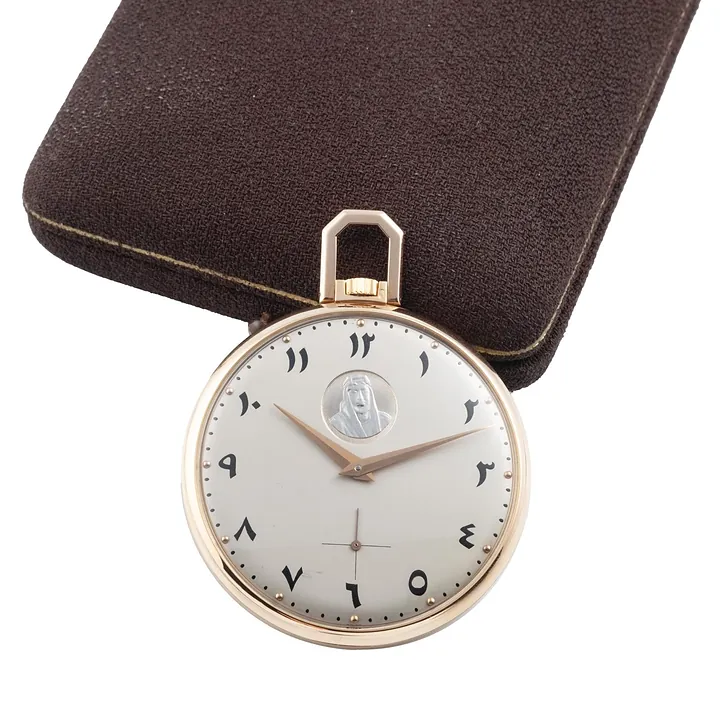
Pocket Watches · c. 1950s
Universal Genève pocket watch, ref. 11746 3/ 11746 1, c. 1950s
Antiquorum auction archive, Geneva
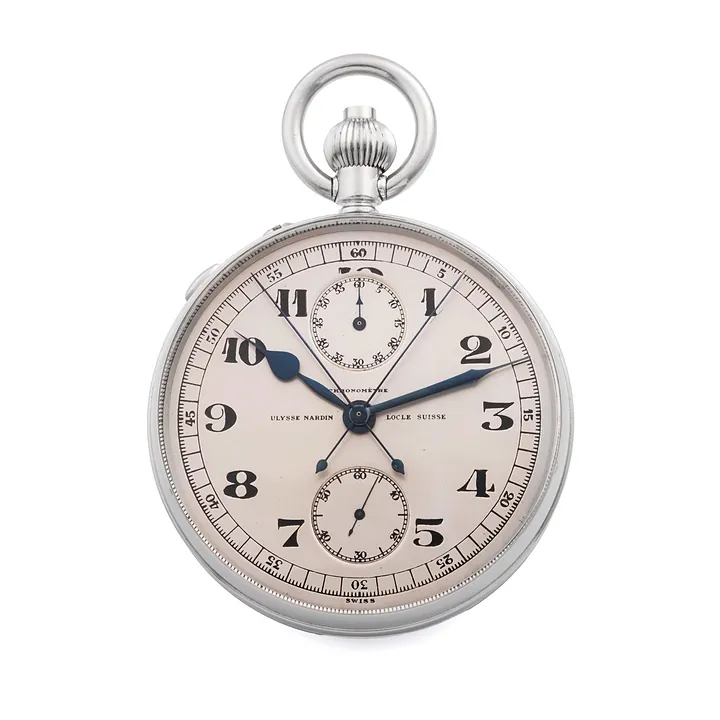
Pocket Watches · c. 1955
Ulysse Nardin Chronometer, c. 1955
Antiquorum auction archive, Geneva

Pocket Watches · c. 1960
Audemars Piguet ''couteau'', c. 1960
Antiquorum auction archive, Geneva