
Instruments · Deck watch
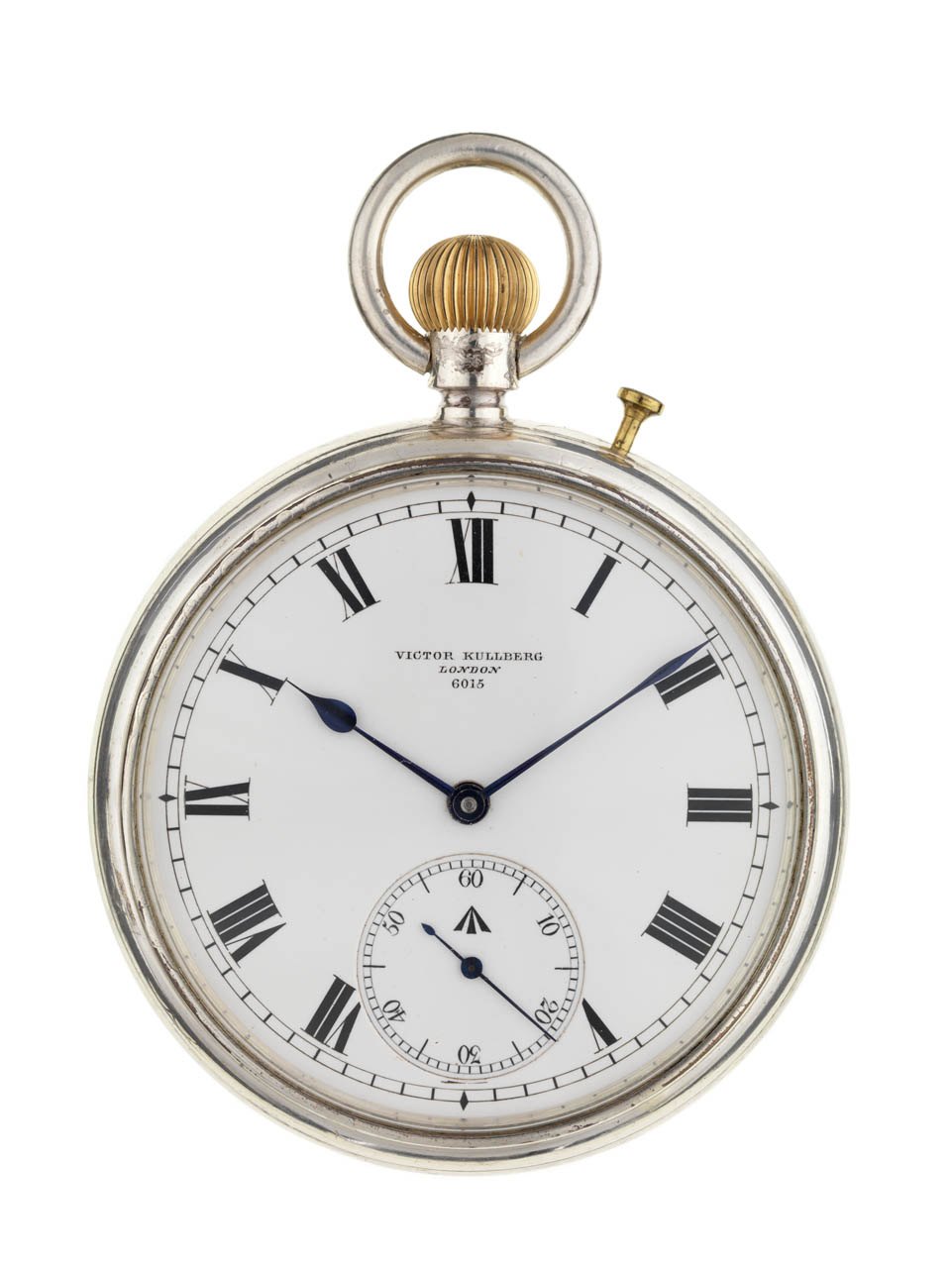
Deck watch no. 6015 by Victor Kullberg
- Maker / attribution
- Victor Kullberg (maker)
- Date
- c. 1909
- Historical period
- Golden Age of Mechanical Watchmaking (1900 – 1945)
- Country of origin
- England
- Object type
- Deck watch
- Materials / technique
- metal: brass; metal: steel
- Dimensions
- 90 x 65 x 23 mm
- Holding institution
- Royal Museums Greenwich
- Accession / object no.
- ZAA0159
- Credit line
- National Maritime Museum, Greenwich, London
- Catalogue title (original)
- 6015 (English)
View the source record ↗ (opens another website in a new tab)Suggest a correction
Record summary
Held and catalogued by Royal Museums Greenwich (object number ZAA0159), this is a deck watch by Victor Kullberg, made in England, dated c. 1909. The Atlas places it in the Golden Age of Mechanical Watchmaking period (1900 – 1945) of its Instruments collection. Materials and techniques recorded by the source: metal: brass; metal: steel. Recorded dimensions: 90 x 65 x 23 mm. The record is illustrated with 3 photographs.
Assembled from the source record's structured fields. Dates and attributions are given as the source states them; where a field is missing the Atlas leaves it blank rather than estimating.
Catalogue description
Catalogue description — Royal Museums Greenwich
Three tier, mahogany deck box, now with internal fittings missing. The silver open-face case is hallmarked for London 1905-06 and is stamped with the sponsor’s mark ‘F.T’ (Frederick Thoms). The watch has a gilt winding crown and brass push-piece for hand setting at one o’clock. The white enamel dial has black roman numerals and is signed below XII: ‘VICTOR KULLBERG / LONDON / 6015’ .There is also a ‘↑’within the subsidiary seconds dial, which has Arabic ten-second numerals. It has polished blued steel spade and poker hands with a fine pointer blued steel second hand with a counter poised tail. The watch has a fine, gilt-brass going barrel, full plate movement with four turned pillars, all fixed with polished and blued steel screws. The top of the potence plate is engraved: ‘Victor Kullberg. 105 Liverpool Rd. London’ and the barrel bridge is engraved with ‘↑’, ‘No.6015’ and two crowned emblems denoting maker to the British Admiralty and the King of Sweden. It has a ratchet tooth lever escapement with compensation balance and blued steel spiral balance spring, with overcoil, under a gilt brass bridge. Jewelled to the third wheel. The watch was first supplied to Kullberg’s as a rough movement from the Lancashire Watch Co. in March 1894. Finishing then began in September 1905 and it was virtually completed in May 1906. It then lay in stock until it was ordered by the Admiralty in February 1909. It cost £18 10s and was delivered in March 1909. It was on active service until 1945 after which it remained in the MoD chronometer workshops until loan to the NMM in 1972. Victor Kullberg (1824-90) was born in Visby on the Island of Gotland, Sweden. He was trained by the Swedish chronometer maker Victor Soderburg in Stockholm in 1840 and emigrated to London in 1851, having moved to his permanent address at 105 Liverpool Road, N1, by 1870. During his lifetime Kullberg gained many medals and awards for his chronometers and enjoyed a truly international reputation. As well as supplying many foreign governments, he regularly submitted chronometers for the Annual Trials at Greenwich Observatory, gaining first place in 1864 with a chronometer fitted with his newly invented ‘flat rim’ balance. His inventions included several designs of compensation balance and improvements to keyless winding for pocket watches. He also designed the automatic gas-governor for controlling the temperature of the chronometer testing ovens at the Observatory. More than 500 chronometers by Kullberg were supplied to the Royal Navy alone and he can be said to have been one of the 19th century’s finest chronometer makers. On Kullberg’s death in 1890 the firm was taken over by George and Peter Wennerstrom, themselves succeeded by Sanfrid Lundquist who had joined the firm in 1894 and who moved the firm to Cranford in Middlesex in 1938, trading under the name of Victor Kullberg until his death in 1947).
Historical context
Golden Age of Mechanical Watchmaking (1900 – 1945)
The wristwatch displaces the pocket watch; waterproof cases, self-winding and grand complications.
Timing instruments became electrical and specialised: industrial time recorders, sports timers and aviation instruments.
Read the period in the timelineMore instruments from this periodEarlier: Industrial Revolution
Atlas type guide
Marine chronometers
A marine chronometer is a precision timekeeper carried at sea to find longitude: the navigator compares local noon, observed with a sextant, with the time at a reference meridian kept by the chronometer. Each hour of difference corresponds to fifteen degrees of longitude. John Harrison proved the method in the 1760s; Pierre Le Roy, Ferdinand Berthoud, John Arnold and Thomas Earnshaw then developed the detent escapement and the compensation balance that made chronometers practical to manufacture.
By the nineteenth century London, Liverpool, Le Locle and Glashütte supplied navies and merchant fleets. A typical box chronometer has a spring-detent escapement, a fusee to equalise mainspring torque, a bimetallic compensation balance with a helical balance spring, and is mounted in gimbals inside a wooden box so that it stays level.
What to look for
- Gimbals and a three-tier wooden box with a glazed inner lid.
- A power-reserve ('up and down') indicator on the dial, usually showing 56 hours on two-day instruments.
- Spring-detent escapement and a cylindrical (helical) balance spring visible through the movement.
- Admiralty or navy marks (broad arrow), and rating certificates from observatories.
- The maker's number on the dial and movement; many makers' registers survive, allowing dating.
Dating clues
- Earnshaw-type spring-detent chronometers became standard after about 1800.
- Auxiliary compensation devices on the balance appear from the mid-nineteenth century.
- Quartz and radio time signals ended routine use of mechanical chronometers in the 1970s and 1980s.
General guidance written by the Atlas editors about this kind of object. It is not a statement about this particular piece; for that, rely on the source record above and on physical examination.
Read next:Spring detent (chronometer) escapementFuseeDetent escapement
Related records
Instruments · 1870–1877
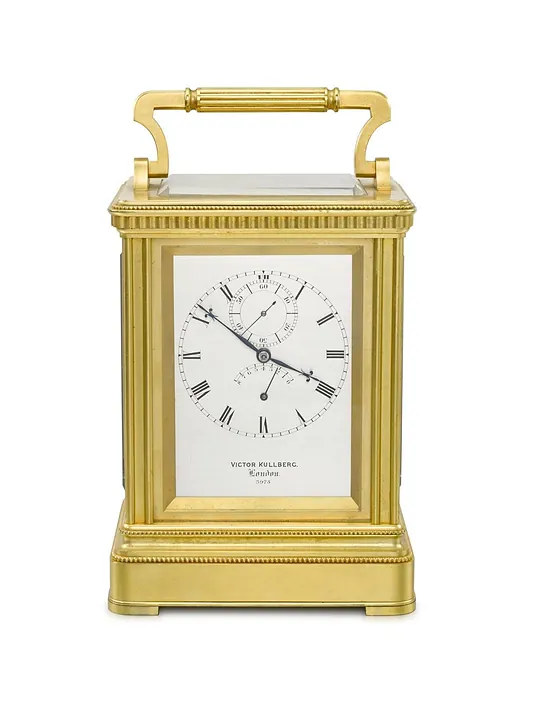
Chronometer by Victor Kullberg, England, 1870–1877
Science Museum Group, London
Movements & Components · 1860–1880
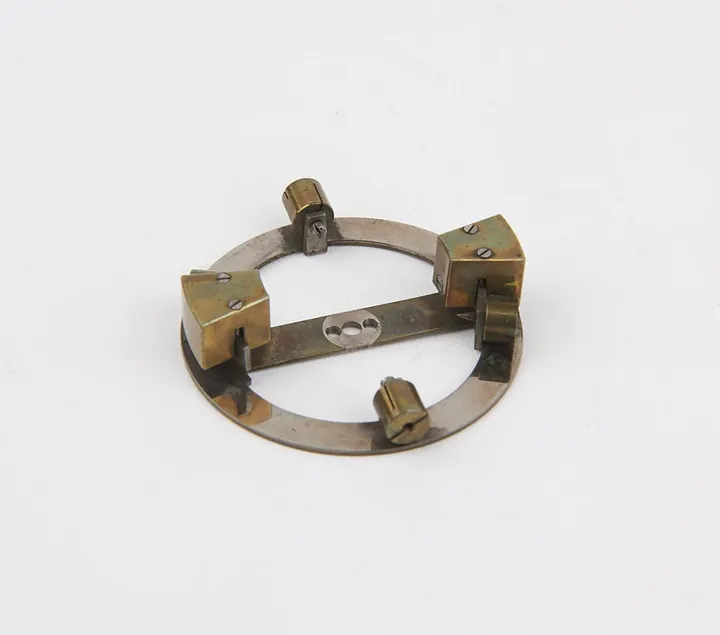
Compensation balance by Victor Kullberg, London, England, 1860–1880.
Science Museum Group, London
Pocket Watches · c. 1890
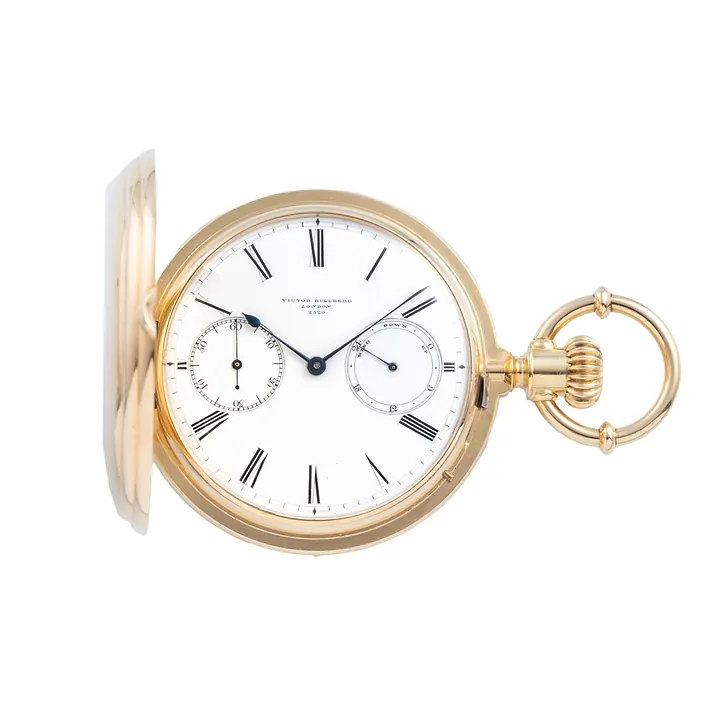
Victor Kullberg Chronometer, c. 1890
Antiquorum auction archive, Geneva
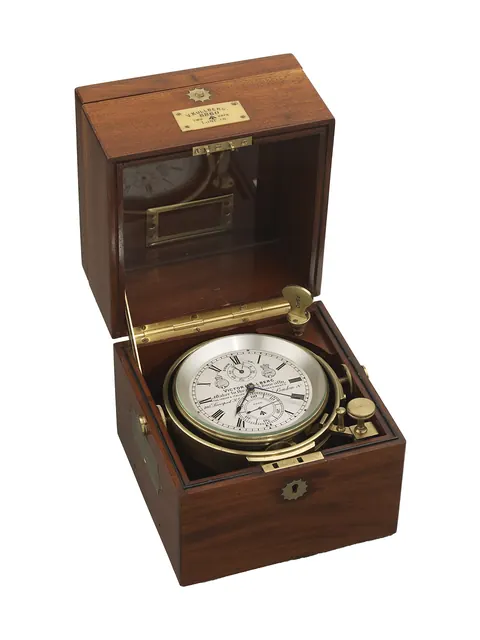
Instruments · c. 1915
Marine chronometer no. 8860 by Victor Kullberg
Royal Museums Greenwich
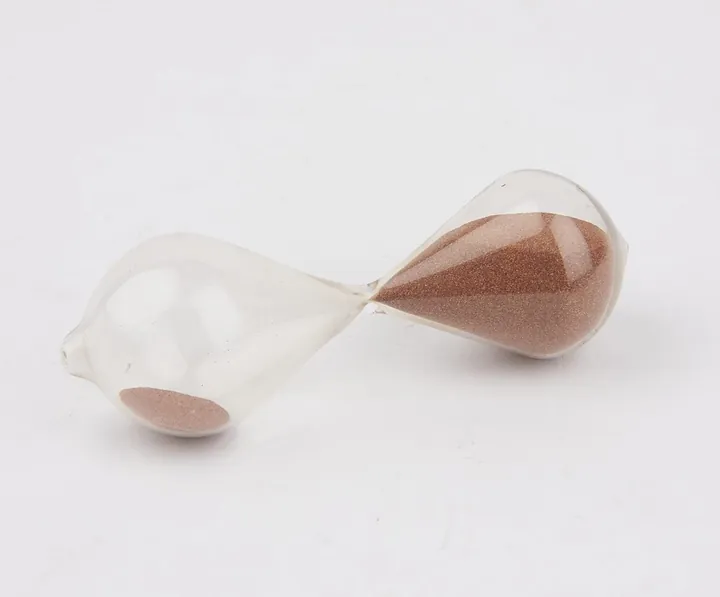
Instruments · 1890–1950
Single sand-glass unmounted, showing complete seal. 15 mins. Abbot Horne. No. Type C., 1890–1950
Science Museum Group, London
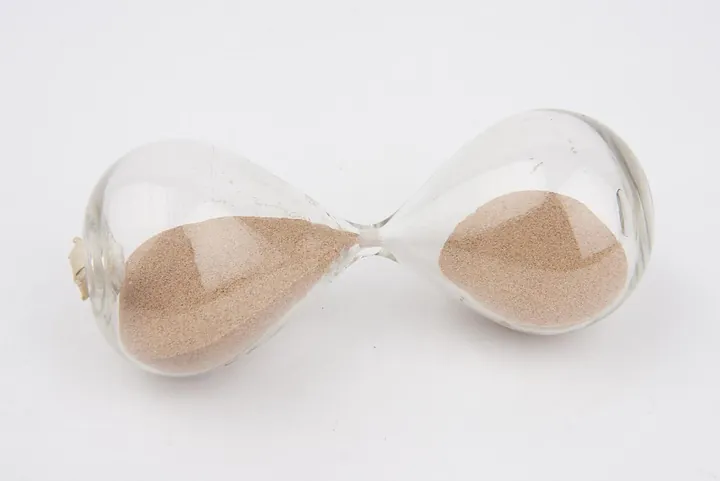
Instruments · 1890–1950
Single sand-glass unmounted, showing corked entry hole. 2 1/2 mins. Abbot Horne. Type B, 1890–1950
Science Museum Group, London
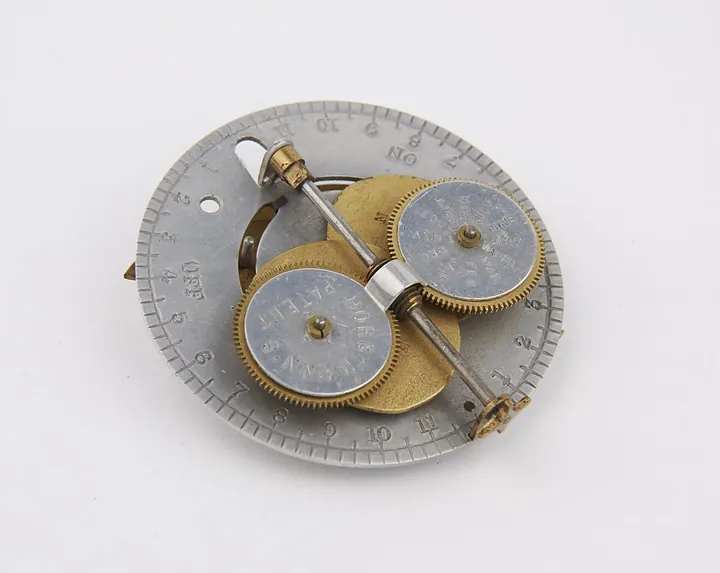
Instruments · 1904–1910
Solar dial from Horstmann patent clockwork street light controller, Horstmann, British, 1904–1910.
Science Museum Group, London
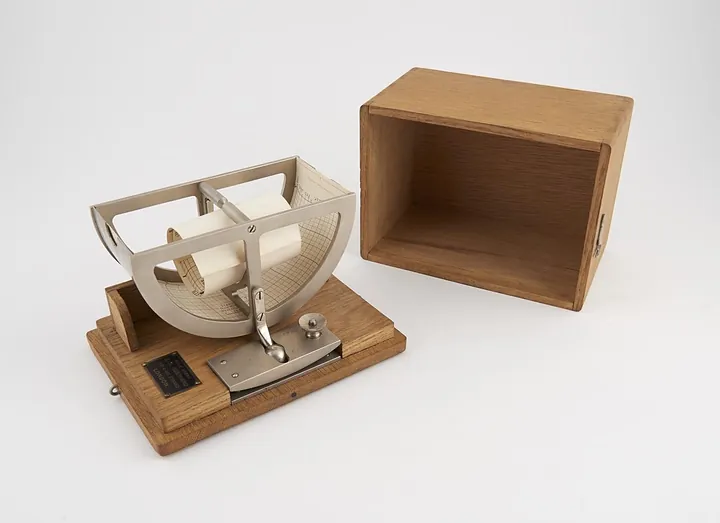
Instruments · 1912
Ferguson solar chronometer and astronomical compass, No. 124G with spare chart, by J.H. Steward, London, England. c.1912. Lacks alidad
Science Museum Group, London