Instruments · Sand glass
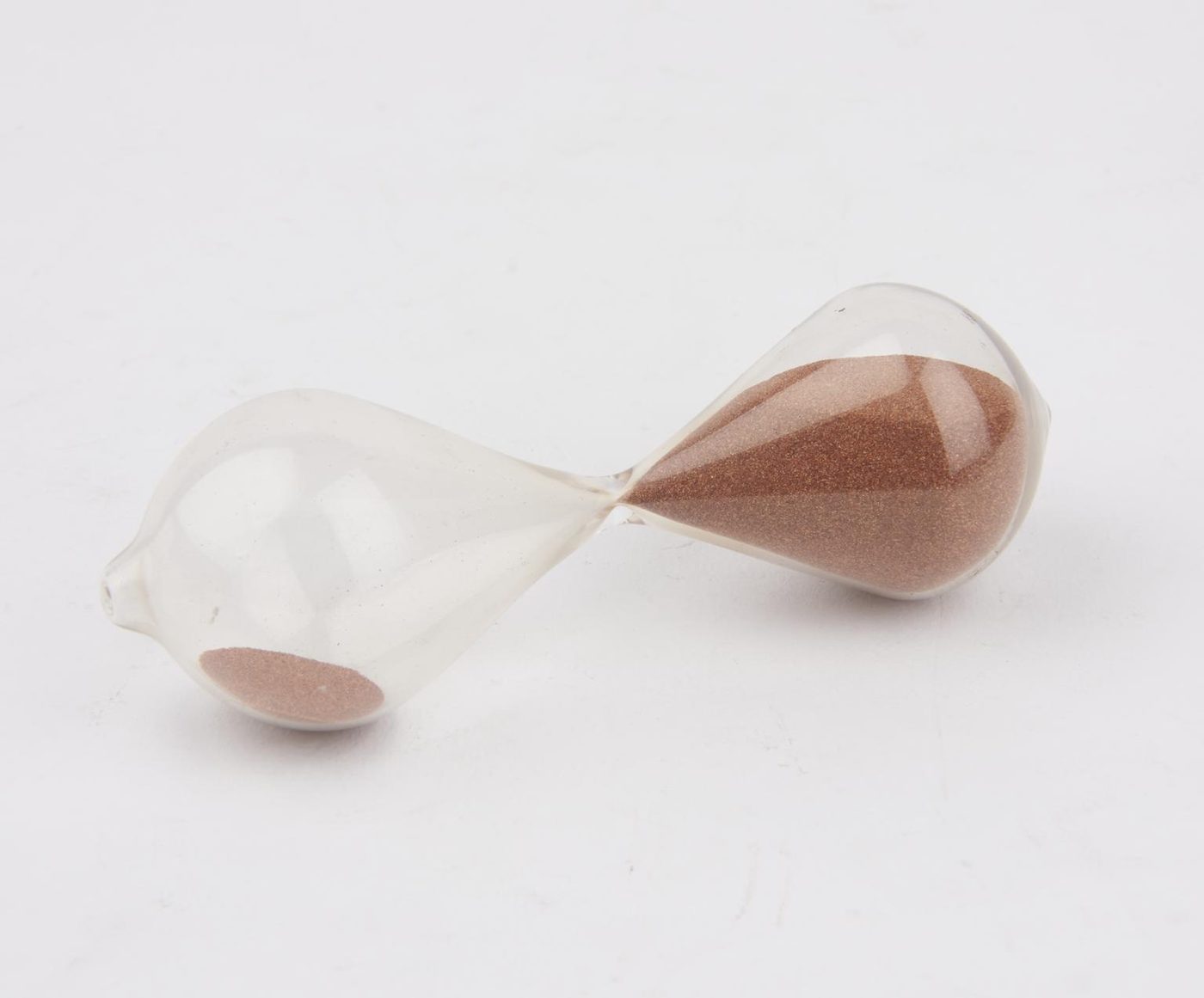
Single sand-glass unmounted, showing complete seal. 15 mins. Abbot Horne. No. Type C., 1890-1950
- Maker / attribution
- Unrecorded in source
- Date
- 1890-1950
- Historical period
- Golden Age of Mechanical Watchmaking (1900 – 1945)
- Country of origin
- United Kingdom
- Place
- United Kingdom, United Kingdom
- Object type
- Sand glass
- Dimensions
- overall: 125 mm 40 mm, .05kg
- Holding institution
- Science Museum Group, London
- Accession / object no.
- 1953-311
- Credit line
- Abbot Horne Collection
- Catalogue title (original)
- Unmounted Sand Glass, Unsigned, 1890-1950
Record summary
Held and catalogued by Science Museum Group, London (object number 1953-311), this is a sand glass, made in United Kingdom, United Kingdom, dated 1890-1950. The Atlas places it in the Golden Age of Mechanical Watchmaking period (1900 – 1945) of its Instruments collection. Recorded dimensions: overall: 125 mm 40 mm, .05kg. The record is illustrated with 1 photograph.
Assembled from the source record's structured fields. Dates and attributions are given as the source states them; where a field is missing the Atlas leaves it blank rather than estimating.
Catalogue description
The source record does not include a narrative description. The structured fields above are reproduced from it.
Historical context
Golden Age of Mechanical Watchmaking (1900 – 1945)
The wristwatch displaces the pocket watch; waterproof cases, self-winding and grand complications.
Timing instruments became electrical and specialised: industrial time recorders, sports timers and aviation instruments.
Read the period in the timelineMore instruments from this periodEarlier: Industrial Revolution
Atlas type guide
Sandglasses and hourglasses
A sandglass measures an interval rather than telling the time of day: a fixed quantity of fine material runs from one bulb into the other through a narrow neck. Documented in Europe from the fourteenth century, sandglasses were used on board ship to time watches and to measure speed with the log line, in churches to time sermons, in schools, laboratories and kitchens.
Early glasses were made as two separate bulbs bound together at the neck with a diaphragm and wax and thread; one-piece blown glasses only became usual in the nineteenth century. The 'sand' could be powdered marble, eggshell or metal filings, carefully sieved and dried. Sets of graduated glasses in one frame allowed several intervals to be timed.
What to look for
- Whether the two bulbs are separate and bound at the neck, or blown as one piece.
- The frame: turned wood, brass, silver or pewter, sometimes with pillars and decorated end plates.
- Multiple glasses in a single frame, giving quarter, half, three-quarter and full hours.
- Marine glasses of 30 seconds or 28 seconds used with the log line.
Dating clues
- Bound two-piece glasses predate about 1800; one-piece glasses are generally later.
- Sermon glasses on pulpits and multi-glass frames are characteristic of the sixteenth to eighteenth centuries.
General guidance written by the Atlas editors about this kind of object. It is not a statement about this particular piece; for that, rely on the source record above and on physical examination.
Related records
Instruments · 1890-1950
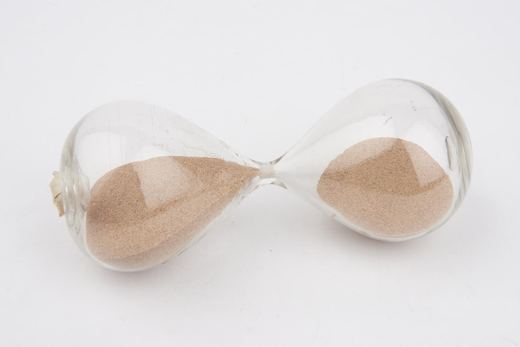
Single sand-glass unmounted, showing corked entry hole. 2 1/2 mins. Abbot Horne. Type B, 1890-1950
Science Museum Group, London
Instruments · 1904-1910
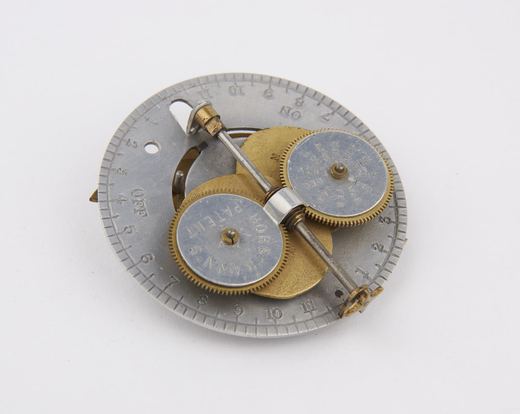
Solar dial from Horstmann patent clockwork street light controller, Horstmann, British, 1904-1910.
Science Museum Group, London
Instruments · circa 1935
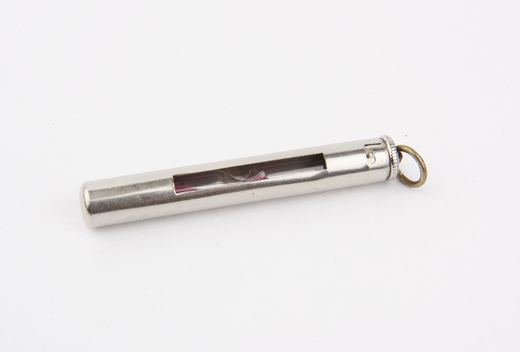
Single sandglass in metal case, 30 seconds running time, used as a pulse glass by a nurse (Muriel Rosebury) at Westwood Hospital, Oldham, 1935-1945.
Science Museum Group, London
Instruments · 1880-1920
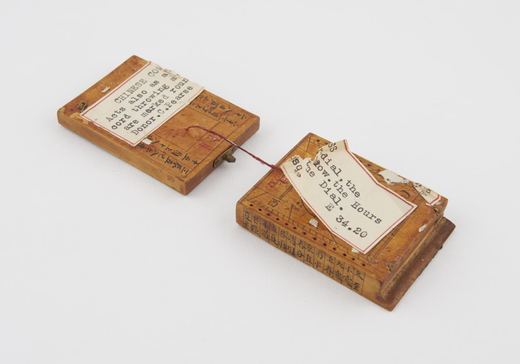
Compass and sundial, two hinged wooden blocks, compass needle set into one, covered with glass windows, painted with Chinese characters, Chinese, 1880-1920
Science Museum Group, London
Instruments · 1890-1930
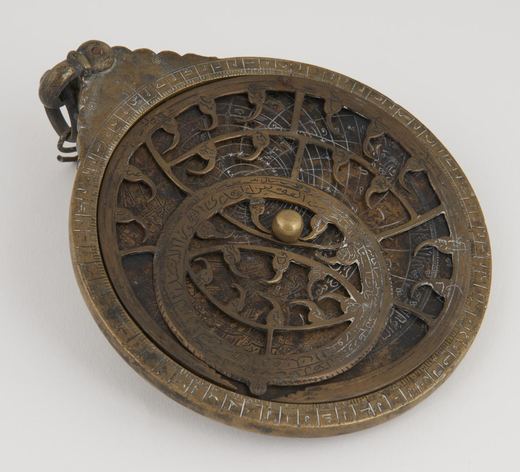
Decorative fake Islamic astrolabe with four plates and sightless alidade, pin missing.
Science Museum Group, London
Instruments · 1890-1930
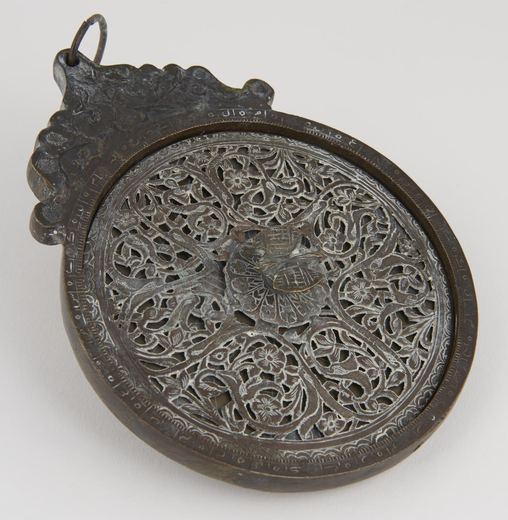
Decorative fake Islamic astrolabe, Arabic origin, brass, with four plates and foliate cover.
Science Museum Group, London
Instruments · 1890-1930
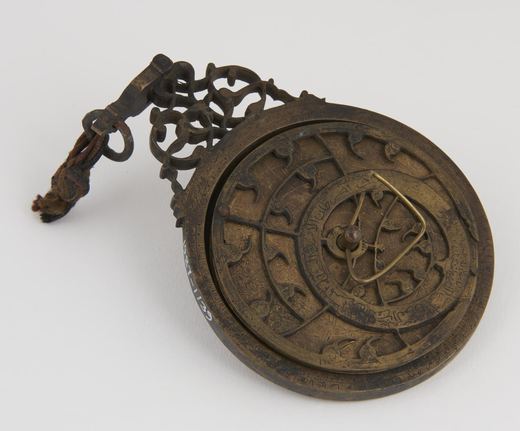
Decorative fake Islamic astrolabe, brass, with four plates, cursive kursi, and sightless alidade, pin missing.
Science Museum Group, London
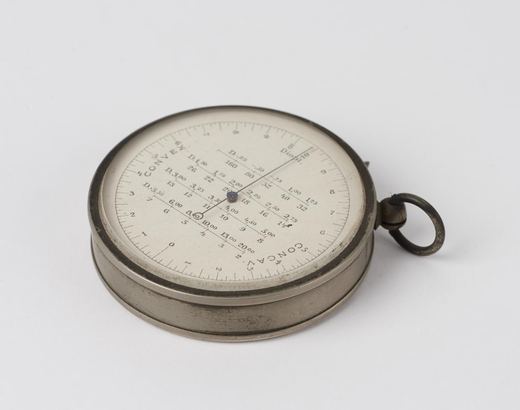
Instruments · 1890-1945
Optometer(?), stop-watch form, scaled circular face to measure concanity,[.........] of lenses, English, 1890-1945
Science Museum Group, London