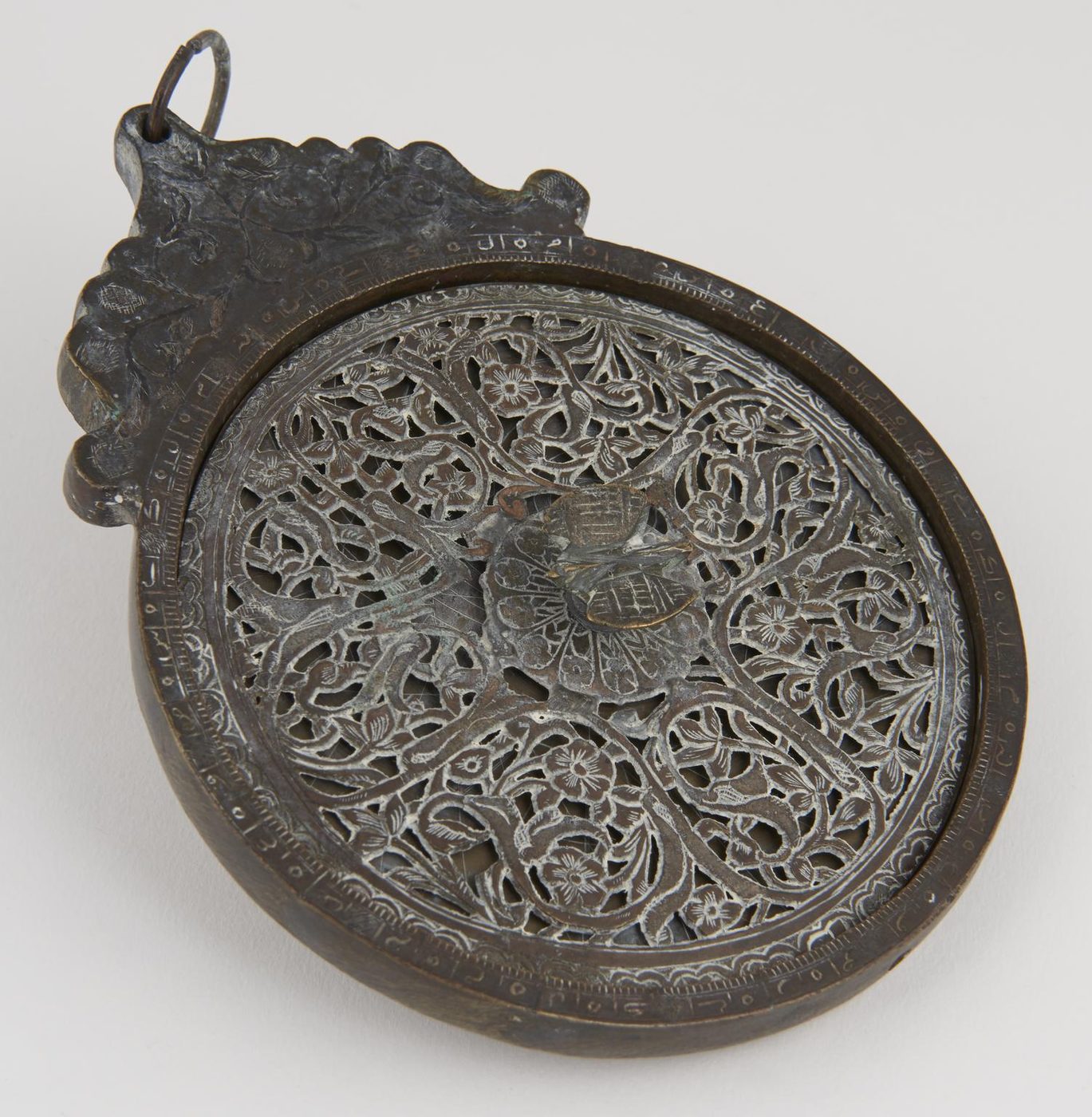
Instruments · Astrolabe; forgery
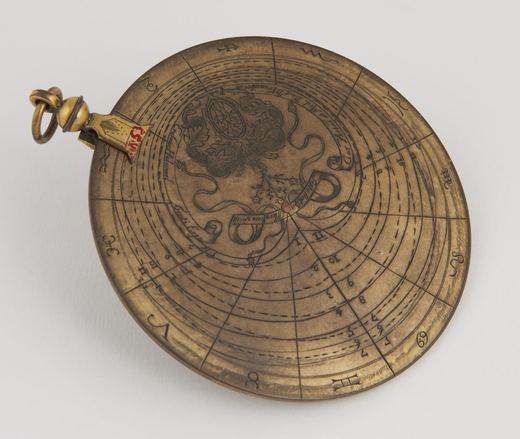
Decorative fake Islamic astrolabe, Arabic origin, brass, with four plates and foliate cover.
- Maker / attribution
- Unrecorded in source
- Date
- 1890-1930
- Historical period
- Golden Age of Mechanical Watchmaking (1900 – 1945)
- Country of origin
- Islamic world
- Object type
- Astrolabe; forgery
- Holding institution
- Science Museum Group, London
- Accession / object no.
- 1987-1137
- Credit line
- On loan from the Wellcome Trust
- Catalogue title (original)
- Fake Islamic astrolabe, 1890-1930
Record summary
Held and catalogued by Science Museum Group, London (object number 1987-1137), this is an astrolabe; forgery, made in Islamic world, dated 1890-1930. The Atlas places it in the Golden Age of Mechanical Watchmaking period (1900 – 1945) of its Instruments collection. The record is illustrated with 1 photograph.
Assembled from the source record's structured fields. Dates and attributions are given as the source states them; where a field is missing the Atlas leaves it blank rather than estimating.
Catalogue description
The source record does not include a narrative description. The structured fields above are reproduced from it.
Historical context
Golden Age of Mechanical Watchmaking (1900 – 1945)
The wristwatch displaces the pocket watch; waterproof cases, self-winding and grand complications.
Timing instruments became electrical and specialised: industrial time recorders, sports timers and aviation instruments.
Read the period in the timelineMore instruments from this periodEarlier: Industrial Revolution
Atlas type guide
Astrolabes, quadrants and astronomical compendia
The planispheric astrolabe is a two-dimensional model of the sky. A pierced rotating star map (the rete) turns over a plate engraved for a particular latitude; by aligning a star or the sun with its observed altitude, the user can read the time of day or night, the time of sunrise and sunset, and solve many other astronomical problems. Developed in the Hellenistic world and refined by astronomers in the Islamic world from the eighth century, it reached Latin Europe through al-Andalus.
Quadrants, compendia, armillary spheres and later orreries belong to the same family of instruments that model the heavens. They were teaching tools, status objects and practical time-finders. Many surviving examples are signed and dated, which makes them important evidence for the history of instrument-making workshops in Baghdad, Isfahan, Lahore, Toledo, Louvain, Nuremberg, London and elsewhere.
What to look for
- The latitudes engraved on the plates — they show which cities the instrument was made for.
- The script and calendar used: Arabic or Persian inscriptions, abjad numerals, Hebrew or Latin text indicate tradition and region.
- The design of the rete: the number of named stars and the style of the star pointers changes by region and period.
- Shadow squares, unequal-hour lines and zodiac scales on the back (dorsum).
- Signatures, dedications and dates, often hidden on the throne (kursi) or the back.
Dating clues
- Signed and dated astrolabes allow precise dating; undated ones are attributed by star positions on the rete, which shift slowly through precession.
- Gothic-style retes with tracery are typical of European instruments of the fourteenth and fifteenth centuries.
- Printed paper astrolabes and planispheres became common from the sixteenth century onward.
General guidance written by the Atlas editors about this kind of object. It is not a statement about this particular piece; for that, rely on the source record above and on physical examination.
Related records
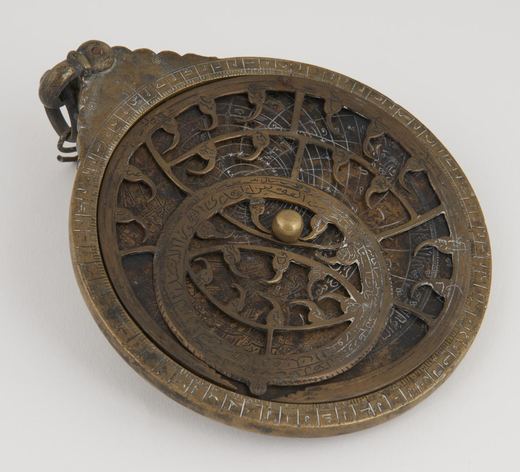
Instruments · 1890-1930
Decorative fake Islamic astrolabe with four plates and sightless alidade, pin missing.
Science Museum Group, London
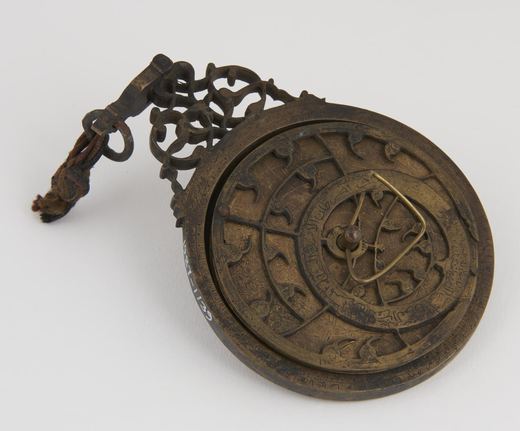
Instruments · 1890-1930
Decorative fake Islamic astrolabe, brass, with four plates, cursive kursi, and sightless alidade, pin missing.
Science Museum Group, London
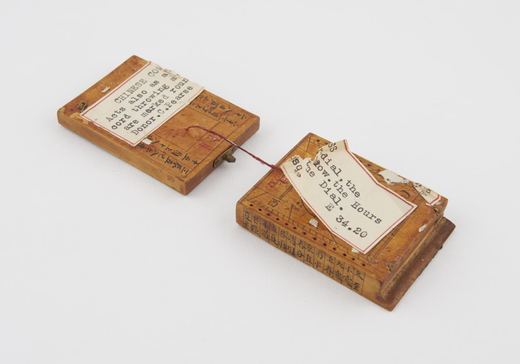
Instruments · 1880-1920
Compass and sundial, two hinged wooden blocks, compass needle set into one, covered with glass windows, painted with Chinese characters, Chinese, 1880-1920
Science Museum Group, London
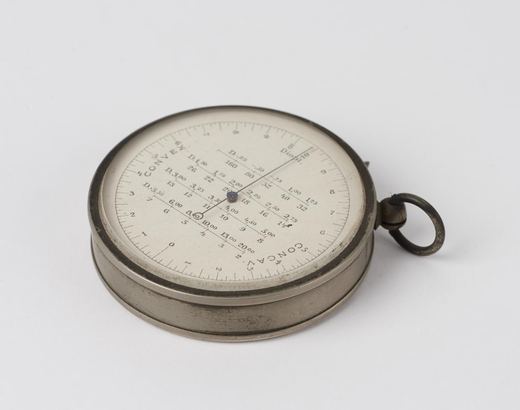
Instruments · 1890-1945
Optometer(?), stop-watch form, scaled circular face to measure concanity,[.........] of lenses, English, 1890-1945
Science Museum Group, London
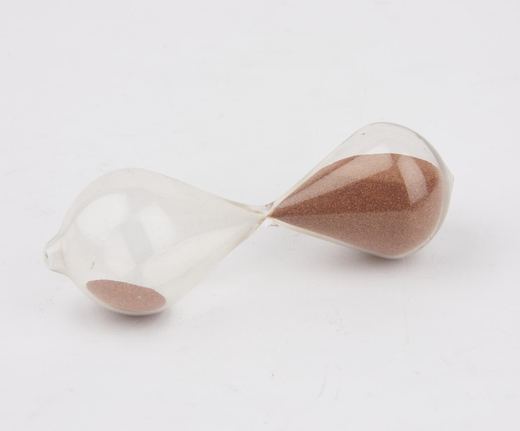
Instruments · 1890-1950
Single sand-glass unmounted, showing complete seal. 15 mins. Abbot Horne. No. Type C., 1890-1950
Science Museum Group, London
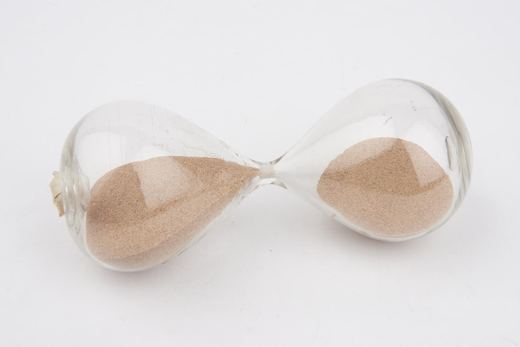
Instruments · 1890-1950
Single sand-glass unmounted, showing corked entry hole. 2 1/2 mins. Abbot Horne. Type B, 1890-1950
Science Museum Group, London
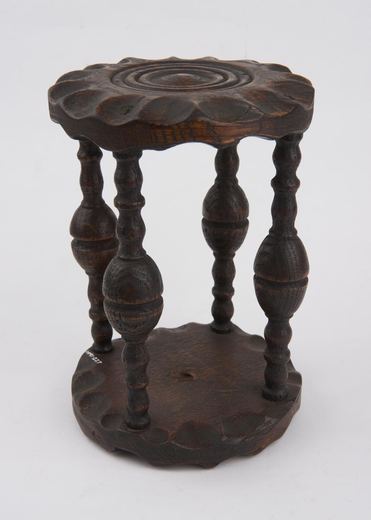
Instruments · 1900–1950
Reproduction of a "Jacobean" sand-glass mount in oak, possibly by Pearson-Page. English, early 20th century
Science Museum Group, London
Instruments · 1901-1933
Sundial by Habermel, Erasmus, Netherlands, 1901-1933
Science Museum Group, London