
Clocks · Skeleton clock
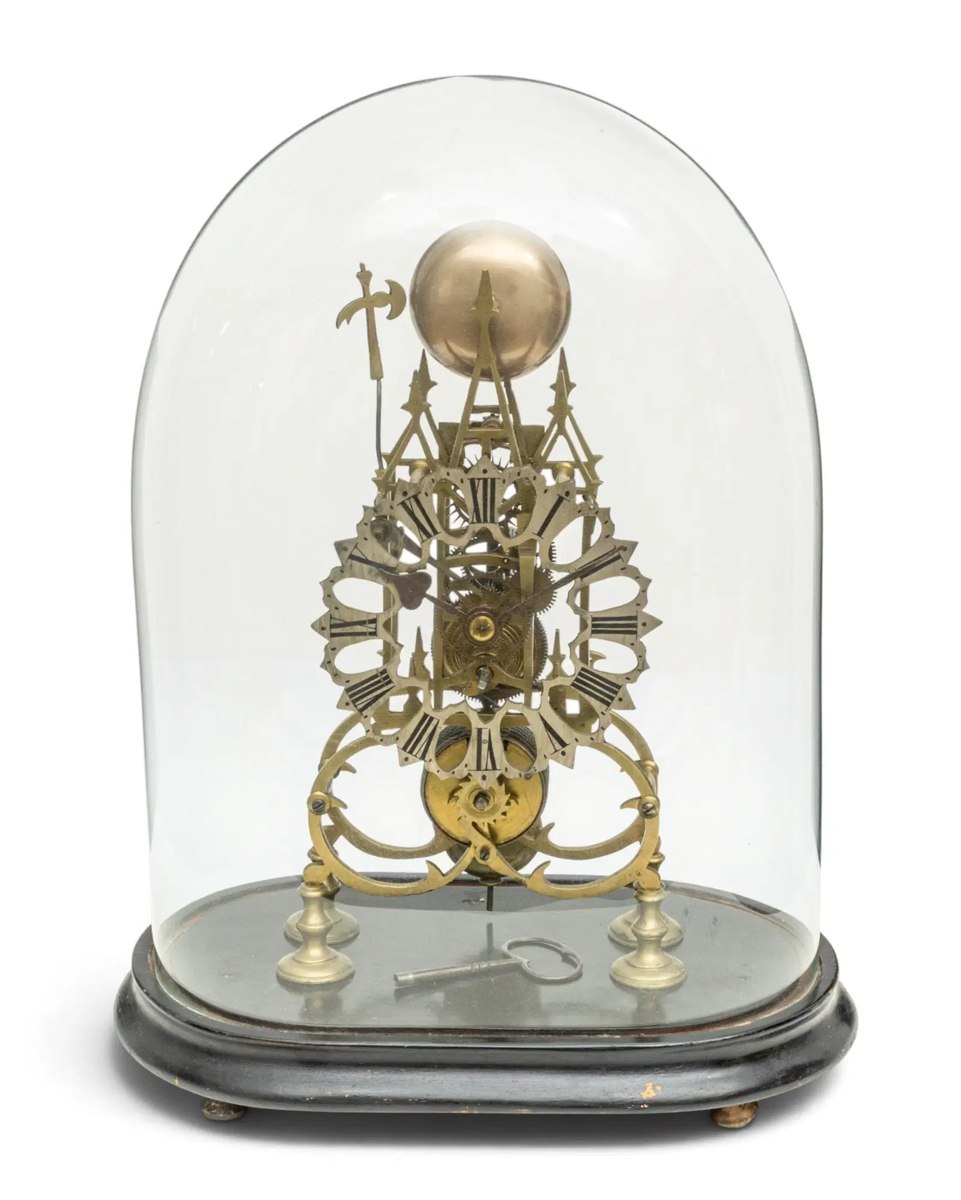
Brass Skeleton Clock with Oval Glass Dome
- Maker / attribution
- Unrecorded in source
- Date
- 19th c.
- Historical period
- Precision & Scientific Horology (1750 – 1850)
- Country of origin
- Unrecorded in source
- Object type
- Skeleton clock
- Dimensions
- H 17\" W 12\"
- Auction house
- DuMouchelles
- Lot
- 0169
- Credit line
- DuMouchelles
- Catalogue title (original)
- Brass Skeleton Clock With Oval Glass Dome 19th.c., H 17\" W 12\" 1 Pc - Oct 15, 2026 | Dumouchelles In Mi (English)
View the source record (auction lot) ↗ (opens another website in a new tab)Suggest a correction
Record summary
Catalogued by DuMouchelles (lot 0169), this is a skeleton clock, dated 19th c.. The Atlas places it in the Precision & Scientific Horology period (1750 – 1850) of its Clocks collection. Recorded dimensions: H 17\" W 12\". The record is illustrated with 1 photograph.
Assembled from the source record's structured fields. Dates and attributions are given as the source states them; where a field is missing the Atlas leaves it blank rather than estimating.
Catalogue description
Original object description
Reported in auction cataloguing as an unsigned nineteenth-century piece without identifiable maker, provenance, or escapement type, this brass skeleton clock measures 17 inches in height and 12 inches in width. It sits mounted upon a solid wooden plinth by turned brass feet, housed beneath an oval glass bell dome. Pierced architectural framing rises toward spires that support an axe-head hammer and an overhead bell. The visible key-wind mechanism displays its movement train, pendulum, and a pierced chapter ring bearing dark hands and black Roman numerals; an unattached winding key accompanies the clock.
Historical context
Precision & Scientific Horology (1750 – 1850)
Harrison solves longitude; Mudge invents the lever; Breguet's Paris workshop defines the modern watch.
The age of the deadbeat escapement, compensated pendulums and observatory regulators. Domestic clocks spread through the middle classes: English longcase and bracket clocks, French gilt-bronze mantel clocks, Viennese Biedermeier wall clocks, Black Forest painted-shield clocks, and the first American shelf clocks.
Read the period in the timelineMore clocks from this periodEarlier: Early Modern Horology
Atlas type guide
Skeleton clocks
A skeleton clock displays its movement: the plates are pierced to a minimum so that wheels, escapement and fusee can be seen, usually under a glass dome. French makers produced fine skeleton clocks in the late eighteenth century; in Victorian England they became popular showpieces, with frames in the shapes of cathedrals and famous buildings.
What to look for
- Pierced brass plates in scroll or architectural shapes.
- A glass dome and wooden or marble base.
- Fusee movements and sometimes passing strike on a bell.
Dating clues
- French skeleton clocks: c. 1780–1830.
- English cathedral-style skeleton clocks: c. 1840–1890.
General guidance written by the Atlas editors about this kind of object. It is not a statement about this particular piece; for that, rely on the source record above and on physical examination.
Read next:FuseeAnchor (recoil) escapement
Related records
Clocks · c. 1780
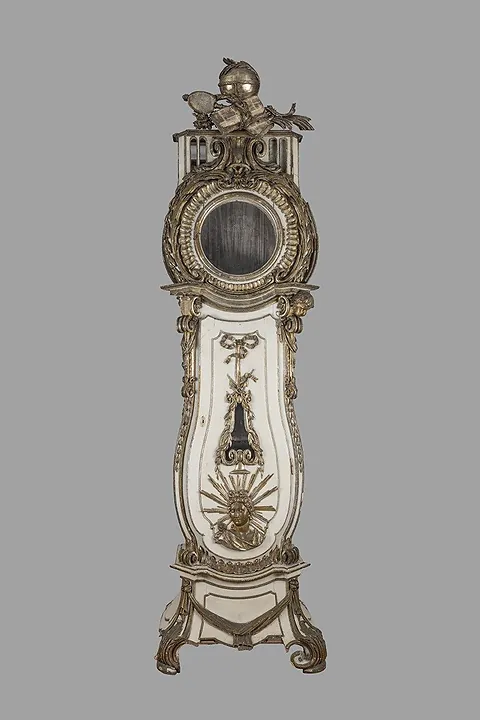
Longcase clock by Louis George, Eberswalde, c. 1780
Museum Eberswalde
Clocks · 1780s (inferred: the museum dates the style to the 1780s and the music includes Gluck's Iphigénie en Tauride of 1779)
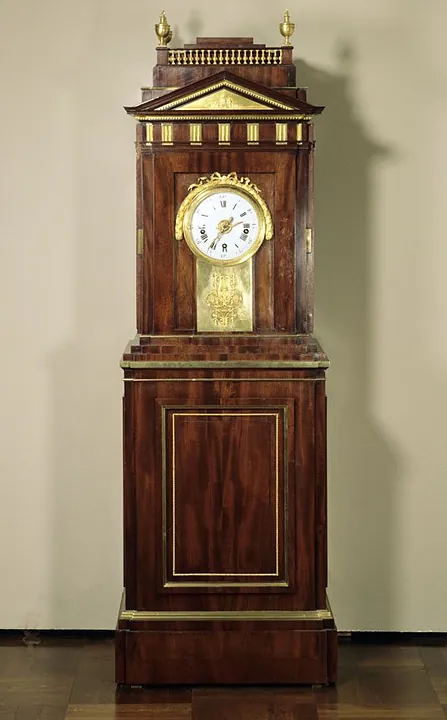
Musical longcase clock, Roentgen workshop, Neuwied, 1780s
Badisches Landesmuseum Karlsruhe
Clocks · 1740–1760
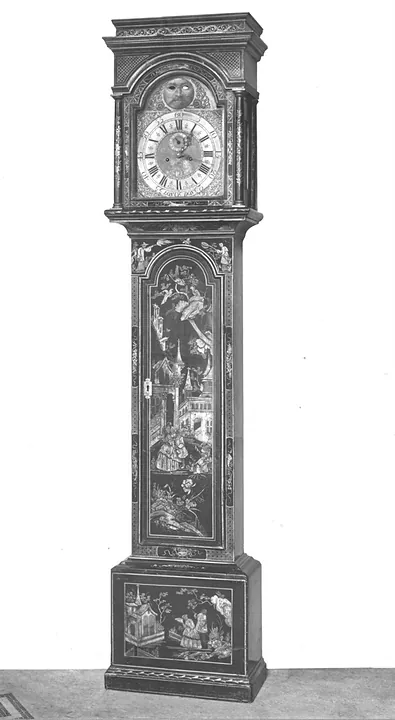
Longcase clock, English, 1740–1760, japanned wood, John Ellicott
Victoria and Albert Museum, London
Clocks · 1740–60
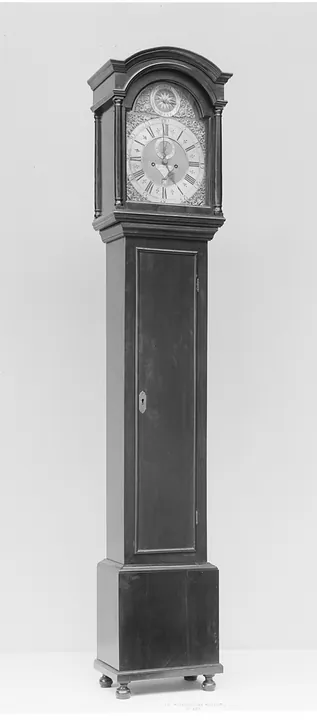
Tall clock by Samuel Bagnall, United States, 1740–60
The Metropolitan Museum of Art, New York
Clocks · c.1750
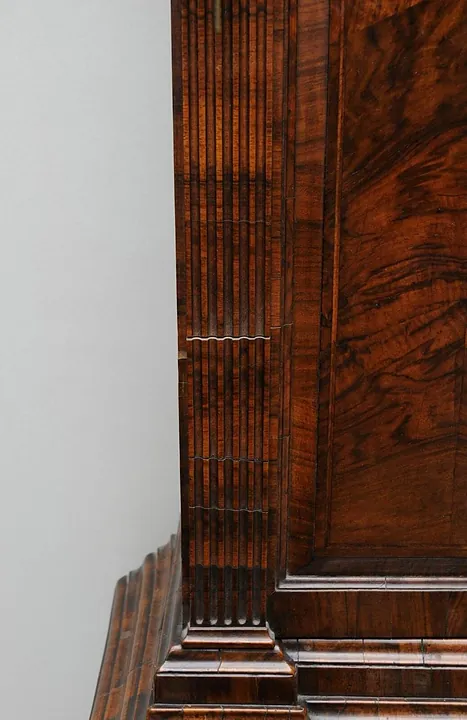
Long-case clock, English, ca. 1750, by Richard Peyton of Gloucester
Victoria and Albert Museum, London
Clocks · 1750–1800
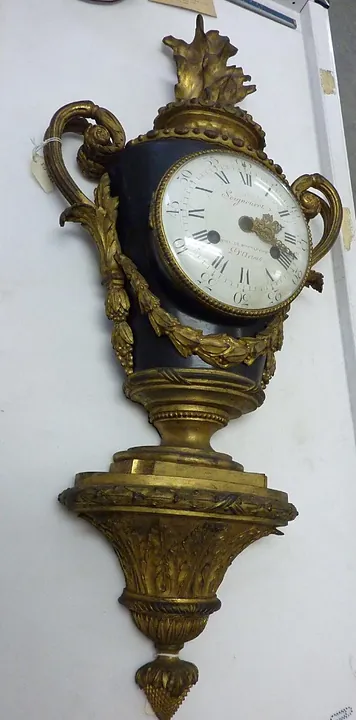
Bracket clock in metal case with scroll handles and flamed-shaped top signed by Pierre Seignoret, Clockmaket to the the Comte d'Artois
Victoria and Albert Museum, London
Clocks · c. 1750
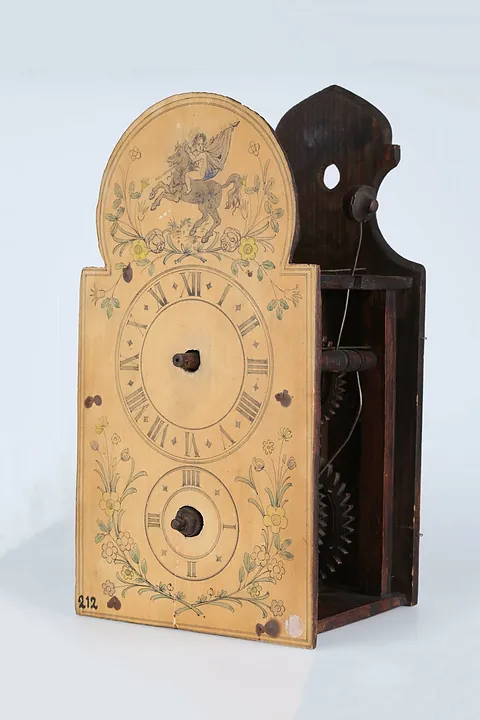
Clock by Georg Gfell, Germany, c. 1750
German Clock Museum
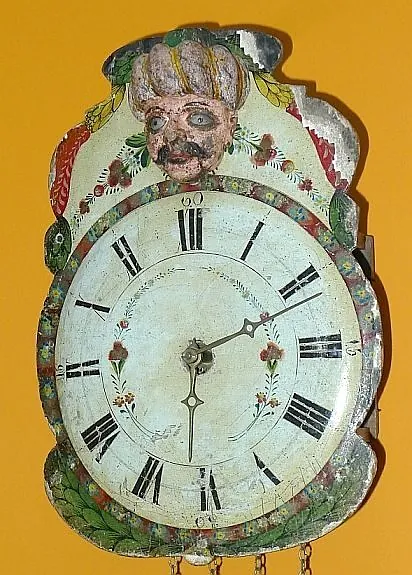
Clocks · 1750–1799
Cuckoo / black forest clock, Germany, 1750–1799
Badisches Landesmuseum Karlsruhe