
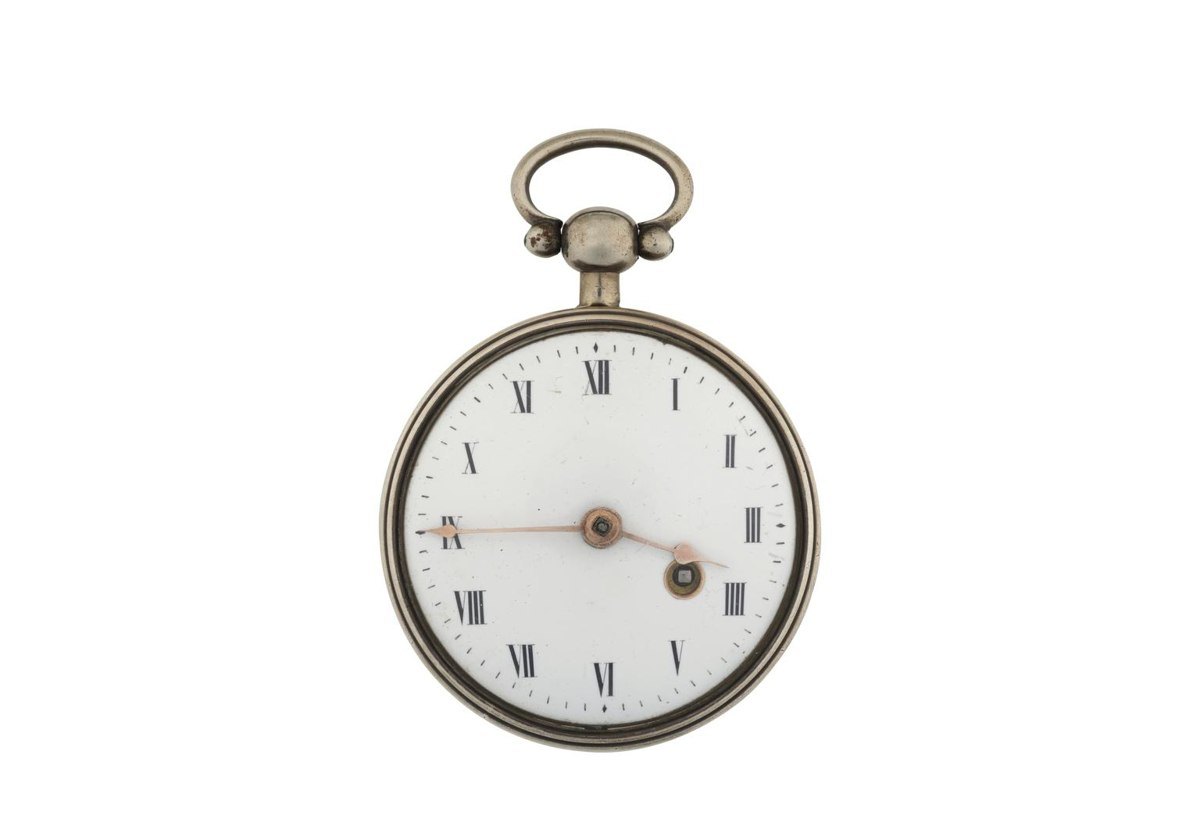
Pocket Watches · Verge pocket watch
A Royal watch by Samuel Houston
- Maker / attribution
- Samuel Houston (source attribution)
- Date
- 1807
- Historical period
- Precision & Scientific Horology (1750 – 1850)
- Country of origin
- United Kingdom
- Object type
- Verge pocket watch
- Holding institution
- Science Museum Group/The Clockmakers' Museum
- Accession / object no.
- a-royal-watch-by-samuel-houston-22fe4a1b63
- Credit line
- Science Museum Group/The Clockmakers' Museum
- Catalogue title (original)
- A Royal watch by Samuel Houston | Science Museum Group Collection (English)
View the source record ↗ (opens another website in a new tab)Suggest a correction
Record summary
Held and catalogued by Science Museum Group/The Clockmakers' Museum (object number a-royal-watch-by-samuel-houston-22fe4a1b63), this is a verge pocket watch attributed to Samuel Houston, made in United Kingdom, dated 1807. The Atlas places it in the Precision & Scientific Horology period (1750 – 1850) of its Pocket Watches collection. The record is illustrated with 1 photograph.
Assembled from the source record's structured fields. Dates and attributions are given as the source states them; where a field is missing the Atlas leaves it blank rather than estimating.
Catalogue description
Original object description
Classified as a verge pocket watch and held in the Science Museum Group collection under Clockmakers' Museum reference 793, this silver consular timepiece originated in the United Kingdom. Although descriptive records suggest a Dublin origin around 1805, the primary catalogue heading and the mechanism's backplate specify London, 1807. The silver case carries an 1807 London hallmark, the maker's mark 'CC', a broad unadorned band, a circular pendant, and an upper bow. On its back cover, an engraved Royal Crown surmounts an inscription stating that Princess Charlotte wore the piece until age twelve before presenting it to Henry Kuper, with the opening initials 'C.P.' The full-plate movement is inscribed 'Saml. Houston, London. 794' and features an early wedge-form balance cock paired with an undecorated five-spoke balance made of steel. Regulation of the verge escapement is managed by a hand of blued steel pointing to an engraved index scale. Beneath gold hands formed with spade and pointed tips, the white enamel dial presents upright Roman numerals, an outer minute ring, and a keyhole positioned next to numeral IIII for winding.
Inscriptions & marks
794
Historical context
Precision & Scientific Horology (1750 – 1850)
Harrison solves longitude; Mudge invents the lever; Breguet's Paris workshop defines the modern watch.
From 1750 to 1850 the watch became a precision instrument. Mudge's lever escapement, the cylinder escapement, Lépine's thin bar calibre, Breguet's innovations (overcoil, tourbillon, perpétuelle) and the pocket chronometer of Arnold and Earnshaw all date from this period, while verge watches remained common in cheaper production.
Read the period in the timelineMore pocket watches from this periodEarlier: Early Modern Horology
Atlas type guide
Verge and pair-cased watches
After Christiaan Huygens and Robert Hooke applied the balance spring around 1675, the verge watch became a reasonably reliable timekeeper and the minute hand became standard. Through the eighteenth century the typical English watch was a pair-cased verge: a fusee movement with a pierced, engraved balance cock, housed in an inner case and a separate protective outer case, often of repoussé gold, shagreen, tortoiseshell or enamel.
French watches of the same period were thicker 'oignons', later replaced by elegant thinner watches following Jean-Antoine Lépine's bar-bridge calibre of c. 1770. Dutch, Swiss and German makers supplied international markets, and verge watches were made until the mid-nineteenth century as cheaper alternatives to the cylinder and lever.
What to look for
- The pierced balance cock on the backplate: winged (continental) or with a foot (English); its style dates the watch.
- Fusee and chain visible through the movement; key winding through the dial (early) or case back.
- Hallmarks inside English silver or gold cases, which give a date letter.
- Maker's name and serial number engraved on the backplate; watch papers inside outer cases.
- Enamel dials (after c. 1720) versus earlier champlevé metal dials.
Dating clues
- Champlevé dials: c. 1680–1730; white enamel dials thereafter.
- English case hallmarks give the year of assay to within a year.
- Verge watches persisted in cheap production until c. 1850.
General guidance written by the Atlas editors about this kind of object. It is not a statement about this particular piece; for that, rely on the source record above and on physical examination.
Related records
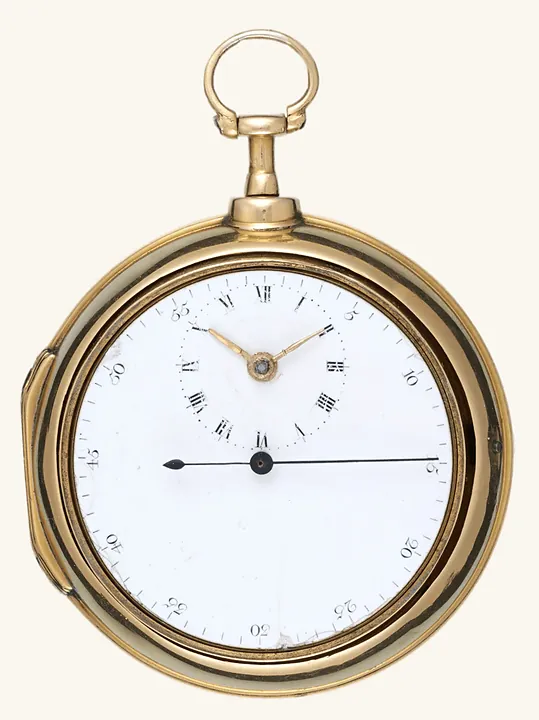
Pocket Watches · c. 1790
Gold Centre Seconds English Verge, c. 1790
WatchMuseum.org shop
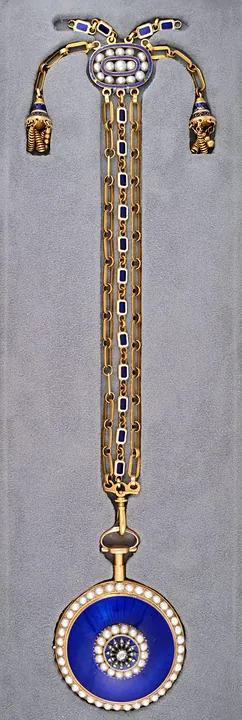
Pocket Watches · c. 1785
Pearl and Diamond Set Irish Verge with Chatelaine, circa 1785
Pieces of Time (dealer), London
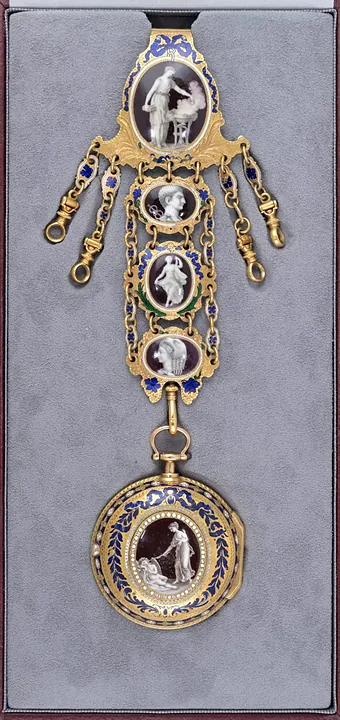
Pocket Watches · 1766 (hallmarked Chester)
Irish Gold and Enamel Chatelaine Watch, 1766
Pieces of Time (dealer), London
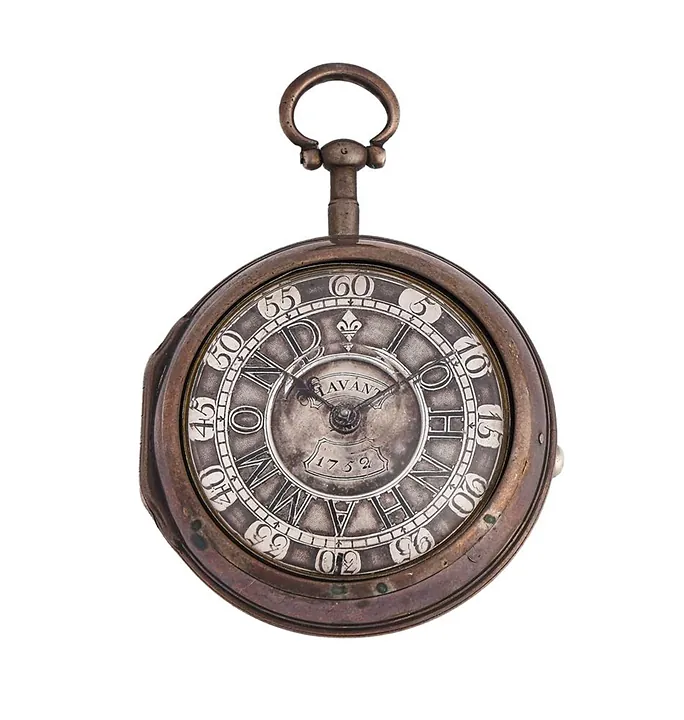
Pocket Watches · 1752
George II provincial silver pair-cased verge pocket watch by Jonathan Stripe
Dreweatts
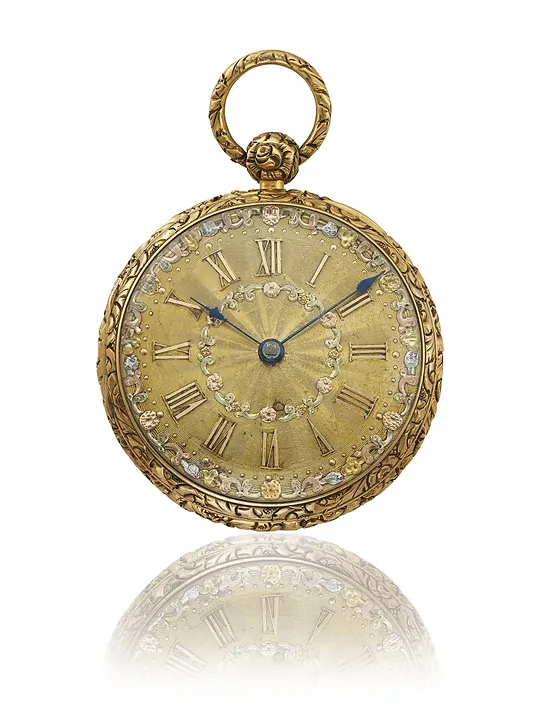
Pocket Watches · c. 1820-1821
Joseph Johnson 18K Gold Openface Keywound Lever Pocket Watch, No. 2811
Christie's
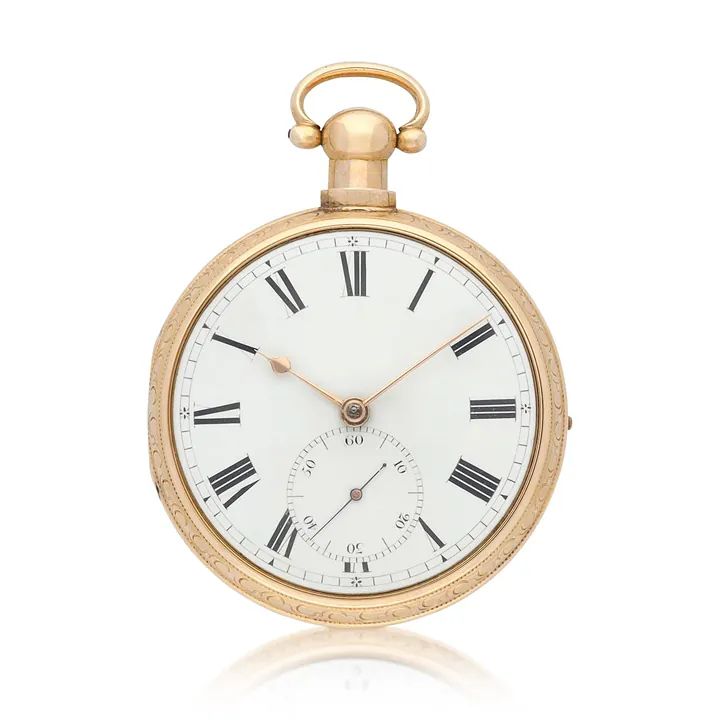
Pocket Watches · 1815–1816
Joseph Johnson No. 441 gold pair-cased pocket chronometer
Sotheby's
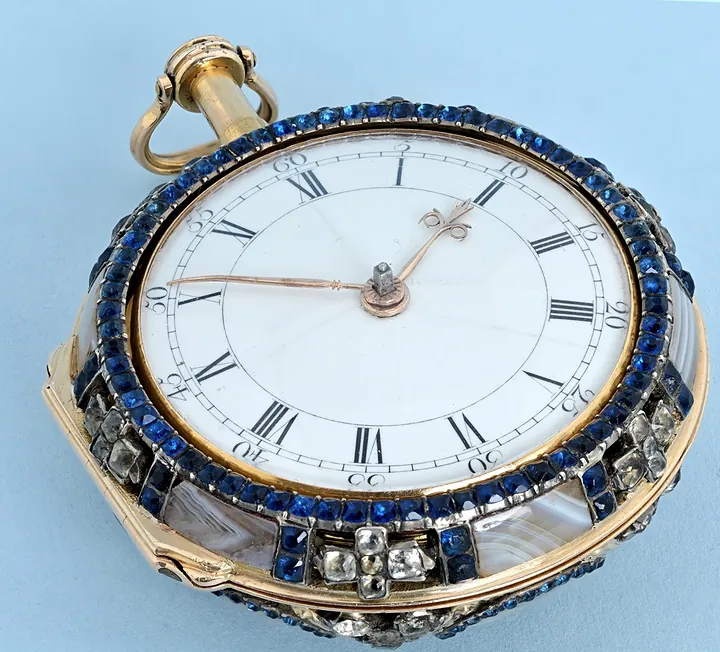
Pocket Watches · c. 1780
Mudge & Dutton quarter-repeating gold and agate pocket watch
Zamanito
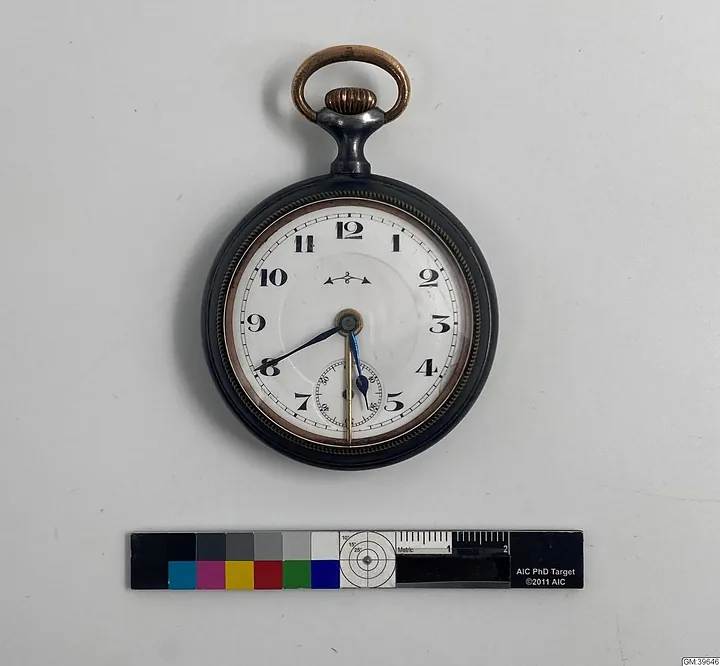
Pocket Watches · 1800–1899
Alarm pocket watch by Eterna w, Gothenburg, 1800–1899
Museum of Gothenburg