
Clocks · Wall clock
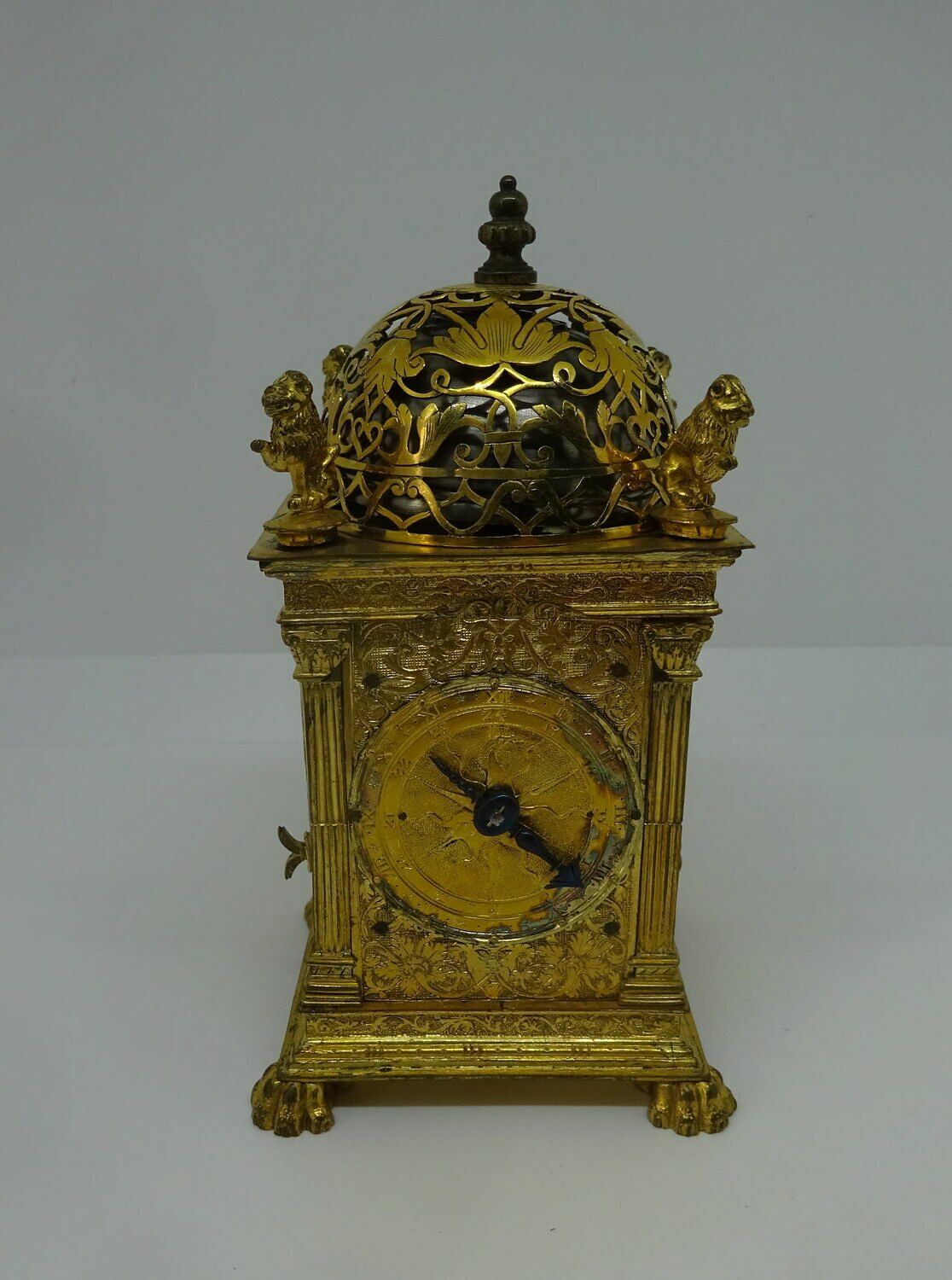
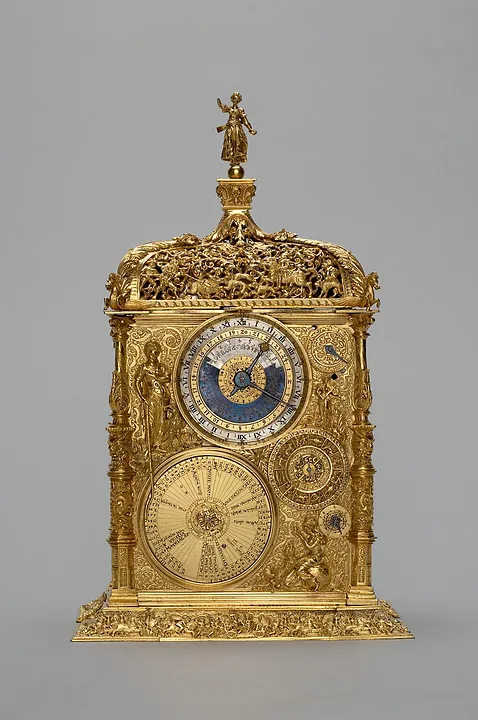
Wall clock by Arsenius Gualterius, Germany, 1550–1600
- Maker / attribution
- Arsenius Gualterius (Horloger)
- Date
- 1550–1600
- Historical period
- Renaissance Horology (1400 – 1600)
- Country of origin
- Germany
- Place
- Allemagne, Germany
- Object type
- Wall clock
- Materials / technique
- brass
- Dimensions
- height 13,2 cm; width 7,3 cm
- Holding institution
- Musée du Louvre, Paris
- Accession / object no.
- OA 7017
- Credit line
- Musée du Louvre, Département des Objets d'art du Moyen Age, de la Renaissance et des temps modernes
- Catalogue title (original)
- Horloge murale en forme de tour carrée (French)
View the source record ↗ (opens another website in a new tab)Suggest a correction
Record summary
Held and catalogued by Musée du Louvre, Paris (object number OA 7017), this is a wall clock by Arsenius Gualterius, made in Allemagne, Germany, dated 1550–1600. The Atlas places it in the Renaissance Horology period (1400 – 1600) of its Clocks collection. Materials and techniques recorded by the source: brass. Recorded dimensions: height 13,2 cm; width 7,3 cm. The record is illustrated with 5 photographs.
Assembled from the source record's structured fields. Dates and attributions are given as the source states them; where a field is missing the Atlas leaves it blank rather than estimating.
Catalogue description
Catalogue description — Musée du Louvre (French)
Horloge murale en forme de tour carrée ; boîte flanquée de quatre pilastres cannelés à chapiteau corinthien. Faces latérales gravées de rinceaux feuillagés sur fond amati, entourant un mascaron ; munies d'un volet découvrant le cadran du réveil d'un côté, et de l'autre, la roue de compte de la sonnerie. Intérieur des portes orné d'un paysage stylisé ; sur la face postérieure, encadrée d'une frise, deux trous permettant le remontage ; monogramme du Christ gravé. Dôme ajouré et gravé de rinceaux ponctués de fleurons dévoilant la cloche ; surmonté d'un bouton mouluré et encadré de quatre lions assis. Base moulurée reposant sur quatre pattes de lion. Face du cadran gravée de rinceaux et mascarons sur fond amati ; cadran composé d'un double cercle de chiffres romains et arabes et d'une bordure de boutons saillants. Centre gravé d'un soleil. Mouvement à poids muni d'une sonnerie et d'un réveil ; échappement à roue de rencontre et un pendule ajoutés postérieurement.
Shown in the original language of the source catalogue. An editor-reviewed English translation has not yet been published; we do not publish machine translations as authoritative text.
Dating and period as catalogued (French)
Epoque / période : François II (1559-1560) (Occident->Renaissance->dynastie des Valois-Angoulême) ; Charles IX (1560-1574) (Occident->Renaissance->dynastie des Valois-Angoulême) ; Henri III (1574-1589) (Occident->Renaissance->dynastie des Valois-Angoulême) ; Henri IV (1589-1610) (Occident->Renaissance->dynastie des Bourbons) · · Date de création/fabrication : 1550 - 1600
Shown in the original language of the source catalogue. An editor-reviewed English translation has not yet been published; we do not publish machine translations as authoritative text.
Materials and techniques as catalogued (French)
Matériau : laiton
Shown in the original language of the source catalogue. An editor-reviewed English translation has not yet been published; we do not publish machine translations as authoritative text.
Inscriptions & marks
Inscription : ; face postérieure : monogramme IHS dans un cercle et initiales et de l'horloger AG
Provenance
collection Paul Garnier (1834-1916), à Paris. Don Paul Garnier, en 1916.
Historical context
Renaissance Horology (1400 – 1600)
Spring power makes clocks portable; Nuremberg and Augsburg produce the first watches; the Prague Orloj is built.
Spring power made the domestic clock portable. Augsburg and Nuremberg produced gilt-brass table clocks, often with astronomical dials and alarms; weight-driven Gothic wall clocks and English lantern clocks served households. Clocks of this period have foliot or balance-wheel control and usually only an hour hand.
Read the period in the timelineMore clocks from this periodEarlier: Medieval Period
Atlas type guide
Regulators, wall and Vienna clocks
A regulator is a precision pendulum clock used as a time standard in observatories, workshops and railway offices. Typical features are a deadbeat or Graham escapement, a temperature-compensated pendulum (mercury jar, gridiron or later invar), maintaining power and a regulator dial that separates hours, minutes and seconds. George Graham's deadbeat escapement (c. 1715) and his mercury pendulum, together with Harrison's gridiron, set the pattern for two centuries.
Wall clocks span a much wider range: the elegant Viennese Laterndluhr and Dachluhr of the Biedermeier period, the Dutch stoelklok and staartklok, English 'dial' clocks used in schools, offices and railway stations, and mass-produced spring and weight wall clocks from Germany (Gustav Becker, Junghans, Kienzle) and America.
What to look for
- Deadbeat escapement and compensated pendulum (gridiron rods, mercury jar or wood rod).
- A regulator dial with a large central minute hand and separate hour and seconds dials.
- Vienna regulators: glazed cases, slender pendulum, small weights, enamel two-piece dials.
- German factory trademarks stamped on the backplate (e.g. Gustav Becker anchor and crown, Junghans star).
Dating clues
- Graham-type deadbeat regulators: from c. 1720.
- Viennese Laterndluhr: c. 1800–1850.
- German factory 'Vienna-style' regulators: c. 1870–1930; Gustav Becker serial numbers allow close dating.
General guidance written by the Atlas editors about this kind of object. It is not a statement about this particular piece; for that, rely on the source record above and on physical examination.
Read next:Deadbeat escapementAnchor (recoil) escapementGrasshopper escapement
Related records
Clocks · 1400–1499
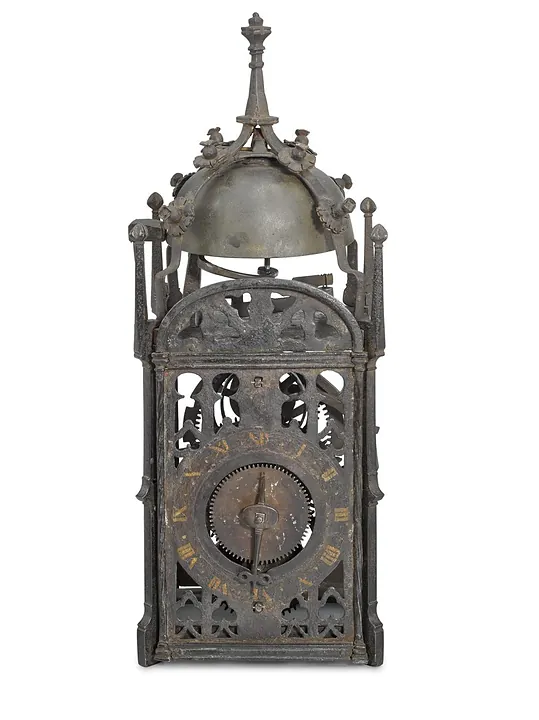
Lantern clock, Germany, 1400–1499
Science Museum Group, London
Clocks · 1500–1599
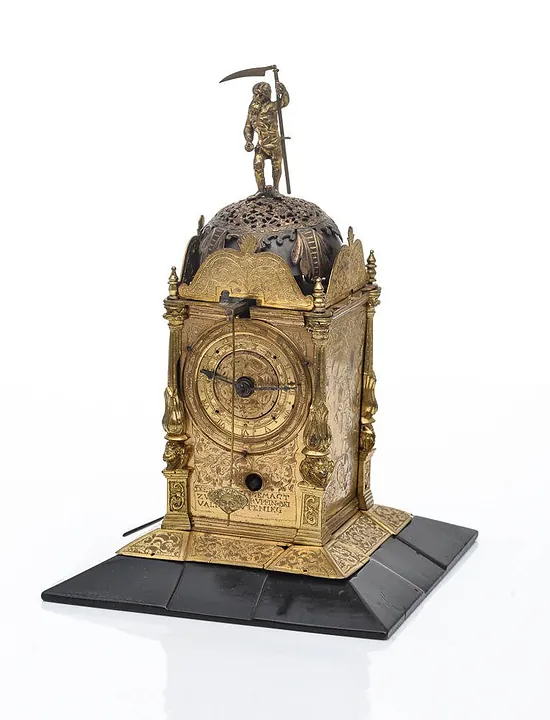
Table clock by Valentin Rutenieg, Germany, 1500–1599
City Museum Berlin
Clocks · 1501–1600
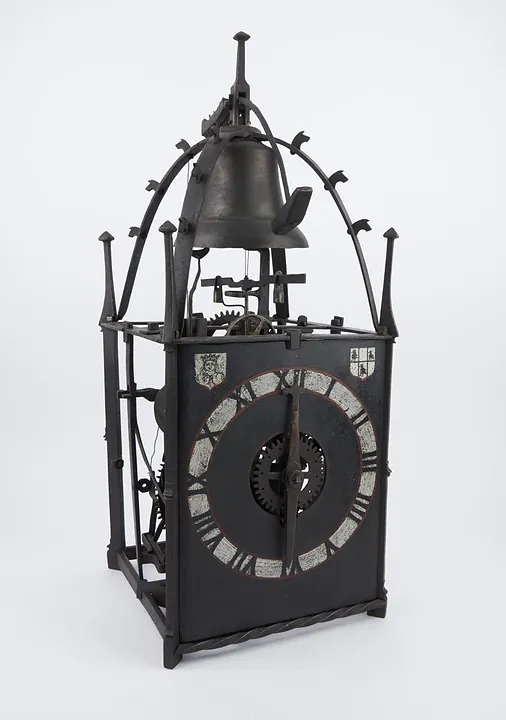
German 16th century iron chamber clock
Science Museum Group, London
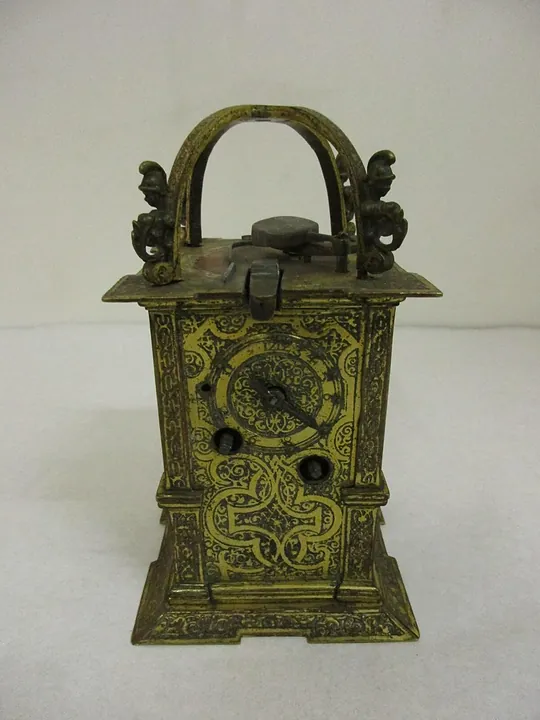
Clocks · c.1550
Clock, a striking alarm clock in a gilt brass case, Germany, c.1550.
Victoria and Albert Museum, London
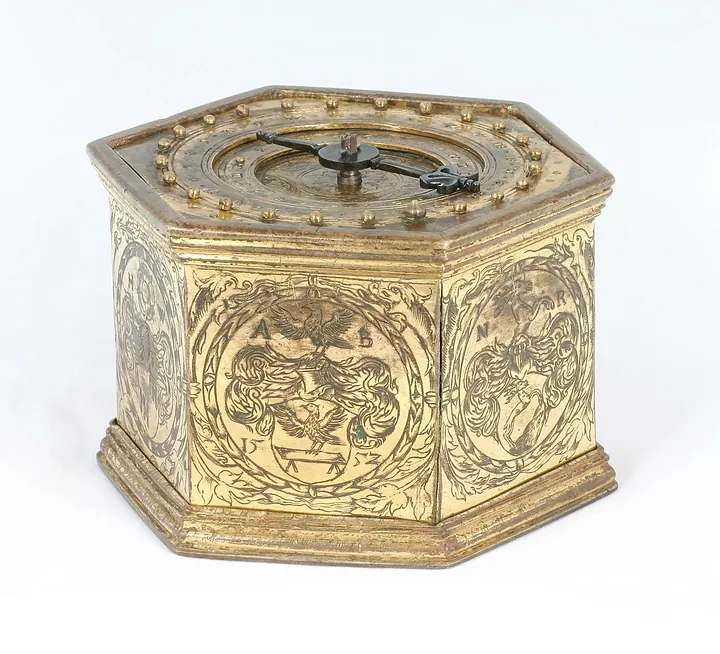
Clocks · 1552
Carriage / travel clock, Germany, 1552
German Clock Museum
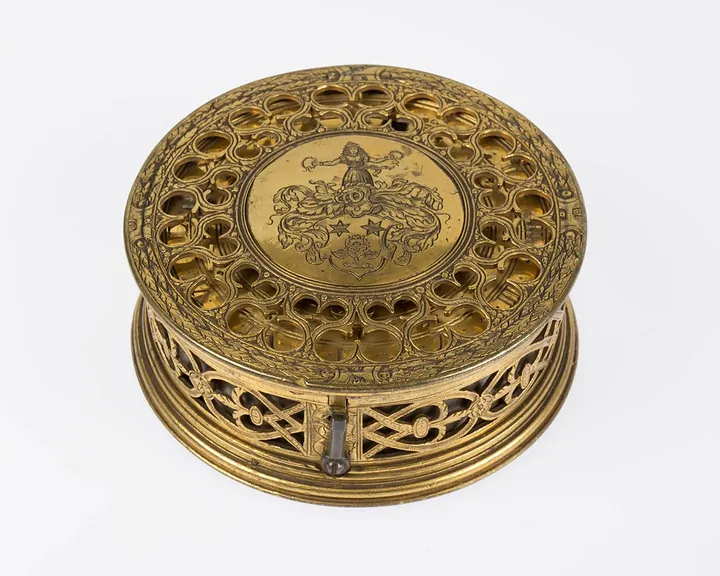
Clocks · c. 1560
Carriage / travel clock by HG, probably Germany, c. 1560
German Clock Museum
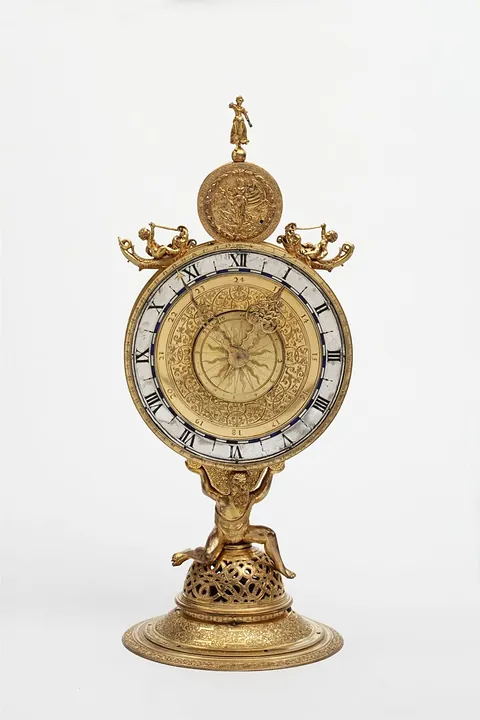
Clocks · 1564
Clock, gilt brass with enamelled silver dial ring, signed by Jeremias Metzger, Augsburg, southern Germany, dated 1564
Victoria and Albert Museum, London
Clocks · 1564
Table clock by Jeremias Metzker, Germany, 1564
Fine Arts Museum Vienna