
Wristwatches · Wristwatch
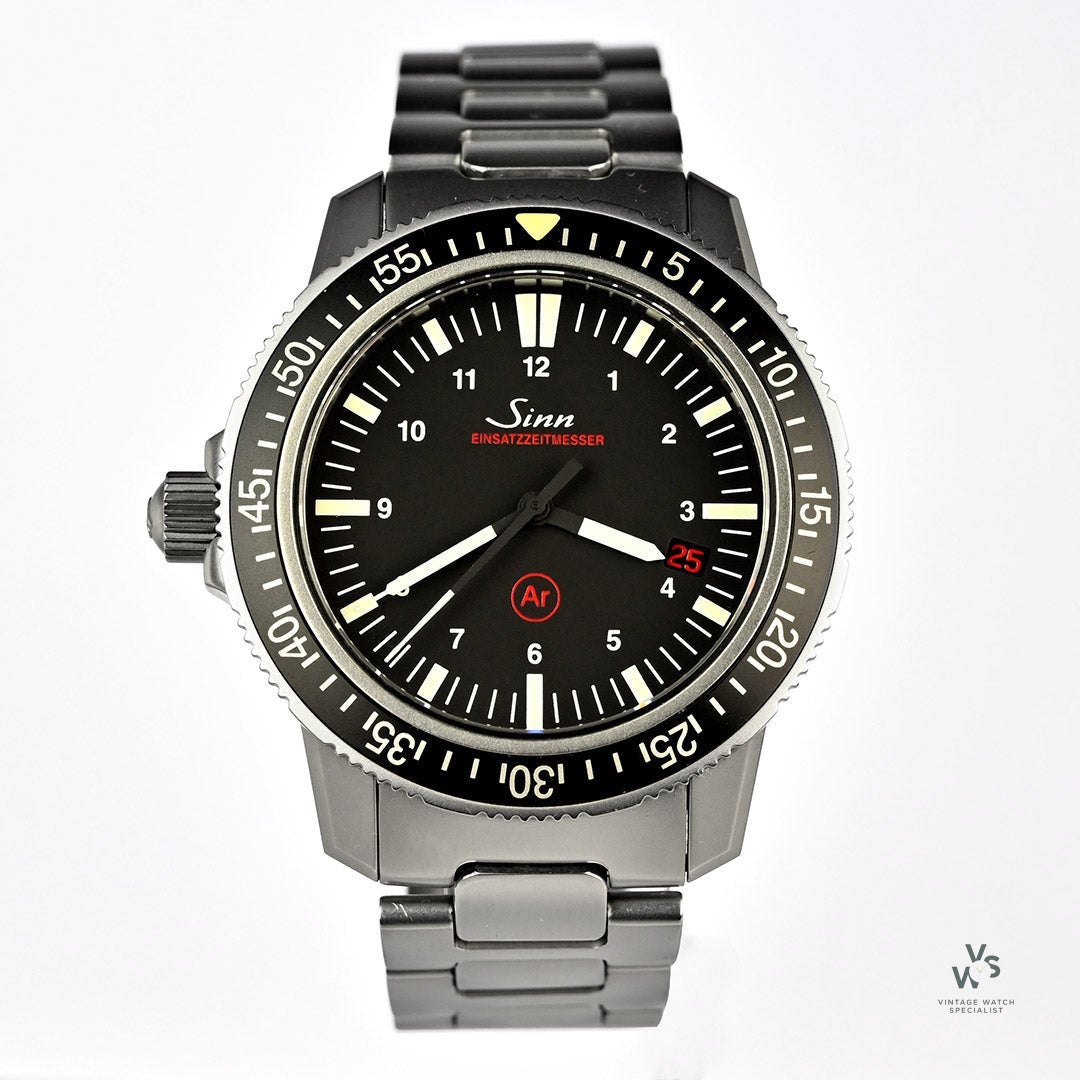
Sinn Diving Watch EZM 3, 2009
- Maker / attribution
- Sinn (maker)
- Date
- 2009
- Historical period
- Mechanical Renaissance (1990 – 2010)
- Country of origin
- Unrecorded in source
- Object type
- Wristwatch
- Dimensions
- Case 41 mm
- Stock no.
- vws2834
- Credit line
- Dealer listing, Vintage Watch Specialist (vws2834)
- Catalogue title (original)
- Sinn Diving Watch EZM 3 - Box and Papers - 2009 (English)
View the source record (dealer listing) ↗ (opens another website in a new tab)Suggest a correction
Record summary
Catalogued by Vintage Watch Specialist (dealer), United Kingdom (stock number vws2834), this is a wristwatch by Sinn, dated 2009. The Atlas places it in the Mechanical Renaissance period (1990 – 2010) of its Wristwatches collection. Recorded dimensions: Case 41 mm. The record is illustrated with 6 photographs.
Assembled from the source record's structured fields. Dates and attributions are given as the source states them; where a field is missing the Atlas leaves it blank rather than estimating.
Catalogue description
Dealer description — Vintage Watch Specialist
A Very Attractive Sinn EZM 3 Diver in Superb Condition and sold with Original Box and Paperwork, 2009 Helmut Sinn founded ‘Helmut Sinn Spezialuhren’ in Frankfurt in 1961. Sinn was a former World War II pilot and an instructor for blind flight. He used his knowledge of aviation to manufacture navigation clocks and pilot chronographs. The pilot’s watch is still one of the brand’s most popular styles today. What’s On Offer A serious diving watch, the EZM 3 is built for the toughest jobs and features a mission timer with magnetic field protection. Traditional mechanics are more reliable than quartz movements in this terrain where a watch with a quartz movement could pose a risk due to electronic interference or failure of the internal power supply. This is especially true when these mechanics are protected by sophisticated Sinn technology. Filling the case with a protective gas ensures optimum start conditions for Sinn Air-Dehumidifying Technology and prevents fogging of the dial. Whether or not you choose to use this watch for its purpose is up to you, but it is certainly geared up for the role! The case (which is in superb condition) is crafted from bead-blasted stainless steel and is presented with a d iver's bezel with minute ratcheting, the crown is on the left side of the case to prevent discomfort on the hand. The dial is rich black with luminescent indices, the hands are also coated with luminescent colour for optimal readability and there are accents of red. This watch is in superb condition, it hasn't been worn very much and is sold with its original box and papers. It looks superb on the wrist, it is meaty in size however, it wears very comfortably. A nice-looking watch which offers form and plenty of functionality, sold in fantastic condition with box and papers. Additional information Made from Case: Stainless Steel Dial: Matte black Crystal: Sapphire crystal glass in front, anti-reflective on both sides Bracelet: Technical specifications Winding: Automatic Movement Type: Mechanical Calibre: SW200-1 Jewels: 26 Waterproof: 500m Power reserve: Purchase details Condition: Excellent (barely worn) Model Reference: 603.010 Date of issue: Dimensions Width (without crown): 41mm Lug width: 20mm Lug height: (lug to lug) 47mm Wrist size: 190mm approx
Historical context
Mechanical Renaissance (1990 – 2010)
Mechanical watches return as cultural objects; independent watchmaking flourishes.
Mechanical watches returned as cultural and luxury objects. Complications, tourbillons and new materials proliferated; independent watchmakers such as George Daniels, F.P. Journe and Philippe Dufour revived artisanal watchmaking; collecting vintage watches became a major field.
Read the period in the timelineMore wristwatches from this periodEarlier: Quartz Revolution
Atlas type guide
Wristwatches
Bracelet watches were worn by women from the early nineteenth century — Breguet made one for Caroline Murat, Queen of Naples, in 1810–12 — but the wristwatch only became a man's instrument with military use and aviation in the early twentieth century. Between the World Wars it overtook the pocket watch; the 1920s and 1930s brought rectangular Art Deco cases, water-resistant cases and the first automatic winding systems.
After 1945 the wristwatch became a carrier of identity — dress watches, sports and dive watches, chronographs, calendars — produced by Swiss, American, Japanese, German, Soviet and Chinese industries. The quartz revolution after 1969 and the mechanical renaissance since the 1990s, including the rise of independent watchmakers, complete the story.
What to look for
- The reference number (between the lugs or inside the case back) and serial number, the starting point for dating.
- The calibre: its maker and number are often stamped under the dial or on the bridge.
- Originality of dial, hands and crown — refinished ('redial') dials are common.
- Case material marks: 18K/750, 14K/585, stainless steel, gold-filled, plated.
Dating clues
- Wire-lug cases: before c. 1925.
- Water-resistant screw-down cases: from 1926.
- Quartz movements: from 1969; sapphire crystals widespread after c. 1980.
General guidance written by the Atlas editors about this kind of object. It is not a statement about this particular piece; for that, rely on the source record above and on physical examination.
Related records
Wristwatches · 1980s
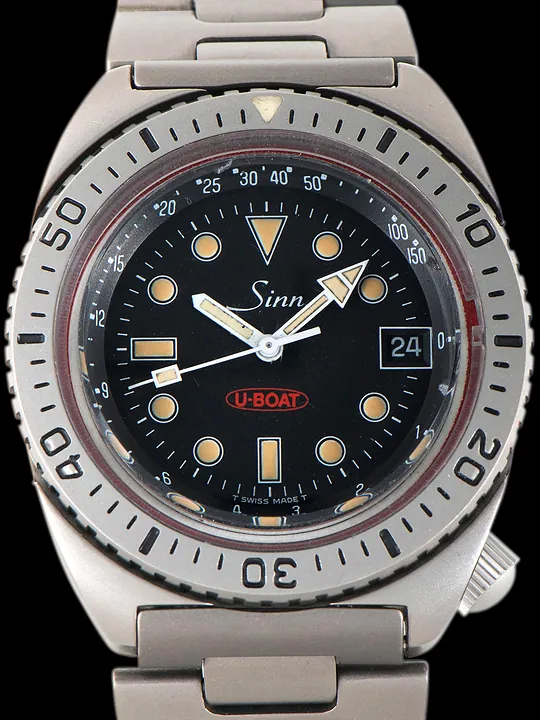
Sinn U-Boat Titanium (Ref. 8820T), 1980s
Craft & Tailored (dealer), Los Angeles
Wristwatches · 1998
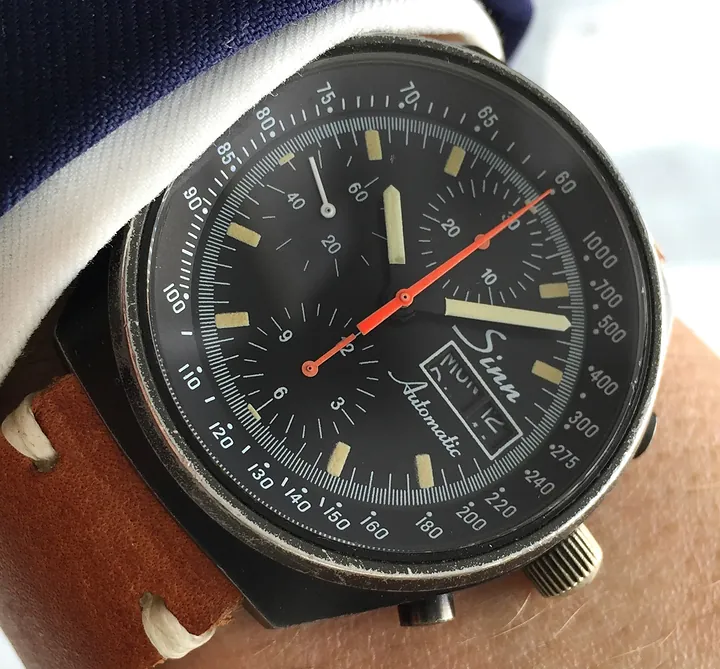
Sinn Chronograph PVD Day Date, 1998
Vintage Portfolio (dealer), Vienna
Wristwatches · 2016
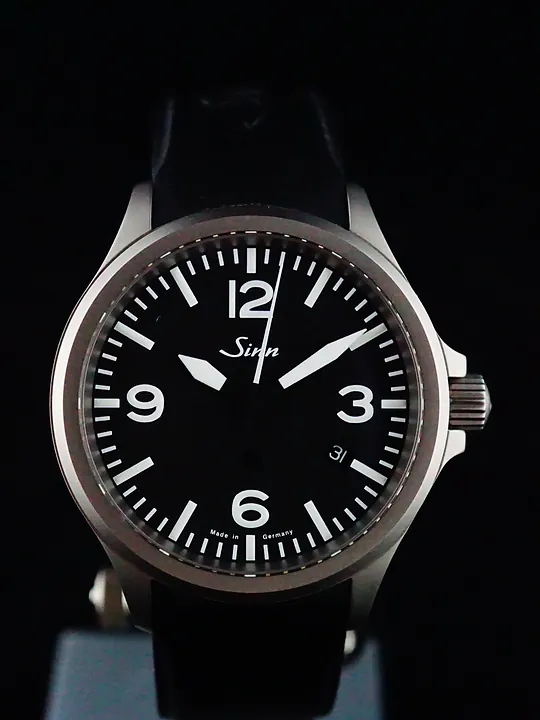
Sinn Ref. 856 Pilot Watch (Box and Papers), 2016
Craft & Tailored (dealer), Los Angeles
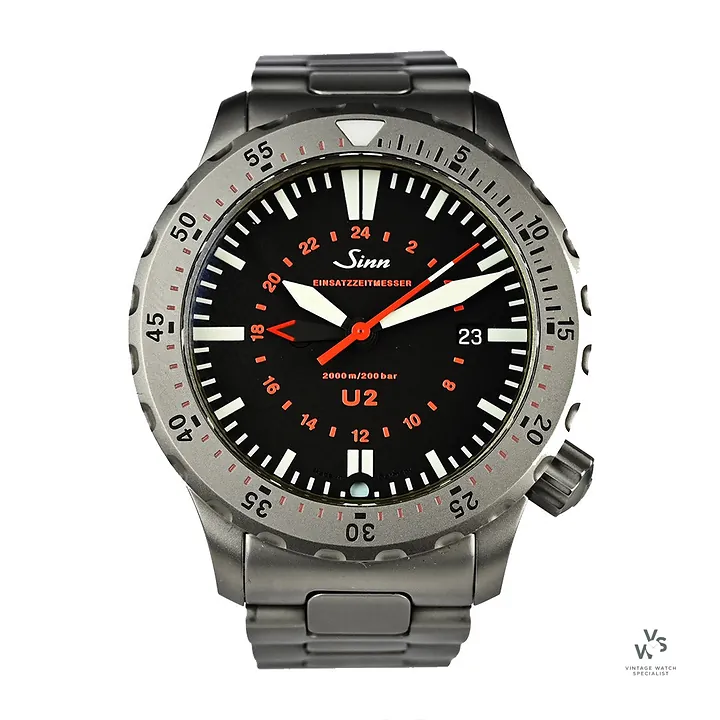
Wristwatches · 2005
Sinn Diving Watch U2 (EZM 5), 2005
Vintage Watch Specialist (dealer), United Kingdom
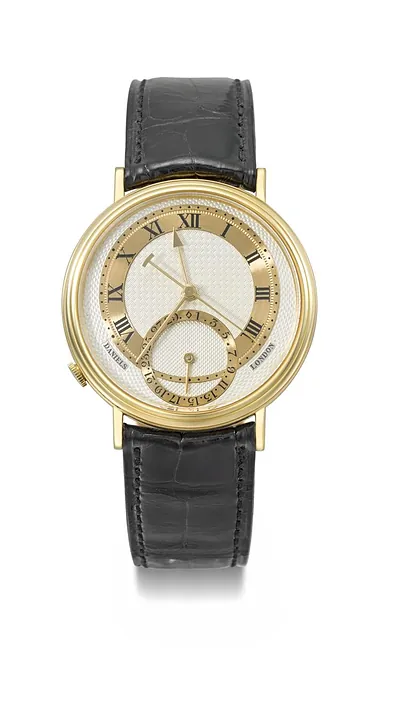
Wristwatches · 1999
'Millennium' co-axial wristwatch by George Daniels and Omega, England, 1999
Science Museum Group, London

Wristwatches · 2008
Wristwatch by Breitling?, 2008
Museum Rotterdam
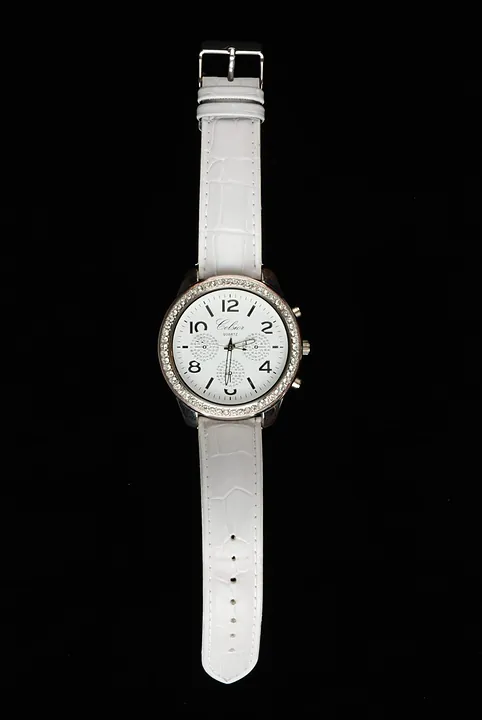
Wristwatches · 2008
Wristwatch by Celsior Quartz, 2008
Museum Rotterdam
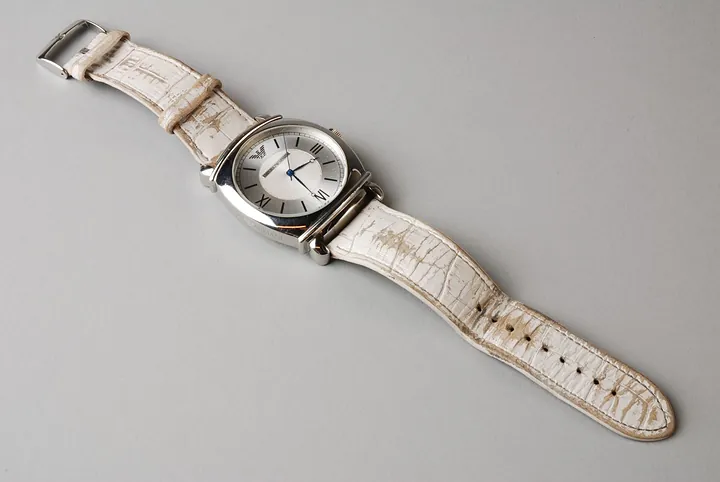
Wristwatches · 2008
Wristwatch possibly by Emporio Armani, 2008
Museum Rotterdam