
Wristwatches · Wristwatch
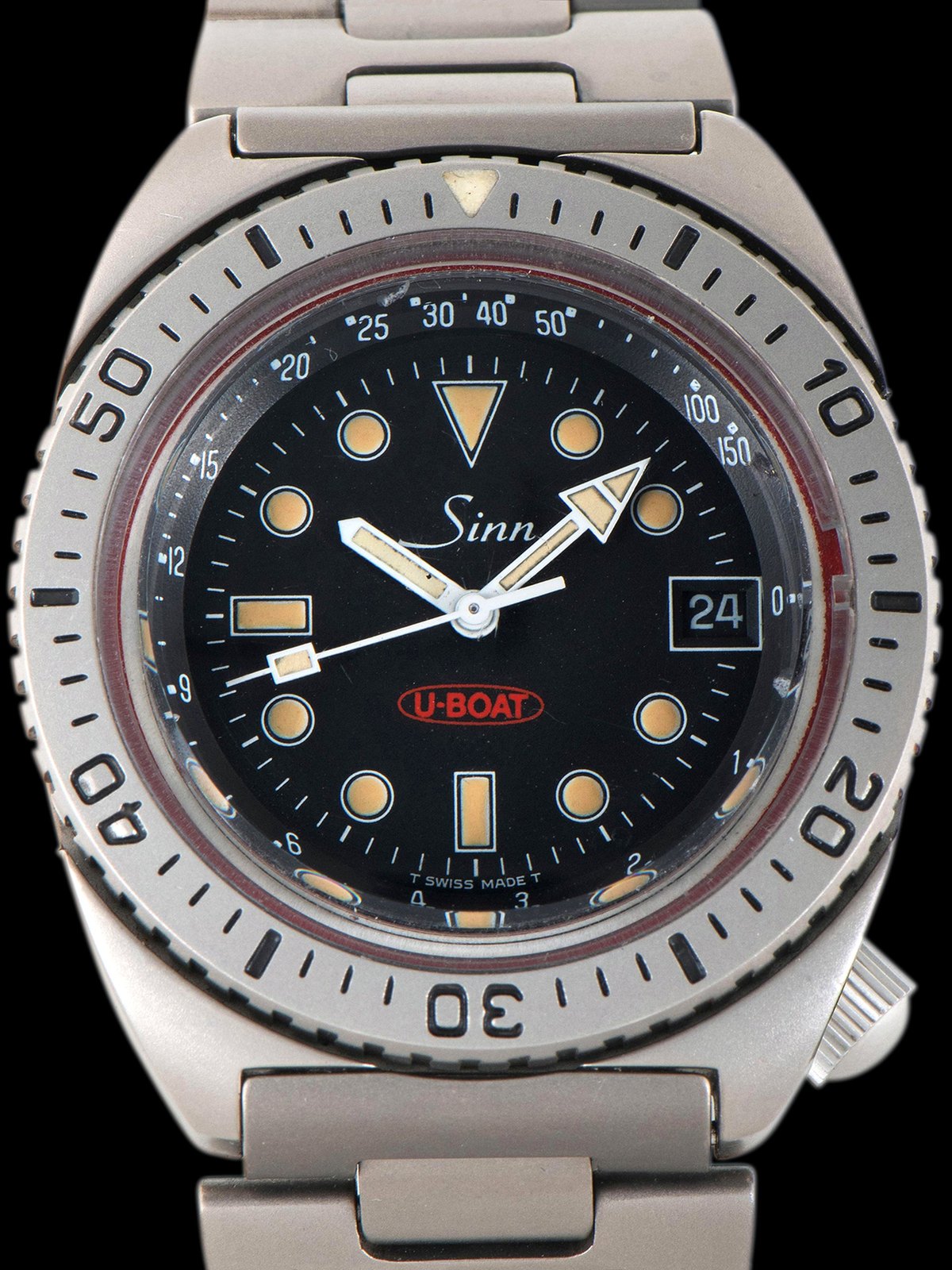
Sinn U-Boat Titanium (Ref. 8820T), 1980s
- Maker / attribution
- Sinn (maker)
- Date
- 1980s
- Historical period
- Quartz Revolution (1969 – 1990)
- Country of origin
- Unrecorded in source
- Object type
- Wristwatch
- Materials / technique
- titanium
- Stock no.
- SINUB8820
- Credit line
- Dealer listing, Craft & Tailored (SINUB8820)
- Catalogue title (original)
- 1980s Sinn U-Boat Titanium (Ref. 8820T) W/ Box (English)
View the source record (dealer listing) ↗ (opens another website in a new tab)Suggest a correction
Record summary
Catalogued by Craft & Tailored (dealer), Los Angeles (stock number SINUB8820), this is a wristwatch by Sinn, dated 1980s. The Atlas places it in the Quartz Revolution period (1969 – 1990) of its Wristwatches collection. Materials and techniques recorded by the source: titanium. The record is illustrated with 6 photographs.
Assembled from the source record's structured fields. Dates and attributions are given as the source states them; where a field is missing the Atlas leaves it blank rather than estimating.
Catalogue description
Dealer description — Craft & Tailored
Sinn was founded in 1961 by flight instructor and pilot Helmut Sinn under the name ‘Helmut Sinn Spezialuhren’. While a relatively young company, Sinn retains deep roots in aviation and aviation-related timekeeping, but has also expanded the brand to offer other functional timepieces and sports watch designs. The Sinn U-Boat Ref. 8820T is a fascinating and rare dive instrument from the 1980s, notable for being among the first Sinn models to feature a lightweight and corrosion-resistant titanium case. Designed for professional use, this watch incorporates a unique analog capillary depth gauge, visible just inside the bezel. The inner rehaut features a depth scale calibrated from 0 to 150 meters, with readings flowing clockwise from the 3 o’clock to the 2 o’clock position — an innovative and highly legible layout that made this watch a serious tool for divers. Examples with a red or yellow “U-Boat” logo above the 6 o’clock marker are especially collectible, believed to be limited editions produced specifically for the Asian market, likely Japan. These dials add a rare visual cue that sets them apart from standard production models. The 8820T continued in production into the 1990s and remained in the catalog after Sinn’s acquisition by Lothar Schmidt in 1994, though later versions were updated with a sapphire case back and the removal of the depth gauge, marking early examples like this one as particularly desirable for collectors of Sinn’s most functional and forward-thinking designs. A true artifact of Sinn’s experimental era, the 8820T is not only a diver’s companion but a significant piece of horological history. SPECS Stock # SINUB8820 Brand Sinn Style U-Boat Dive Watch Model 8820T Serial N/A Size Men's Material Stainless Steel Dial Matte Black Millimeters 39 Bracelet Sinn Titanium Bracelet CASE & BRACELET The unique titanium case is in wonderful overall condition, showing honest signs of light use throughout, with all of the factory dimensions and geometry fully present. The titanium unidirectional bezel is also in excellent condition, retaining its tritium triangle with minimal signs of previous use present. The case retains its original screw-down crown at 4 o'clock. The titanium case back exhibits some signs of rubbing from being previously worn on a Nato strap for a period of time, though all the factory markings and engravings remain fully present. The bracelet is a later unit used for the 8820 model, and it fits the watch perfectly, retaining 13 links that show almost no stretch and will fit up to a 7.25-inch wrist. DIAL & HANDS The matte black "U-Boat" dial is in virtually perfect condition, showing no age or damage. The tritium lume plots have achieved a beautiful golden-yellow patina and show no degradation under UV light inspection. The original tritium hands have aged a shade lighter than the dial and exhibit very minor spots of lume loss in the hour and minute hands, but remain stable when inspected under UV light. ACCESSORIES The watch comes with its original Sinn box. The watch is keeping time, but the service history is unknown. A movement service can be provided upon request.
Historical context
Quartz Revolution (1969 – 1990)
Seiko's Astron begins mass quartz timekeeping; traditional industries contract sharply.
Quartz and digital watches transformed the market after 1969. Swiss employment collapsed, Japanese and Hong Kong production soared, and the Swatch (1983) helped the Swiss industry recover; mechanical watches survived as luxury goods.
Read the period in the timelineMore wristwatches from this periodEarlier: Modern Mechanical Horology
Atlas type guide
Wristwatches
Bracelet watches were worn by women from the early nineteenth century — Breguet made one for Caroline Murat, Queen of Naples, in 1810–12 — but the wristwatch only became a man's instrument with military use and aviation in the early twentieth century. Between the World Wars it overtook the pocket watch; the 1920s and 1930s brought rectangular Art Deco cases, water-resistant cases and the first automatic winding systems.
After 1945 the wristwatch became a carrier of identity — dress watches, sports and dive watches, chronographs, calendars — produced by Swiss, American, Japanese, German, Soviet and Chinese industries. The quartz revolution after 1969 and the mechanical renaissance since the 1990s, including the rise of independent watchmakers, complete the story.
What to look for
- The reference number (between the lugs or inside the case back) and serial number, the starting point for dating.
- The calibre: its maker and number are often stamped under the dial or on the bridge.
- Originality of dial, hands and crown — refinished ('redial') dials are common.
- Case material marks: 18K/750, 14K/585, stainless steel, gold-filled, plated.
Dating clues
- Wire-lug cases: before c. 1925.
- Water-resistant screw-down cases: from 1926.
- Quartz movements: from 1969; sapphire crystals widespread after c. 1980.
General guidance written by the Atlas editors about this kind of object. It is not a statement about this particular piece; for that, rely on the source record above and on physical examination.
Related records
Wristwatches · 1998
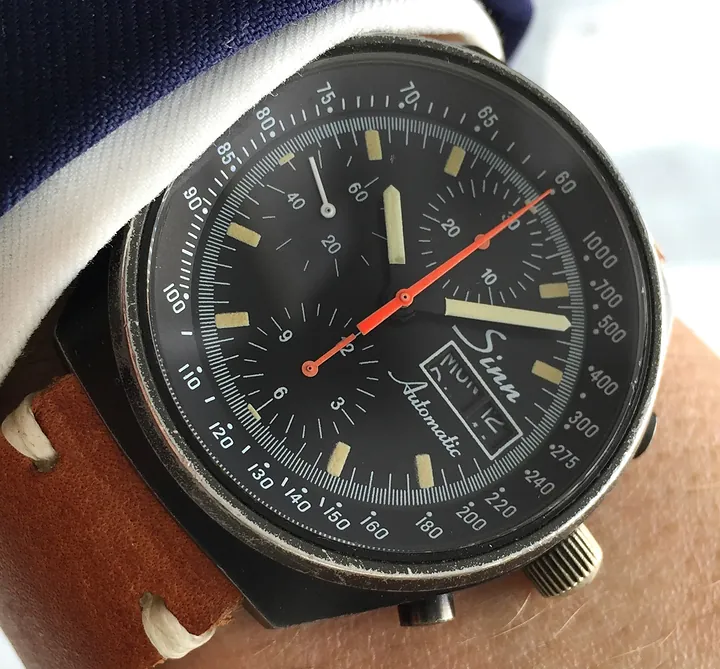
Sinn Chronograph PVD Day Date, 1998
Vintage Portfolio (dealer), Vienna
Wristwatches · 2016
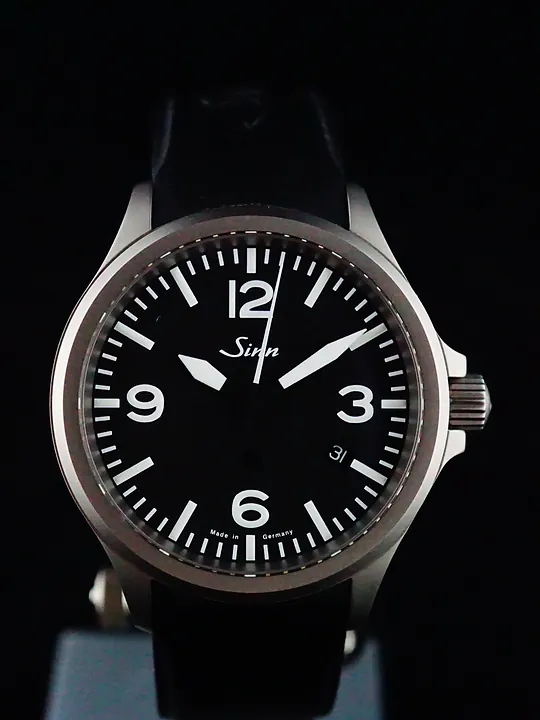
Sinn Ref. 856 Pilot Watch (Box and Papers), 2016
Craft & Tailored (dealer), Los Angeles
Wristwatches · 2005
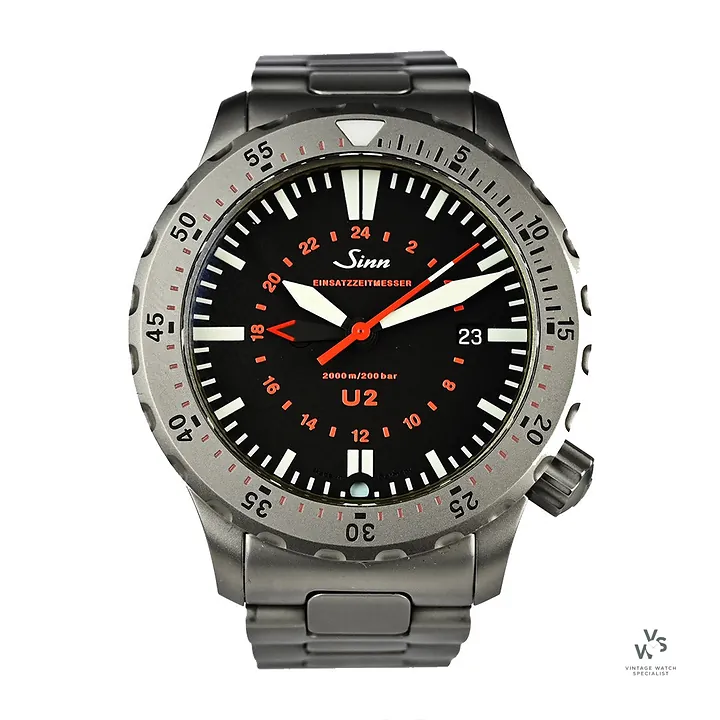
Sinn Diving Watch U2 (EZM 5), 2005
Vintage Watch Specialist (dealer), United Kingdom
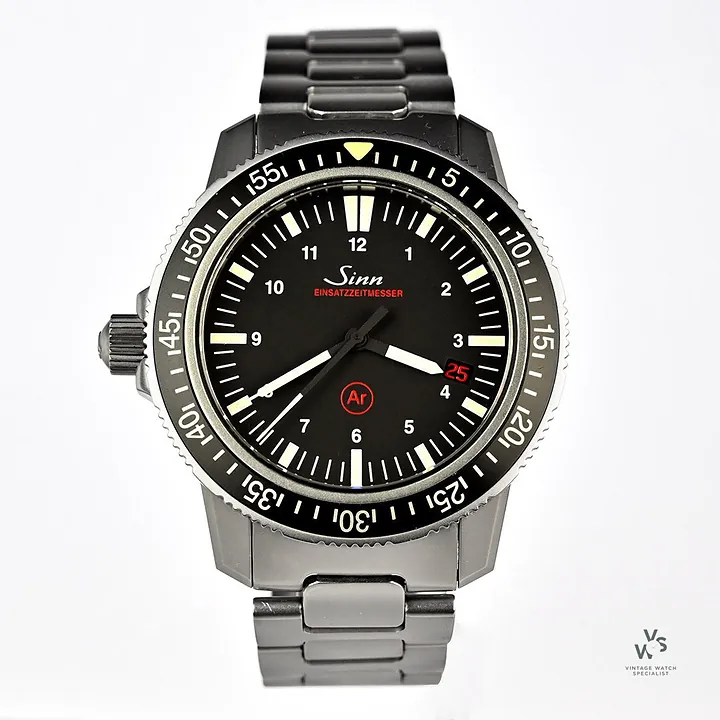
Wristwatches · 2009
Sinn Diving Watch EZM 3, 2009
Vintage Watch Specialist (dealer), United Kingdom

Wristwatches · 1970
Wristwatch by Heno, Switzerland, 1970
Museum Rotterdam
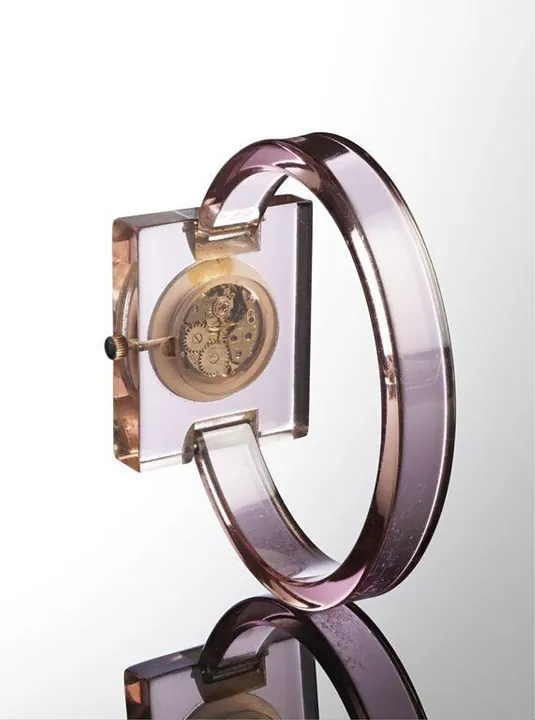
Wristwatches · 1970s
Wristwatch, plastic, by Gucci; Italy, 1970s.
Victoria and Albert Museum, London
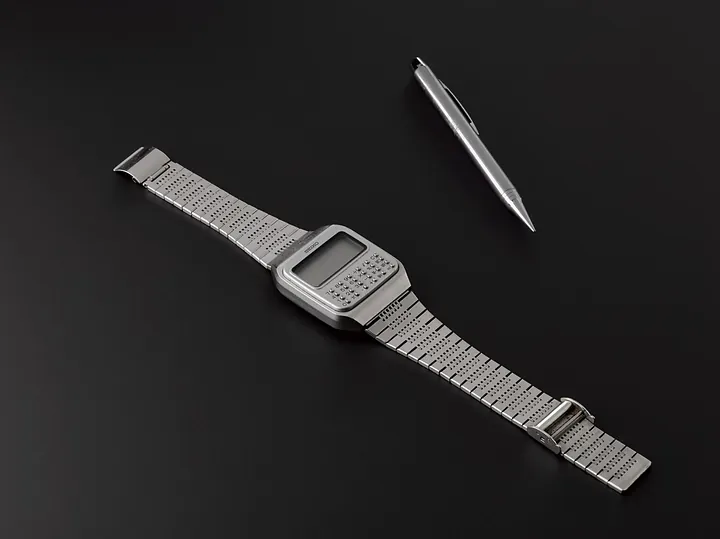
Wristwatches · 1978
Calculator wristwatch by Suwa Seikosha Co. Limited, Japan, 1978
Science Museum Group, London
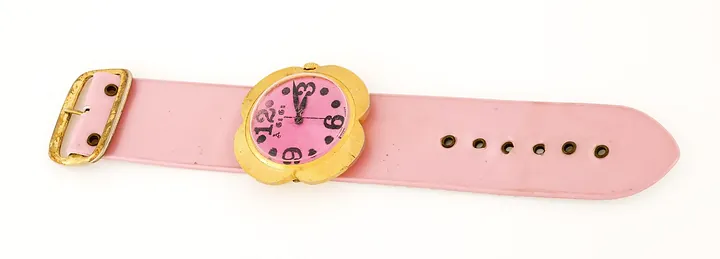
Wristwatches · 1980
Wristwatch, 1980 (no. 71413)
Museum Rotterdam