
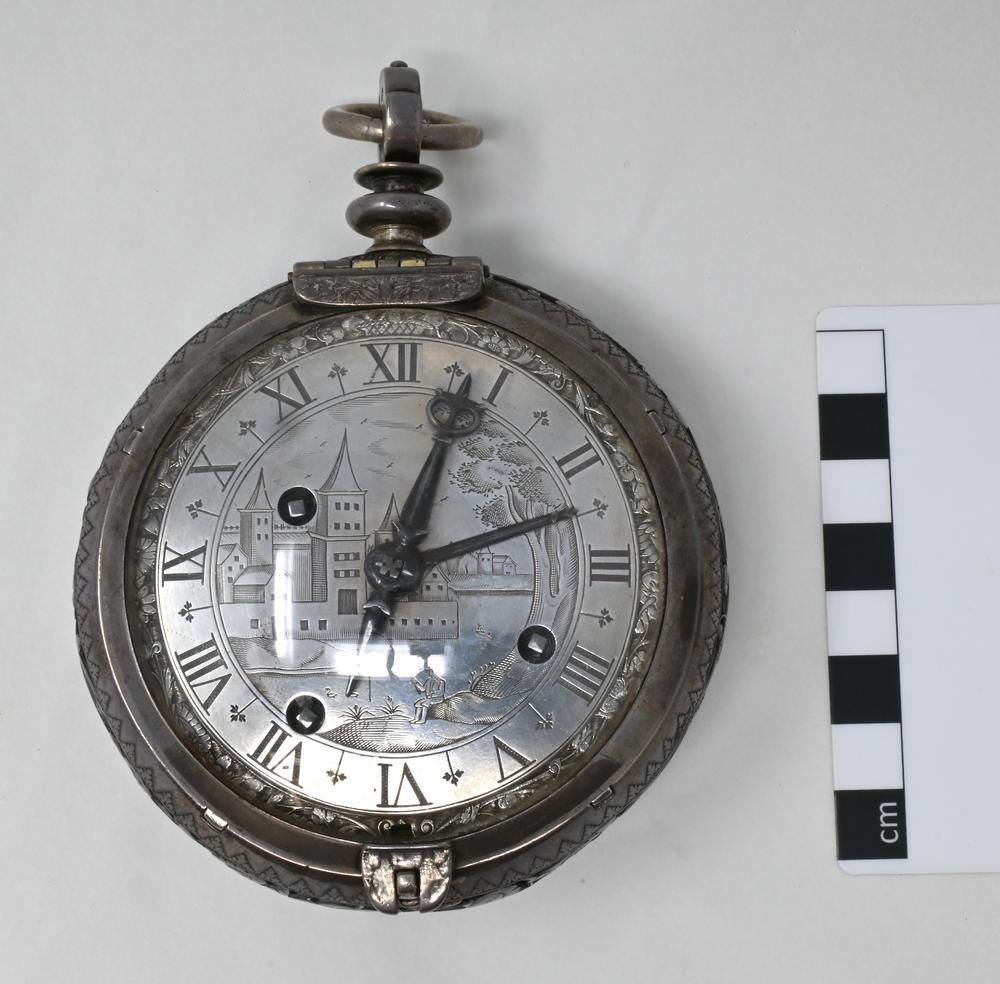
Pocket Watches · Coach watch
Silver cased verge coach watch with hour striking and alarm [dial not original]
- Maker / attribution
- Jean Bonbruict (Made by (attributed))
- Date
- 1650–1660
- Historical period
- Early Modern Horology (1600 – 1750)
- Country of origin
- France
- Place
- Blois
- Object type
- Coach watch
- Materials / technique
- silver
- Dimensions
- Diameter: 91 millimetres (case)
- Holding institution
- British Museum
- Accession / object no.
- 1958,1201.2340
- Credit line
- British Museum, London
- Catalogue title (original)
- Silver cased verge coach watch with hour striking and alarm [dial not original] (English)
View the source record ↗ (opens another website in a new tab)Suggest a correction
Record summary
Held and catalogued by British Museum (object number 1958,1201.2340), this is a coach watch attributed to Jean Bonbruict, made in Blois, France, dated 1650–1660. The Atlas places it in the Early Modern Horology period (1600 – 1750) of its Pocket Watches collection. Materials and techniques recorded by the source: silver. Recorded dimensions: Diameter: 91 millimetres (case). The record is illustrated with 6 photographs.
Assembled from the source record's structured fields. Dates and attributions are given as the source states them; where a field is missing the Atlas leaves it blank rather than estimating.
Catalogue description
Description — British Museum
Movement frame: Circular gilt-brass plates with four baluster pillars. Three separate bridges for the recessed train wheels. Engraved decoration around the verge aperture. Riveted potence and screwed-on counter potence. Mainspring & set-up: Gilt-brass barrel with dovetailed cap and riveted steel hook. Ratchet and click set-up mounted on the pillar-plate, the click replaced. Fusee & stop-work: Gilt-brass fusee with chain and standard stop-work. Going train: Three wheel train of gilt-brass wheels, the second wheel and contrate pinion recessed into the pillar-plate and running in a separate bridge and both with three crossings. Escapement & balance: Verge escapement now with a brass 3-arm balance and spiral balance spring with geared regulation. Striking train: Count-wheel striking, for hours only, powered by a fixed gilt-brass barrel, pierced and engraved on the visible side. The original geared stop-work formerly mounted on the potence-plate has been removed and replaced with a later similar system now mounted on the dial side of the pillar-plate. Six wheel train of solid gilt-brass wheels, the fourth wheel and fifth pinion recessed into the pillar-plate and running in a separate bridge. Warned release with two steel gates. Silver count-wheel engraved 1-12 and with an engraved centre of realistic flowers. The hour to be struck shown by a gilt-brass hand. Released by a twelve-point star wheel on the dial wheel. Alarm train: Gilt-brass barrel, pierced and engraved on the visible side. Mainspring with geared stop-work, the finger piece, brass wheel and pierced brass cover not original. Three wheel train of solid wheels, the great wheel gilt-brass, the second wheel solid steel and the contrate wheel brass with a steel rim. The second wheel and contrate pinion are recessed into the pillar-plate and run in a separate bridge. Brass crown wheel with steel rim, running between a scroll-shaped riveted potence and a screwed-on counter-potence. Released by a cam on the dial wheel. Semi-circular steel hammer mounted on a steel verge. Dial & hands: Silver dial-plate engraved on the dial side with a border of foliate scrolls and realistic flowers. The central area removed except for six lugs which are drilled to accept the dial feet. The plate is also engraved on the underside with scrolling foliage to provide a border for the movement. Movement attached by three bayonet lugs, one with a locking latch. Later [20th century] solid silver dial engraved in a style relating to ca.1620-30. The hour and minute hands are probably contemporary with the dial. : CASE: Very thick silver case with a hinged bezel,glazed but not split. Case with plain back, and a band pierced and engraved with foliate scrolls and realistic flowers. Silver pendant, hallmarked. A bell in the case.
Curator's comments — British Museum
The watch has undergone considerable updating in the early part of the 18th century, including:- 1. The addition of a new brass 3-arm balance with spiral balance spring. 2. The addition of geared regulation. 3. The replacement of the original balance-cock with a balance bridge. 4. The removal of the striking-train stop-work from the potence-plate and the construction of new stop-work under the dial. 5. The alteration from rear winding to through-the-dial winding. : Further alterations have been made in the 20th century. : 6. The replacement of the original dial wheel with a new one to operate with the newly installed minute wheel and pinion to provide the watch with minute indication. The minute wheel is driven by a pinion mounted on the extended second wheel arbor. 7. The addition of a heavy silver dial which almost certainly replaces a dial which was put on when the watch was converted to balance-spring operation. 8. The 18th century verge and pallets were replaced.
Inscriptions & marks
signature; Bonbruict A Blois.; hallmark; On the pendant, contremarque used on old objects destined for export 1768-1774 and also two indistinct marks.
Provenance
Previous owner/ex-collection:, Courtenay Adrian Ilbert; Purchased through:, Christie's; Acquired 1958
Historical context
Early Modern Horology (1600 – 1750)
Huygens' pendulum and balance spring transform accuracy; English makers develop the anchor and deadbeat escapements.
The balance spring (c. 1675) improved watches dramatically and introduced the minute hand. English pair-cased verge watches with pierced balance cocks and French oignons were typical; enamel painting at Blois and Geneva, and the repeating watch (1680s), made watches objects of great refinement.
Read the period in the timelineMore pocket watches from this periodEarlier: Renaissance Horology
Atlas type guide
Verge and pair-cased watches
After Christiaan Huygens and Robert Hooke applied the balance spring around 1675, the verge watch became a reasonably reliable timekeeper and the minute hand became standard. Through the eighteenth century the typical English watch was a pair-cased verge: a fusee movement with a pierced, engraved balance cock, housed in an inner case and a separate protective outer case, often of repoussé gold, shagreen, tortoiseshell or enamel.
French watches of the same period were thicker 'oignons', later replaced by elegant thinner watches following Jean-Antoine Lépine's bar-bridge calibre of c. 1770. Dutch, Swiss and German makers supplied international markets, and verge watches were made until the mid-nineteenth century as cheaper alternatives to the cylinder and lever.
What to look for
- The pierced balance cock on the backplate: winged (continental) or with a foot (English); its style dates the watch.
- Fusee and chain visible through the movement; key winding through the dial (early) or case back.
- Hallmarks inside English silver or gold cases, which give a date letter.
- Maker's name and serial number engraved on the backplate; watch papers inside outer cases.
- Enamel dials (after c. 1720) versus earlier champlevé metal dials.
Dating clues
- Champlevé dials: c. 1680–1730; white enamel dials thereafter.
- English case hallmarks give the year of assay to within a year.
- Verge watches persisted in cheap production until c. 1850.
General guidance written by the Atlas editors about this kind of object. It is not a statement about this particular piece; for that, rely on the source record above and on physical examination.
Read next:Verge escapement
Related records
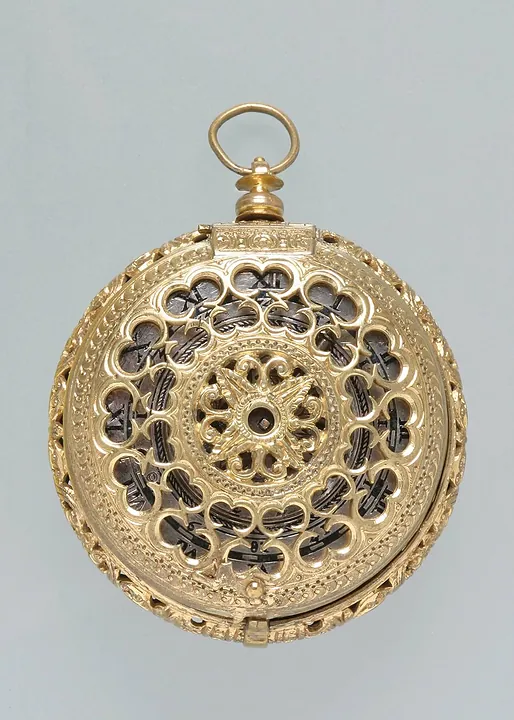
Pocket Watches · c. 1600
Pocket watch by Hans Reinboldt, France, c. 1600
German Clock Museum
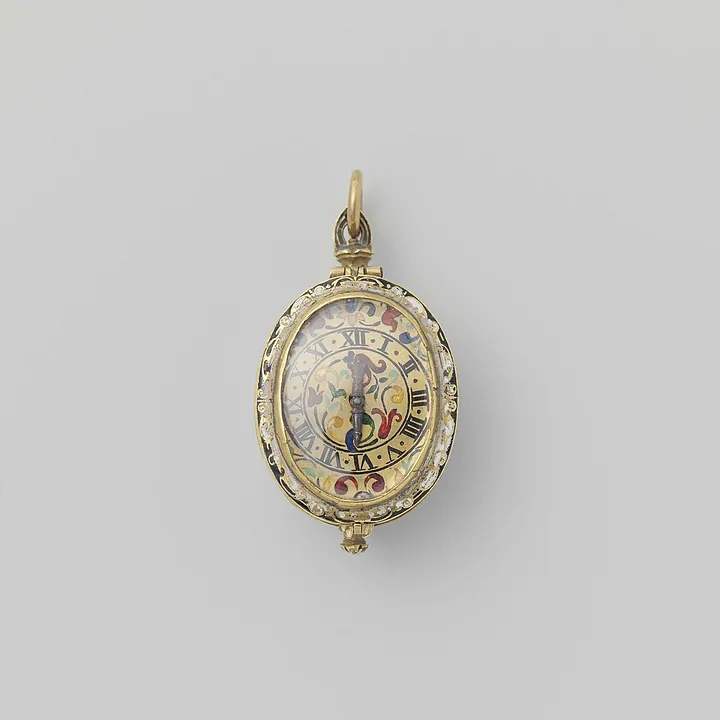
Pocket Watches · 1600
Pocket watch, France, 1600
Rijksmuseum
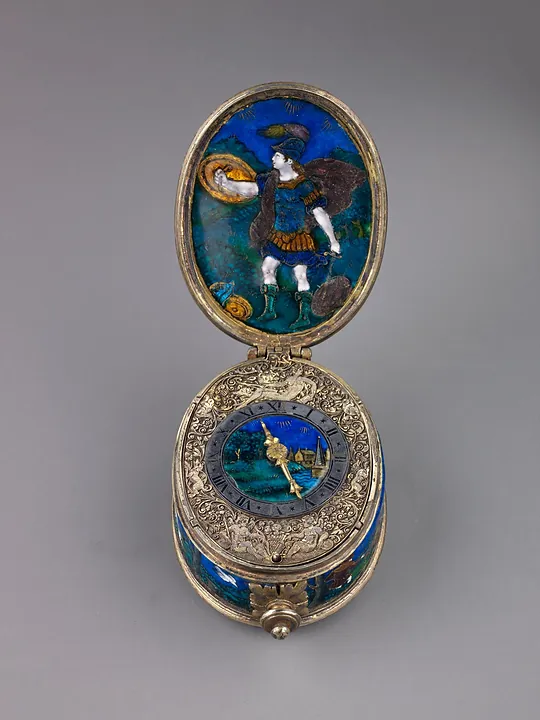
Pocket Watches · first quarter of 17th century
Watch by Suzanne de Court, France, first quarter of 17th century
The Metropolitan Museum of Art, New York
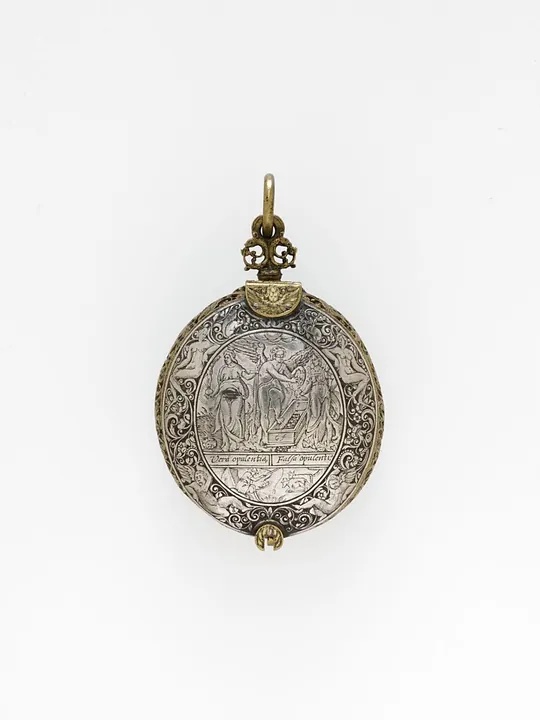
Pocket Watches · early 17th century
Watch of engraved and pierced silver and gilt brass, signed 'Noel Hubert A Rouen', France, early 17th century
Victoria and Albert Museum, London
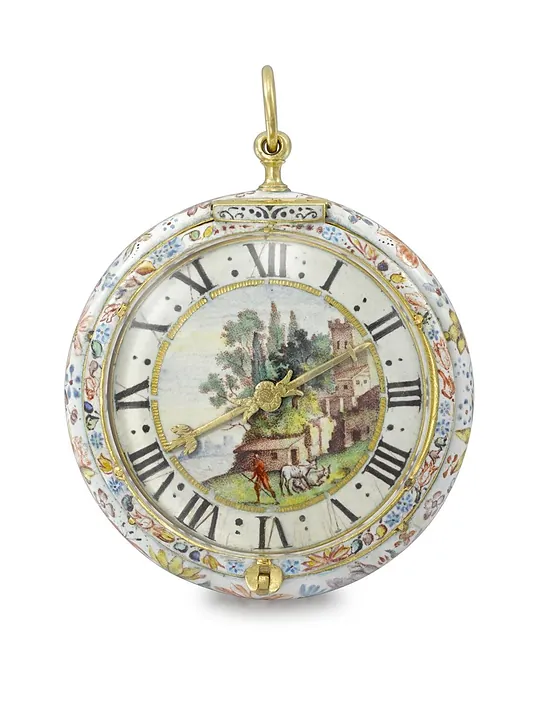
Pocket Watches · 1601–1700
Pocket watch by D Margotin, France, 1601–1700
Science Museum Group, London
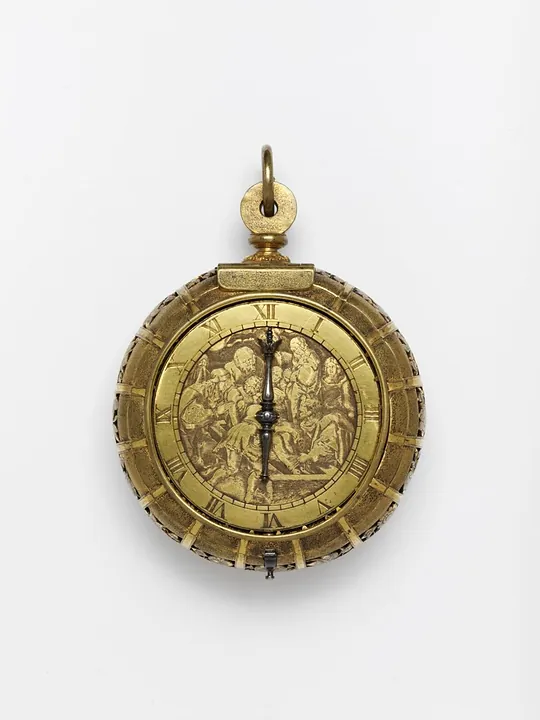
Pocket Watches · 1630
Carriage watch with gilt brass case and engraved dial by Nicolas Lemaindre, Blois, 1630
Victoria and Albert Museum, London
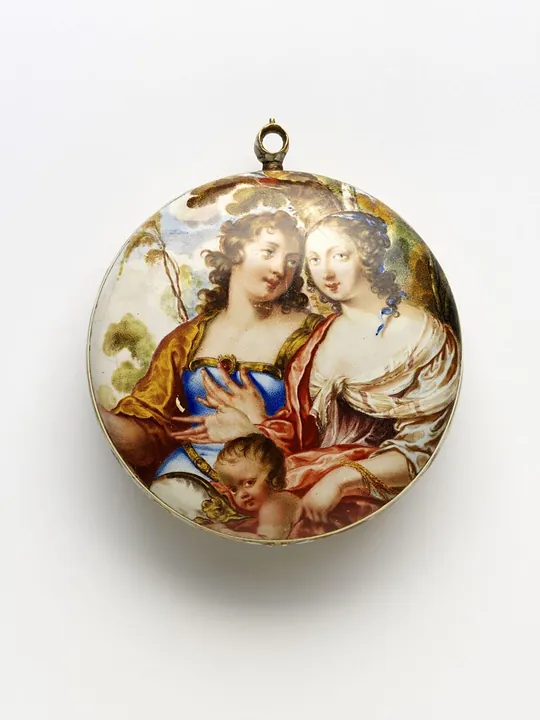
Pocket Watches · 1640–1660
Watch by Jan Bernardus Vrythoff, France, 1640–1660
Victoria and Albert Museum, London
Pocket Watches · 1640–1650
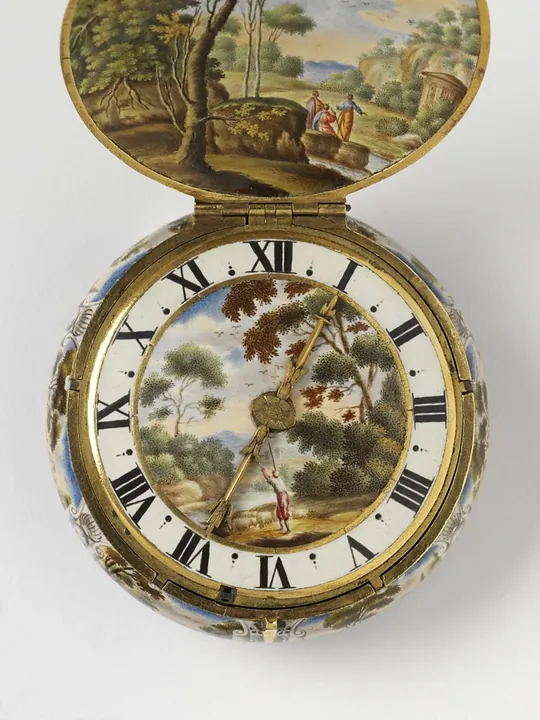
Watch with enamelled gold case depicting Faith, Hope and Charity, made by Nicolas Bernard, Paris, 1640–1650
Victoria and Albert Museum, London