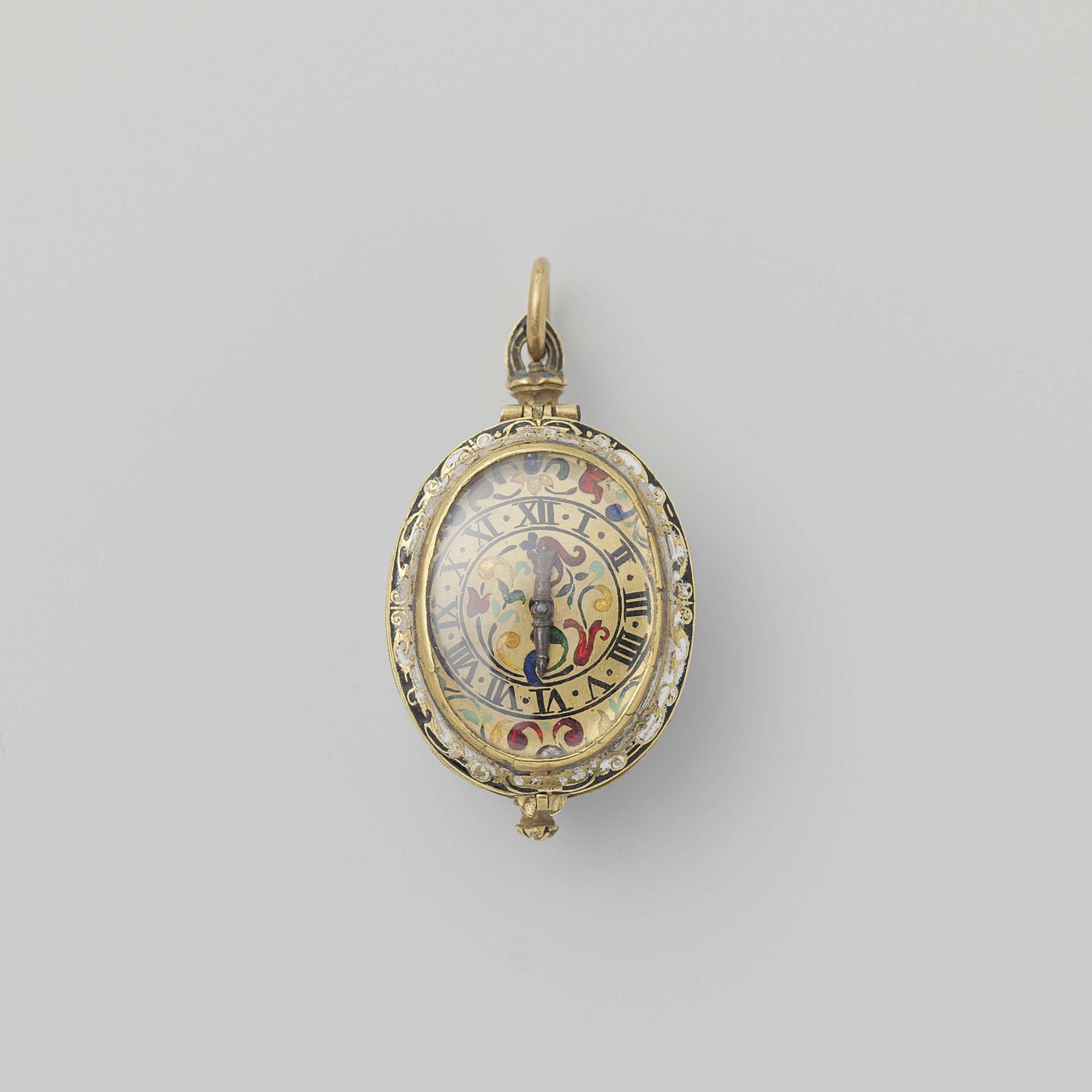
Pocket Watches · Pocket watch
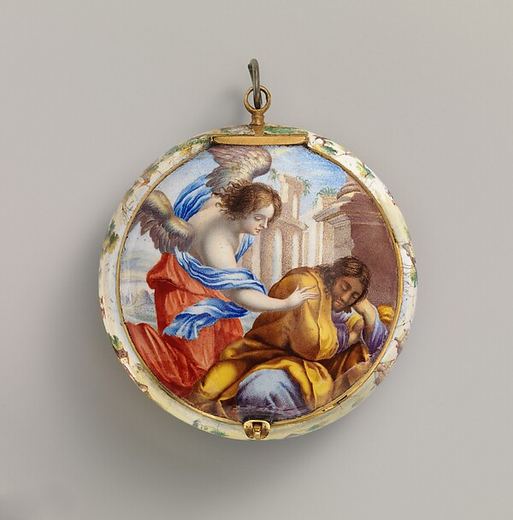
Pocket watch by anoniem, France, 1600
- Maker / attribution
- anoniem (creator)
- Date
- 1600
- Historical period
- Early Modern Horology (1600 – 1750)
- Country of origin
- France
- Place
- France
- Object type
- Pocket watch
- Holding institution
- Rijksmuseum
- Accession / object no.
- europeana_fashion_BK_17078
- Catalogue title (original)
- Pendant Watch (English)
Record summary
Held and catalogued by Rijksmuseum (object number europeana_fashion_BK_17078), this is a pocket watch by anoniem, made in France, dated 1600. The Atlas places it in the Early Modern Horology period (1600 – 1750) of its Pocket Watches collection. The record is illustrated with 1 photograph.
Assembled from the source record's structured fields. Dates and attributions are given as the source states them; where a field is missing the Atlas leaves it blank rather than estimating.
Catalogue description
Catalogue description from Rijksmuseum (Dutch)
Horloge van bergkristal, email en goud. Op de voorzijde versierd met ranken in translucide email.
Shown in the original language of the source catalogue. An editor-reviewed English translation has not yet been published; we do not publish machine translations as authoritative text.
Historical context
Early Modern Horology (1600 – 1750)
Huygens' pendulum and balance spring transform accuracy; English makers develop the anchor and deadbeat escapements.
The balance spring (c. 1675) improved watches dramatically and introduced the minute hand. English pair-cased verge watches with pierced balance cocks and French oignons were typical; enamel painting at Blois and Geneva, and the repeating watch (1680s), made watches objects of great refinement.
Read the period in the timelineMore pocket watches from this periodEarlier: Renaissance Horology
Atlas type guide
Early spring-driven watches
Portable spring-driven timepieces appeared in southern Germany, France and Italy in the early sixteenth century; Peter Henlein of Nuremberg is traditionally credited, although the historical record is complex. These early watches were worn as pendants or carried, had iron or brass movements with a verge escapement and a foliot or small balance, and used a stackfreed or fusee to equalise spring force. They indicated hours only and were notoriously inaccurate.
From the later sixteenth century watches were made in Blois, Paris, Geneva, London and Augsburg in oval, octagonal, cruciform, skull and other 'form' cases of rock crystal, gilt brass, silver and enamel. They were jewellery and status objects as much as timekeepers.
What to look for
- A single hour hand and often a touch-pin hour ring for feeling the time.
- Stackfreed (a cam and spring) instead of a fusee on German watches.
- Pierced and engraved cocks over the balance, fine gut fusee lines.
- Rock-crystal, enamelled or engraved form cases.
Dating clues
- Drum-shaped German watches: c. 1530–1580.
- Oval and form watches: c. 1580–1650.
- Before c. 1675 there is no balance spring; watches can vary by many minutes a day.
General guidance written by the Atlas editors about this kind of object. It is not a statement about this particular piece; for that, rely on the source record above and on physical examination.
Related records
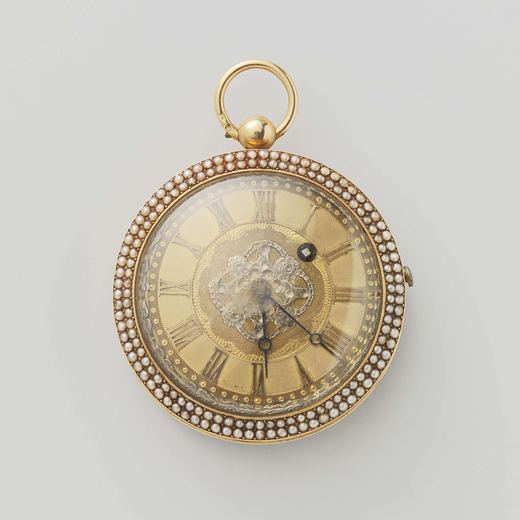
Pocket Watches · 1754
Pocket watch by anoniem, Switzerland, 1754
Rijksmuseum
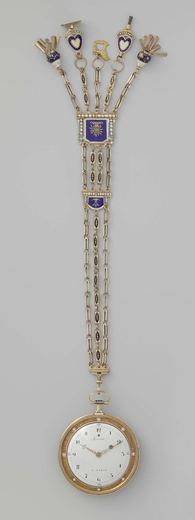
Pocket Watches · 1830
Pocket watch by anoniem, France, 1830
Rijksmuseum
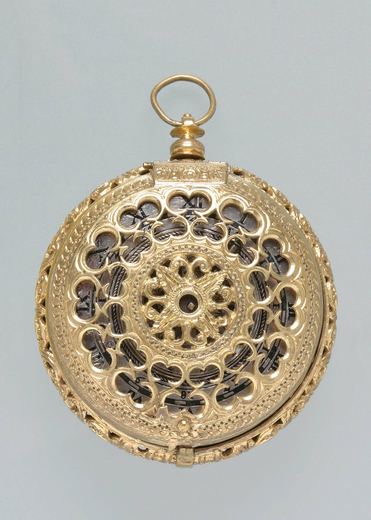
Pocket Watches · 1600
Pocket watch by Hans Reinboldt, France, 1600
German Clock Museum
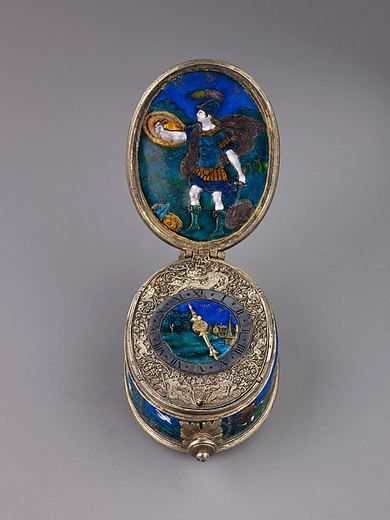
Pocket Watches · first quarter of 17th century
Watch by Suzanne de Court, France, first quarter of 17th century
The Metropolitan Museum of Art, New York
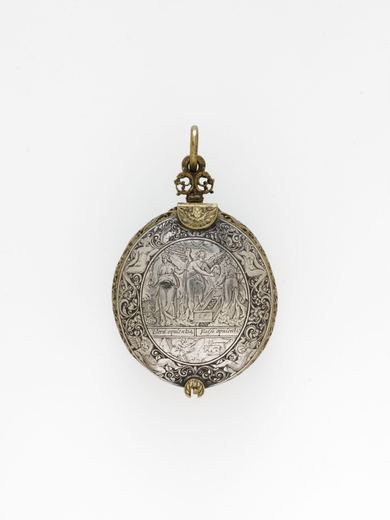
Pocket Watches · early 17th century
Watch of engraved and pierced silver and gilt brass, signed 'Noel Hubert A Rouen', France, early 17th century
Victoria and Albert Museum, London
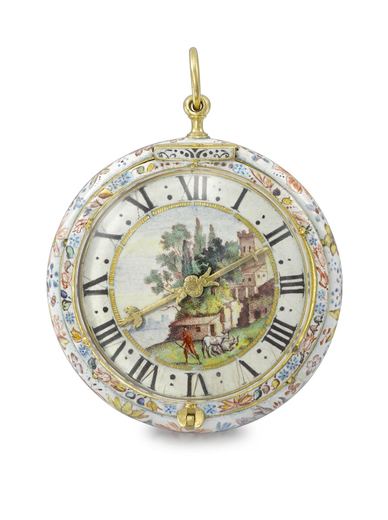
Pocket Watches · 1601-1700
Pocket watch by Margotin, D, France, 1601-1700
Science Museum Group, London
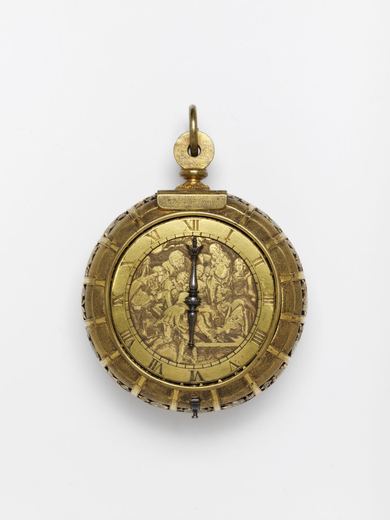
Pocket Watches · 1630
Carriage watch with gilt brass case and engraved dial by Nicolas Lemaindre, Blois, 1630
Victoria and Albert Museum, London
Pocket Watches · ca. 1645–50
Watch by Jacques Goullons, France, ca. 1645–50 (The Met 17.190.1557)
The Metropolitan Museum of Art, New York