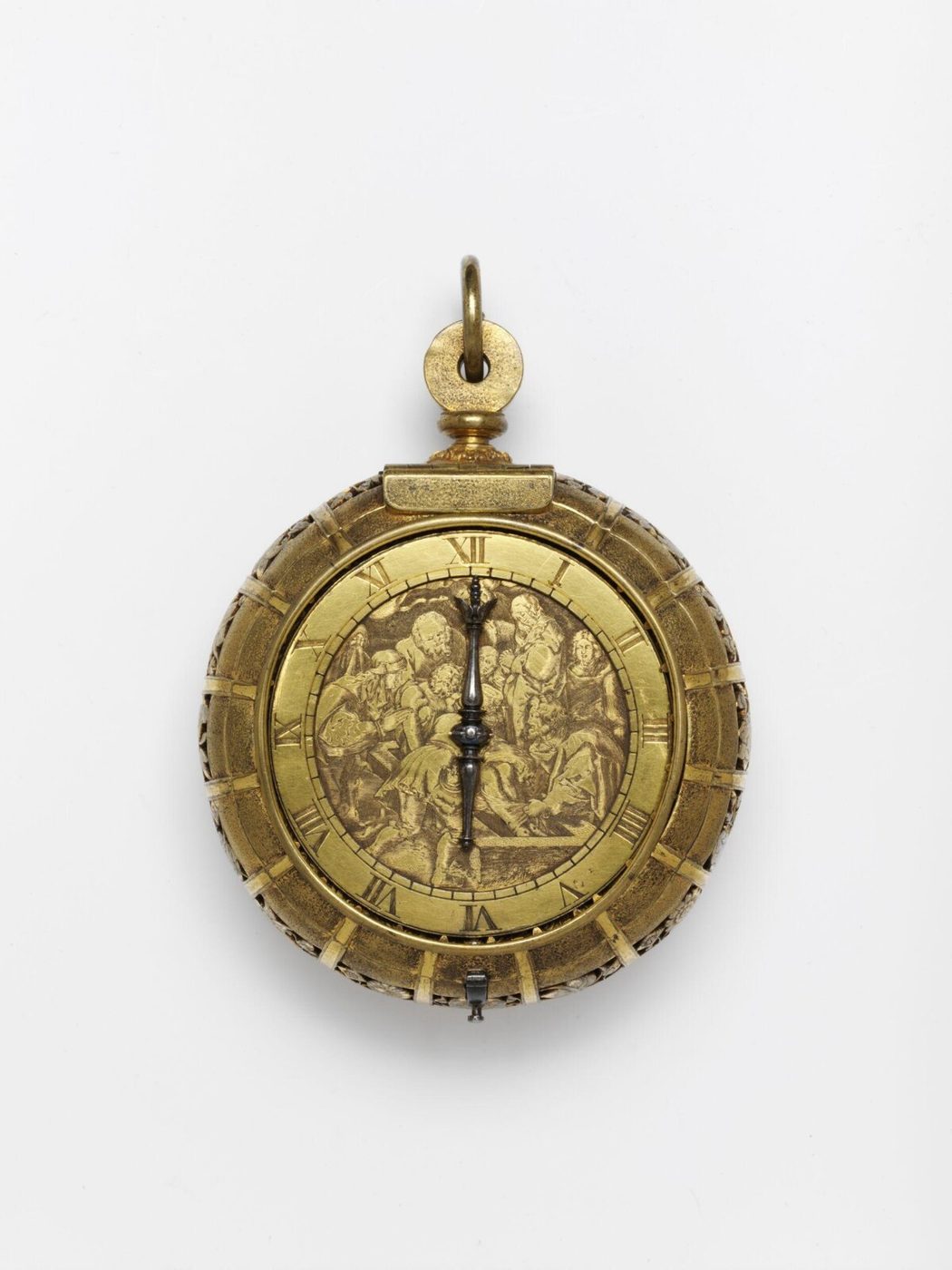
Pocket Watches · Carriage watch
Carriage watch with gilt brass case and engraved dial by Nicolas Lemaindre, Blois, 1630
- Maker / attribution
- Nicolas Lemaindre (watchmaker)
- Date
- 1630
- Historical period
- Early Modern Horology (1600 – 1750)
- Country of origin
- France
- Place
- Blois
- Object type
- Carriage watch
- Materials / technique
- Brass in part engraved, pierced, matted, gilded, and cast. Steel. Silver.
- Dimensions
- Height: 145 mm (With loose suspension ring fully extended); Width: 104 mm; Depth: 43 mm
- Holding institution
- Victoria and Albert Museum, London
- Accession / object no.
- 2366-1855
Record summary
Held and catalogued by Victoria and Albert Museum, London (object number 2366-1855), this is a carriage watch by Nicolas Lemaindre, made in Blois, France, dated 1630. The Atlas places it in the Early Modern Horology period (1600 – 1750) of its Pocket Watches collection. Materials and techniques recorded by the source: Brass in part engraved, pierced, matted, gilded, and cast. Steel. Silver. Recorded dimensions: Height: 145 mm (With loose suspension ring fully extended); Width: 104 mm; Depth: 43 mm. The record is illustrated with 4 photographs.
Assembled from the source record's structured fields. Dates and attributions are given as the source states them; where a field is missing the Atlas leaves it blank rather than estimating.
Catalogue description
V&A — Summary
Carriage watches were large, robust watches possibly made for the use of travellers and frequently excellent examples of the art of the watchmaker. This watch has a finely-made movement and a superbly engraved dial which reflect the high quality of watchmaking in Blois in the seventeenth-century. Blois makers received royal patronage and rivalled Paris in the quality of the movements, the engraving and the enamelling. Nicolas I Lemaindre was watch and clockmaker (horloger) of the queen mother, Marie de Médici, widow of Henri IV, who was at one point exiled to Blois. He died in 1652-3. His nephew Nicolas II Lemaindre was watch and clockmaker to the brother of Louis XIII, Duke Gaston d'Orléans, to whom the château of Blois was granted. Nicholas II also made fine watches in the second quarter of the seventeenth century.
V&A — Physical description
Watch with circular gilt-brass case, the side pierced and engraved with panels of flowers and foliage between 16 radial flutes. The base of the case, which is almost flat, has been soldered to the side. The bezel, back and the rim of the case have been matted with a circular tool. The dial glass is lacking. The gilt-brass dial has an applied gilt-brass chapter ring with Roman hours, I - XII, and inner ring of quarter-hour marks. The centre of the dial is engraved with The Entombment . A band of engraved foliage runs around the dial outside the chapter ring. Single steel hour hand with foliage head and extended tail. Brass movement plates separated by Egyptian pillars. Top plate engraved as below. The going train has a fusee and chain, and a verge escapement. Single-foot balance cock, pierced and engraved with flowers and foliage. Later balance-wheel and steel spring. The regulator arc has a projecting pin engaged by the fork of a lever, the outer end of which moves between positions marked A[vance], fast, and R[etard], slow. The mainspring set-up click has table and foot pierced and engraved with flowers and foliage. The resting barrel of the striking train is pierced and engraved with foliage and flowers. The count wheell is numbered 1 to 12, with pierced and engraved centre, mounted on top of the top plate. Steel index with tail. Silver bell mounted inside case. The front case has been cut out at a later date to reveal the dial face through the glass.
V&A — Object history
Bought at the Bernal Sale, Christie's, London, 1855, lot 3913. Grand Palais Exhibition RF.2001/297
Inscriptions & marks
'A Blois Nicolas Lemaindre 1630'
Historical context
Early Modern Horology (1600 – 1750)
Huygens' pendulum and balance spring transform accuracy; English makers develop the anchor and deadbeat escapements.
The balance spring (c. 1675) improved watches dramatically and introduced the minute hand. English pair-cased verge watches with pierced balance cocks and French oignons were typical; enamel painting at Blois and Geneva, and the repeating watch (1680s), made watches objects of great refinement.
Read the period in the timelineMore pocket watches from this periodEarlier: Renaissance Horology
Atlas type guide
Pocket watches
The pocket watch was the dominant personal timekeeper from the late seventeenth century until the First World War. Its development tracks the history of the escapement: verge watches with fusees until the late eighteenth century; Thomas Mudge's lever escapement (c. 1755) and the cylinder escapement popularised by George Graham and later by Swiss makers; and the Swiss and English lever watches of the nineteenth century. Lépine's bar-bridge calibre and keyless winding made watches thinner and easier to use.
Industrialisation transformed the trade: American factories such as Waltham (from 1850) and Elgin produced interchangeable parts by machine, and Swiss makers responded with their own mechanisation after the 1876 Philadelphia Exhibition. By 1900 a reliable watch was affordable to millions; the finest makers continued to produce complications and precision watches.
What to look for
- The escapement: verge (crown wheel), cylinder, duplex, English or Swiss lever.
- Key winding (a square arbor in dial or back) or keyless crown winding.
- Signatures and serial numbers on the movement, dial and inside case back.
- Hallmarks, case maker's marks and gold or silver standards stamped in the case.
- Dial material: enamel, silver, gold, later printed metal.
Dating clues
- Verge watches dominate before c. 1800; cylinder watches c. 1770–1900; lever watches after c. 1820.
- Keyless winding: increasingly common after c. 1860.
- Manufacturer serial number lists exist for Waltham, Elgin, Longines, Omega, Patek Philippe and others.
General guidance written by the Atlas editors about this kind of object. It is not a statement about this particular piece; for that, rely on the source record above and on physical examination.
Read next:Identification Centre
Related records
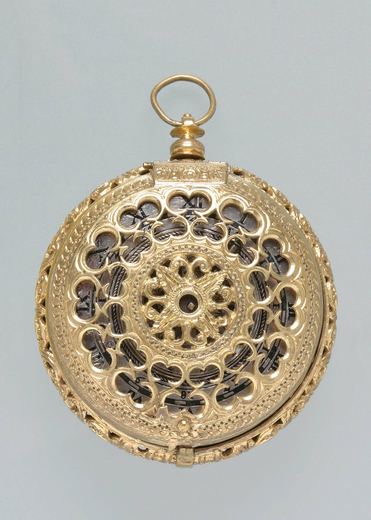
Pocket Watches · 1600
Pocket watch by Hans Reinboldt, France, 1600
German Clock Museum
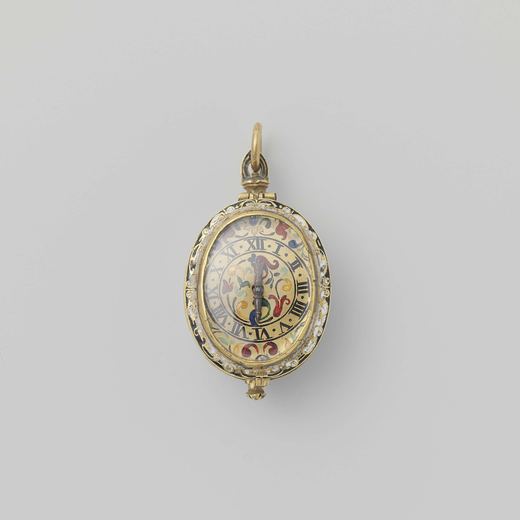
Pocket Watches · 1600
Pocket watch by anoniem, France, 1600
Rijksmuseum
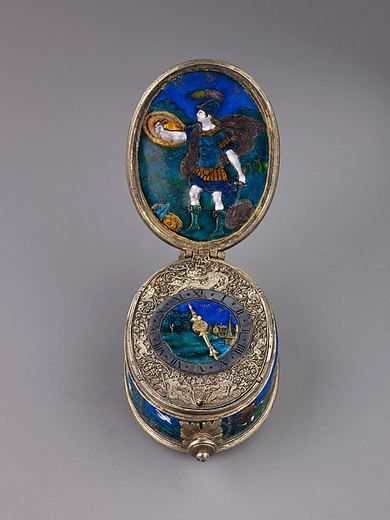
Pocket Watches · first quarter of 17th century
Watch by Suzanne de Court, France, first quarter of 17th century
The Metropolitan Museum of Art, New York
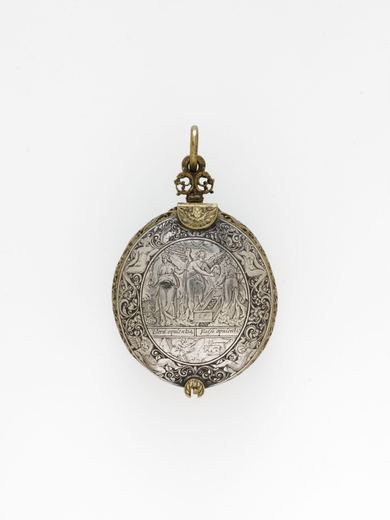
Pocket Watches · early 17th century
Watch of engraved and pierced silver and gilt brass, signed 'Noel Hubert A Rouen', France, early 17th century
Victoria and Albert Museum, London
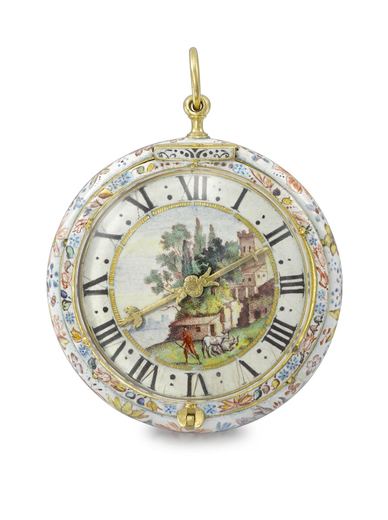
Pocket Watches · 1601-1700
Pocket watch by Margotin, D, France, 1601-1700
Science Museum Group, London
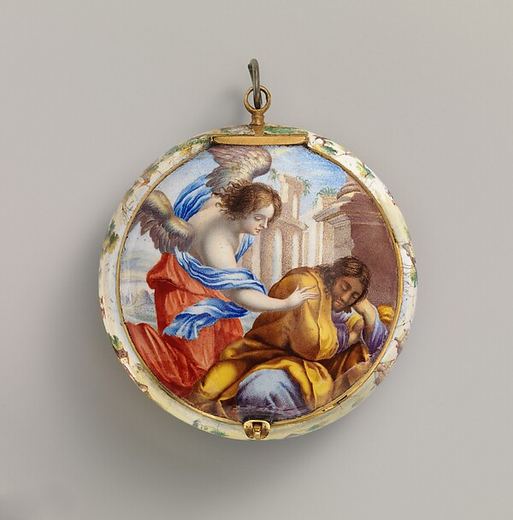
Pocket Watches · ca. 1645–50
Watch by Jacques Goullons, France, ca. 1645–50 (The Met 17.190.1557)
The Metropolitan Museum of Art, New York
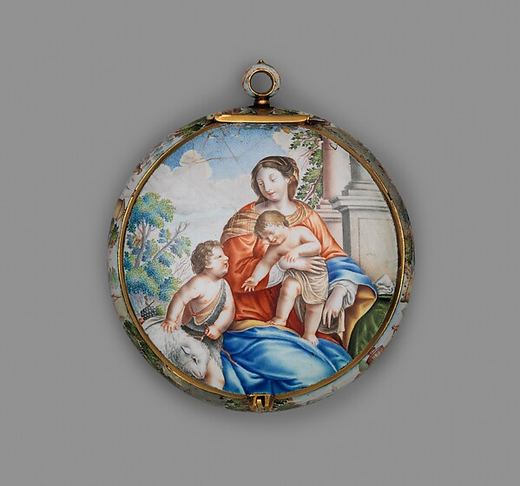
Pocket Watches · ca. 1645–50
Watch by Jacques Goullons, France, ca. 1645–50 (The Met 17.190.1627)
The Metropolitan Museum of Art, New York
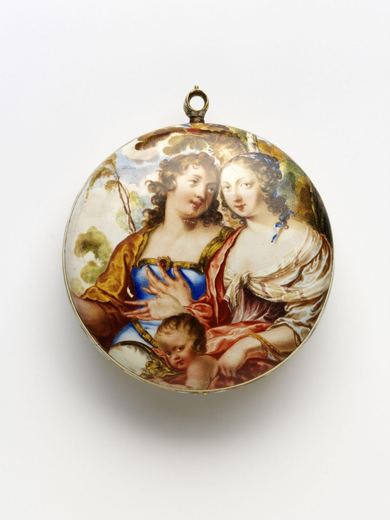
Pocket Watches · 1640-1660
Watch by Jan Bernardus Vrythoff, France, 1640-1660
Victoria and Albert Museum, London