
Clocks · Skeleton clock
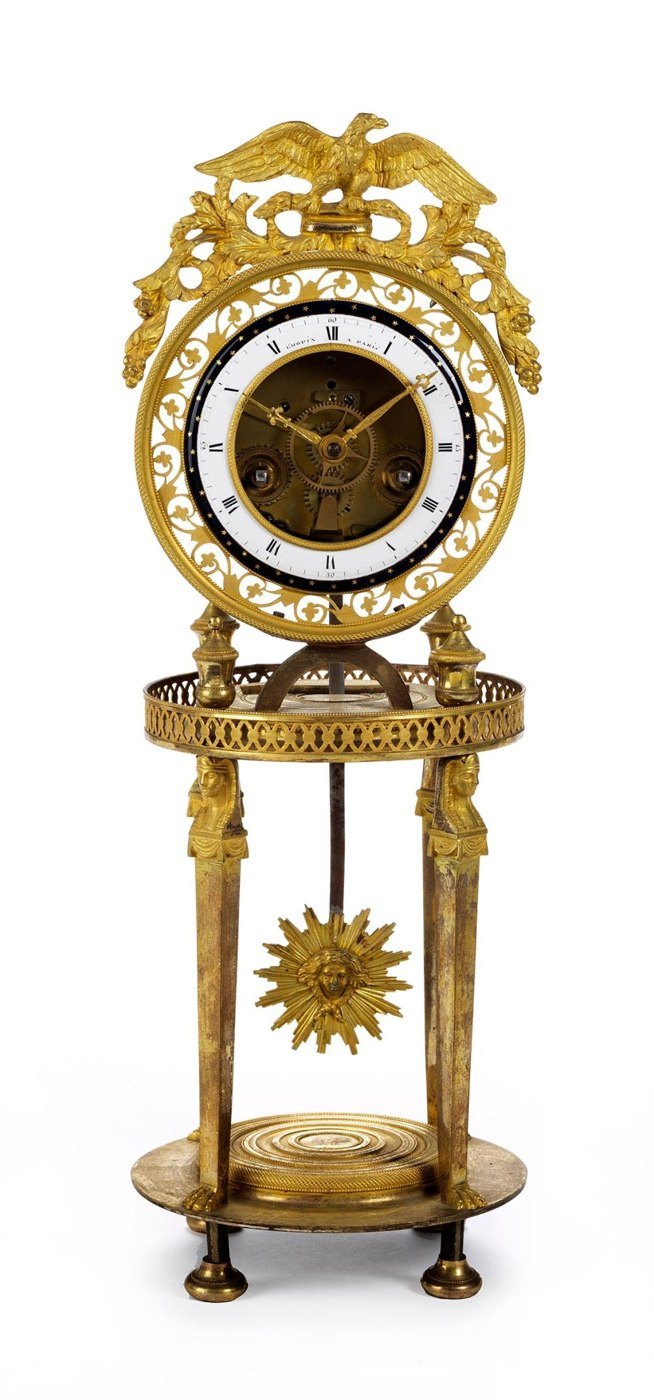
Pariser Empire-Skelettpendule
- Maker / attribution
- Chopin (source attribution)
- Date
- c. early 19th century
- Historical period
- Precision & Scientific Horology (1750 – 1850)
- Country of origin
- France
- Object type
- Skeleton clock
- Dimensions
- 40 cm
- Auction house
- Hampel Fine Art Auctions (via Invaluable)
- Lot
- 85
- Credit line
- Hampel Fine Art Auctions (via Invaluable)
- Catalogue title (original)
- Pariser Empire-Skelettpendule (English)
View the source record (auction lot) ↗ (opens another website in a new tab)Suggest a correction
Record summary
Catalogued by Hampel Fine Art Auctions (via Invaluable) (lot 85), this is a skeleton clock attributed to Chopin, made in France, dated c. early 19th century. The Atlas places it in the Precision & Scientific Horology period (1750 – 1850) of its Clocks collection. Recorded dimensions: 40 cm. The record is illustrated with 1 photograph.
Assembled from the source record's structured fields. Dates and attributions are given as the source states them; where a field is missing the Atlas leaves it blank rather than estimating.
Catalogue description
Original object description
Fashioned as a classical open tempietto resting on stepped circular disc supports, this Parisian skeleton clock of the French Empire period dates to the first quarter of the 19th century and has a total height of 40 cm. An openwork gallery surmounts the dial beneath an eagle finial. Outlined by engine-turned guilloché detailing, the chapter ring displays white and deep blue enamel scattered with gilt stars, complemented by gilded fleur-de-lis hands that register black Roman hours, Arabic minute numerals, and interval track markings. Bearing the signature "Chopin A Paris", it is assigned to the clockmaker of that name who founded his Rue aux Ours premises in 1806 prior to relocating to Rue Beaubourg in 1820, where he operated until 1867. The skeletonized caliber exposes two winding arbors on the dial side, a count-wheel striking train chiming hours and half-hours on a bell, and a silk suspension carrying a sunburst pendulum embossed with a stylized face. A winding key is included, though its operating functionality has not been tested.
Historical context
Precision & Scientific Horology (1750 – 1850)
Harrison solves longitude; Mudge invents the lever; Breguet's Paris workshop defines the modern watch.
The age of the deadbeat escapement, compensated pendulums and observatory regulators. Domestic clocks spread through the middle classes: English longcase and bracket clocks, French gilt-bronze mantel clocks, Viennese Biedermeier wall clocks, Black Forest painted-shield clocks, and the first American shelf clocks.
Read the period in the timelineMore clocks from this periodEarlier: Early Modern Horology
Atlas type guide
Skeleton clocks
A skeleton clock displays its movement: the plates are pierced to a minimum so that wheels, escapement and fusee can be seen, usually under a glass dome. French makers produced fine skeleton clocks in the late eighteenth century; in Victorian England they became popular showpieces, with frames in the shapes of cathedrals and famous buildings.
What to look for
- Pierced brass plates in scroll or architectural shapes.
- A glass dome and wooden or marble base.
- Fusee movements and sometimes passing strike on a bell.
Dating clues
- French skeleton clocks: c. 1780–1830.
- English cathedral-style skeleton clocks: c. 1840–1890.
General guidance written by the Atlas editors about this kind of object. It is not a statement about this particular piece; for that, rely on the source record above and on physical examination.
Read next:FuseeAnchor (recoil) escapement
Related records
Clocks · 1750–1800
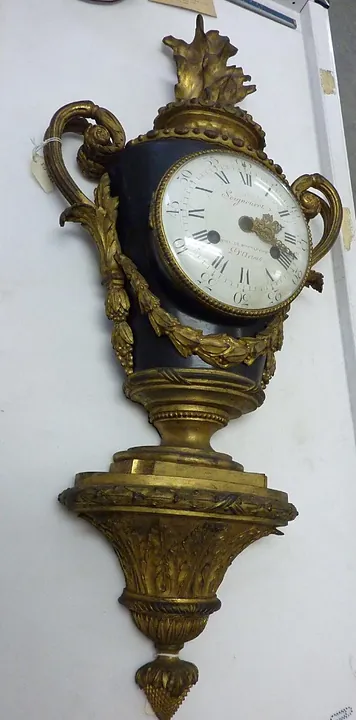
Bracket clock in metal case with scroll handles and flamed-shaped top signed by Pierre Seignoret, Clockmaket to the the Comte d'Artois
Victoria and Albert Museum, London
Clocks · 1756
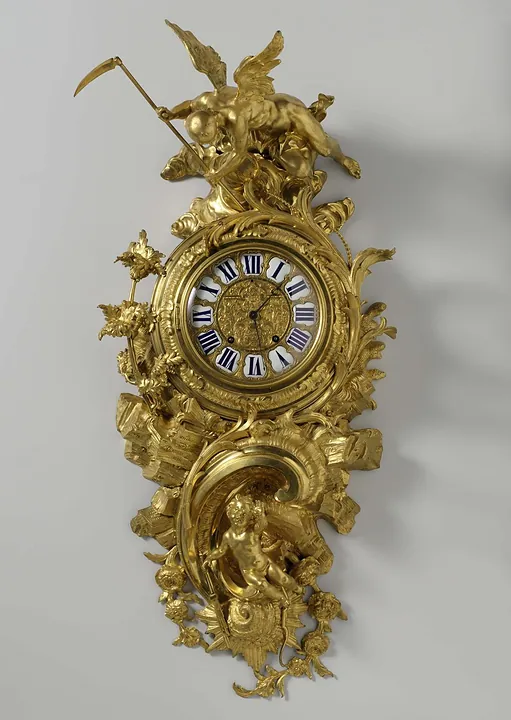
Mantel clock, France, 1756
Rijksmuseum
Clocks · c. 1764–70
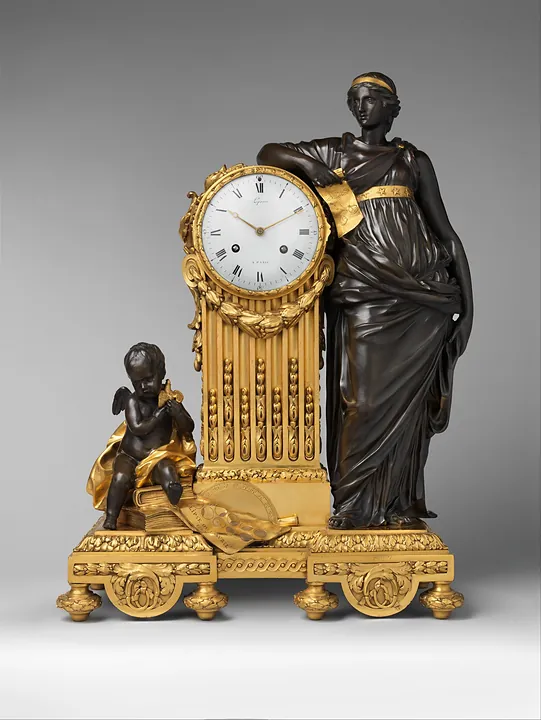
Mantel clock by Jean-André Lepaute, France, c. 1764–70
The Metropolitan Museum of Art, New York
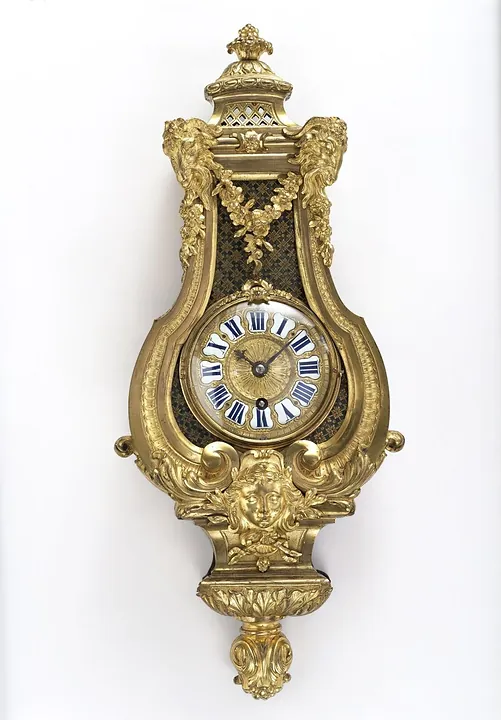
Clocks · 1760–1860
'Pendule d'alcove' wall clock, gilt-bronze and boulle marquetry, Paris, 1760-1860
Victoria and Albert Museum, London
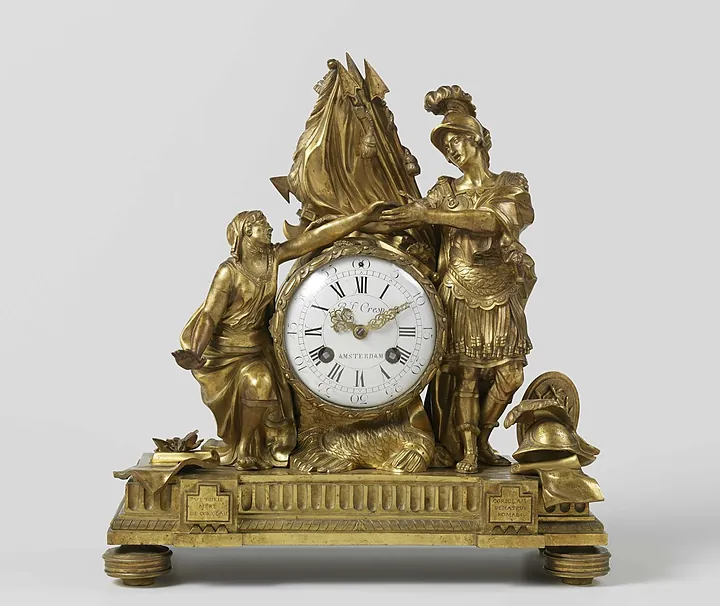
Clocks · 1760
Mantel clock, France, 1760
Rijksmuseum
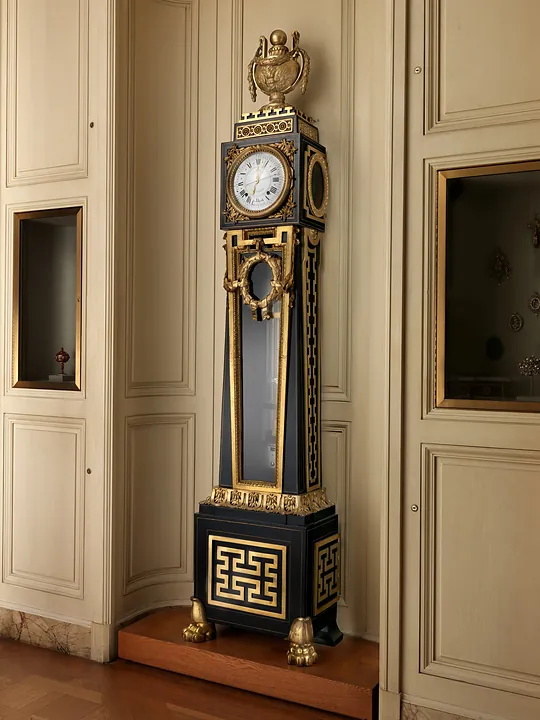
Clocks · c. 1768–70
Longcase astronomical regulator by Ferdinand Berthoud, France, c. 1768–70
The Metropolitan Museum of Art, New York
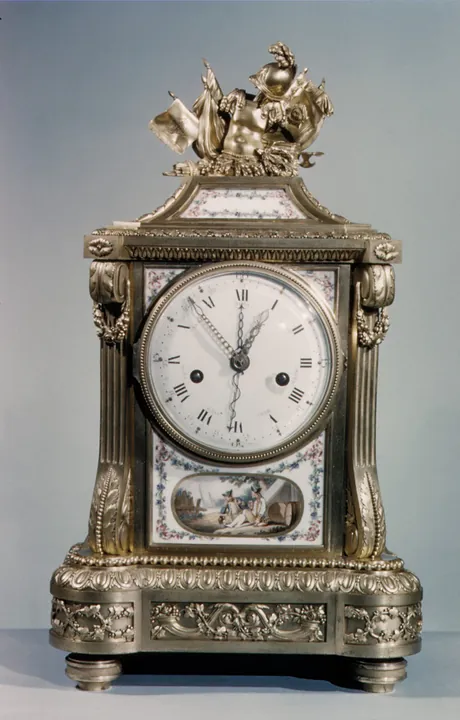
Clocks · c. 1775
Clock by Porcelain plaques by Sèvres Manufactory, France, c. 1775
The Metropolitan Museum of Art, New York
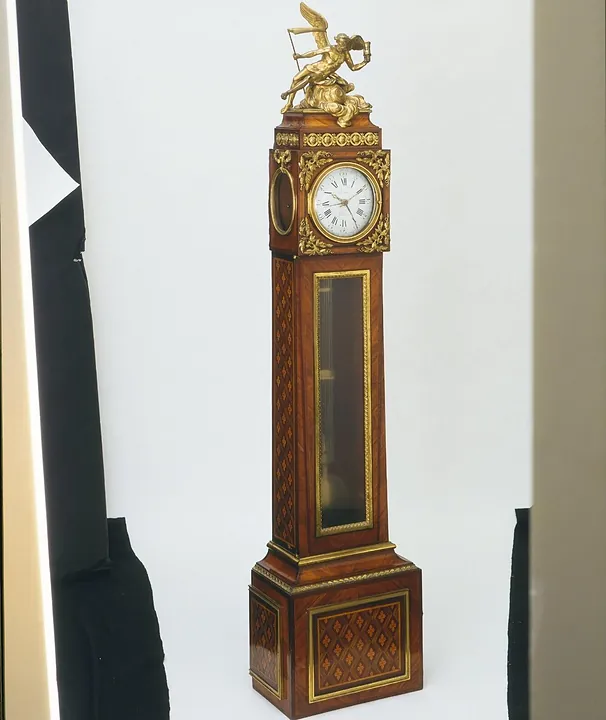
Clocks · 1770–1775
Longcase clock (régulateur) by Robert Robin, France, 1770–1775
Victoria and Albert Museum, London