
Clocks · Clock
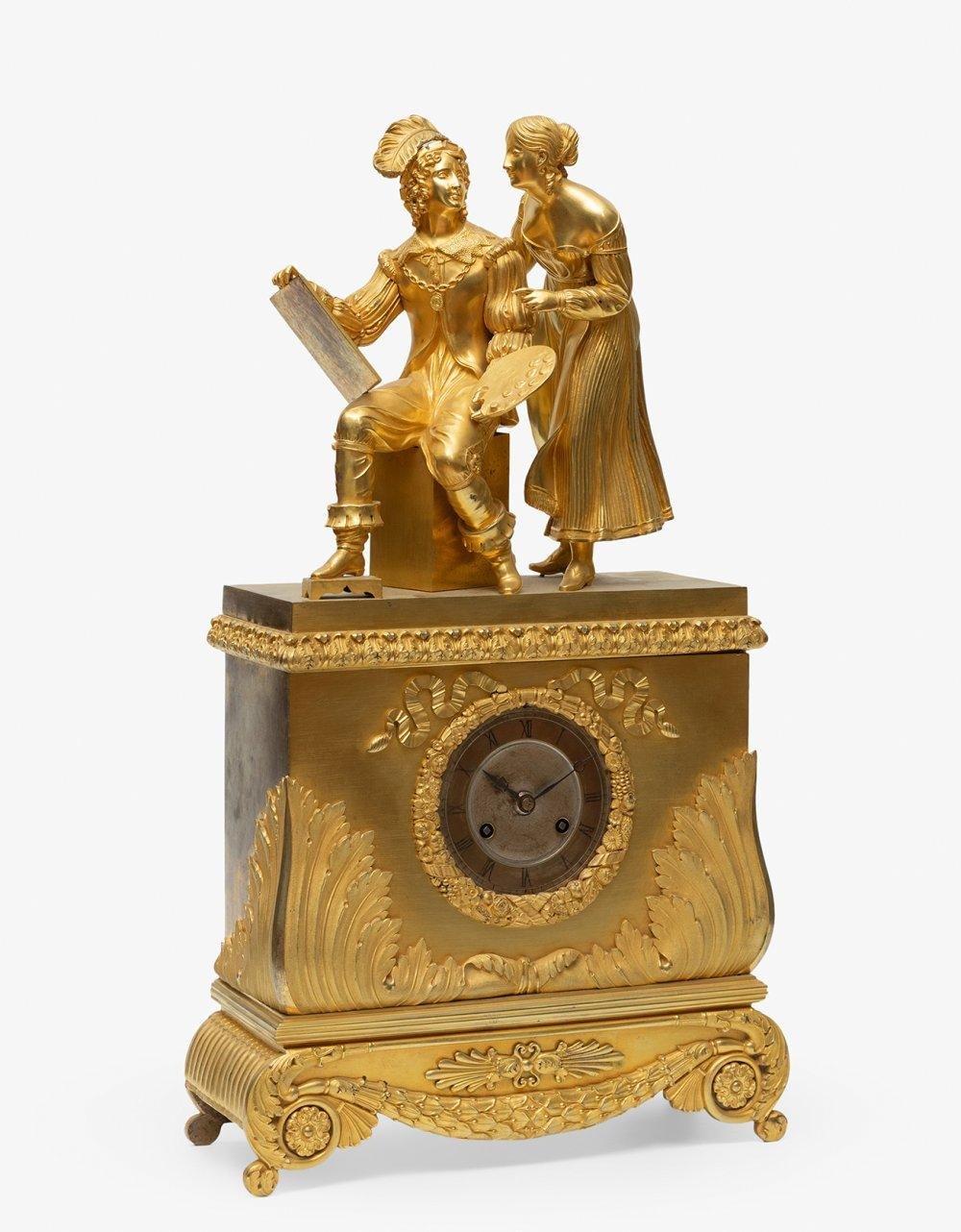
Louis-Philippe table clock, France, c. 1830
- Maker / attribution
- Unrecorded in source
- Date
- c. 1830
- Historical period
- Precision & Scientific Horology (1750 – 1850)
- Country of origin
- France
- Object type
- Clock
- Materials / technique
- bronze
- Auction house
- Invaluable auction listings
- Lot
- Lot 12F9C0958A
- Credit line
- Auction lot record: lot 109, 23rd November - Decorative & Oriental Art, Setdart Auction House (2026), via Invaluable
- Catalogue title (original)
- Louis-Philippe table clock, France, c. 1830. Gilded bronze. Features a silk-thread suspension and a pendulum. In working condition. (English)
View the source record (auction lot) ↗ (opens another website in a new tab)Suggest a correction
Record summary
Catalogued by Invaluable auction listings (lot Lot 12F9C0958A), this is a clock, made in France, dated c. 1830. The Atlas places it in the Precision & Scientific Horology period (1750 – 1850) of its Clocks collection. Materials and techniques recorded by the source: bronze. The record is illustrated with 4 photographs.
Assembled from the source record's structured fields. Dates and attributions are given as the source states them; where a field is missing the Atlas leaves it blank rather than estimating.
Catalogue description
Lot description — Setdart Auction House
Measurements: 53 x 29 x 11 cm. Crowned by a sculptural group depicting a painter and his companion, this clock is a representative example of French decorative clockmaking from the Louis-Philippe period (1830–1848). The scene, with its anecdotal and romantic character, transforms the clock into more than just an instrument for measuring time: a small sculptural composition in which art and the human figure take center stage. The case, with its architectural structure and curved contours, features rich relief ornamentation consisting of plant motifs, garlands, and foliage elements, enhanced by the warm luster of gilded bronze. The piece reflects the bourgeois taste of France in the second quarter of the 19th century, when table clocks occupied a prominent place in salons and studies, combining mechanical precision, ornamental value, and symbolic representation. The silk-thread suspension, characteristic of many French movements of the period, offers an interesting insight into nineteenth-century watchmaking techniques. The meticulous composition of the upper scene and the gilding technique lend the piece a striking decorative presence, making it ideal for a classical interior or a collection of 19th-century decorative arts
Historical context
Precision & Scientific Horology (1750 – 1850)
Harrison solves longitude; Mudge invents the lever; Breguet's Paris workshop defines the modern watch.
The age of the deadbeat escapement, compensated pendulums and observatory regulators. Domestic clocks spread through the middle classes: English longcase and bracket clocks, French gilt-bronze mantel clocks, Viennese Biedermeier wall clocks, Black Forest painted-shield clocks, and the first American shelf clocks.
Read the period in the timelineMore clocks from this periodEarlier: Early Modern Horology
Atlas type guide
Bracket, table and spring-driven clocks
Spring-driven clocks freed timekeeping from the hanging weight. The coiled mainspring, documented from the fifteenth century, made portable table clocks possible; to even out its declining force, makers used the fusee, a conical pulley connected to the barrel by a gut line or chain. Renaissance table clocks from Augsburg and Nuremberg — drum-shaped, square or tower-shaped in gilt brass — were luxury scientific objects, often with astronomical dials and alarms.
After the pendulum, English makers developed the bracket clock: a wooden case with a carrying handle, a short pendulum with a verge escapement, and often repeating work to sound the hours on demand at night. Later examples use the anchor escapement. In the nineteenth century, 'table clock' became a broad term for spring clocks of every nationality.
What to look for
- A fusee in the movement (cone-shaped pulley) and the type of line — gut or chain.
- Verge escapement with a short bob pendulum, often with a decoratively engraved backplate.
- Repeat cords or buttons that make the clock strike again on demand.
- Gilt-brass engraved cases and horizontal dials on Renaissance pieces.
- Case shapes: inverted bell, bell top, break-arch, lancet or balloon.
Dating clues
- Drum and tower table clocks: c. 1520–1650.
- Ebony veneered English bracket clocks with verge escapements: c. 1670–1800.
- Engraved backplates were usual on English clocks until c. 1800, then generally plain.
General guidance written by the Atlas editors about this kind of object. It is not a statement about this particular piece; for that, rely on the source record above and on physical examination.
Related records
Clocks · 1750–1800
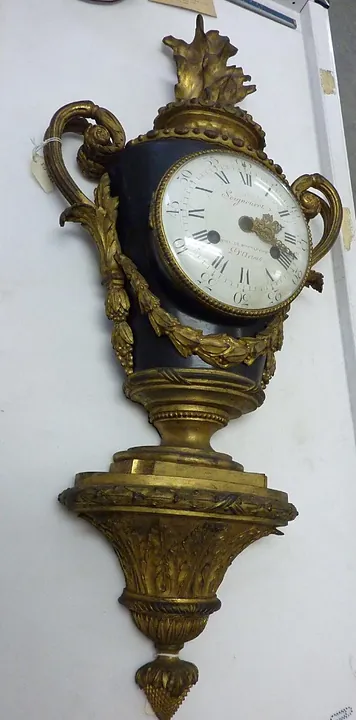
Bracket clock in metal case with scroll handles and flamed-shaped top signed by Pierre Seignoret, Clockmaket to the the Comte d'Artois
Victoria and Albert Museum, London
Clocks · 1756
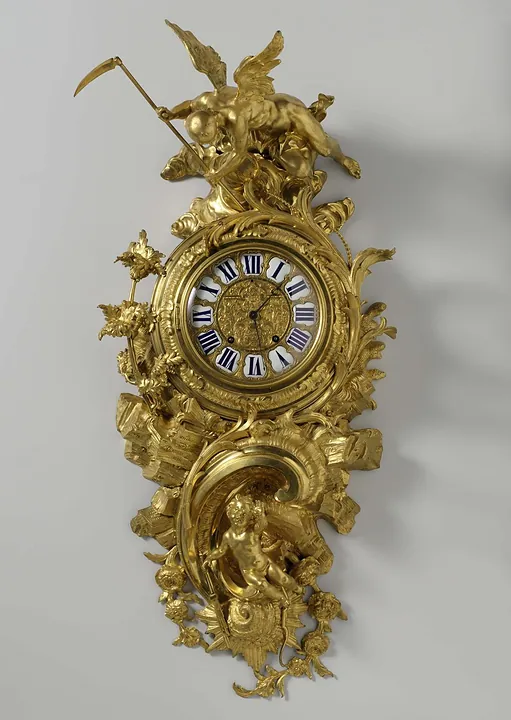
Mantel clock, France, 1756
Rijksmuseum
Clocks · c. 1764–70
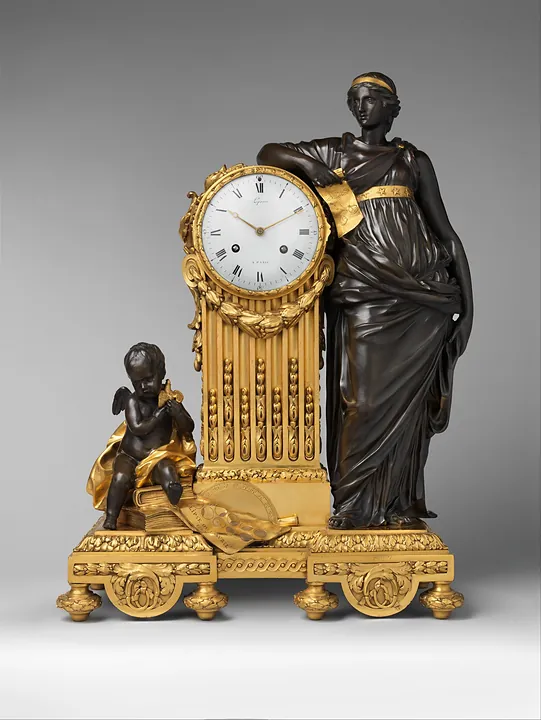
Mantel clock by Jean-André Lepaute, France, c. 1764–70
The Metropolitan Museum of Art, New York
Clocks · 1760–1860
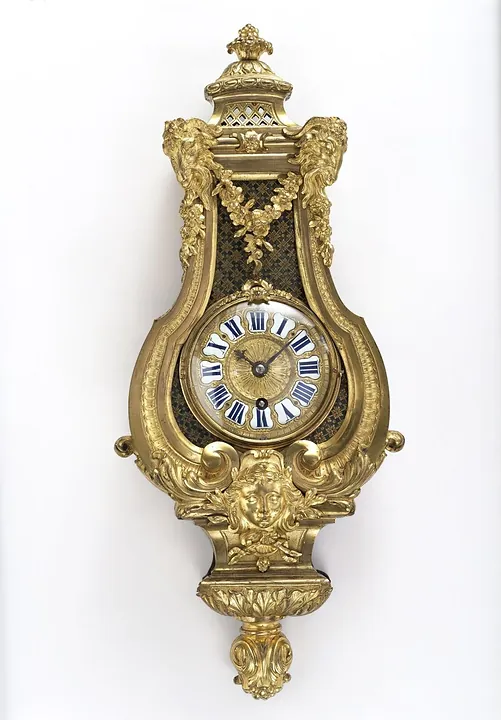
'Pendule d'alcove' wall clock, gilt-bronze and boulle marquetry, Paris, 1760-1860
Victoria and Albert Museum, London
Clocks · 1760
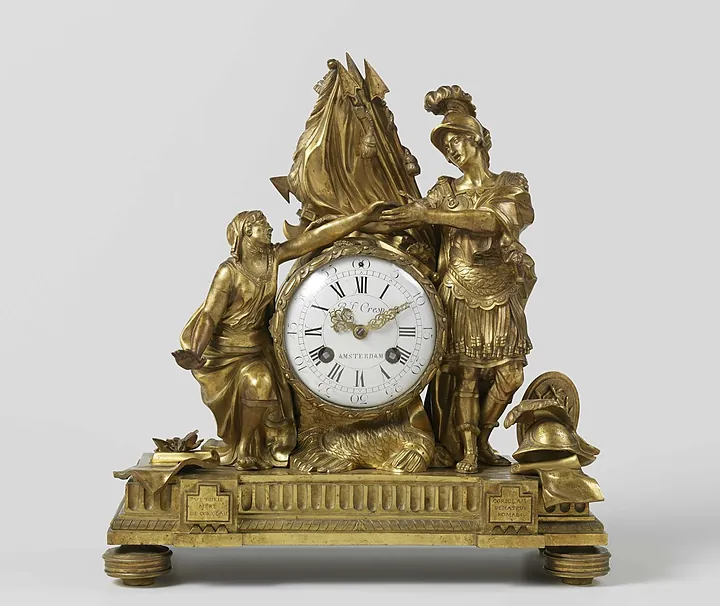
Mantel clock, France, 1760
Rijksmuseum
Clocks · c. 1768–70
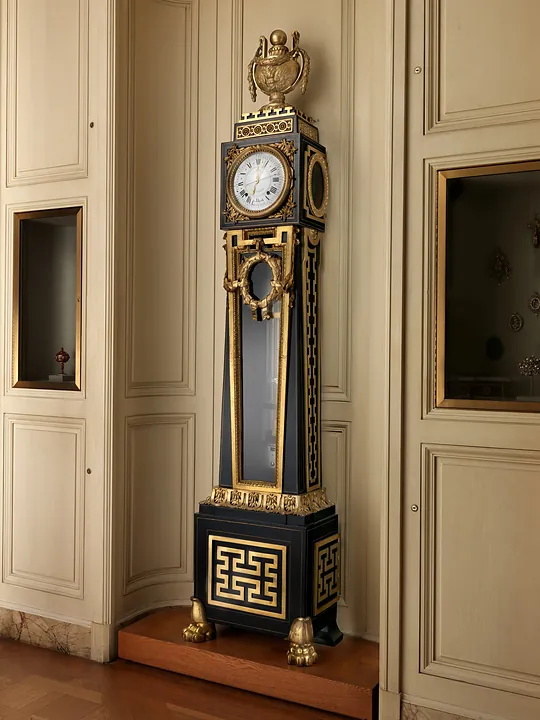
Longcase astronomical regulator by Ferdinand Berthoud, France, c. 1768–70
The Metropolitan Museum of Art, New York
Clocks · c. 1775
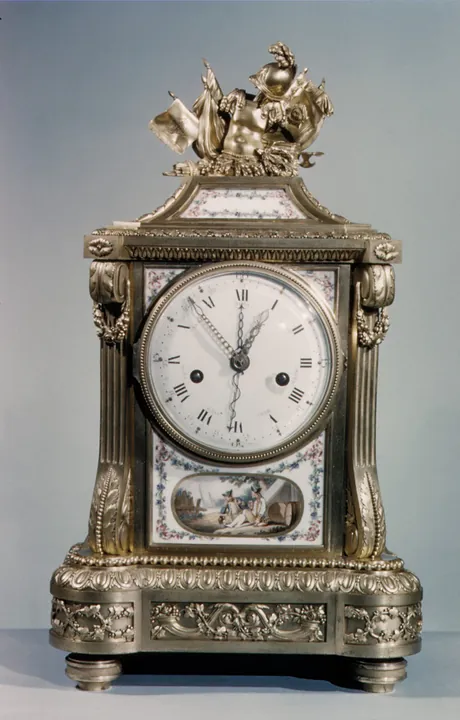
Clock by Porcelain plaques by Sèvres Manufactory, France, c. 1775
The Metropolitan Museum of Art, New York
Clocks · 1770–1775
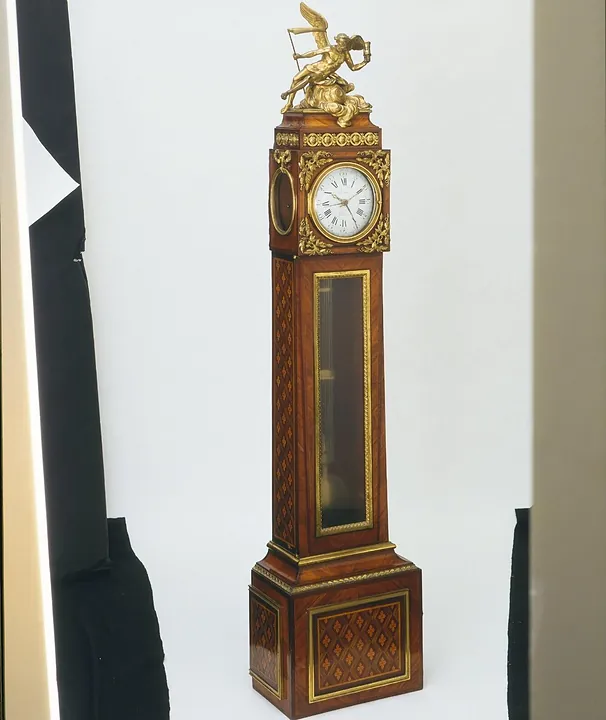
Longcase clock (régulateur) by Robert Robin, France, 1770–1775
Victoria and Albert Museum, London