
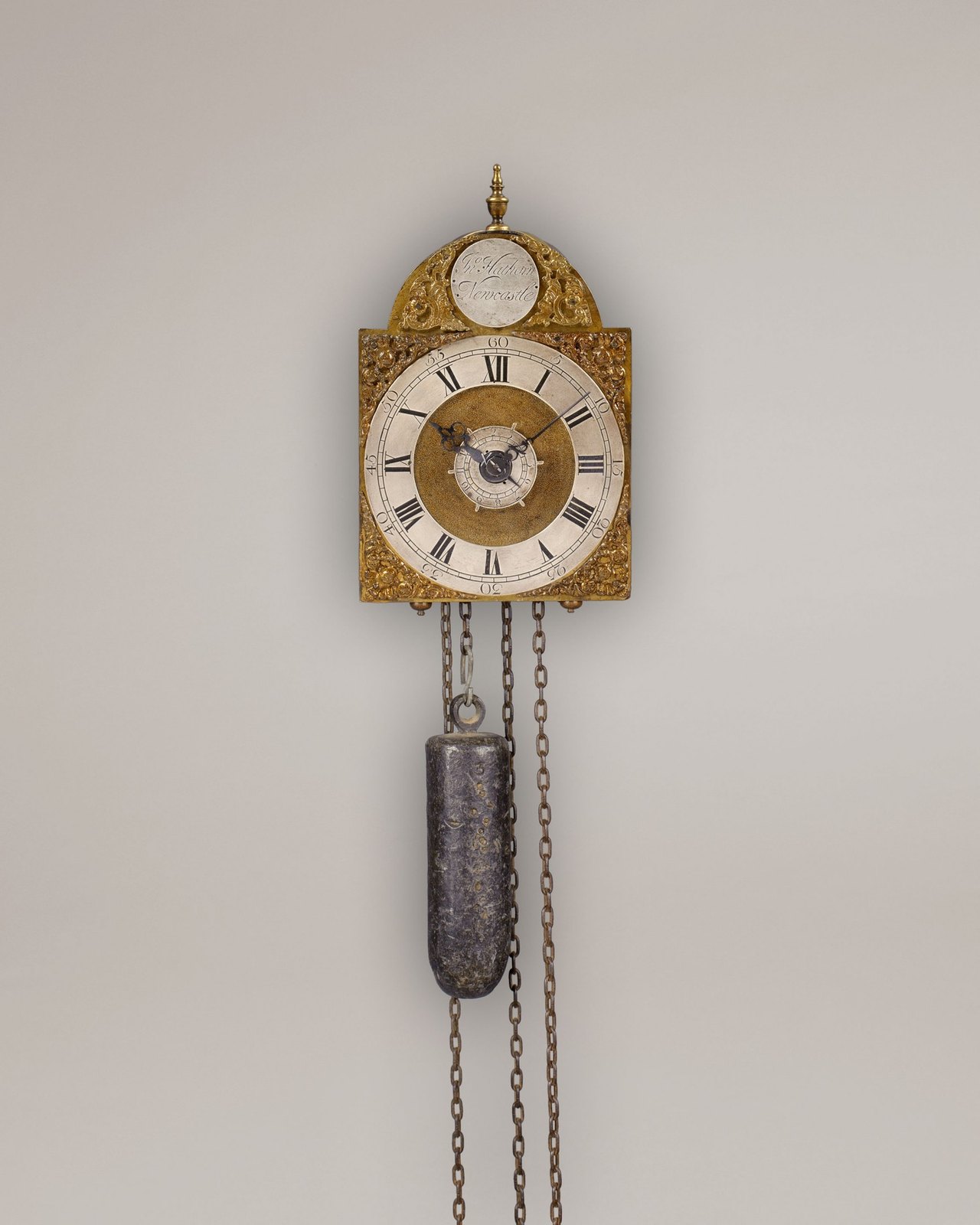
Clocks · Lantern clock
Lantern clock by John Hathorn, Newcastle, c. 1780
- Maker / attribution
- John Hathorn (maker)
- Date
- c. 1780
- Historical period
- Precision & Scientific Horology (1750 – 1850)
- Country of origin
- United Kingdom
- Place
- Newcastle
- Object type
- Lantern clock
- Materials / technique
- brass
- Dimensions
- Height 19 cm
- Stock no.
- SKU 60
- Credit line
- Dealer listing, Howard Walwyn (SKU 60)
- Catalogue title (original)
- JOHN HATHORN. A GOOD 18TH CENTURY MINIATURE BRASS TIMEPIECE LANTERN CLOCK WITH ALARM. (English)
View the source record (dealer listing) ↗ (opens another website in a new tab)Suggest a correction
Record summary
Catalogued by Howard Walwyn Fine Antique Clocks (dealer), London (stock number SKU 60), this is a lantern clock by John Hathorn, made in Newcastle, United Kingdom, dated c. 1780. The Atlas places it in the Precision & Scientific Horology period (1750 – 1850) of its Clocks collection. Materials and techniques recorded by the source: brass. Recorded dimensions: Height 19 cm. The record is illustrated with 3 photographs.
Assembled from the source record's structured fields. Dates and attributions are given as the source states them; where a field is missing the Atlas leaves it blank rather than estimating.
Catalogue description
Dealer description — Howard Walwyn
A good 18th century miniature brass timepiece lantern clock with alarm. The maker’s signature is engraved on a silvered disc in the arch and the delicate chapter ring has Roman hour markers and Arabic five minute numerals. The 5 inch dial also retains its original central alarm disc. The original crown wheel escapement has a short bob which swings at the back of the case and the latter hangs on the wall from a steel hoop and spurs. The alarm work is mounted inside on the brass back plate. Both the going and alarm trains have chains with old lead weights. Height: 7 ½ in (19 cm) * John Hathorn also spelt Hawthorn was working in Newcastle-upon-Tyne in the last quarter of the 18th century. HW5613 Signed / Inscribed Jn° Hathorn Newcastle
Historical context
Precision & Scientific Horology (1750 – 1850)
Harrison solves longitude; Mudge invents the lever; Breguet's Paris workshop defines the modern watch.
The age of the deadbeat escapement, compensated pendulums and observatory regulators. Domestic clocks spread through the middle classes: English longcase and bracket clocks, French gilt-bronze mantel clocks, Viennese Biedermeier wall clocks, Black Forest painted-shield clocks, and the first American shelf clocks.
Read the period in the timelineMore clocks from this periodEarlier: Early Modern Horology
Atlas type guide
Lantern, chamber and Gothic clocks
Domestic weight-driven clocks were made in southern Germany, Switzerland, Italy and Flanders from the fifteenth century. These 'Gothic' or chamber clocks have an open iron frame with corner posts, a verge escapement controlled by a foliot or balance wheel, and often an alarm or hour striking on a bell mounted above.
In England the lantern clock appeared around 1600: a brass posted-frame clock with a bell on top under decorative frets, hung on a hook or set on a wall bracket. After about 1658 many were converted to pendulum control, so originality of the escapement is a key question for any surviving example.
What to look for
- Iron (continental) or brass (English) posted frames with turned corner pillars and finials.
- A single hour hand — minute hands are rare before the pendulum era.
- Evidence of conversion: plugged holes, replaced escapement wheels or later pendulums.
- Fret designs and engraving on the dial centre, which help date English lantern clocks.
Dating clues
- Continental Gothic chamber clocks: c. 1450–1650.
- English lantern clocks: c. 1600–1720, with provincial examples later.
- Short 'bob' pendulum conversions after 1658; long pendulums with anchor escapement after c. 1670.
General guidance written by the Atlas editors about this kind of object. It is not a statement about this particular piece; for that, rely on the source record above and on physical examination.
Related records
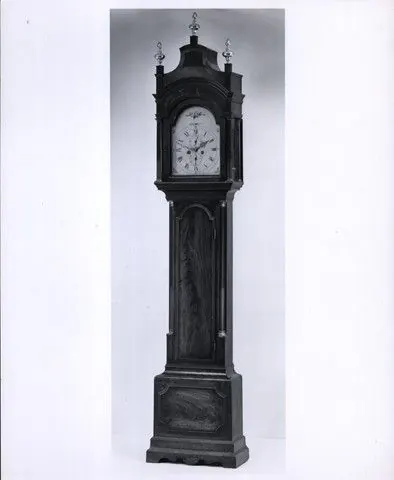
Clocks · 1798
Tall Case Clock
Yale University Art Gallery, New Haven
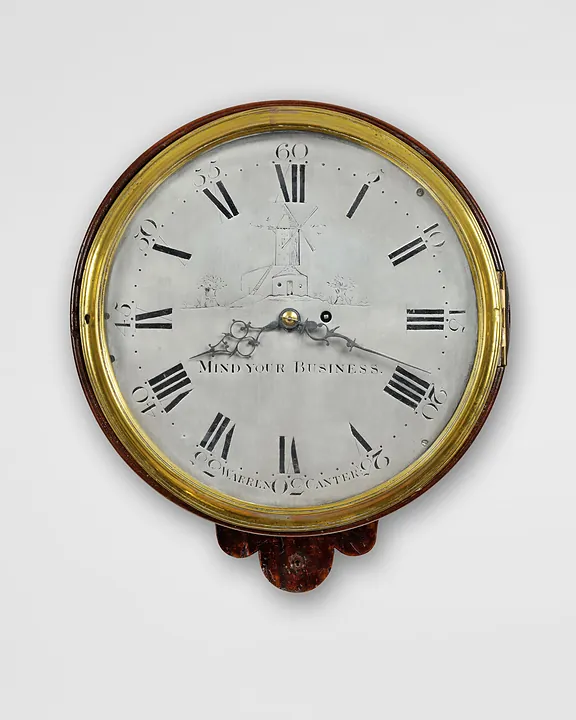
Clocks · c. 1800
Wall clock by Warren, Canterbury, c. 1800
Howard Walwyn Fine Antique Clocks (dealer), London
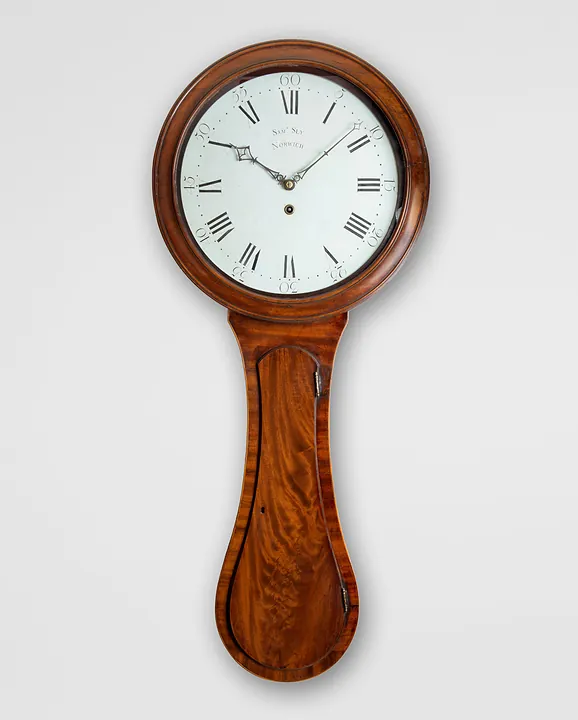
Clocks · c. 1800
Clock by Samuel Sly, Norwich, c. 1800
Howard Walwyn Fine Antique Clocks (dealer), London
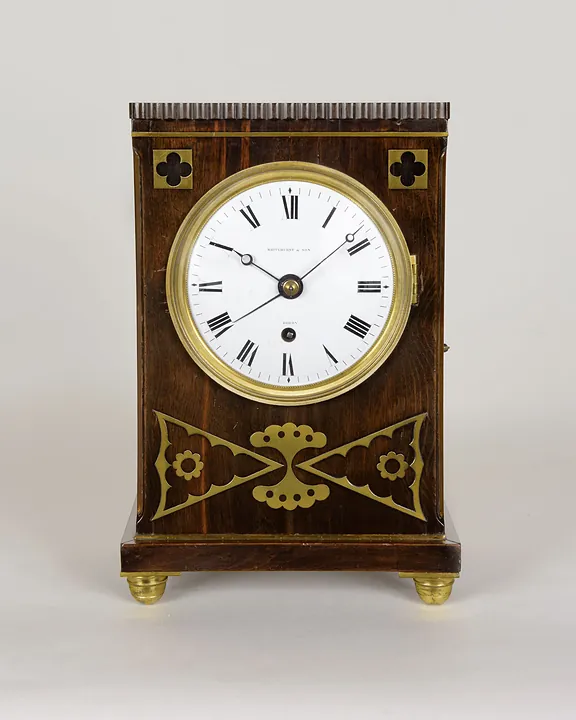
Clocks · c. 1840–1845
Bracket clock by Whitehurst & Son, Derby, c. 1840–1845
Howard Walwyn Fine Antique Clocks (dealer), London
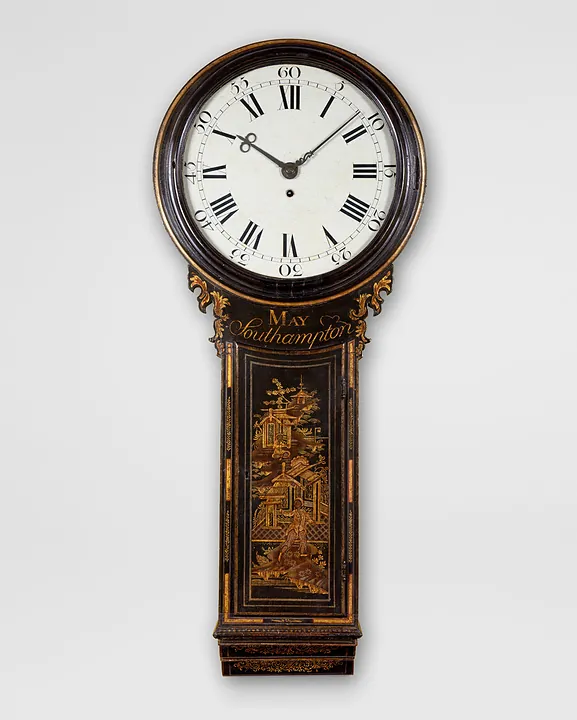
Clocks · 1775
Tavern clock by John May, Southampton, 1775
Howard Walwyn Fine Antique Clocks (dealer), London
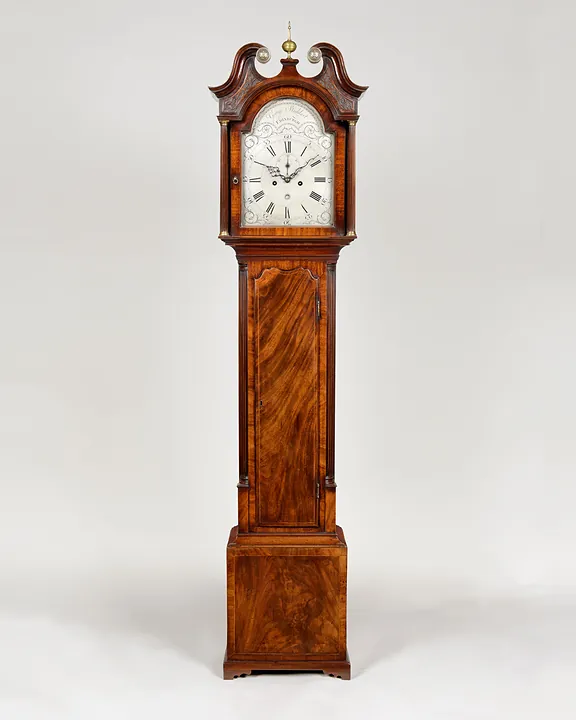
Clocks · c. 1795
Longcase clock by George Stoddart, c. 1795
Howard Walwyn Fine Antique Clocks (dealer), London
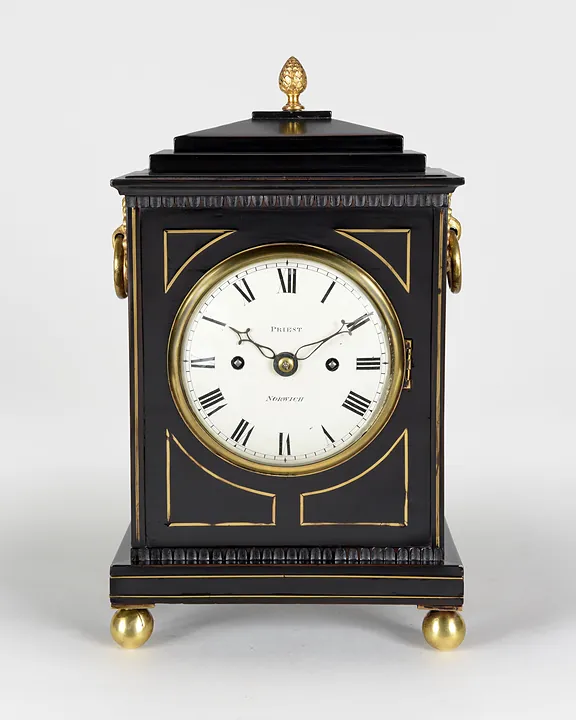
Clocks · c. 1830–1835
Bracket clock by Priest, Norwich, c. 1830–1835
Howard Walwyn Fine Antique Clocks (dealer), London
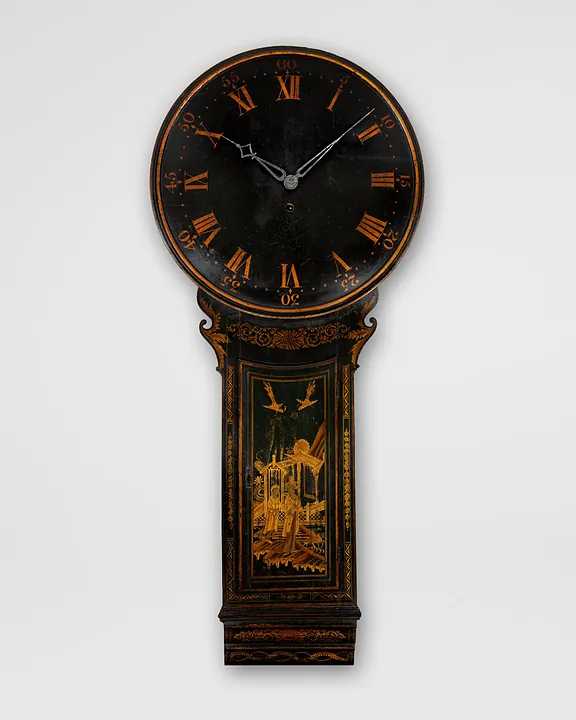
Clocks · c. 1785
Clock by Thomas Smoult, Newcastle, c. 1785
Howard Walwyn Fine Antique Clocks (dealer), London