
Clocks · Tavern clock
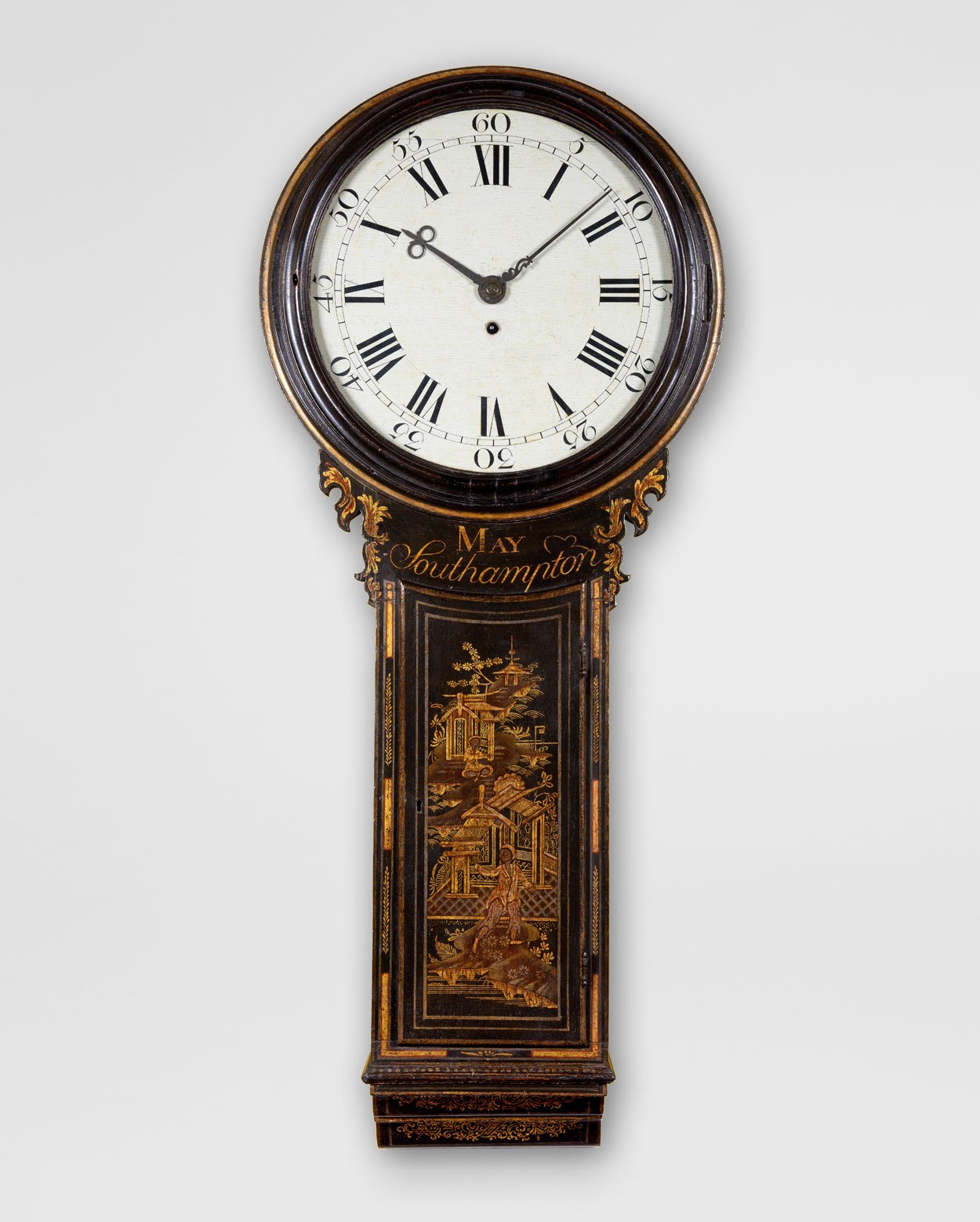
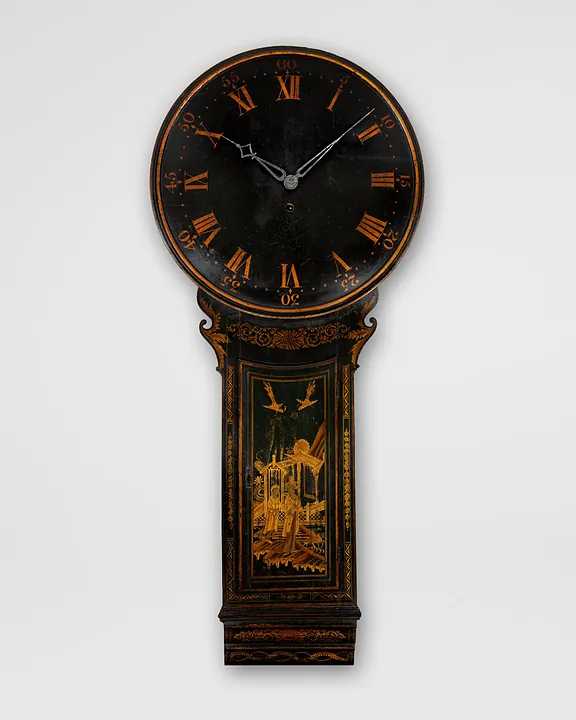
Tavern clock by John May, Southampton, 1775
- Maker / attribution
- John May (maker)
- Date
- 1775
- Historical period
- Precision & Scientific Horology (1750 – 1850)
- Country of origin
- United Kingdom
- Place
- Southampton
- Object type
- Tavern clock
- Materials / technique
- gilt
- Dimensions
- Height 138.5 cm
- Stock no.
- Product 4806
- Credit line
- Dealer listing, Howard Walwyn (product 4806)
- Catalogue title (original)
- JOHN MAY. A fine late George III period gilt Chinoiserie tavern clock. (English)
View the source record (dealer listing) ↗ (opens another website in a new tab)Suggest a correction
Record summary
Catalogued by Howard Walwyn Fine Antique Clocks (dealer), London (stock number Product 4806), this is a tavern clock by John May, made in Southampton, United Kingdom, dated 1775. The Atlas places it in the Precision & Scientific Horology period (1750 – 1850) of its Clocks collection. Materials and techniques recorded by the source: gilt. Recorded dimensions: Height 138.5 cm. The record is illustrated with 3 photographs.
Assembled from the source record's structured fields. Dates and attributions are given as the source states them; where a field is missing the Atlas leaves it blank rather than estimating.
Catalogue description
Dealer description — Howard Walwyn
A fine late George III period gilt Chinoiserie tavern clock in very original condition. The case is of classic tavern-clock form, with a broad circular white dial and full opening door above a long moulded drop trunk. It is finished in a deep black japanned ground, richly heightened with gilt work throughout. There is a bold gilt maker’s signature panel beneath the dial signed MAY, Southampton , flanked by shaped gilt scroll ears at the shoulders. The full length trunk door is decorated with a finely composed Chinoiserie scene with figures amongst pavilions and a stylised landscape. They are framed by gilt wheat-ear border lines and narrow floral sprigs to the sides. The ogee shaped base has additional gilt foliate and line decoration and the sides to the trunk are ornamented with gilt chrysanthemums. The 18-inch white painted dial has its original craquelure surface with Roman hour numerals and an outer minute ring with Arabic five-minute markers. The original brass hands are finely pierced and suited to the tavern form, and the whole sits behind a glazed painted and turned wooden bezel, a very rare feature. The 8-day duration timepiece movement has A-shaped plates and an anchor escapement and is regulated by a long pendulum with a lenticular brass bob. It retains its original oval lead weight. Date: circa 1775 Height: 54 ½ in (138.5 cm) Width: 23 in (58.4 cm) * Tavern Clocks signed ‘ May, Southampton ’ are distinctly uncommon and the present example is a very appealing provincial counterpart to the London-signed tavern clocks of the period, combining a strong, architectural silhouette with particularly decorative japanned work in original condition. John May is listed on page 521 of Brian Loomes’ Watchmakers and Clockmakers of the World: Complete 21 st Century Edition . He is said to have worked in Southampton from 1773 until his death in 1791. HW6578
Historical context
Precision & Scientific Horology (1750 – 1850)
Harrison solves longitude; Mudge invents the lever; Breguet's Paris workshop defines the modern watch.
The age of the deadbeat escapement, compensated pendulums and observatory regulators. Domestic clocks spread through the middle classes: English longcase and bracket clocks, French gilt-bronze mantel clocks, Viennese Biedermeier wall clocks, Black Forest painted-shield clocks, and the first American shelf clocks.
Read the period in the timelineMore clocks from this periodEarlier: Early Modern Horology
Atlas type guide
Domestic clocks
A clock combines four systems: a source of power (falling weight, coiled spring, or later electricity), a gear train that divides time, an escapement and oscillator that regulate it (foliot, pendulum or balance), and an indicating system of dial and hands or a bell. Its history runs from the large iron weight-driven clocks of the late thirteenth century to Renaissance spring-driven table clocks, the pendulum revolution of 1656, the factory clocks of the nineteenth century and electric and quartz clocks of the twentieth.
Domestic clocks also reflect regional furniture and decorative traditions — English longcase and bracket clocks, French pendules, Viennese regulators, Black Forest and American shelf clocks — and therefore record changing tastes as much as technical progress.
What to look for
- How the clock is powered: weights, spring barrel, fusee, electric coil.
- The oscillator: foliot, short pendulum, long seconds pendulum or balance.
- Whether it strikes: hour only (count wheel) or hours and quarters (rack striking).
- The maker or retailer's name on dial and movement, and any factory trademarks.
- Signs of alteration — replaced dials, converted escapements, 'married' cases.
Dating clues
- Before 1656 clocks used foliots or balances; after, most domestic clocks have pendulums.
- Anchor escapements spread after c. 1670; minute hands became common at the same time.
- Factory production in America and Germany transformed prices after c. 1840.
General guidance written by the Atlas editors about this kind of object. It is not a statement about this particular piece; for that, rely on the source record above and on physical examination.
Read next:Verge escapementFoliot
Related records
Pocket Watches · c. 1700
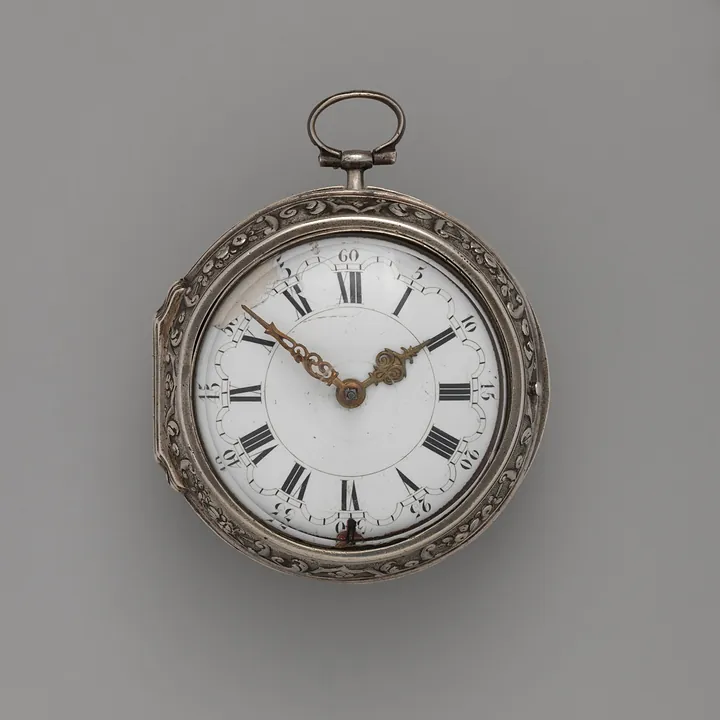
Watch by John May, England, c. 1700
The Metropolitan Museum of Art, New York
Clocks · 1798
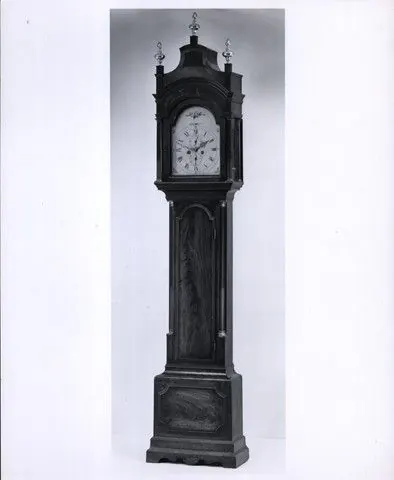
Tall Case Clock
Yale University Art Gallery, New Haven
Clocks · c. 1800
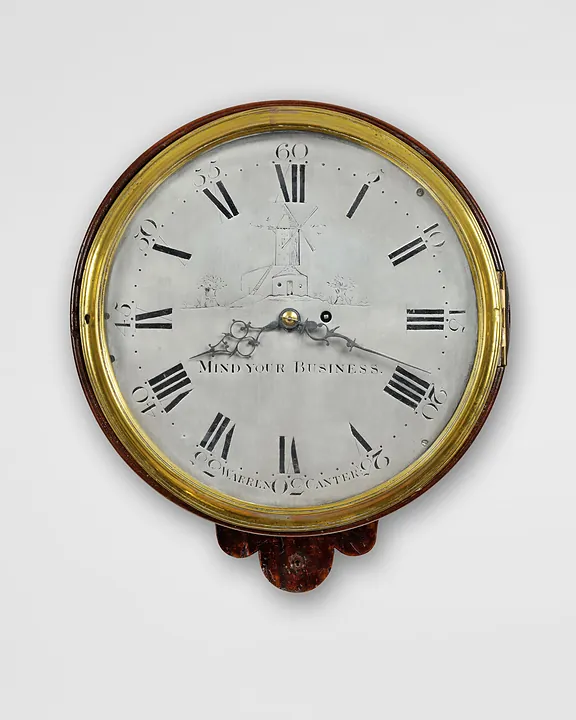
Wall clock by Warren, Canterbury, c. 1800
Howard Walwyn Fine Antique Clocks (dealer), London
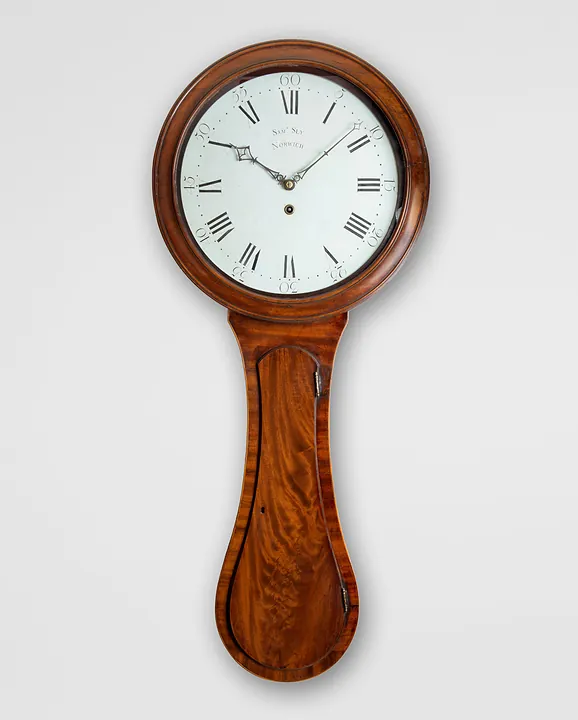
Clocks · c. 1800
Clock by Samuel Sly, Norwich, c. 1800
Howard Walwyn Fine Antique Clocks (dealer), London
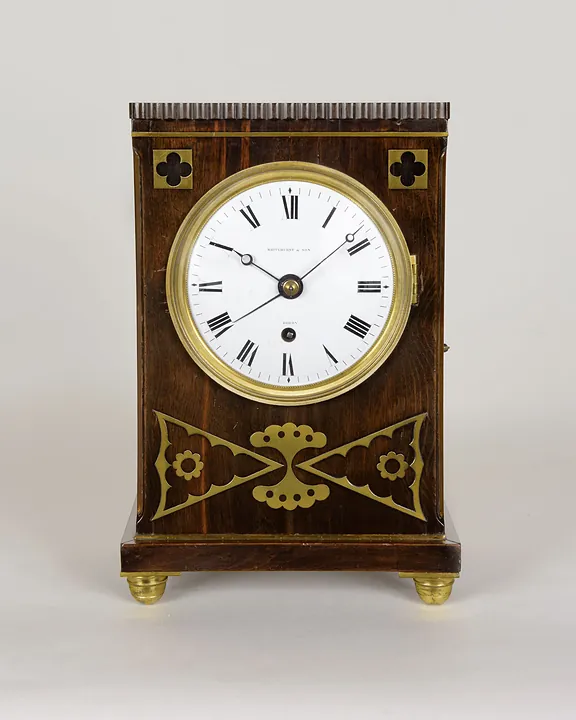
Clocks · c. 1840–1845
Bracket clock by Whitehurst & Son, Derby, c. 1840–1845
Howard Walwyn Fine Antique Clocks (dealer), London
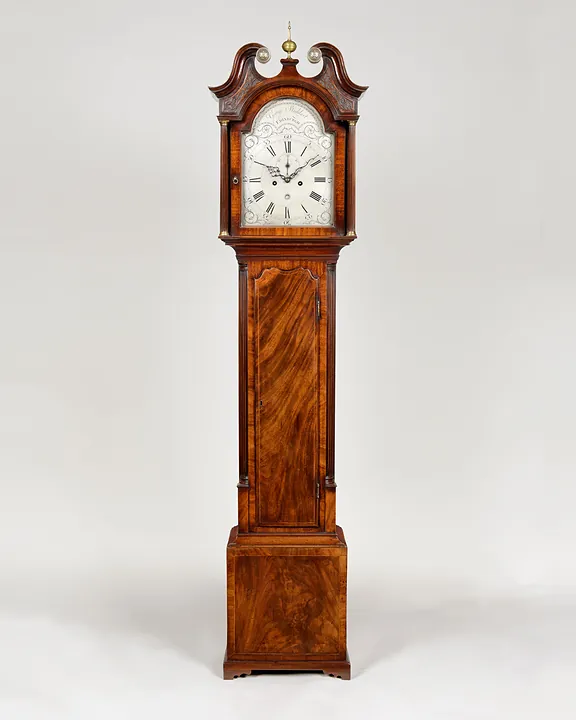
Clocks · c. 1795
Longcase clock by George Stoddart, c. 1795
Howard Walwyn Fine Antique Clocks (dealer), London
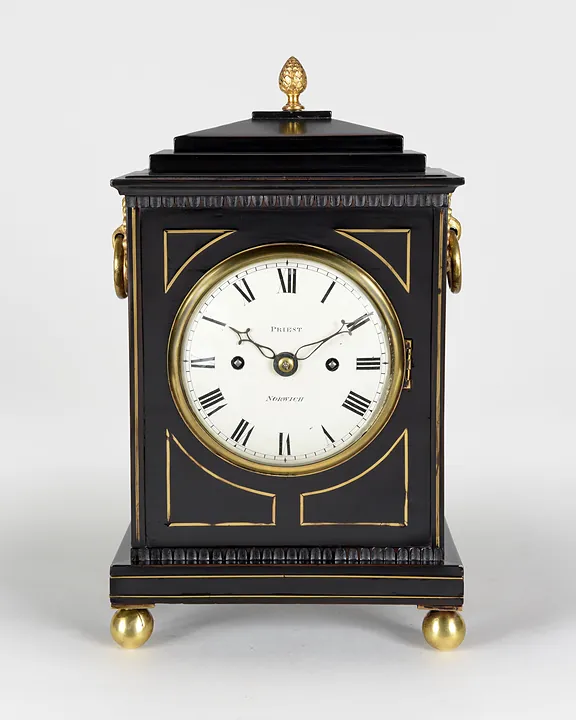
Clocks · c. 1830–1835
Bracket clock by Priest, Norwich, c. 1830–1835
Howard Walwyn Fine Antique Clocks (dealer), London
Clocks · c. 1785
Clock by Thomas Smoult, Newcastle, c. 1785
Howard Walwyn Fine Antique Clocks (dealer), London