
Wristwatches · Wristwatch
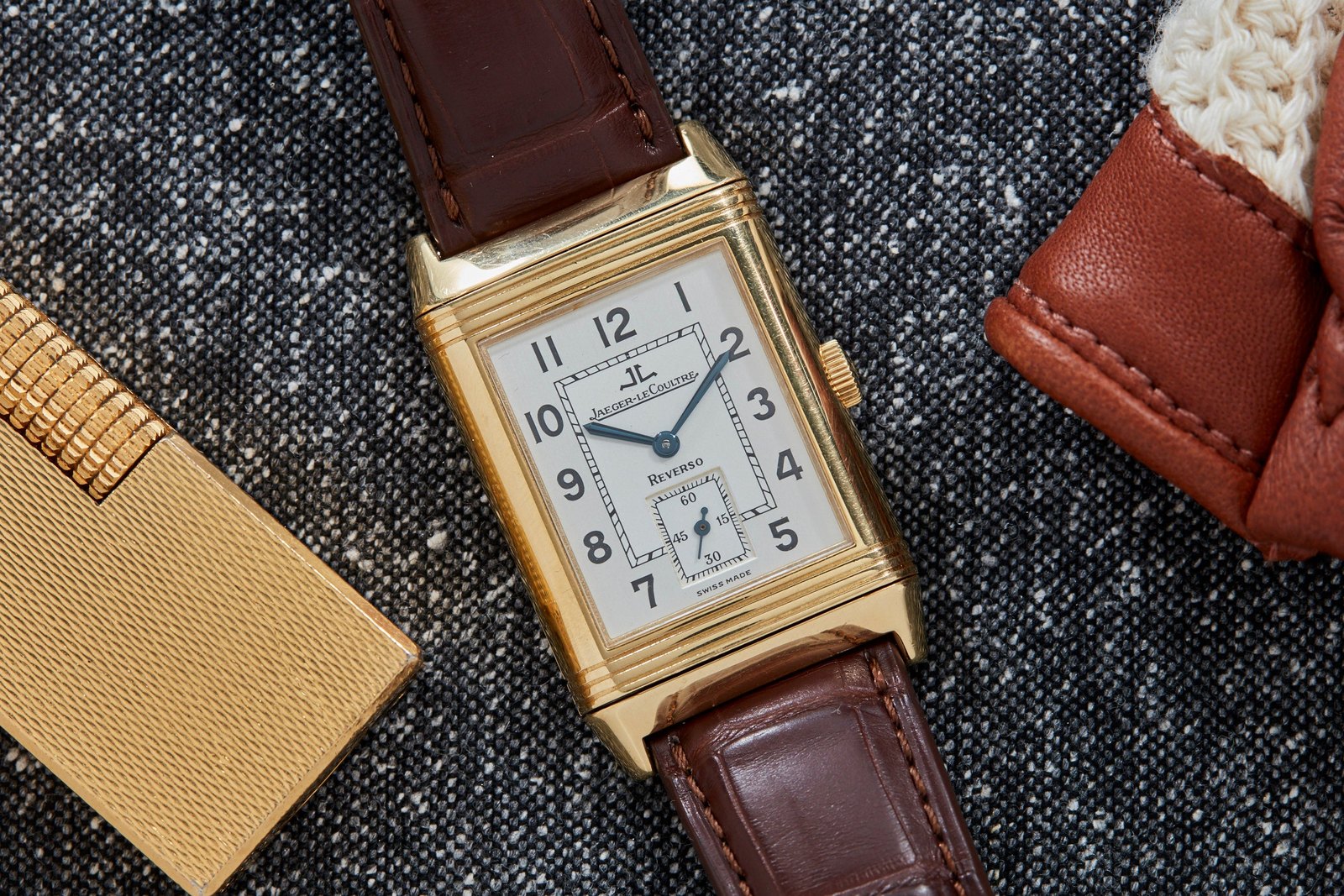
Jaeger-LeCoultre Reverso Grande Taille, 1990s
- Maker / attribution
- Jaeger LeCoultre (maker)
- Date
- 1990s
- Historical period
- Mechanical Renaissance (1990 – 2010)
- Country of origin
- Unrecorded in source
- Object type
- Wristwatch
- Dimensions
- Case 42 mm
- Stock no.
- Product 427282038814
- Credit line
- Dealer listing, Analog/Shift (product 427282038814)
- Catalogue title (original)
- Jaeger-LeCoultre Reverso Grande Taille (English)
View the source record (dealer listing) ↗ (opens another website in a new tab)Suggest a correction
Record summary
Catalogued by Analog/Shift (dealer), New York (stock number Product 427282038814), this is a wristwatch by Jaeger LeCoultre, dated 1990s. The Atlas places it in the Mechanical Renaissance period (1990 – 2010) of its Wristwatches collection. Recorded dimensions: Case 42 mm. The record is illustrated with 6 photographs.
Assembled from the source record's structured fields. Dates and attributions are given as the source states them; where a field is missing the Atlas leaves it blank rather than estimating.
Catalogue description
Dealer description — Analog/Shift
Though the Reverso might have first brought to life as a sports watch, over the years collectors have come to associate it primarily a dress watch. Its distinctive Art Deco silhouette, though born from necessity (if anything associated with the princely sport of polo can be considered necessary), is recognizable and indicative of its owner’s discerning taste. As with its rectangular cousin, the Cartier Tank, wearing a watch in any shape other than round says not only “I have good taste,” but also, “I know watches.” And when a Reverso is crafted out of solid gold, that impression is only amplified. True, the Reverso was first offered in steel, but when its popularity as a dress watch began to build after its introduction in the 1930s, JLC offered it in gold as well. In fact, in late 1931 and early 1932, a limited number of Reversos were made in white and yellow gold and then sold to Patek Philippe (on whose board Jacques-David LeCoultre served). The Reverso would undergo a fallow period starting in the 1940s, as tastes in post-war Europe shifted back to round watches… but not for long. In the 1970s, an Italian watch dealer spotted some Reverso cases while on a trip to the Jaeger-LeCoultre manufacture in Le Sentier. Convinced that the time was ripe for a revival, JLC re-released the Reverso using quartz movements with limited success. But it wasn’t until the 1990s that the model enjoyed a full resurgence. The 1991 release of the Reverso 60ème marked the first time the watch featured complications—in this case, a power reserve indicator. And the watch was, fittingly, in bright, beautiful 18k gold. Moreover, the Reverso 60ème, with its larger case, inaugurated the Grande Taille line of Reverso. This particular Reverso, dating from the 1990s, is a Grande Taille Reference 270.1.62. While retaining the elegant Art Deco lines of gold Reversos from the model's golden years, the size was updated to 42mm in length; additionally, an improved movement gives the watch an impressive 45-hour power reserve. With a virgin case back (never engraved) and crisp silver dial with Arabic markers and blued steel hands, this particular example is the perfect blend of vintage and modern, as well as being the ultimate dress watch alternative for the sporting collector.
Historical context
Mechanical Renaissance (1990 – 2010)
Mechanical watches return as cultural objects; independent watchmaking flourishes.
Mechanical watches returned as cultural and luxury objects. Complications, tourbillons and new materials proliferated; independent watchmakers such as George Daniels, F.P. Journe and Philippe Dufour revived artisanal watchmaking; collecting vintage watches became a major field.
Read the period in the timelineMore wristwatches from this periodEarlier: Quartz Revolution
Atlas type guide
Wristwatches
Bracelet watches were worn by women from the early nineteenth century — Breguet made one for Caroline Murat, Queen of Naples, in 1810–12 — but the wristwatch only became a man's instrument with military use and aviation in the early twentieth century. Between the World Wars it overtook the pocket watch; the 1920s and 1930s brought rectangular Art Deco cases, water-resistant cases and the first automatic winding systems.
After 1945 the wristwatch became a carrier of identity — dress watches, sports and dive watches, chronographs, calendars — produced by Swiss, American, Japanese, German, Soviet and Chinese industries. The quartz revolution after 1969 and the mechanical renaissance since the 1990s, including the rise of independent watchmakers, complete the story.
What to look for
- The reference number (between the lugs or inside the case back) and serial number, the starting point for dating.
- The calibre: its maker and number are often stamped under the dial or on the bridge.
- Originality of dial, hands and crown — refinished ('redial') dials are common.
- Case material marks: 18K/750, 14K/585, stainless steel, gold-filled, plated.
Dating clues
- Wire-lug cases: before c. 1925.
- Water-resistant screw-down cases: from 1926.
- Quartz movements: from 1969; sapphire crystals widespread after c. 1980.
General guidance written by the Atlas editors about this kind of object. It is not a statement about this particular piece; for that, rely on the source record above and on physical examination.
Related records
Wristwatches · 1953–1956
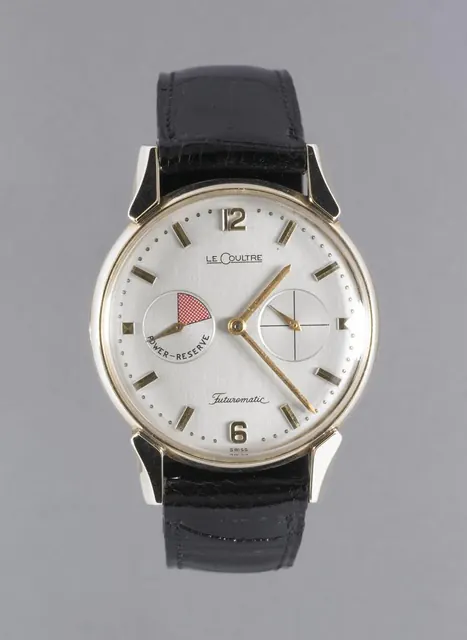
Automatic wristwatch with subsidiary seconds and power-reserve dial
British Museum
Wristwatches · mid 1960s
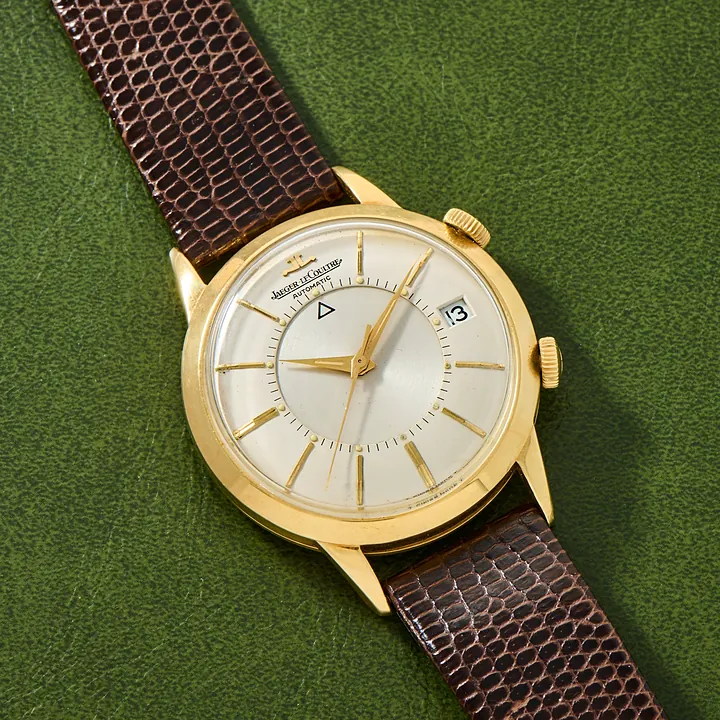
Jaeger-LeCoultre Memovox, mid 1960s
Analog/Shift (dealer), New York
Wristwatches · 1960
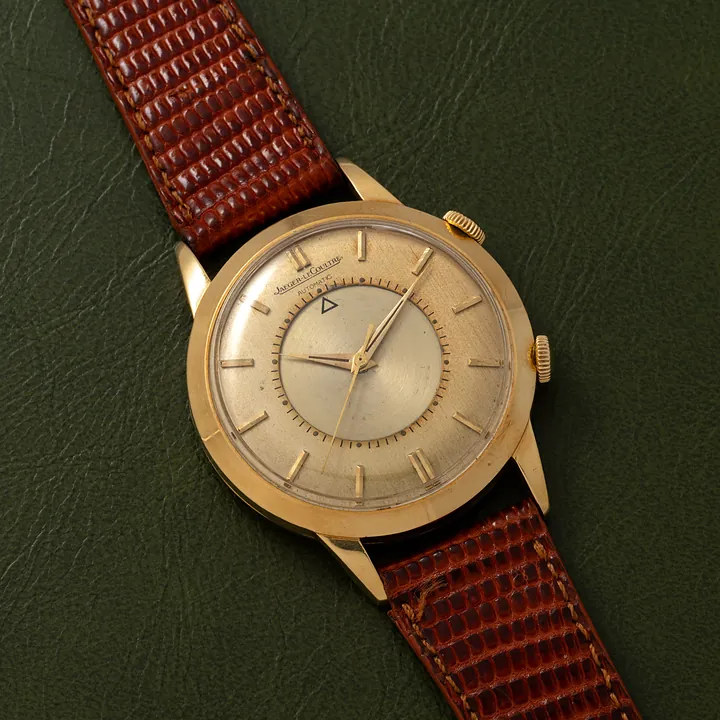
Jaeger-LeCoultre 'European Market' Memovox, 1960
Analog/Shift (dealer), New York
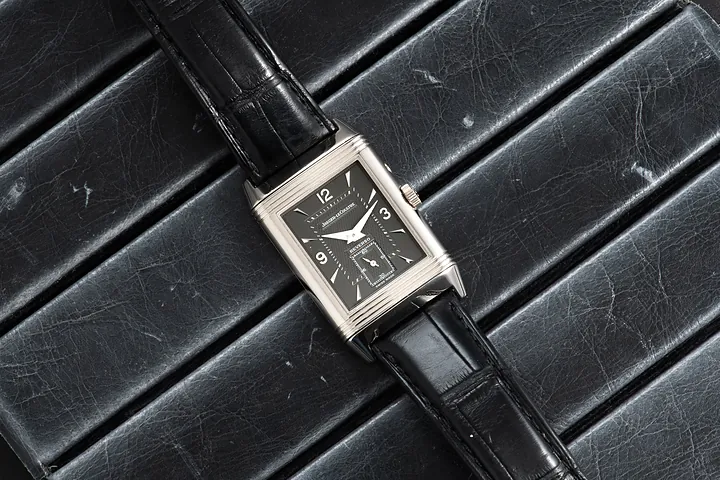
Wristwatches · 2010s
Jaeger-LeCoultre Reverso Duoface Day/Night, 2010s
Analog/Shift (dealer), New York
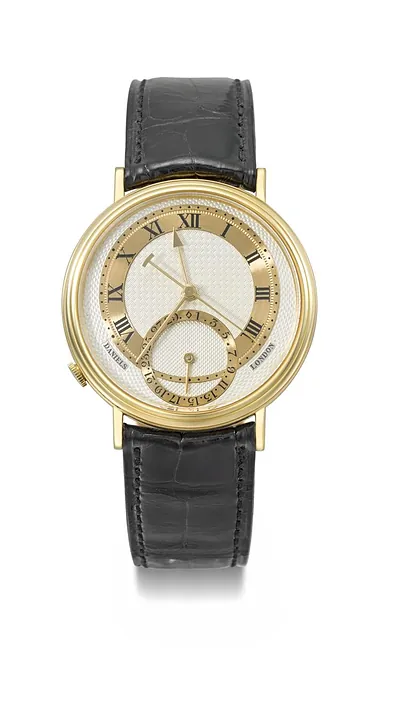
Wristwatches · 1999
'Millennium' co-axial wristwatch by George Daniels and Omega, England, 1999
Science Museum Group, London

Wristwatches · 2008
Wristwatch by Breitling?, 2008
Museum Rotterdam
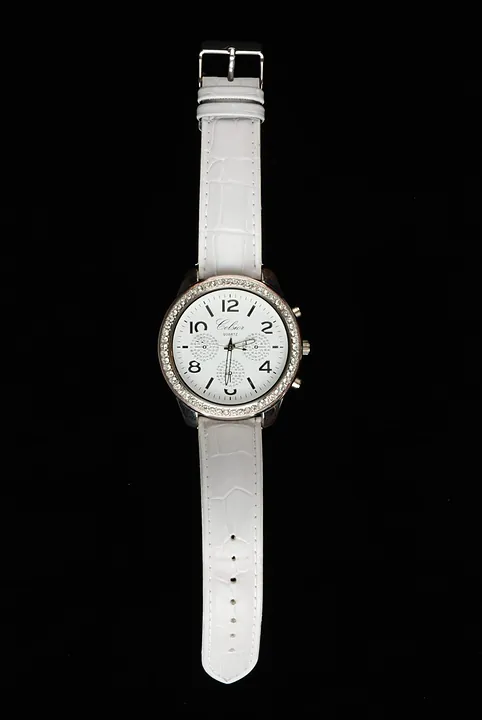
Wristwatches · 2008
Wristwatch by Celsior Quartz, 2008
Museum Rotterdam
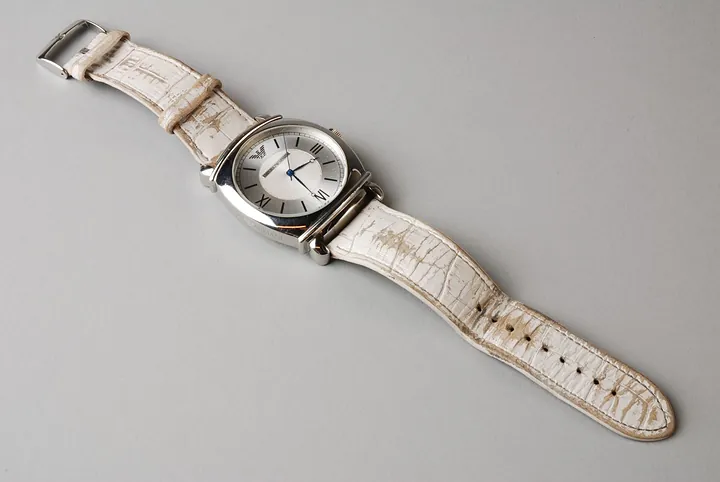
Wristwatches · 2008
Wristwatch possibly by Emporio Armani, 2008
Museum Rotterdam