
Wristwatches · Wristwatch
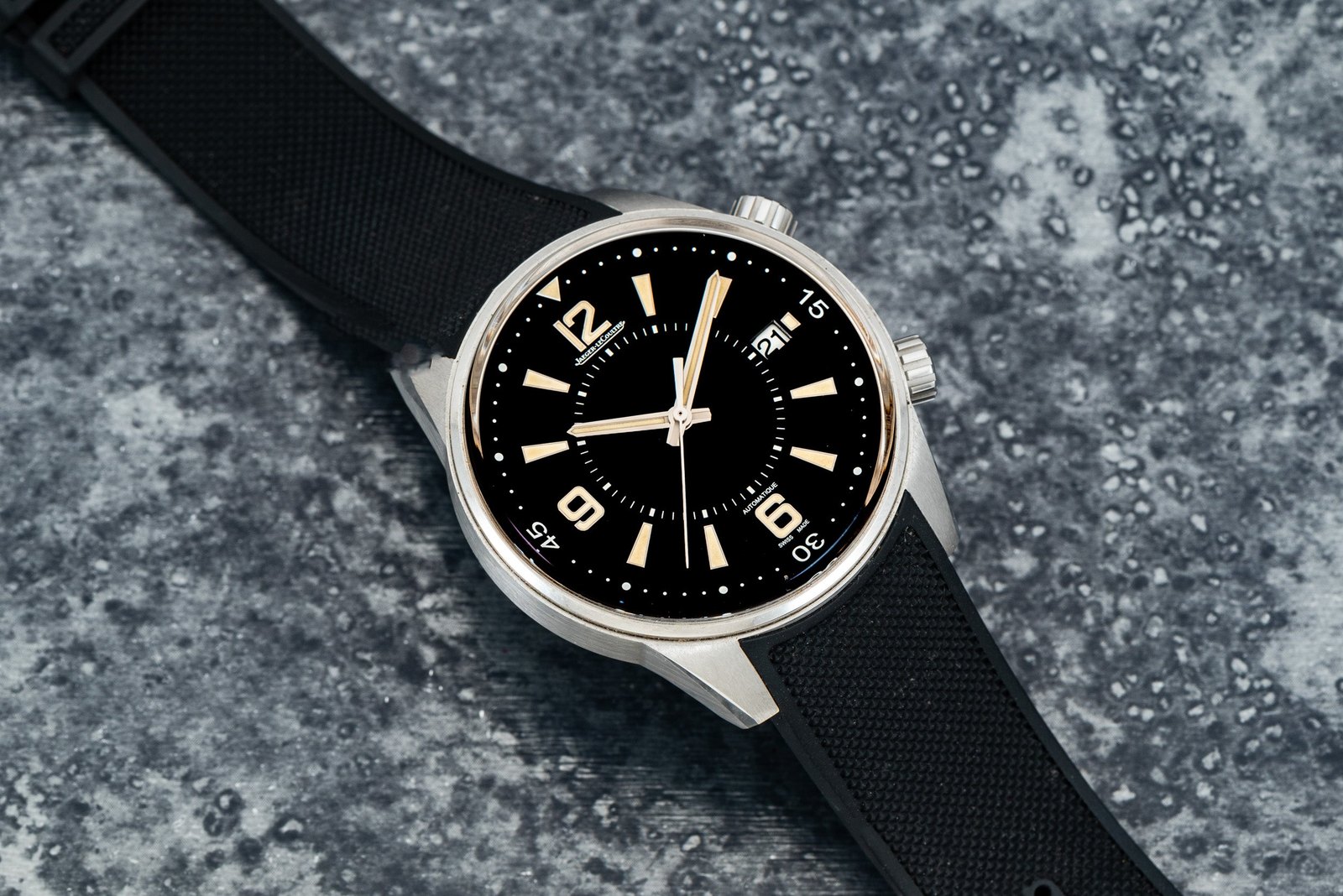
Jaeger-LeCoultre Polaris Mariner, c. 2019
- Maker / attribution
- Jaeger LeCoultre (maker)
- Date
- c. 2019
- Historical period
- Contemporary Horology (2010 – Present)
- Country of origin
- Unrecorded in source
- Object type
- Wristwatch
- Dimensions
- Case 42 mm
- Stock no.
- 40980042
- Credit line
- Dealer listing, Analog/Shift (40980042)
- Catalogue title (original)
- Jaeger-LeCoultre Polaris Mariner (English)
View the source record (dealer listing) ↗ (opens another website in a new tab)Suggest a correction
Record summary
Catalogued by Analog/Shift (dealer), New York (stock number 40980042), this is a wristwatch by Jaeger LeCoultre, dated c. 2019. The Atlas places it in the Contemporary Horology period (2010 – Present) of its Wristwatches collection. Recorded dimensions: Case 42 mm. The record is illustrated with 6 photographs.
Assembled from the source record's structured fields. Dates and attributions are given as the source states them; where a field is missing the Atlas leaves it blank rather than estimating.
Catalogue description
Dealer description — Analog/Shift
Jaeger-LeCoultre has a rich history of tool watch innovation. The Reverso? Actually a tool watch. (No, seriously — the whole reversible schtick was so that polo players wouldn’t crack their glass watch crystals mid-game.) The Memovox Polaris? A water-resistant alarm watch that would let you know, audibly, when it was time to begin your ascent. The contemporary Polaris Date pays homage to the latter watch but does away with the alarm bit — which, let’s face it, your iPhone can handle just fine, thank you very much. Retaining the compressor-style case of its namesake as well as the cool, internal bezel, it adds a thoroughly modern, in-house movement to the mix for a watch rich in details and heritage. This particular Polaris Date, a Reference Q9068670, dates to circa 2019. Housed in a 42mm stainless steel case with a sapphire crystal, dual, signed crowns, and a polished bezel, it features a sunburst and matte black dial with applied luminous ‘Arabic’ and ‘wedge’ indices, an inner, fully graduated timing bezel, a lumed ‘sword’ handset, and a handy date wheel at 3:00. Powered by the Jaeger-LeCoultre manufacture calibre 899/1 with a 38-hour power reserve, it comes paired to a signed, black rubber strap with a signed, stainless steel pin buckle deployant clasp. Accompanied by some of its factory goodies, it’s both an excellent tool watch, and a fine timepiece from one of Switzerland’s most storied houses. Don’t let this one slip through your fingers!
Historical context
Contemporary Horology (2010 – Present)
Silicon components, connected watches, optical-lattice research clocks and a thriving independent scene.
Smartwatches became the world's best-selling watches, while mechanical watchmaking focuses on craft, innovation (silicon components, new escapements) and independent makers.
Read the period in the timelineMore wristwatches from this periodEarlier: Mechanical Renaissance
Atlas type guide
Dive and water-resistant watches
Keeping water and dust out of a wristwatch was a long-standing challenge. Rolex's screw-down Oyster case (1926) and Omega's Marine (1932) were landmarks; in the early 1950s Blancpain's Fifty Fathoms and Rolex's Submariner defined the professional dive watch with rotating bezels for timing dives, luminous dials and high water resistance. The ISO 6425 standard (1982) later codified what a 'diver's watch' must do.
Dive watches became icons of post-war design and exploration, and their evolution — helium escape valves, ceramic bezels, saturation-diving depth ratings — records the history of underwater work.
What to look for
- Unidirectional or bidirectional rotating bezel with minute markings.
- Screw-down crown and case back; depth rating printed on the dial.
- Luminous hands and markers (radium before c. 1960, tritium c. 1960–1998, then Super-LumiNova).
- Reference numbers on the case between the lugs or inside the back.
Dating clues
- Screw-down Oyster cases: from 1926.
- Professional dive watches: from 1953.
- Tritium 'T' marks on dials: c. 1960–1998.
General guidance written by the Atlas editors about this kind of object. It is not a statement about this particular piece; for that, rely on the source record above and on physical examination.
Related records
Wristwatches · 1953–1956
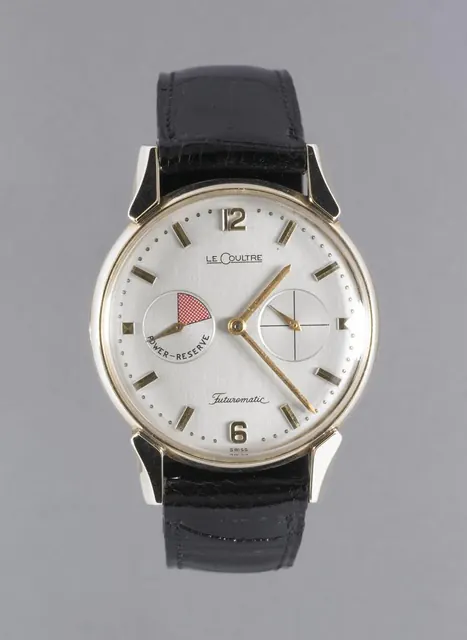
Automatic wristwatch with subsidiary seconds and power-reserve dial
British Museum
Wristwatches · mid 1960s
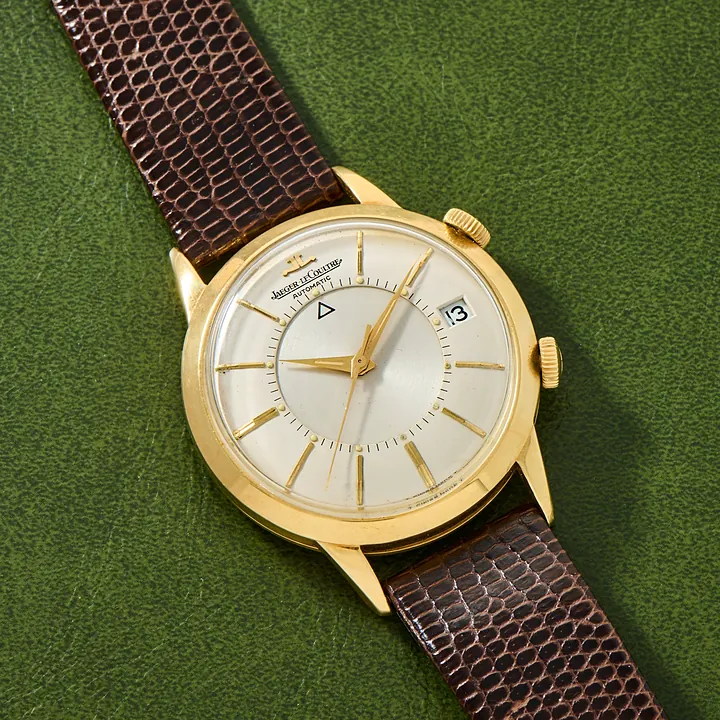
Jaeger-LeCoultre Memovox, mid 1960s
Analog/Shift (dealer), New York
Wristwatches · 1960
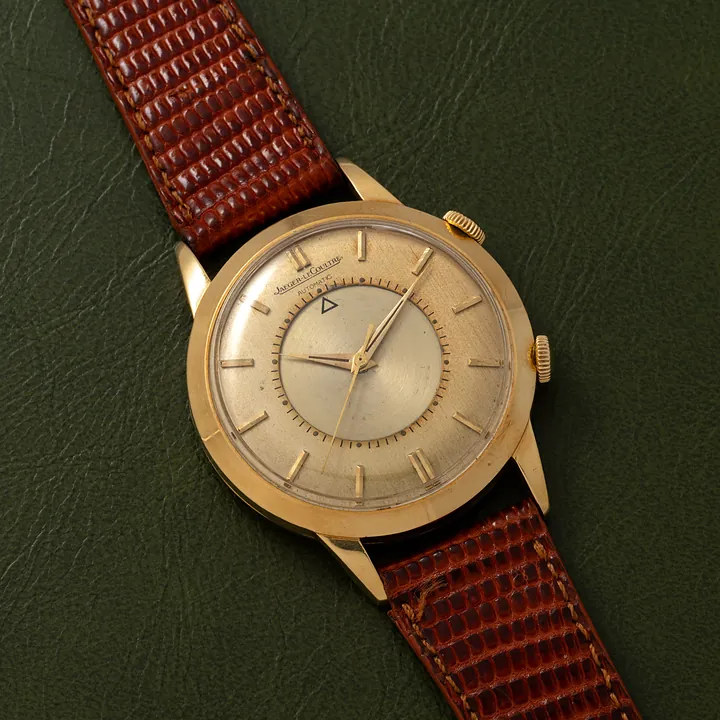
Jaeger-LeCoultre 'European Market' Memovox, 1960
Analog/Shift (dealer), New York
Wristwatches · 2010s
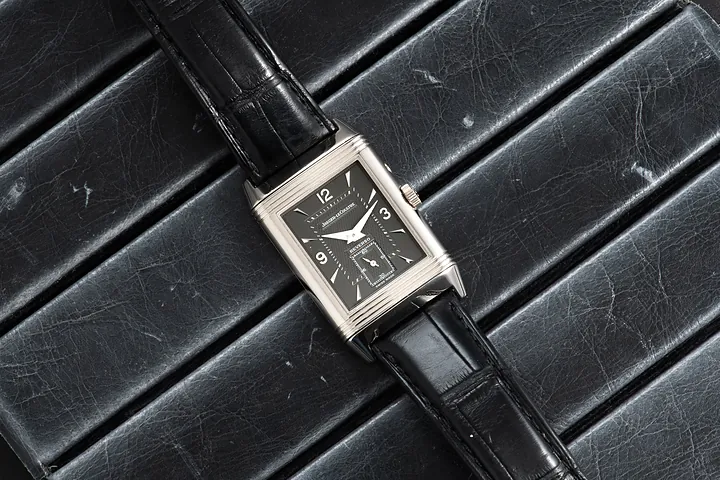
Jaeger-LeCoultre Reverso Duoface Day/Night, 2010s
Analog/Shift (dealer), New York
Wristwatches · 2010
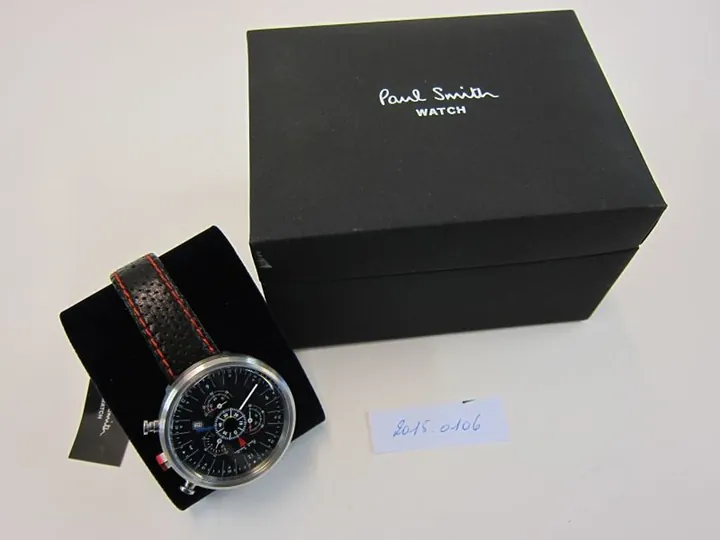
Wristwatch, 2010
Modemuseum Hasselt
Wristwatches · 2018 (Series 4 released in September 2018; '1977' in the source is the model number A1977)
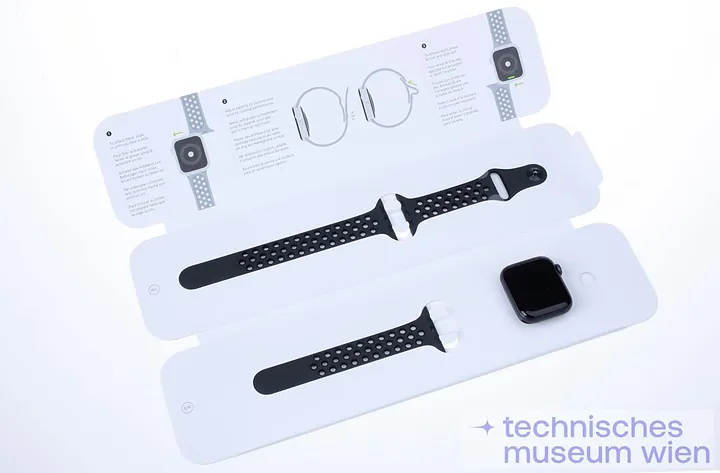
Apple Watch Series 4 (GPS, 40 mm, model A1977), 2018
Vienna Museum of Science and Technology
Wristwatches · c. 2010s
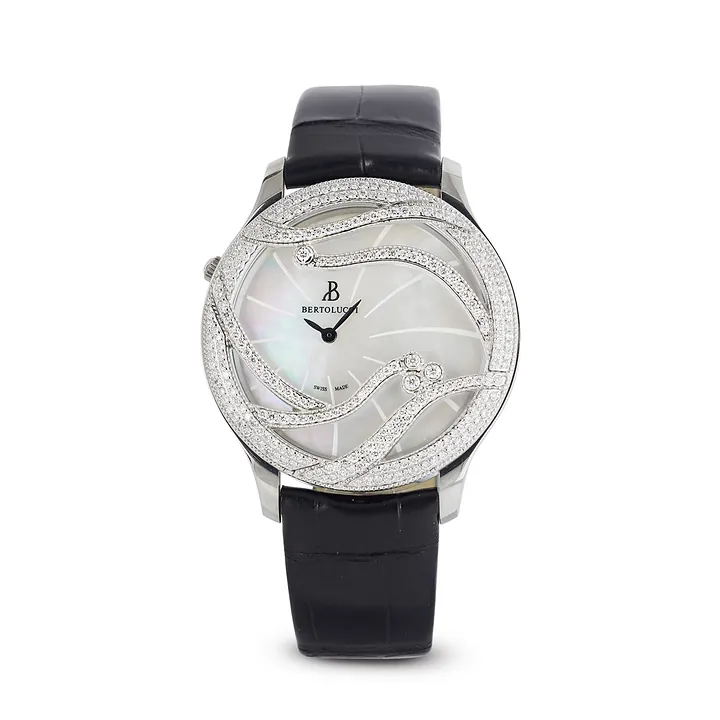
Bertolucci Stria III, ref. 11513.50.45.B88.6C1.501, c. 2010s
Antiquorum auction archive, Geneva
Wristwatches · c. 2010s
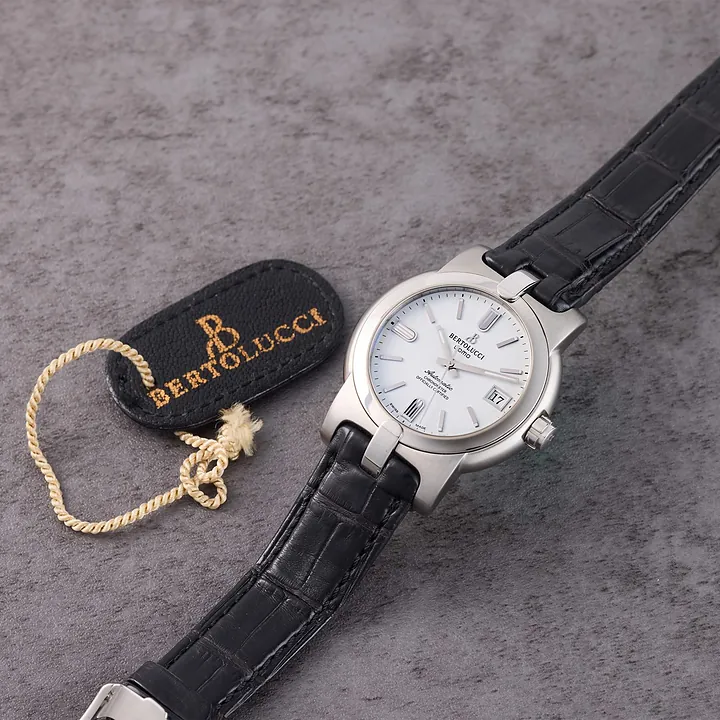
Bertolucci Uoma, ref. 824.51.41.10B, c. 2010s
Antiquorum auction archive, Geneva