
Wristwatches · Wristwatch
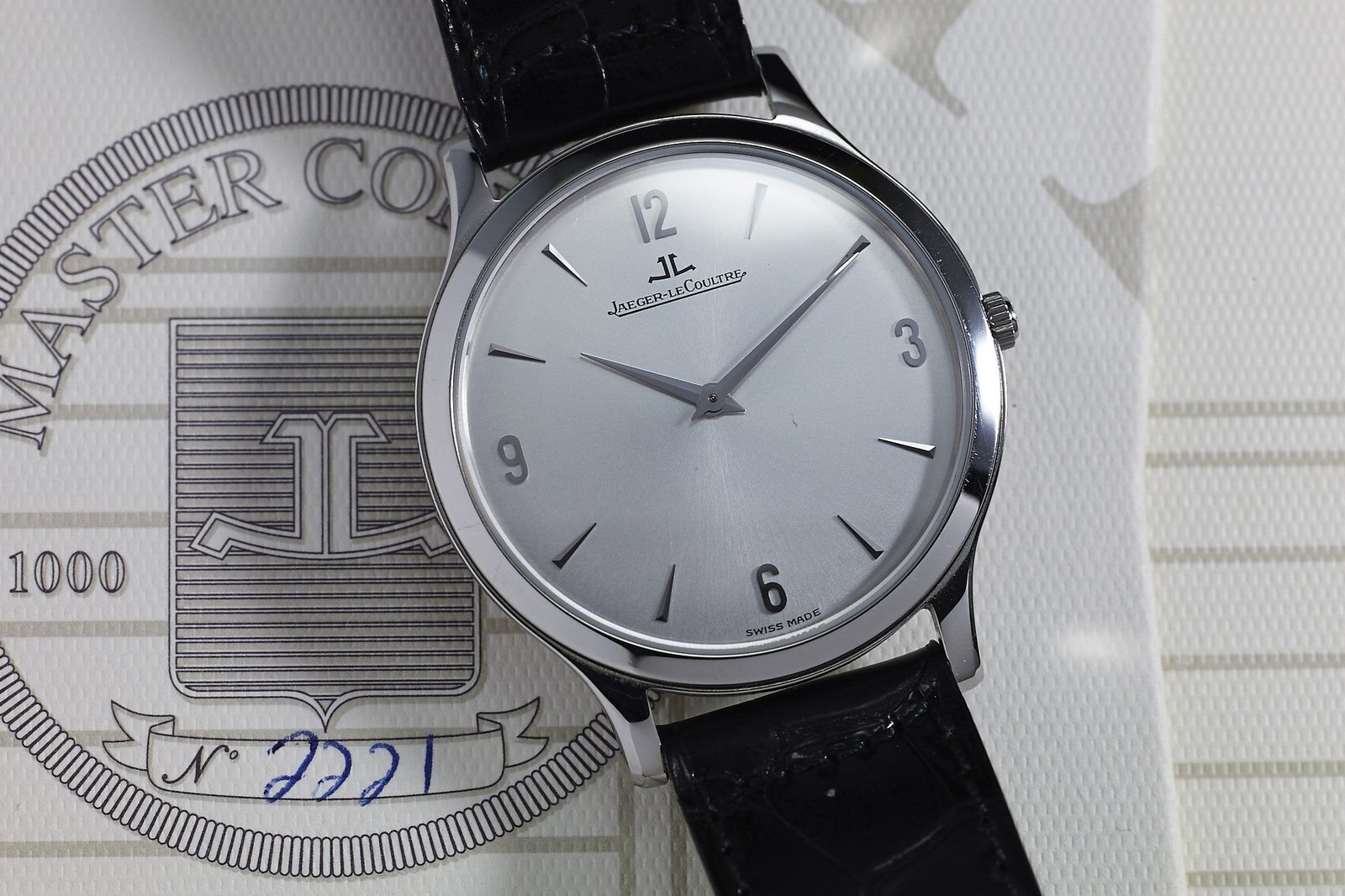
Jaeger-LeCoultre Master Ultra Thin 1000 Hours - Steel, c. 2000
- Maker / attribution
- Jaeger LeCoultre (maker)
- Date
- c. 2000
- Historical period
- Mechanical Renaissance (1990 – 2010)
- Country of origin
- Unrecorded in source
- Object type
- Wristwatch
- Materials / technique
- steel
- Stock no.
- Product 994059649
- Credit line
- Dealer listing, Analog/Shift (product 994059649)
- Catalogue title (original)
- Jaeger-LeCoultre Master Ultra Thin 1000 Hours - Steel (English)
View the source record (dealer listing) ↗ (opens another website in a new tab)Suggest a correction
Record summary
Catalogued by Analog/Shift (dealer), New York (stock number Product 994059649), this is a wristwatch by Jaeger LeCoultre, dated c. 2000. The Atlas places it in the Mechanical Renaissance period (1990 – 2010) of its Wristwatches collection. Materials and techniques recorded by the source: steel. The record is illustrated with 6 photographs.
Assembled from the source record's structured fields. Dates and attributions are given as the source states them; where a field is missing the Atlas leaves it blank rather than estimating.
Catalogue description
Dealer description — Analog/Shift
If you've been following us, you may have noticed an increase in offering of modern pieces from Jaeger-LeCoultre recently. To be honest, we're not really sure what it is that grabs us about them; it could be their designs, which are indisputably timeless and perpetually appealing. It could be their quality, which, lets face it- is simply tops. It could be their value, which certainly plays a role. Whatever it is, modern pieces from JLC speak to us in very similar tones to the vintage pieces we more commonly lust after and ultimately present in our collection. There is something about them that exudes an indefinable X-Factor that pushes a piece to be more than the sum of its parts and into the hearts of collectors and enthusiasts. Indeed, whether it is a Reverso, a heritage edition Deep Sea Alarm, a Geopysic, or a Perpetual Calendar, JLC manages to evoke a stirring emotional response in the hearts of even the most diehard vintage timepiece collector (that'd be yours truly), and more than one of their modern timepieces has found their way into our personal watch boxes. Alas, we can't keep every watch we want (or this would be a very short lived enterprise) so in the interest of sharing, we present to you this absolutely killer Master Ultra Thin - a modern masterpiece if there ever was one. Measuring only 5mm thick, this steel-cased dress watch houses a Calibre .849 manual winding movement that was tested for 1000 hours certification before leaving the factory. An early example with solid case back dating from approximately 2000, this particular example has seen only light use, and has a flawless dial and hands. Its svelte proportions make it an excellent dress watch, while its sturdy steel case suggest usability in a more regular context. To be clear, this isn't an ultra-thin watch that you'll forget you're wearing - it is far too beautiful to look away for more than a short time! Whatever you choose to use it for, this timepiece exudes the brilliance of modern design coupled with the emotional connection only a brand with the gravitas and wherewithal of Jaeger-LeCoultre could pull off. Simply perfect. For more information on the 1000 Hours Testing, check out Jaeger-LeCoultre's website, HERE .
Historical context
Mechanical Renaissance (1990 – 2010)
Mechanical watches return as cultural objects; independent watchmaking flourishes.
Mechanical watches returned as cultural and luxury objects. Complications, tourbillons and new materials proliferated; independent watchmakers such as George Daniels, F.P. Journe and Philippe Dufour revived artisanal watchmaking; collecting vintage watches became a major field.
Read the period in the timelineMore wristwatches from this periodEarlier: Quartz Revolution
Atlas type guide
Wristwatches
Bracelet watches were worn by women from the early nineteenth century — Breguet made one for Caroline Murat, Queen of Naples, in 1810–12 — but the wristwatch only became a man's instrument with military use and aviation in the early twentieth century. Between the World Wars it overtook the pocket watch; the 1920s and 1930s brought rectangular Art Deco cases, water-resistant cases and the first automatic winding systems.
After 1945 the wristwatch became a carrier of identity — dress watches, sports and dive watches, chronographs, calendars — produced by Swiss, American, Japanese, German, Soviet and Chinese industries. The quartz revolution after 1969 and the mechanical renaissance since the 1990s, including the rise of independent watchmakers, complete the story.
What to look for
- The reference number (between the lugs or inside the case back) and serial number, the starting point for dating.
- The calibre: its maker and number are often stamped under the dial or on the bridge.
- Originality of dial, hands and crown — refinished ('redial') dials are common.
- Case material marks: 18K/750, 14K/585, stainless steel, gold-filled, plated.
Dating clues
- Wire-lug cases: before c. 1925.
- Water-resistant screw-down cases: from 1926.
- Quartz movements: from 1969; sapphire crystals widespread after c. 1980.
General guidance written by the Atlas editors about this kind of object. It is not a statement about this particular piece; for that, rely on the source record above and on physical examination.
Related records
Wristwatches · 1953–1956
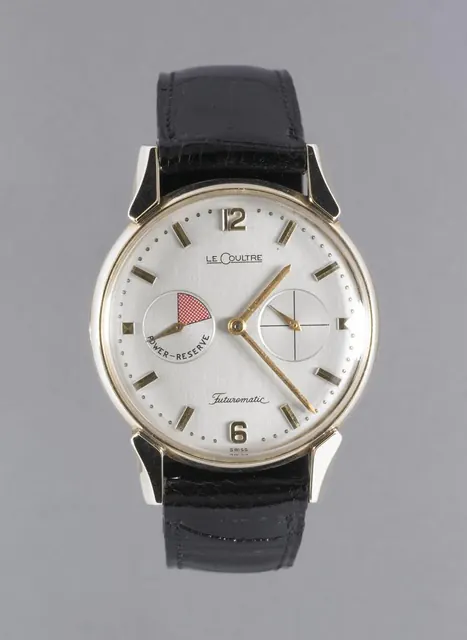
Automatic wristwatch with subsidiary seconds and power-reserve dial
British Museum
Wristwatches · mid 1960s
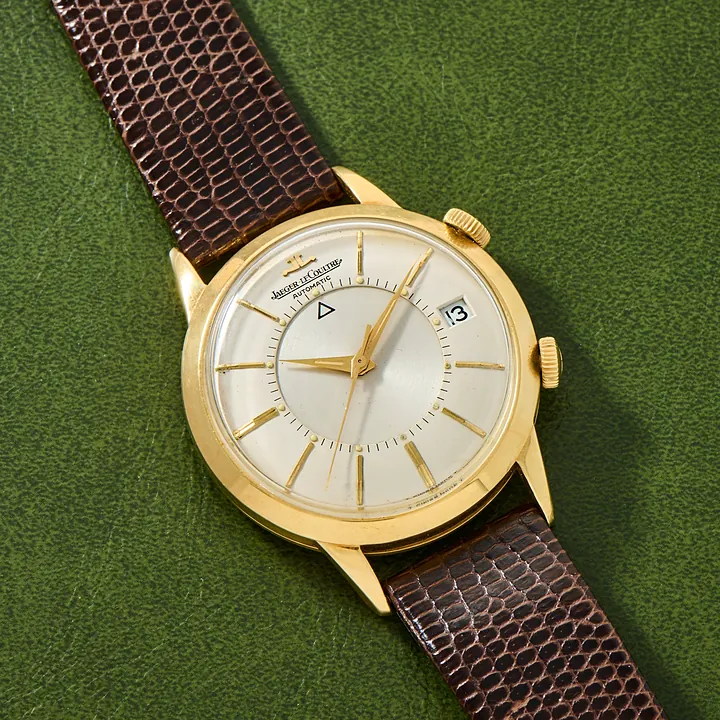
Jaeger-LeCoultre Memovox, mid 1960s
Analog/Shift (dealer), New York
Wristwatches · 1960
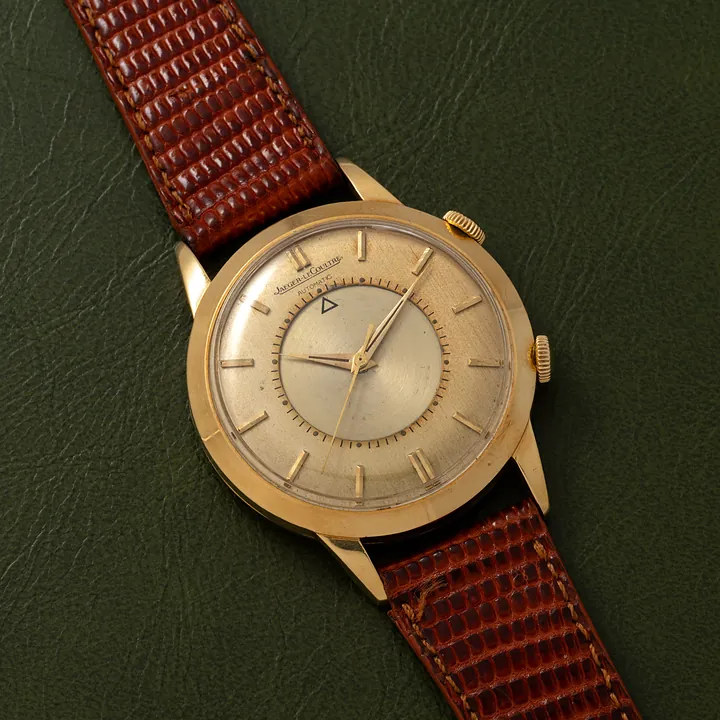
Jaeger-LeCoultre 'European Market' Memovox, 1960
Analog/Shift (dealer), New York
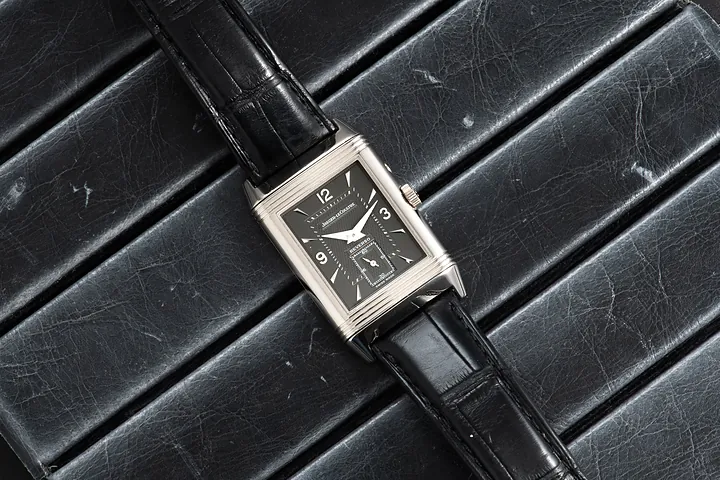
Wristwatches · 2010s
Jaeger-LeCoultre Reverso Duoface Day/Night, 2010s
Analog/Shift (dealer), New York
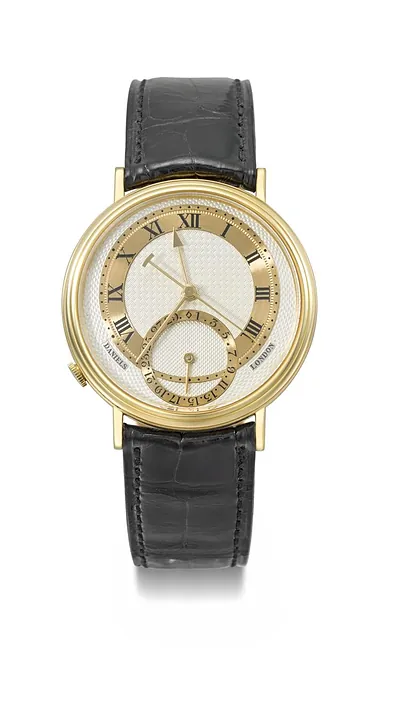
Wristwatches · 1999
'Millennium' co-axial wristwatch by George Daniels and Omega, England, 1999
Science Museum Group, London

Wristwatches · 2008
Wristwatch by Breitling?, 2008
Museum Rotterdam
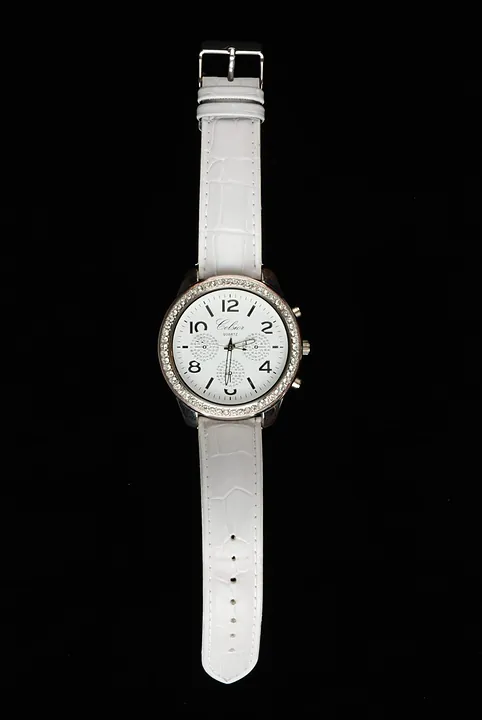
Wristwatches · 2008
Wristwatch by Celsior Quartz, 2008
Museum Rotterdam
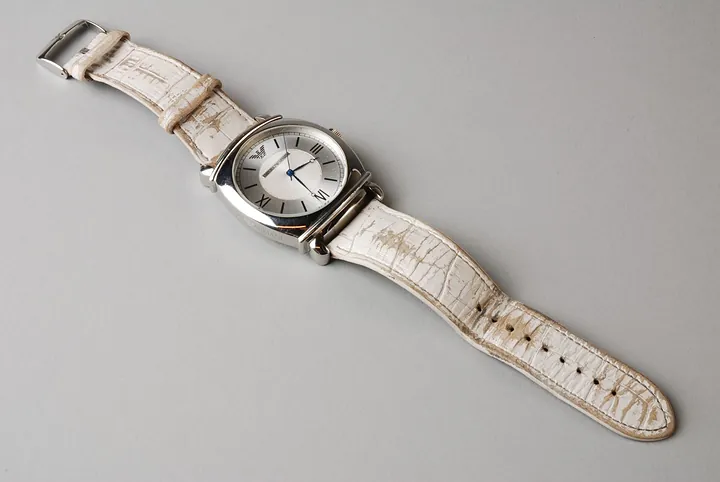
Wristwatches · 2008
Wristwatch possibly by Emporio Armani, 2008
Museum Rotterdam