
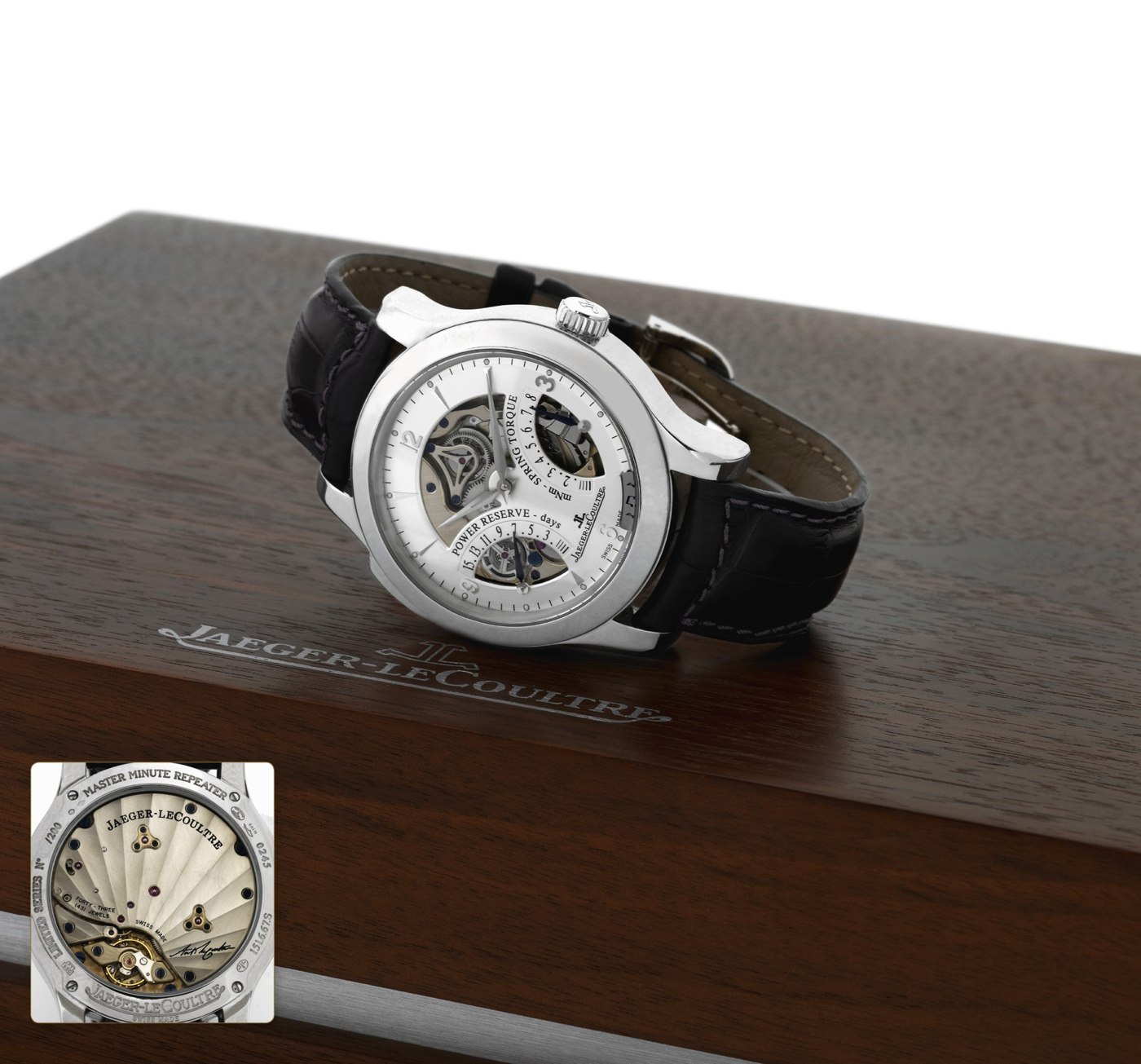
Wristwatches · Minute-repeating wristwatch
Jaeger-LeCoultre Master Minute Repeater, Antoine LeCoultre No. 079/200
- Maker / attribution
- Jaeger-LeCoultre (source attribution)
- Date
- 2007
- Historical period
- Mechanical Renaissance (1990 – 2010)
- Country of origin
- Switzerland
- Object type
- Minute-repeating wristwatch
- Materials / technique
- Platinum
- Dimensions
- 44 mm diameter, 15 mm thickness
- Holding institution
- Antiquorum
- Accession / object no.
- 144
- Credit line
- Antiquorum
- Catalogue title (original)
- JAEGER LECOULTRE MINUTE REPEATER, PLATINUM NO.079/200\nJaeger-LeCoultre, \"Master Minute Repeater, Antoine LeCoultre,\" No. 079/200,\ncase No. 0245, Ref. 151.6.67.S. Made in a limited edition of 200 p (English)
View the source record ↗ (opens another website in a new tab)Suggest a correction
Record summary
Held and catalogued by Antiquorum (object number 144), this is a minute-repeating wristwatch attributed to Jaeger-LeCoultre, made in Switzerland, dated 2007. The Atlas places it in the Mechanical Renaissance period (1990 – 2010) of its Wristwatches collection. Materials and techniques recorded by the source: Platinum. Recorded dimensions: 44 mm diameter, 15 mm thickness. The record is illustrated with 1 photograph.
Assembled from the source record's structured fields. Dates and attributions are given as the source states them; where a field is missing the Atlas leaves it blank rather than estimating.
Catalogue description
Original object description
Dating to 2007, this Antoine LeCoultre Master Minute Repeater (reference 151.6.67.S, case number 0245) by Jaeger-LeCoultre was issued as number 079 in a 200-piece limited edition, with records indicating an initial sale on February 6, 2009. The three-piece, polished platinum case measures 44 mm across by 15 mm high and includes concave lugs, sapphire crystals on both sides, water resistance, and an exhibition back retained by four screws. The minute repeating mechanism sounds internal gongs when triggered by a slide situated along the case flank. On the satiné silver dial, apertures disclose portions of the internal mechanism alongside readouts for a 15-day power reserve and mainspring torque; time is indicated by luminous white gold alpha hands pointing to white gold Arabic numerals, dart indexes, and luminous dots. The watch is powered by the rhodium-finished, manually wound Caliber 947, configured with 43 jewels, two spring barrels, Geneva stripes, a straight-line lever escapement, a shock-cushioned monometallic balance, and a self-compensating Breguet balance spring. Completed by an 18K white gold double folding clasp, the watch, case, and dial were assessed in "as new" condition.
Inscriptions & marks
0245
Historical context
Mechanical Renaissance (1990 – 2010)
Mechanical watches return as cultural objects; independent watchmaking flourishes.
Mechanical watches returned as cultural and luxury objects. Complications, tourbillons and new materials proliferated; independent watchmakers such as George Daniels, F.P. Journe and Philippe Dufour revived artisanal watchmaking; collecting vintage watches became a major field.
Read the period in the timelineMore wristwatches from this periodEarlier: Quartz Revolution
Atlas type guide
Repeating watches
Before electric light, telling the time in the dark was a real problem. Repeating watches strike the time on demand when a slide or push-piece is operated: quarter repeaters sound hours and quarters, minute repeaters hours, quarters and minutes. Edward Barlow and Daniel Quare disputed the invention in London in the 1680s. Early repeaters struck on a bell inside the case; Abraham-Louis Breguet introduced the gong (a coiled steel wire) around 1780, allowing thinner watches.
Repeaters require a separate train with racks, snails and a governor to control the striking speed, and are among the most demanding complications to make and adjust. Swiss makers of the Vallée de Joux specialised in repeating ébauches in the nineteenth century.
What to look for
- A slide on the case band or a push-piece through the pendant.
- Gongs encircling the movement (after c. 1780) or a bell in the case (earlier); pierced case for sound.
- The racks, snails and governor visible under the dial or on the movement.
- Terms such as 'Minutes', 'Quarts' or 'Répétition' on the dial or cuvette.
Dating clues
- Bell-striking quarter repeaters: c. 1690–1800.
- Gong repeaters and dumb repeaters (striking on the case): after c. 1780.
- Minute repeaters became more common after c. 1830 with Vallée de Joux ébauches.
General guidance written by the Atlas editors about this kind of object. It is not a statement about this particular piece; for that, rely on the source record above and on physical examination.
Read next:Minute repeater
Related records
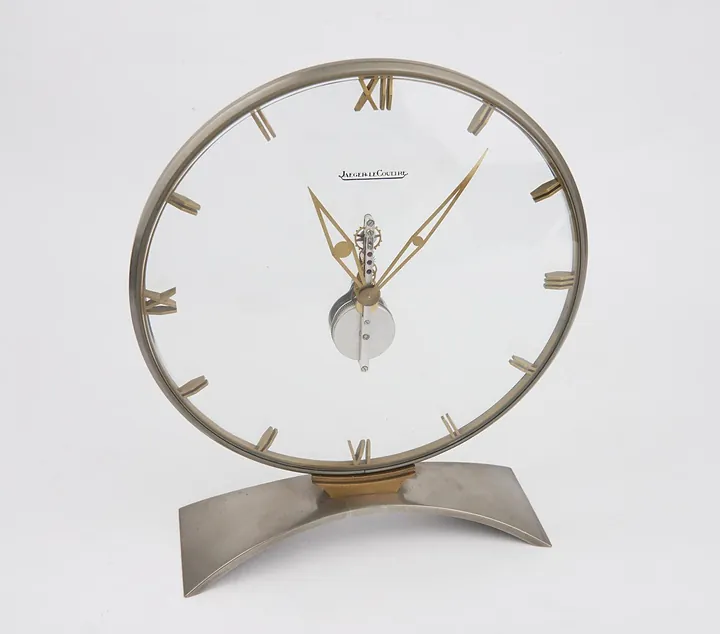
Clocks · 1937–1938
Skeleton clock by Jaeger-LeCoultre, Switzerland, 1937–1938
Science Museum Group, London
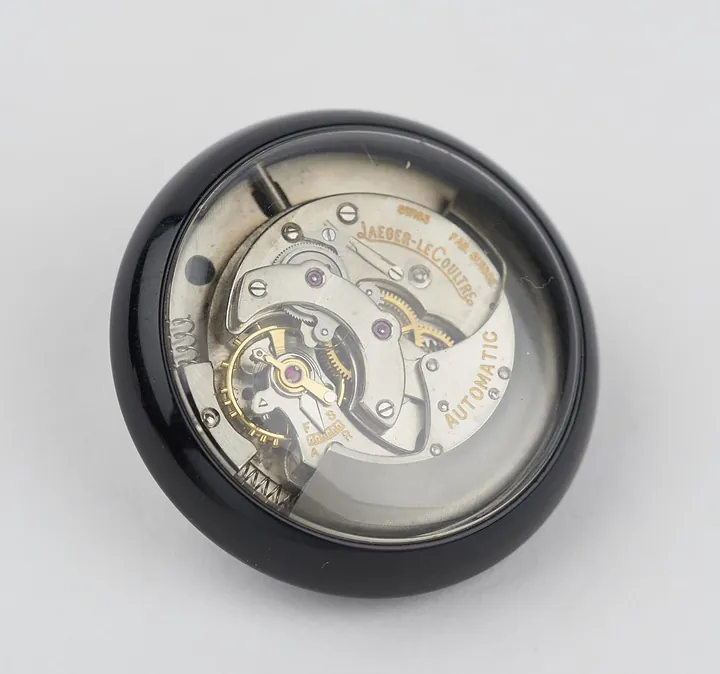
Movements & Components · 1953
Automatic watch movement, Jaeger-LeCoultre, 1953, Geneva, Switzerland, showing self-winding mechanism
Science Museum Group, London
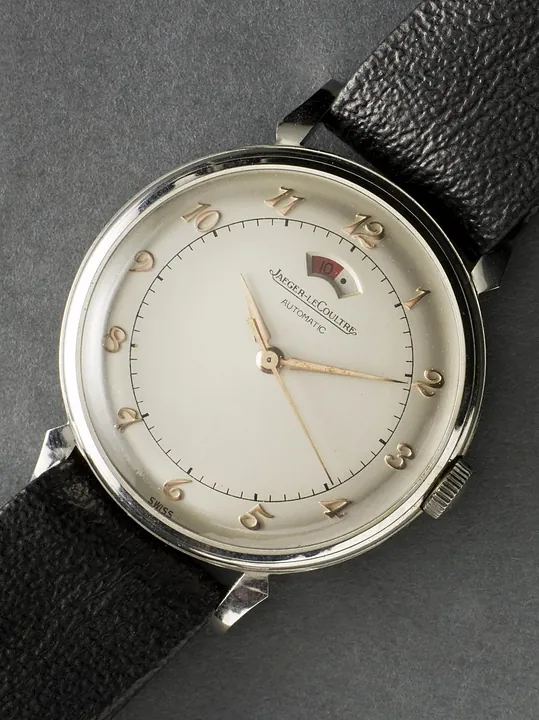
Wristwatches · 1953
Automatic Wrist-watch, Jaeger-LeCoultre, Geneva, Switzerland, with reserve power indicator complete in steel case, 1953. Back numbered 564556.
Science Museum Group, London
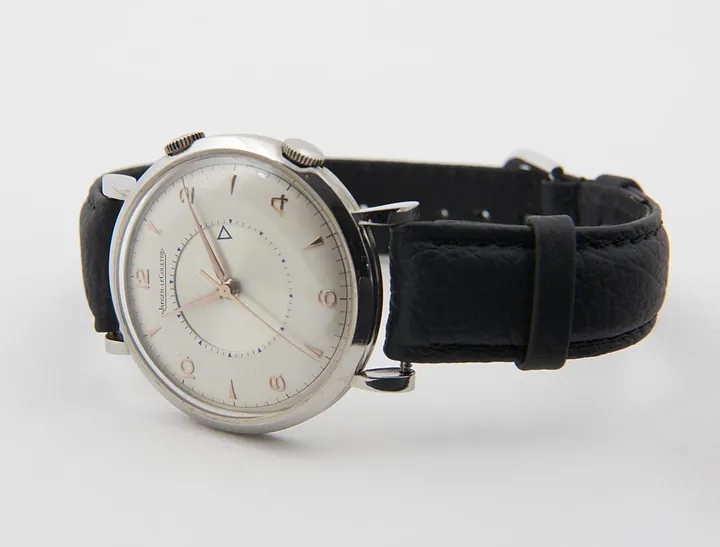
Wristwatches · 1953
Wrist-watch, 'Memovox' alarm, Jaeger-LeCoultre, Geneva, Switzerland, complete in steel case, 1953.
Science Museum Group, London
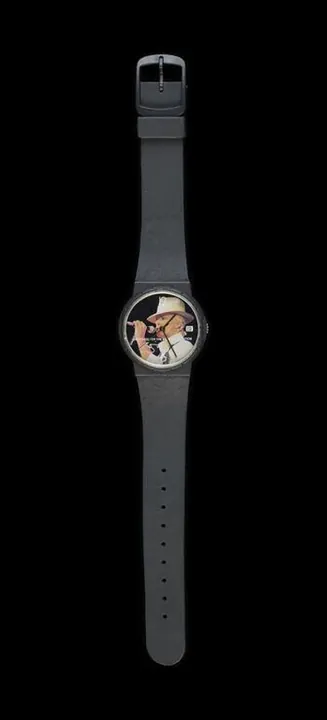
Wristwatches · 1991
Limited edition watch designed by Eta relating to David Bowie's Serious Moonlight live tour, 1991
Victoria and Albert Museum, London

Wristwatches · 2008
Wristwatch by Breitling?, 2008
Museum Rotterdam

Wristwatches · c. 1990s
Audemars Piguet Bamboo, c. 1990s
Antiquorum auction archive, Geneva

Wristwatches · c. 1990
Audemars Piguet Huitieme Perpetual Calendar, ref. 25696PT, c. 1990
Antiquorum auction archive, Geneva