
Wristwatches · Wristwatch
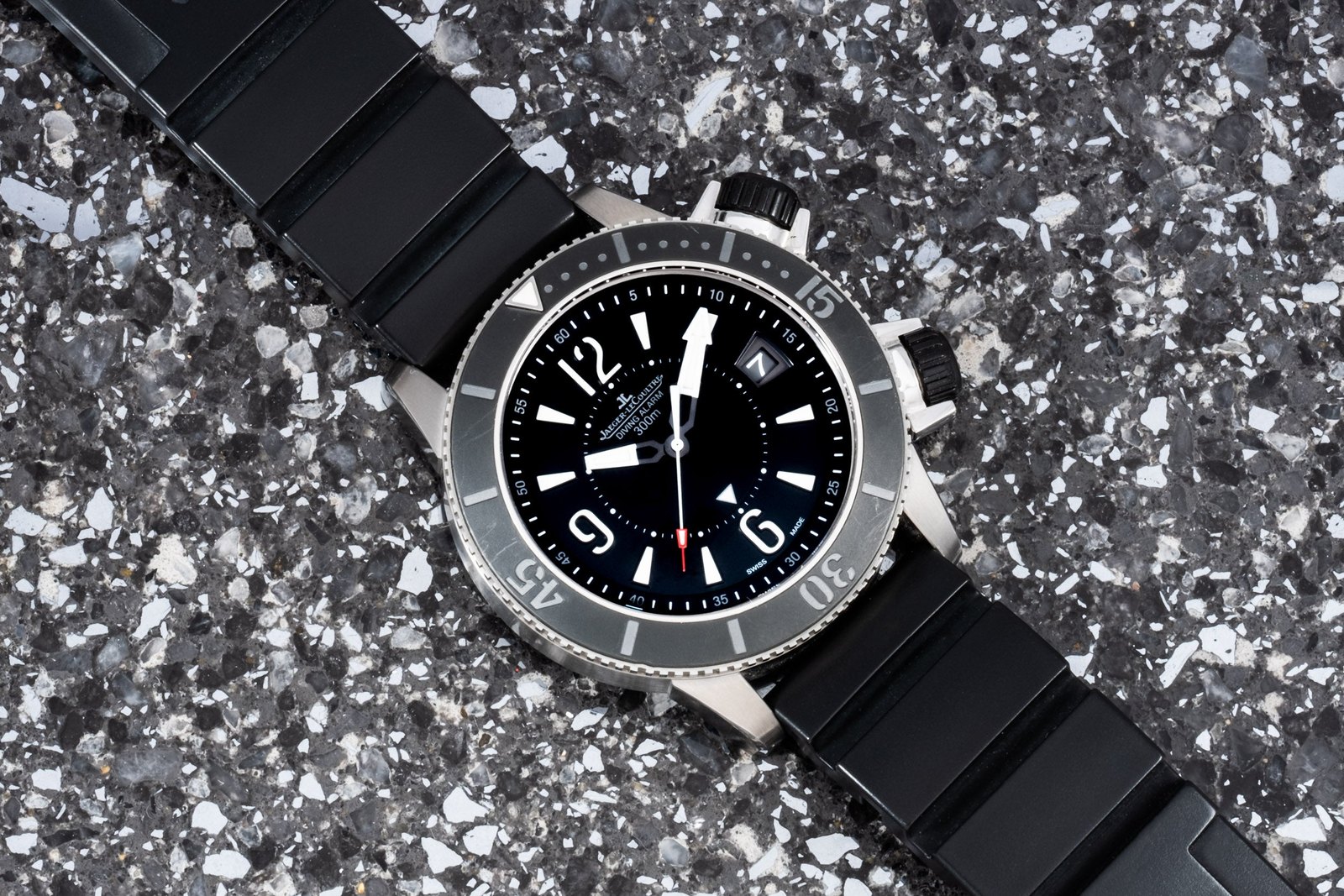
Jaeger-LeCoultre Master Compressor Alarm Navy Seals, c. 2010s
- Maker / attribution
- Jaeger LeCoultre (maker)
- Date
- c. 2010s
- Historical period
- Contemporary Horology (2010 – Present)
- Country of origin
- Unrecorded in source
- Object type
- Wristwatch
- Dimensions
- Case 44 mm
- Stock no.
- 40980037
- Credit line
- Dealer listing, Analog/Shift (40980037)
- Catalogue title (original)
- Jaeger-LeCoultre Master Compressor Alarm Navy Seals (English)
View the source record (dealer listing) ↗ (opens another website in a new tab)Suggest a correction
Record summary
Catalogued by Analog/Shift (dealer), New York (stock number 40980037), this is a wristwatch by Jaeger LeCoultre, dated c. 2010s. The Atlas places it in the Contemporary Horology period (2010 – Present) of its Wristwatches collection. Recorded dimensions: Case 44 mm. The record is illustrated with 6 photographs.
Assembled from the source record's structured fields. Dates and attributions are given as the source states them; where a field is missing the Atlas leaves it blank rather than estimating.
Catalogue description
Dealer description — Analog/Shift
Most are no doubt familiar with Jaeger-LeCoultre via the famed Reverso. But that’s not La Grand Maison’s entire story. The dynamic Swiss watchmaking powerhouse is responsible for myriad iconic designs, from — yes — reversible dress watches, to alarm-equipped dive watches, to complicated masterpieces, and more. Indeed, the storied company has one of the most diverse offerings in fine watchmaking. The particular Jaeger-LeCoultre we have here couldn’t be farther, for example, from the elegant simplicity of the Reverso. A Reference 160.T.96 Master Compressor Alarm Navy SEALs Limited Edition — (say that three times fast) — it’s part of a special run of just 1,500 pieces made as a collaboration with the U.S. Navy SEALs. Dating from circa the 2010s, it’s housed in a 44mm titanium case with a sapphire crystal, a signed and locking crown, a locking alarm winding crown pushers, a titanium unidirectional rotating dive timing bezel with a ceramic insert, and a matte black dial with applied luminous indices and a center alarm indicator disc. Powered by Jaeger-LeCoultre's in-house Calibre 956 automatic winding movement (with a manually wound alarm), it comes paired to a signed black rubber diving strap with a signed steel pin buckle. The crisp ring that comes when the hands cross the set time alerts the diver that it is time to ascend. It of course works above water as well, making it perfect for determining the perfect time to execute a breaching maneuver utilizing fragmentation grenades, suppressed submachine guns and garrote wire. Or, when it's time to take that pie out of the oven... You get the idea. While many manufacturers have developed mechanical alarms, Jaeger-LeCoultre is the undisputed king of the hill, and when you hear this thing go off - and you will, if you're anywhere nearby - you'll know you're hearing a JLC. Limited and rare, t his is modern watchmaking in its most badass manifestation.
Historical context
Contemporary Horology (2010 – Present)
Silicon components, connected watches, optical-lattice research clocks and a thriving independent scene.
Smartwatches became the world's best-selling watches, while mechanical watchmaking focuses on craft, innovation (silicon components, new escapements) and independent makers.
Read the period in the timelineMore wristwatches from this periodEarlier: Mechanical Renaissance
Atlas type guide
Military, pilot and travel watches
The wristwatch owes much of its adoption by men to warfare and aviation. Wristlets — small pocket watches soldered with lugs and worn on a strap — were used in colonial campaigns and became standard equipment in the First World War, with protective grilles over the crystal ('shrapnel guards'). Louis Cartier's Santos (1904), designed for the aviator Alberto Santos-Dumont, is often cited as an early purpose-made pilot's watch.
In the Second World War governments specified watches in detail: the German B-Uhr observation watches, the American A-11, and the British 'W.W.W.' (the 'Dirty Dozen' set of 1945). After the war, jet travel brought GMT and world-time watches, which show two or more time zones at once — Louis Cottier's world-time mechanism and the Rolex GMT-Master (1955) are examples.
What to look for
- Military markings on the case back: broad arrow, issue numbers, 'W.W.W.', 'A.T.P.'
- High-legibility black dials with luminous Arabic numerals; oversized crowns for gloved hands.
- 24-hour hands and rotating 24-hour bezels or city rings on GMT/world-time watches.
- Wire lugs on early wristlets converted from pocket watches.
Dating clues
- Wire-lug wristlets: c. 1900–1925.
- Military specifications of the Second World War: 1939–1945.
- GMT and world-time wristwatches: mainly after 1950.
General guidance written by the Atlas editors about this kind of object. It is not a statement about this particular piece; for that, rely on the source record above and on physical examination.
Related records
Wristwatches · 1953–1956
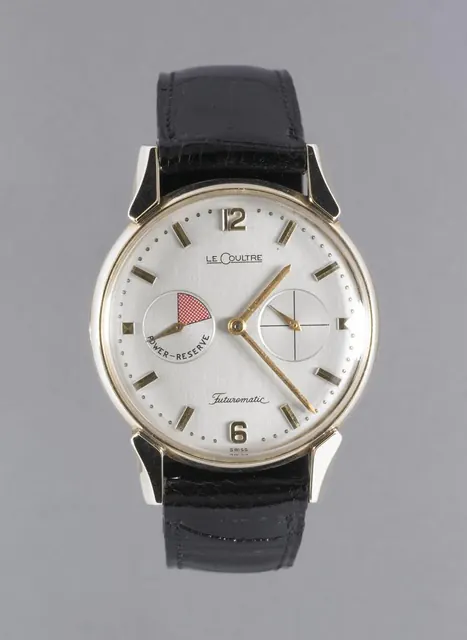
Automatic wristwatch with subsidiary seconds and power-reserve dial
British Museum
Wristwatches · mid 1960s
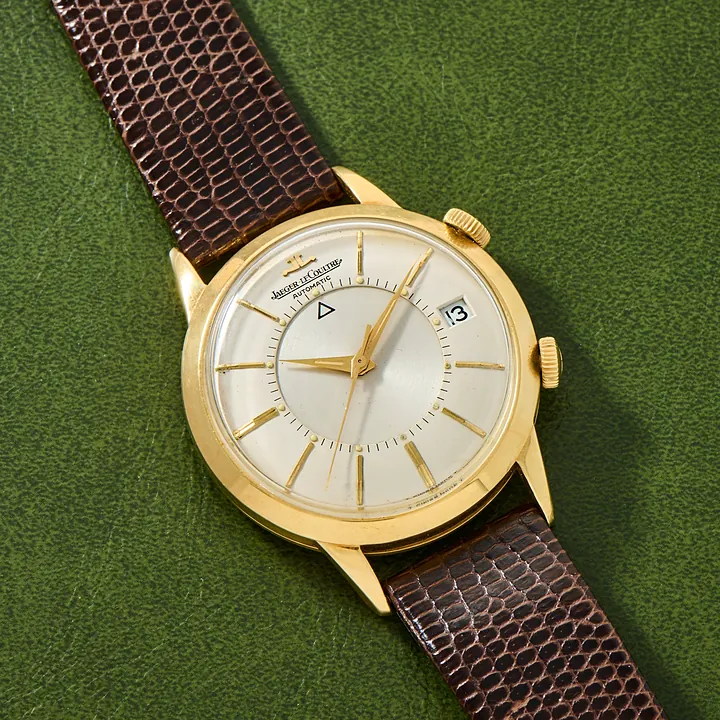
Jaeger-LeCoultre Memovox, mid 1960s
Analog/Shift (dealer), New York
Wristwatches · 1960
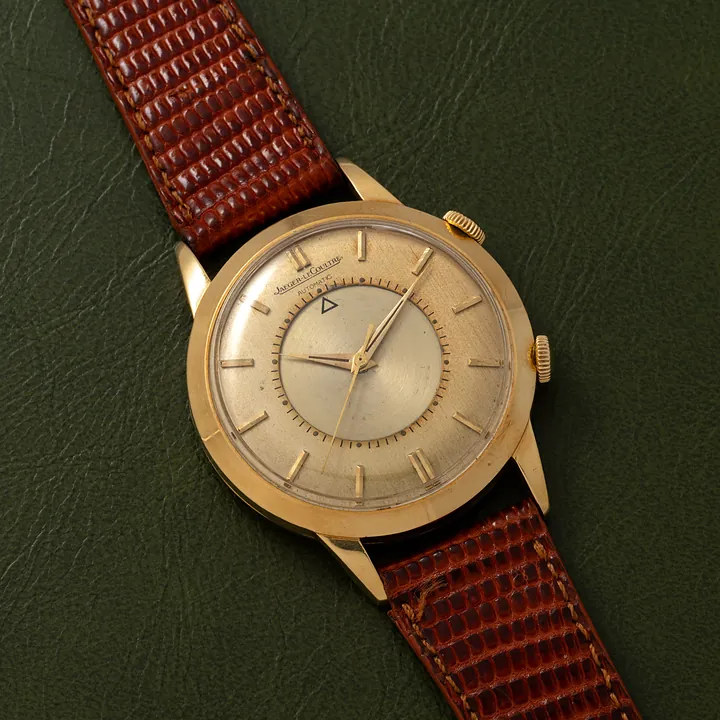
Jaeger-LeCoultre 'European Market' Memovox, 1960
Analog/Shift (dealer), New York
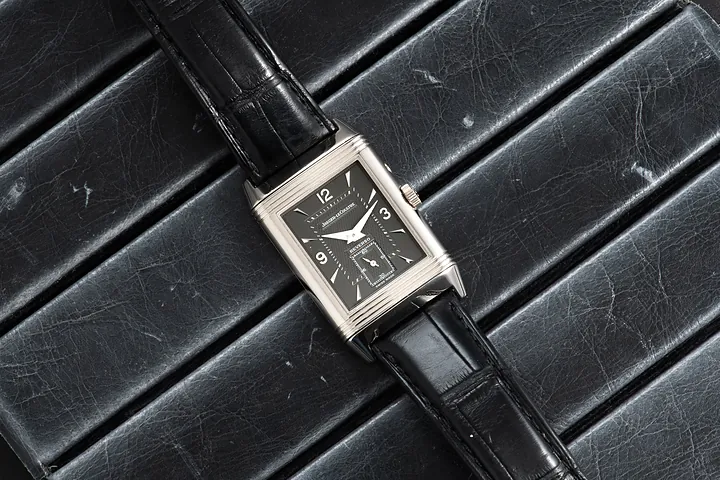
Wristwatches · 2010s
Jaeger-LeCoultre Reverso Duoface Day/Night, 2010s
Analog/Shift (dealer), New York
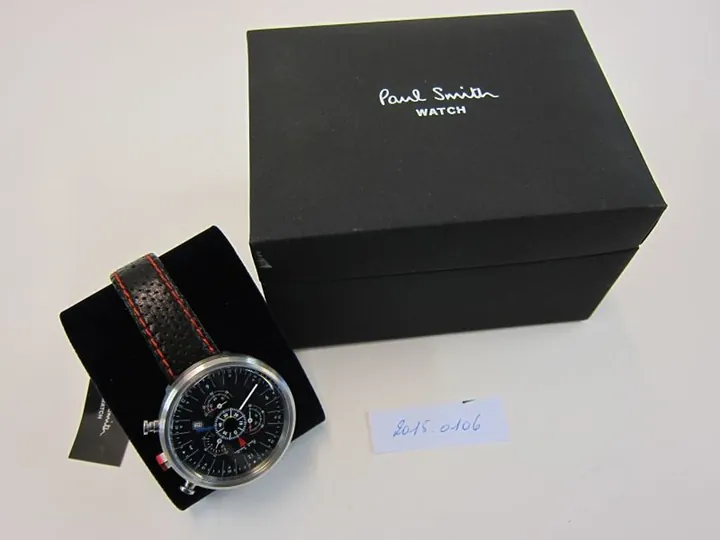
Wristwatches · 2010
Wristwatch, 2010
Modemuseum Hasselt
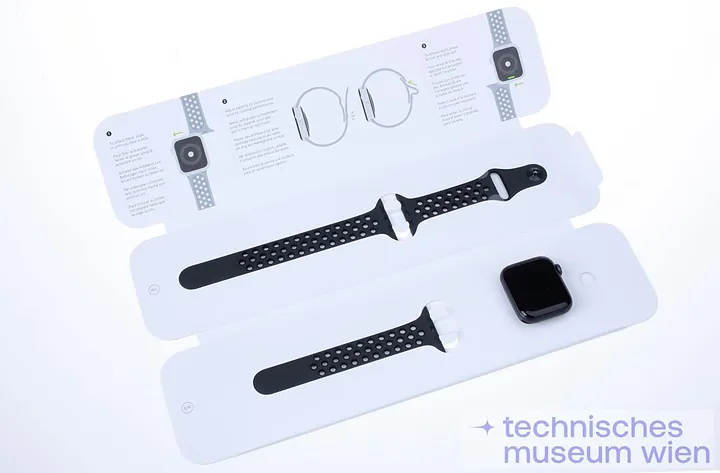
Wristwatches · 2018 (Series 4 released in September 2018; '1977' in the source is the model number A1977)
Apple Watch Series 4 (GPS, 40 mm, model A1977), 2018
Vienna Museum of Science and Technology
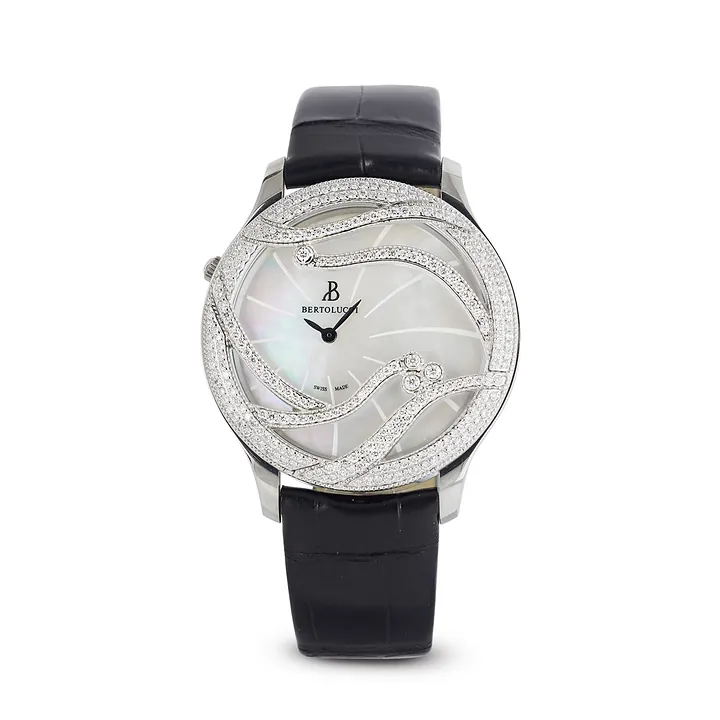
Wristwatches · c. 2010s
Bertolucci Stria III, ref. 11513.50.45.B88.6C1.501, c. 2010s
Antiquorum auction archive, Geneva
Wristwatches · c. 2010s
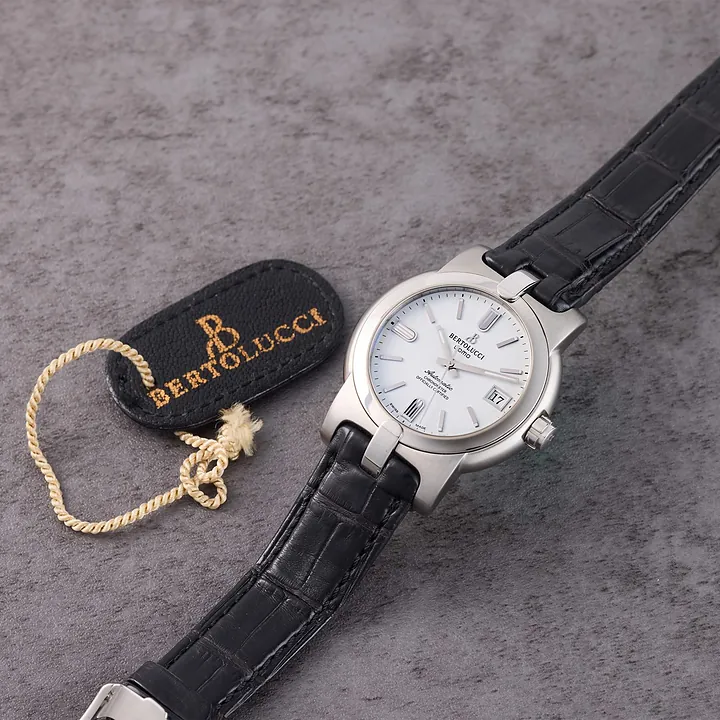
Bertolucci Uoma, ref. 824.51.41.10B, c. 2010s
Antiquorum auction archive, Geneva