
Clocks · Table pendulum clock
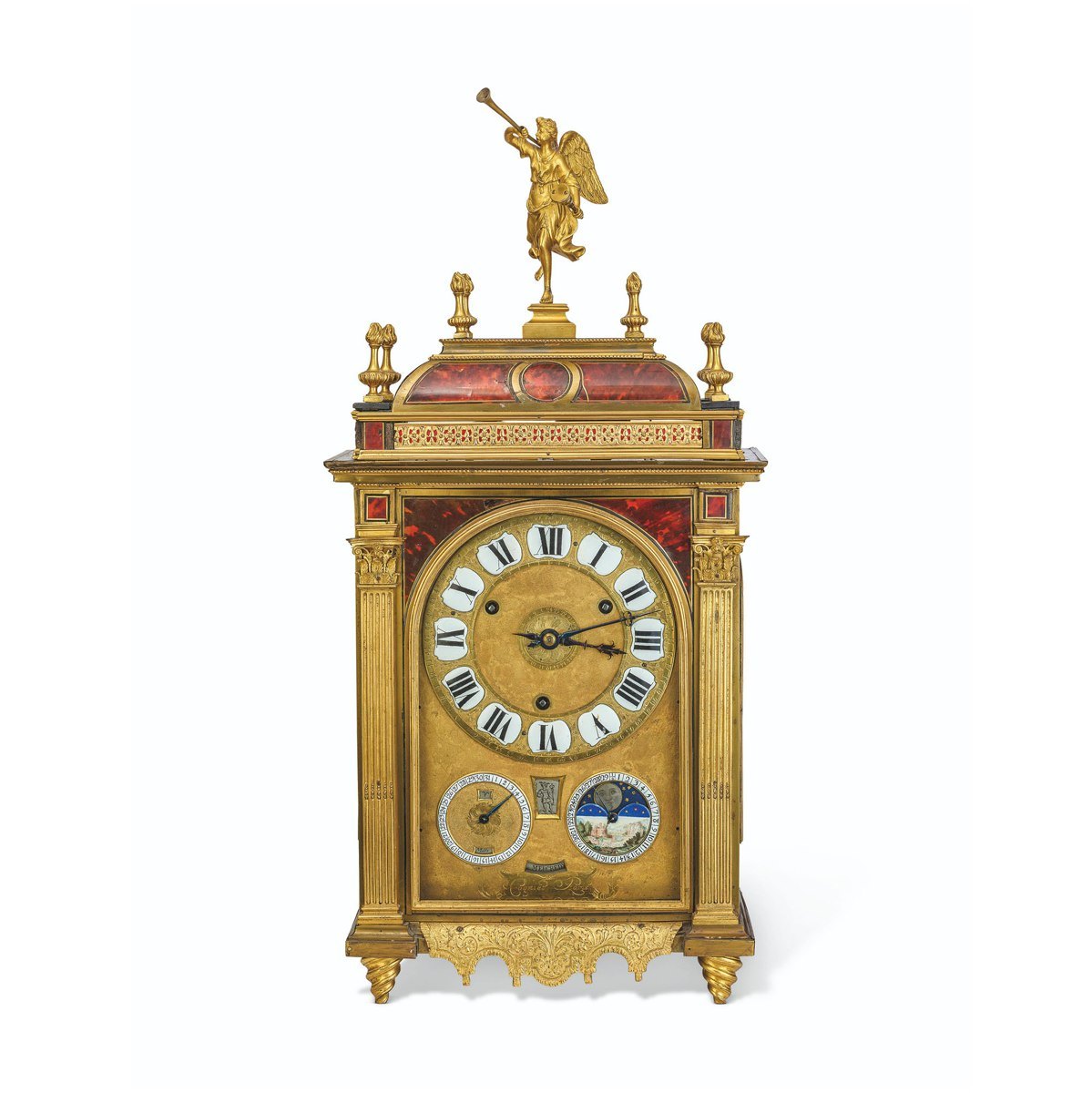
Jacques Cogniet Gilt Brass and Wooden Table Pendulum Clock
- Maker / attribution
- Jacques Cogniet (source attribution)
- Date
- c. 1700
- Historical period
- Early Modern Horology (1600 – 1750)
- Country of origin
- Unrecorded in source
- Object type
- Table pendulum clock
- Materials / technique
- Gilt brass and wood
- Auction house
- Christie's
- Lot
- 197
- Credit line
- Christie's
- Catalogue title (original)
- JACQUES COGNIET, GILT BRASS AND WOODEN QUARTER REPEATING TABLE PENDULUM CLOCK WITH CALENDAR, MOON PHASES AND ALARM, | Christie’s (English)
View the source record (auction lot) ↗ (opens another website in a new tab)Suggest a correction
Record summary
Catalogued by Christie's (lot 197), this is a table pendulum clock attributed to Jacques Cogniet, dated c. 1700. The Atlas places it in the Early Modern Horology period (1600 – 1750) of its Clocks collection. Materials and techniques recorded by the source: Gilt brass and wood. The record is illustrated with 1 photograph.
Assembled from the source record's structured fields. Dates and attributions are given as the source states them; where a field is missing the Atlas leaves it blank rather than estimating.
Catalogue description
Original object description
Measuring roughly 57 cm in height, this architectural table pendulum clock dates to circa 1700 and is credited to Jacques Cogniet by Christie's. Built from wood and gilt brass, the case incorporates fluted pilasters, finials at the corners, panels finished in red lacquer or mottled faux-tortoiseshell, and a stepped dome surmounted by a gilt winged figure with a trumpet. Time is indicated across individual white enamel cartouches with Roman numerals, set over two subsidiary dials that include a multicolored lunar phase display. The movement was designed with an alarm, calendar indications, moon phases, and a repeater for the minutes and quarters; however, it was idle during inspection and is in need of maintenance after an extended period of inactivity. While the dial remains original despite age-related wear, the clock shows surface tarnishing, faint chipping, hairline cracks near XII and above the lunar window, and decorative elements whose attachment is precarious.
Historical context
Early Modern Horology (1600 – 1750)
Huygens' pendulum and balance spring transform accuracy; English makers develop the anchor and deadbeat escapements.
Huygens's pendulum (1656–57) improved clock accuracy from about a quarter of an hour to under a minute a day. The anchor escapement (c. 1670) and the long seconds pendulum created the longcase clock; London makers such as Fromanteel, Knibb, Tompion and Quare led European clockmaking, and French makers created the Boulle pendule.
Read the period in the timelineMore clocks from this periodEarlier: Renaissance Horology
Atlas type guide
Alarm clocks
Alarm work is among the oldest clock functions: monastic clocks woke monks for night prayers, and Renaissance table clocks often carried an alarm disc set by a pin. A separate spring or weight is released at the set time and drives a hammer against a bell. Some early alarms also lit a candle by striking a flint — the 'tinder pistol' alarm.
The cheap, mass-produced alarm clock arrived in the second half of the nineteenth century. American firms such as Seth Thomas and Westclox (the 'Big Ben' of 1910) and German makers such as Junghans and Kienzle made millions of drum-shaped alarms with pin-pallet escapements. Electric, quartz and digital alarm clocks followed in the twentieth century.
What to look for
- A separate alarm-setting dial or disc and an extra winding key.
- Twin bells on top (common after c. 1920) or a bell enclosed in the base.
- Pin-pallet escapements in inexpensive factory alarms.
- Trademarks and patent dates on dial or back.
Dating clues
- Renaissance alarm table clocks: sixteenth to seventeenth centuries.
- Drum alarm clocks: from the 1870s.
- Luminous dials with radium paint: c. 1910–1960.
General guidance written by the Atlas editors about this kind of object. It is not a statement about this particular piece; for that, rely on the source record above and on physical examination.
Related records
Clocks · Early 17th century
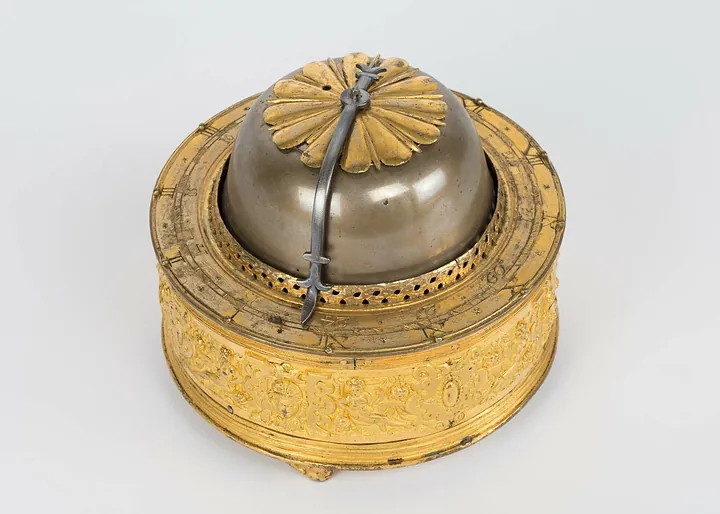
Table clock, probably Denmark, early 17th century
German Clock Museum
Clocks · 1590–1610
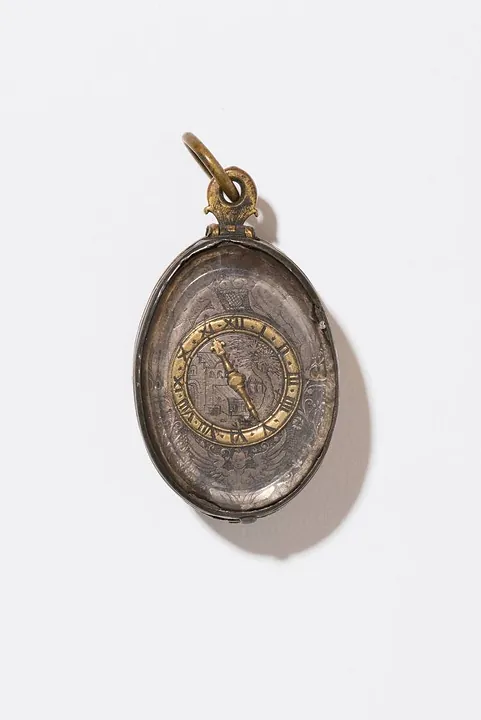
Clock, France, 1590–1610
MAK – Museum of Applied Arts
Clocks · c. 1600
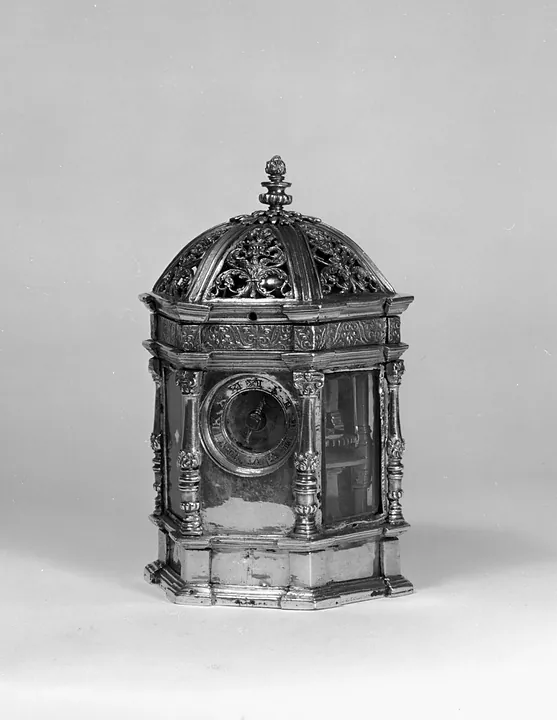
Table Clock, sheet brass, engraved, pierced and gilt, Paris, ca.1600, signed 'B(?) Pichard, à Paris'
Victoria and Albert Museum, London
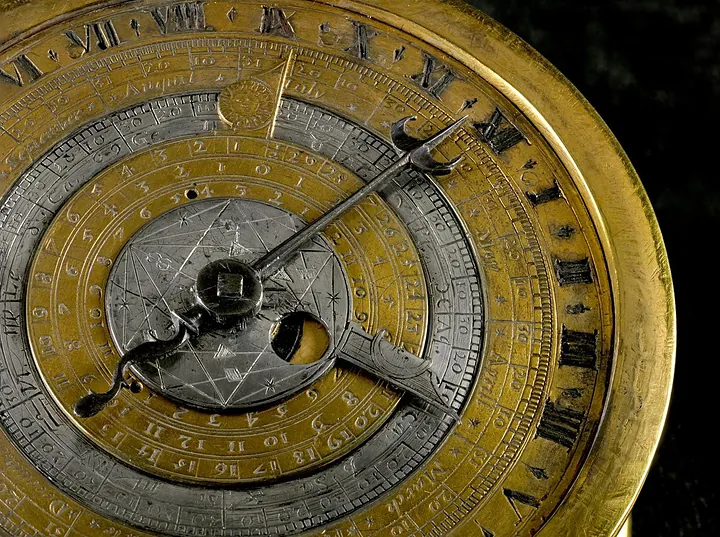
Clocks · 1598–1603
Circular table-clock with calendrical and lunar indications made by Nicholas Vallin in London between 1598 and 1603.
Science Museum Group, London
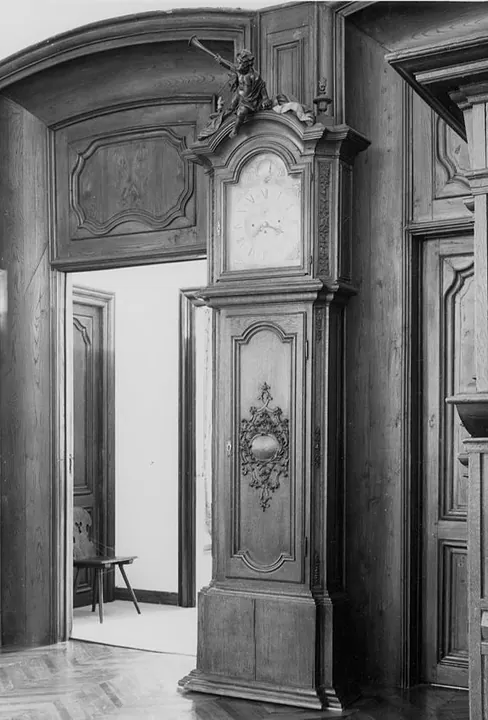
Clocks · 1660
Clock by Joannes Volcker, Belgium, 1660 (no. AP_10156031)
Royal Institute for Cultural Heritage
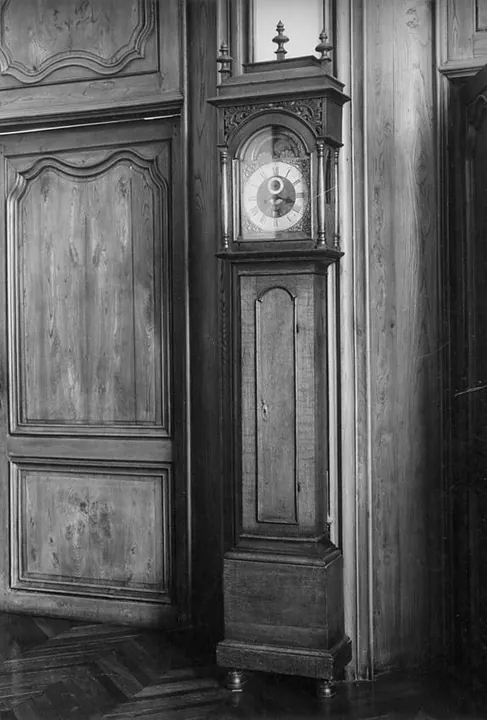
Clocks · 1641–1660
Clock by Joannes Volcker, Belgium, 1641–1660 (no. AP_10156032)
Royal Institute for Cultural Heritage
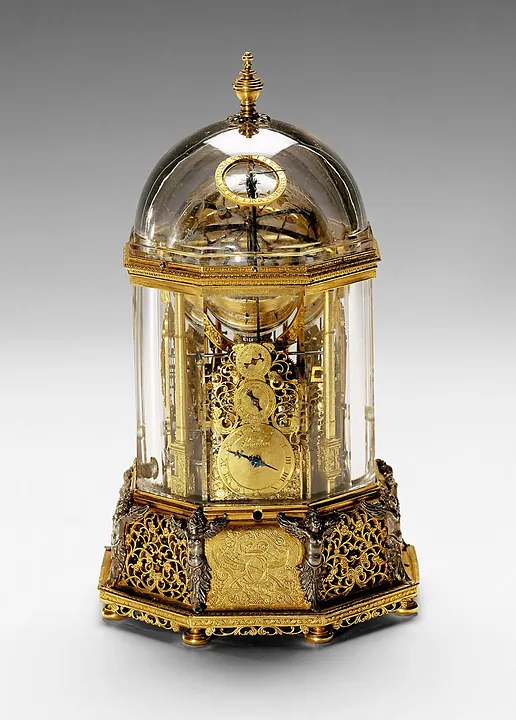
Clocks · 1600–1699
Clock attributed to Jobst Bürgi, Czech Republic, 1600–1699
Fine Arts Museum Vienna
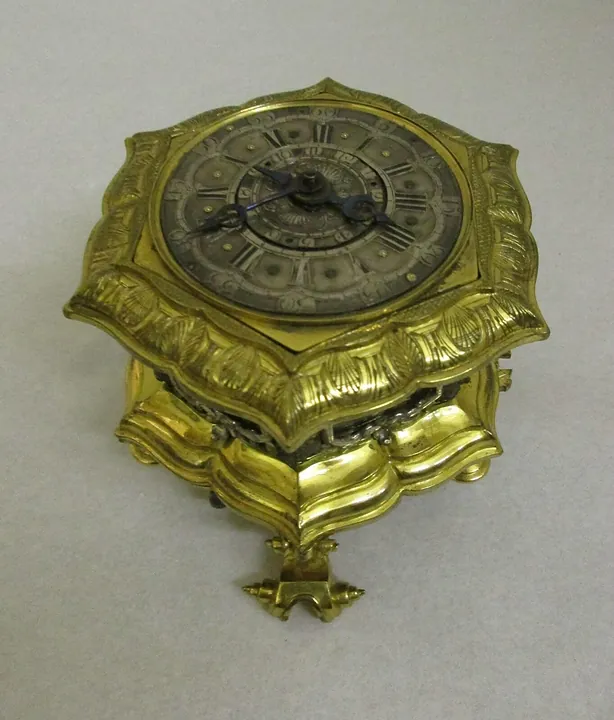
Clocks · 1600–1700
Clock, Germany, 1600–1700
Victoria and Albert Museum, London