
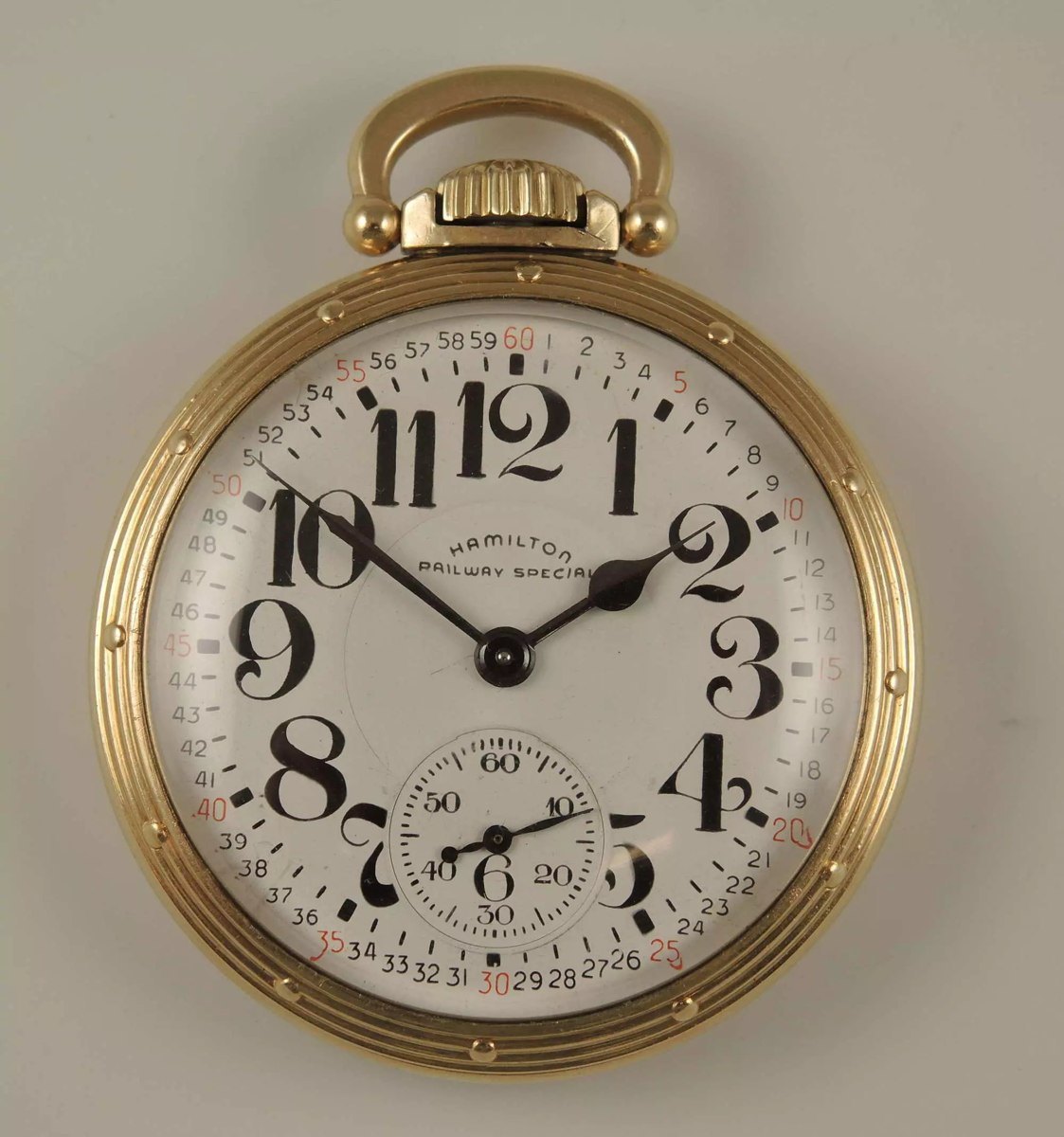
Pocket Watches · Railroad pocket watch
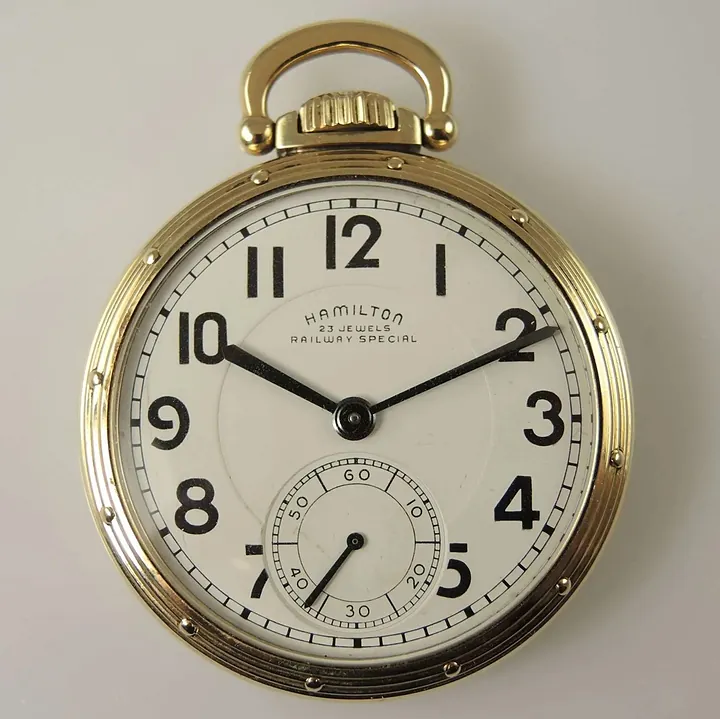
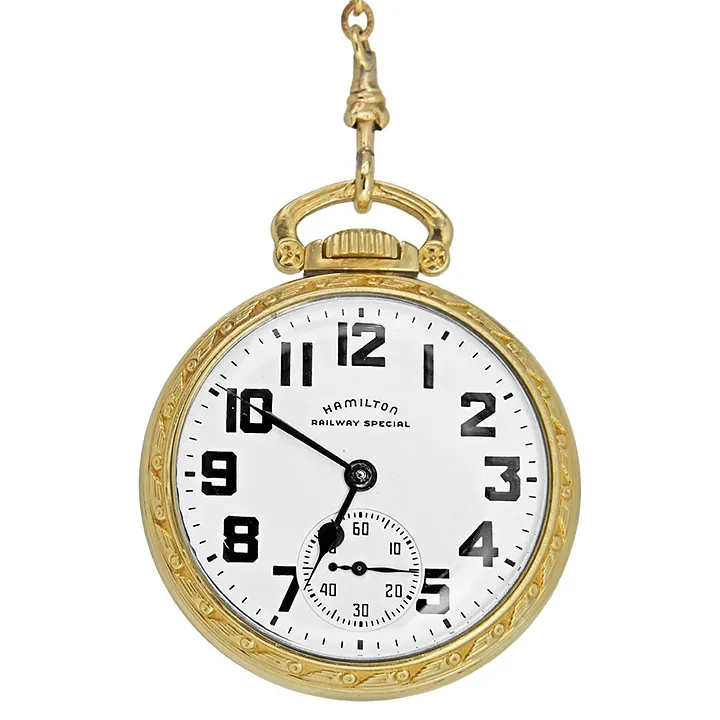
Hamilton 950B 16-size 23-jewel railroad pocket watch
- Maker / attribution
- Hamilton Watch Co. (source attribution)
- Date
- c. 1952 / c. 1957
- Historical period
- Modern Mechanical Horology (1945 – 1969)
- Country of origin
- United States
- Object type
- Railroad pocket watch
- Materials / technique
- 10K Gold filled
- Dimensions
- 50mm x 15mm deep
- Holding institution
- Atlam Watches
- Accession / object no.
- 4.289 (AB-151022)
- Credit line
- Atlam Watches
- Catalogue title (original)
- 16 Size 23 Jewel Hamilton 950B Pocket watch c1957 in Antique Mens Watches (English)
View the source record ↗ (opens another website in a new tab)Suggest a correction
Record summary
Held and catalogued by Atlam Watches (object number 4.289 (AB-151022)), this is a railroad pocket watch attributed to Hamilton Watch Co., made in United States, dated c. 1952 / c. 1957. The Atlas places it in the Modern Mechanical Horology period (1945 – 1969) of its Pocket Watches collection. Materials and techniques recorded by the source: 10K Gold filled. Recorded dimensions: 50mm x 15mm deep. The record is illustrated with 1 photograph.
Assembled from the source record's structured fields. Dates and attributions are given as the source states them; where a field is missing the Atlas leaves it blank rather than estimating.
Catalogue description
Original object description
Attributed to the Hamilton Watch Co. with divergent dealer dates of circa 1952 and circa 1957, this open-face American railroad pocket watch is fitted with a flat bulls-eye glass crystal over a single-sunk Montgomery-style melamine dial. The dial, marked "Hamilton, Railway Special", displays prominent Arabic hour numerals, an outer perimeter of individual minute numerals, blued steel hands, and a sunken subsidiary seconds register at 6 o'clock. The timepiece measures 50 mm in width by 15 mm in depth and sits in a 10K gold-filled Model A case featuring a 12 o'clock pendant and bow, a smooth back exhibiting fine abrasions, and threaded bezels; the front bezel has a milled perimeter with raised bead accents, while a corresponding raised element on the rear shows noticeable indentation. Because the listing only illustrates the exterior front, interior mechanical details derive strictly from vendor statements: a 16-size, stem-wound, lever-set Grade 950B nickel bridge movement bearing serial number S21608, 23 jewels with gold chatons, mainspring jeweling, an Elinvar Extra hairspring, a lever escapement, a micrometer regulator, gold endstones for the escape wheel and lever, circular-damascened winding gears, and pinstripe-damascened bridges engraved "Hamilton Watch Co, USA, Adj temp & 6 positions, 950B, 23 Jewels".
Inscriptions & marks
S21608
Historical context
Modern Mechanical Horology (1945 – 1969)
Tool watches for divers, pilots and astronauts; electric watches anticipate the electronic age.
After 1945 the pocket watch became a niche product — presentation and railway watches, inexpensive pin-lever watches, and commemorative pieces — while most innovation moved to the wrist.
Read the period in the timelineMore pocket watches from this periodEarlier: Golden Age of Mechanical Watchmaking
Atlas type guide
Railroad and railway watches
Timetables made accurate timekeeping a matter of safety. After a fatal collision at Kipton, Ohio, in 1891, American railroads adopted strict standards: open-face watches, lever setting, at least 17 jewels, adjustment to temperature and five positions, and a performance within 30 seconds a week, inspected regularly by approved watch inspectors. Waltham, Elgin, Hamilton, Illinois and Ball made railroad-grade watches in large numbers.
European railways issued service watches to guards, drivers and station staff, often engraved with the railway's initials and a staff number. Such watches link industrial timekeeping with the standardisation of time zones (Greenwich Mean Time adopted by British railways in 1847; North American standard time in 1883).
What to look for
- Open-face cases with the crown at 12 and lever setting under the bezel.
- Montgomery dials with every minute numbered, or bold Arabic numerals.
- 'Railroad grade', '21 Jewels', 'Adjusted 5 positions' on the movement.
- Railway initials and issue numbers engraved on the case back.
Dating clues
- American railroad standards: from 1891–93, revised c. 1908.
- Serial numbers of American makers allow dating to within a year.
General guidance written by the Atlas editors about this kind of object. It is not a statement about this particular piece; for that, rely on the source record above and on physical examination.
Related records
Instruments · c. 1942
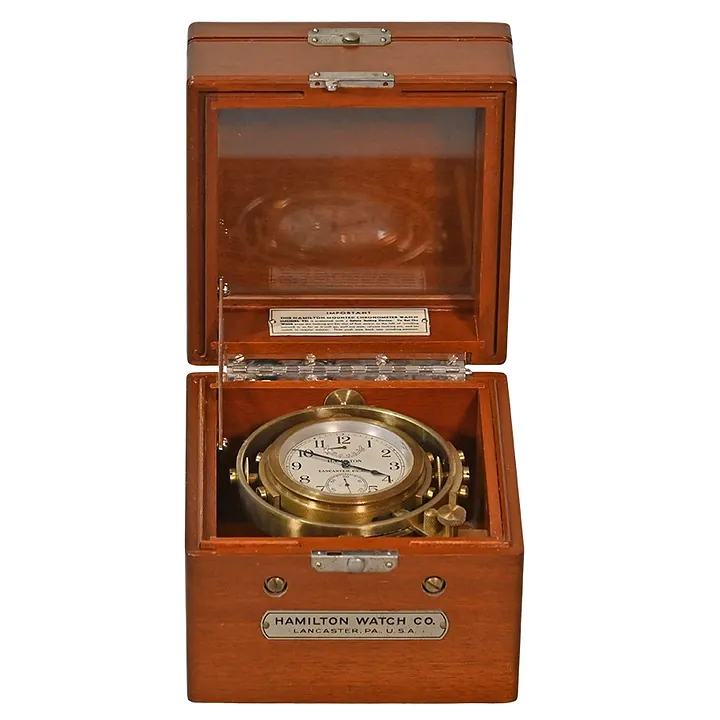
American Hamilton Model 22 Chronometer Deck Watch
Renaissance Antiques
Pocket Watches · 1928
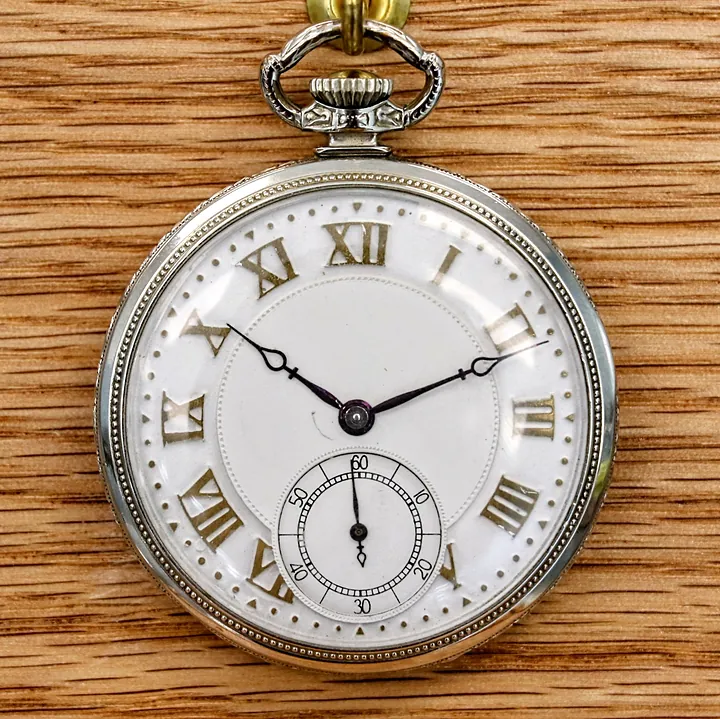
1928 Hamilton Grade 912 12s Pocket Watch
Secondhand Horology
Pocket Watches · 1942
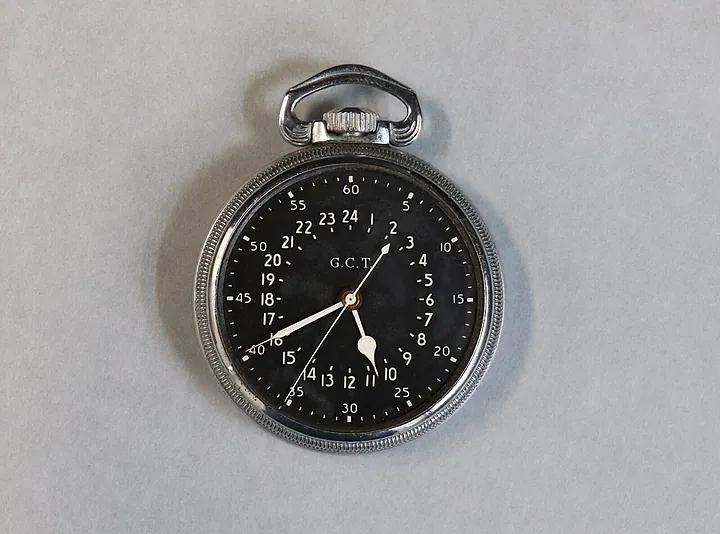
Hamilton 4992B Navigator's Watch
San Diego Air & Space Museum Archives
Pocket Watches · c. 1952
Hamilton 950B 16-size railroad pocket watch
Atlam Watches / Antiques Boutique
Pocket Watches · c. 1950
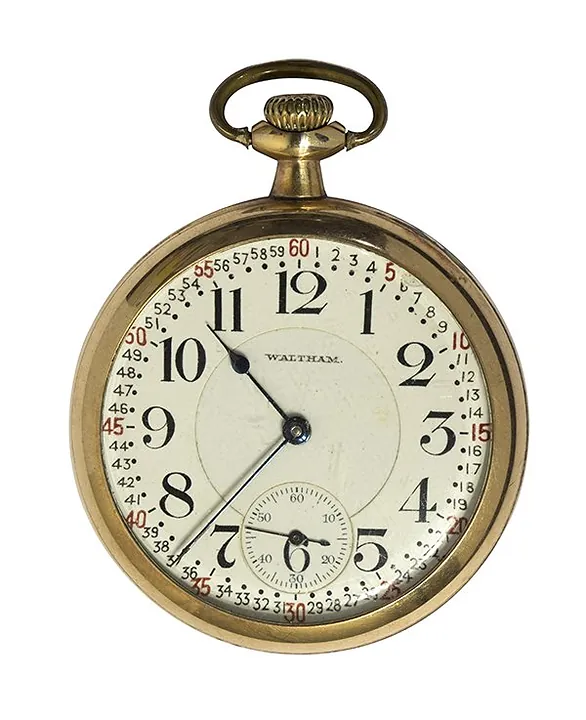
Waltham railroad openface pocket watch, circa 1950
LiveAuctioneers auction archive
Pocket Watches · c. 1950s
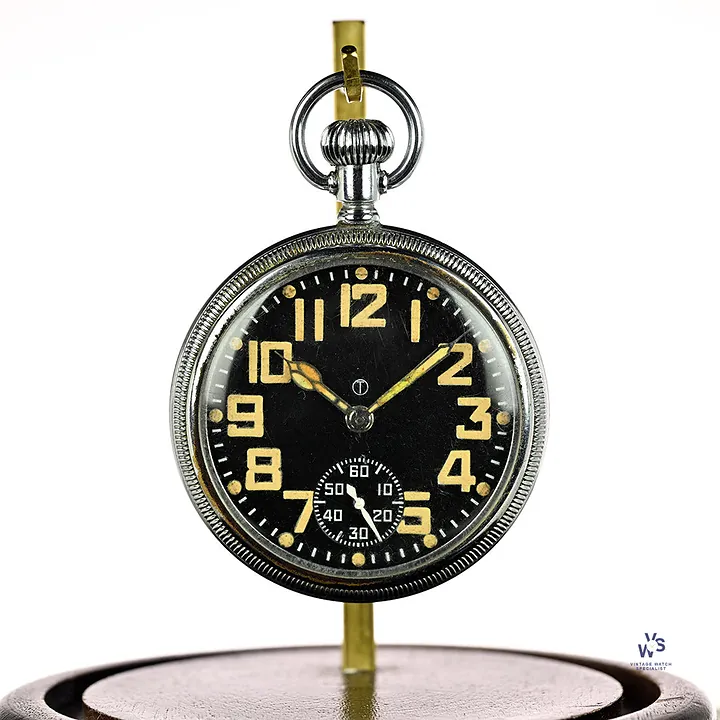
Waltham British Military issued Pocket Watch, Military, Marked 0552, circa 1950s
Vintage Watch Specialist (dealer), United Kingdom
Pocket Watches · 1949
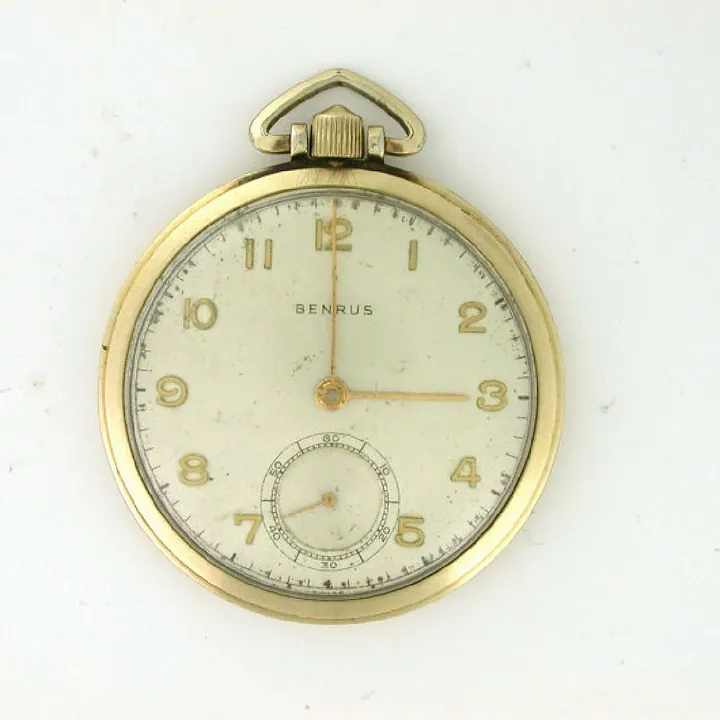
Benrus 10k Rolled Gold Pocket Watch, 1949
LiveAuctioneers
Pocket Watches · c. 1949
Hamilton 992B Railway Special Pocket Watch
Renaissance Antiques