
Pocket Watches · Railroad pocket watch
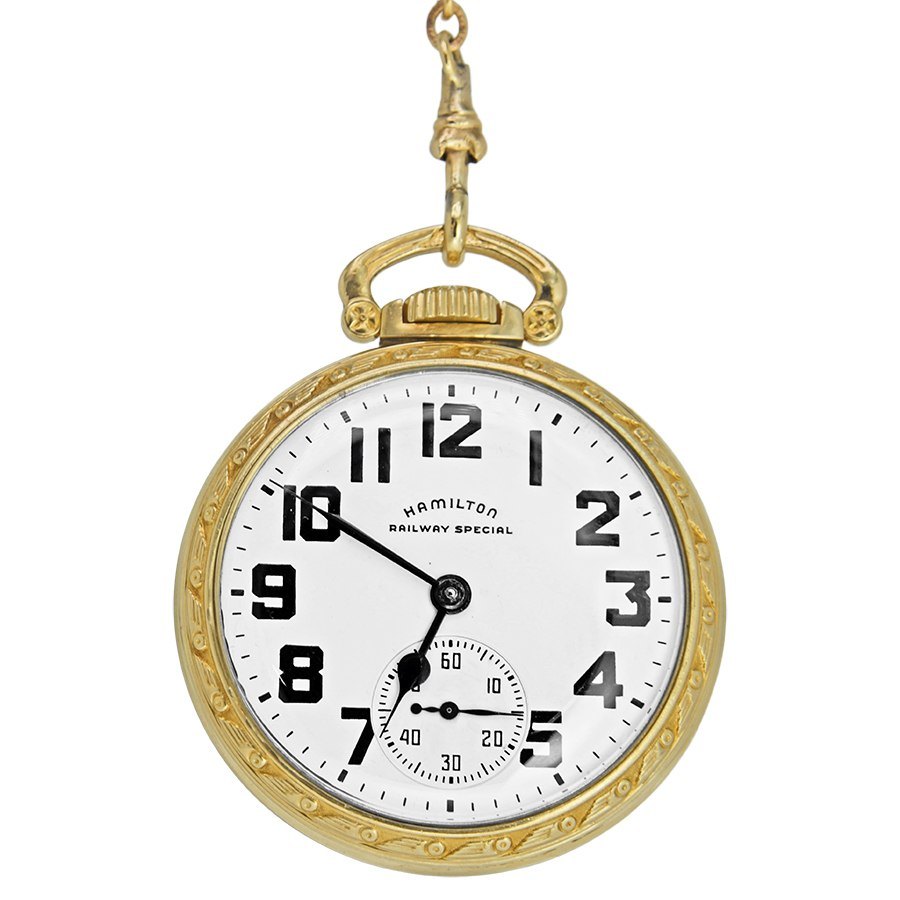
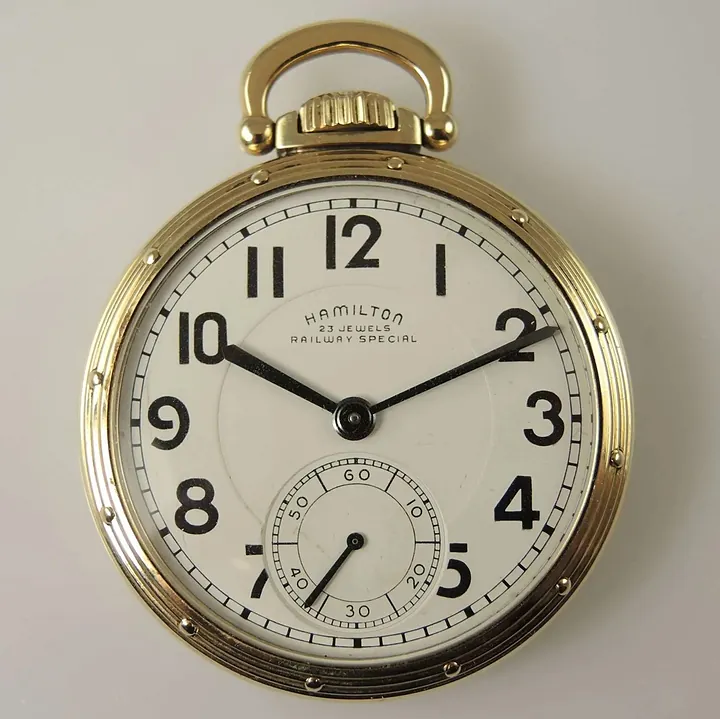
Hamilton 992B Railway Special Pocket Watch
- Maker / attribution
- Hamilton (source attribution)
- Date
- c. 1949
- Historical period
- Modern Mechanical Horology (1945 – 1969)
- Country of origin
- United States
- Object type
- Railroad pocket watch
- Materials / technique
- 10K gold-filled
- Holding institution
- Renaissance Antiques
- Accession / object no.
- JMOS 1 P
- Credit line
- Renaissance Antiques
- Catalogue title (original)
- American Hamilton 992B Railway Special Pocket Watch - Renaissance Antiques (English)
View the source record ↗ (opens another website in a new tab)Suggest a correction
Record summary
Held and catalogued by Renaissance Antiques (object number JMOS 1 P), this is a railroad pocket watch attributed to Hamilton, made in United States, dated c. 1949. The Atlas places it in the Modern Mechanical Horology period (1945 – 1969) of its Pocket Watches collection. Materials and techniques recorded by the source: 10K gold-filled. The record is illustrated with 1 photograph.
Assembled from the source record's structured fields. Dates and attributions are given as the source states them; where a field is missing the Atlas leaves it blank rather than estimating.
Catalogue description
Original object description
Dating to circa 1949 according to source documentation, this open-face Hamilton 992B Railway Special pocket watch is cased in 10K gold-filled metal embellished with an engraved bezel. An overhead winding crown and bow at 12 o'clock connect to a detachable swivel clasp. The white face features strong black Arabic hour numbers, a peripheral minute scale, a subsidiary seconds dial at 6 o'clock marked in ten-second increments, and maker and model signatures situated beneath the 12 o'clock indicator. The time is traced by black hands, consisting of an hour indicator in a poised spade style and a narrow minute hand. Internally, the mechanism is powered by a 21-jewel caliber adjusted for temperature variations and six operating positions, equipped with a zero-backlash micrometer regulator.
Historical context
Modern Mechanical Horology (1945 – 1969)
Tool watches for divers, pilots and astronauts; electric watches anticipate the electronic age.
After 1945 the pocket watch became a niche product — presentation and railway watches, inexpensive pin-lever watches, and commemorative pieces — while most innovation moved to the wrist.
Read the period in the timelineMore pocket watches from this periodEarlier: Golden Age of Mechanical Watchmaking
Atlas type guide
Railroad and railway watches
Timetables made accurate timekeeping a matter of safety. After a fatal collision at Kipton, Ohio, in 1891, American railroads adopted strict standards: open-face watches, lever setting, at least 17 jewels, adjustment to temperature and five positions, and a performance within 30 seconds a week, inspected regularly by approved watch inspectors. Waltham, Elgin, Hamilton, Illinois and Ball made railroad-grade watches in large numbers.
European railways issued service watches to guards, drivers and station staff, often engraved with the railway's initials and a staff number. Such watches link industrial timekeeping with the standardisation of time zones (Greenwich Mean Time adopted by British railways in 1847; North American standard time in 1883).
What to look for
- Open-face cases with the crown at 12 and lever setting under the bezel.
- Montgomery dials with every minute numbered, or bold Arabic numerals.
- 'Railroad grade', '21 Jewels', 'Adjusted 5 positions' on the movement.
- Railway initials and issue numbers engraved on the case back.
Dating clues
- American railroad standards: from 1891–93, revised c. 1908.
- Serial numbers of American makers allow dating to within a year.
General guidance written by the Atlas editors about this kind of object. It is not a statement about this particular piece; for that, rely on the source record above and on physical examination.
Read next:Detached lever escapement
Related records
Pocket Watches · c. 1943
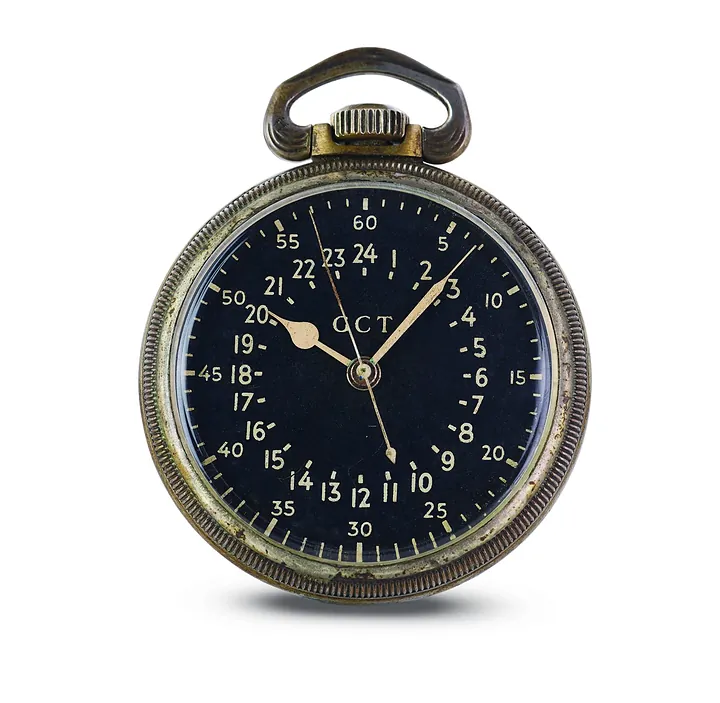
Hamilton 4992B, GCT Navigation U.S Air Force, c. 1943
Antiquorum auction archive, Geneva
Wristwatches · c. 1940s
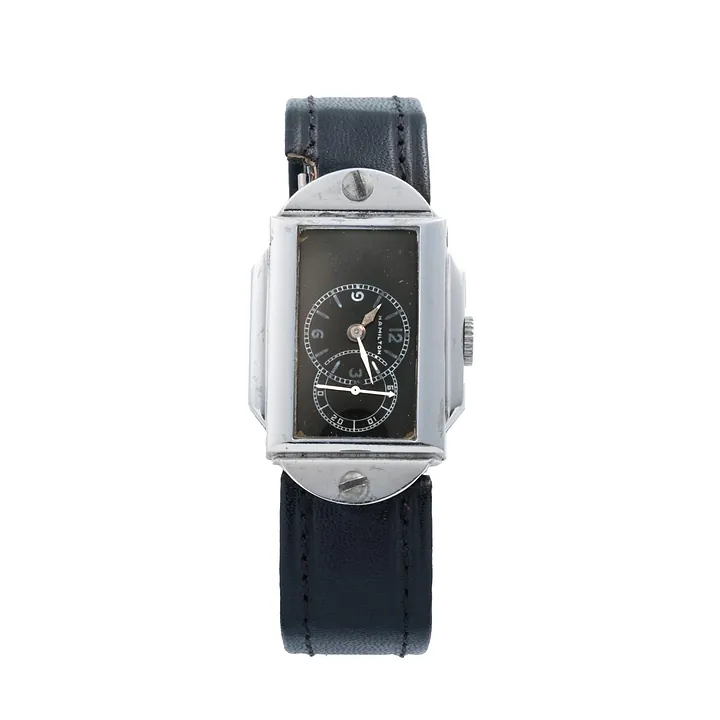
Hamilton Bomb Timer, c. 1940s
Antiquorum auction archive, Geneva
Wristwatches · originally sold in February 2025 (per the lot record)
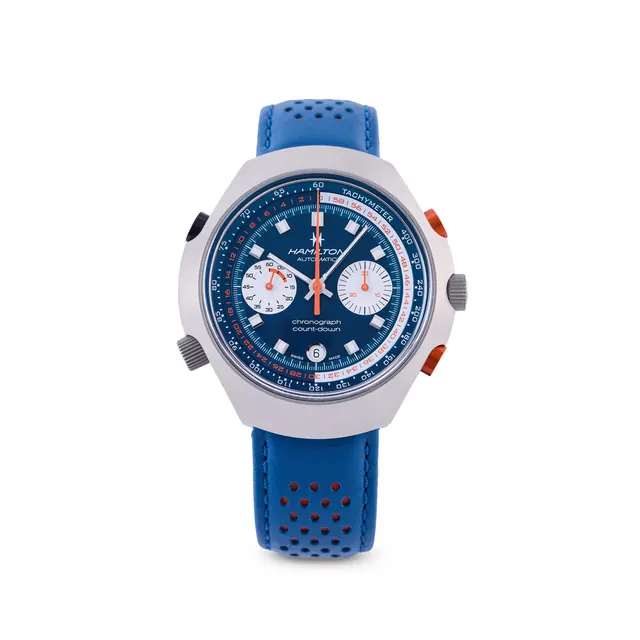
Hamilton wristwatch, ref. H51606640, American Classic Chrono-Matic 50 Limited Edition, originally sold in February 2025 (per the lot record)
Antiquorum auction archive, Geneva
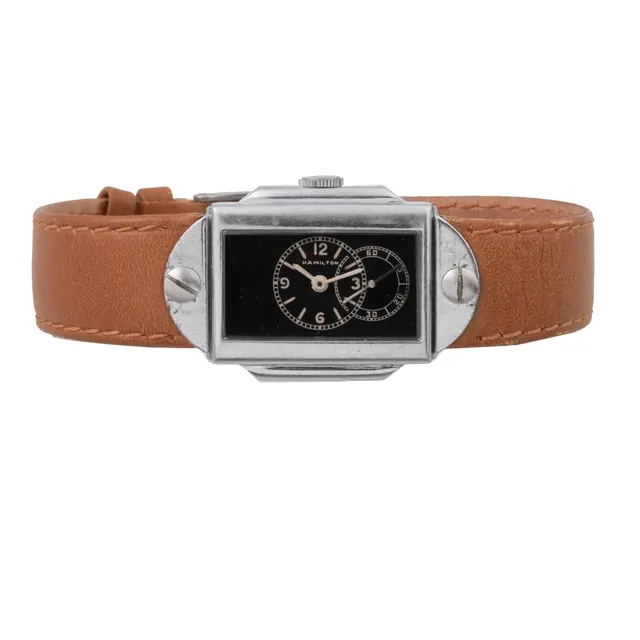
Wristwatches · c. 1940s
Hamilton wristwatch, Bomb Timer Watch, circa 1940's
Antiquorum auction archive, Geneva
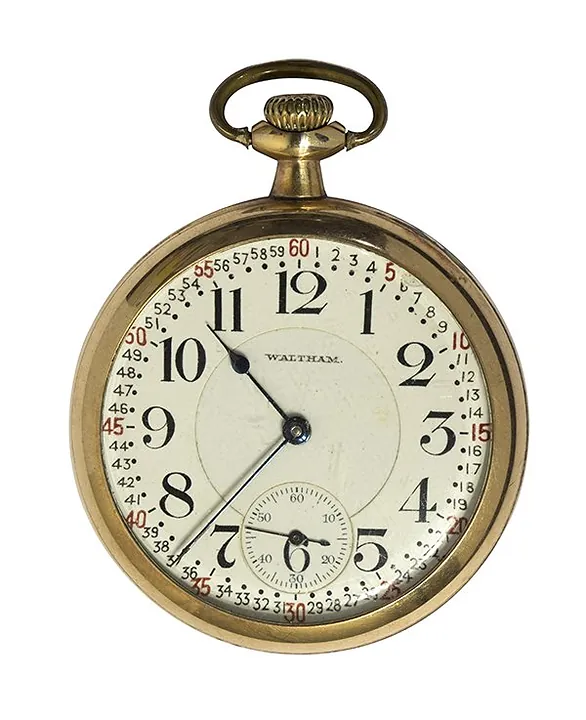
Pocket Watches · c. 1950
Waltham railroad openface pocket watch, circa 1950
LiveAuctioneers auction archive
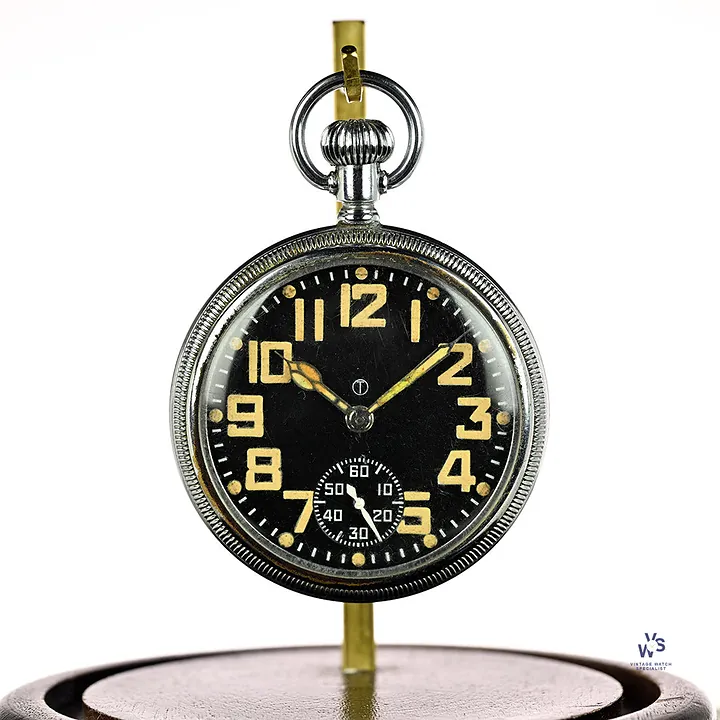
Pocket Watches · c. 1950s
Waltham British Military issued Pocket Watch, Military, Marked 0552, circa 1950s
Vintage Watch Specialist (dealer), United Kingdom
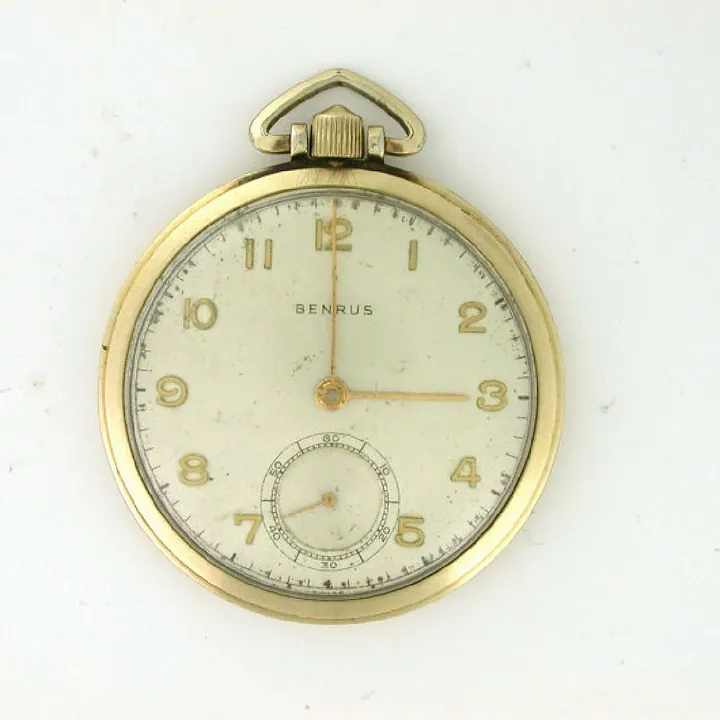
Pocket Watches · 1949
Benrus 10k Rolled Gold Pocket Watch, 1949
LiveAuctioneers
Pocket Watches · c. 1952
Hamilton 950B 16-size railroad pocket watch
Atlam Watches / Antiques Boutique