
Pocket Watches · Pocket watch
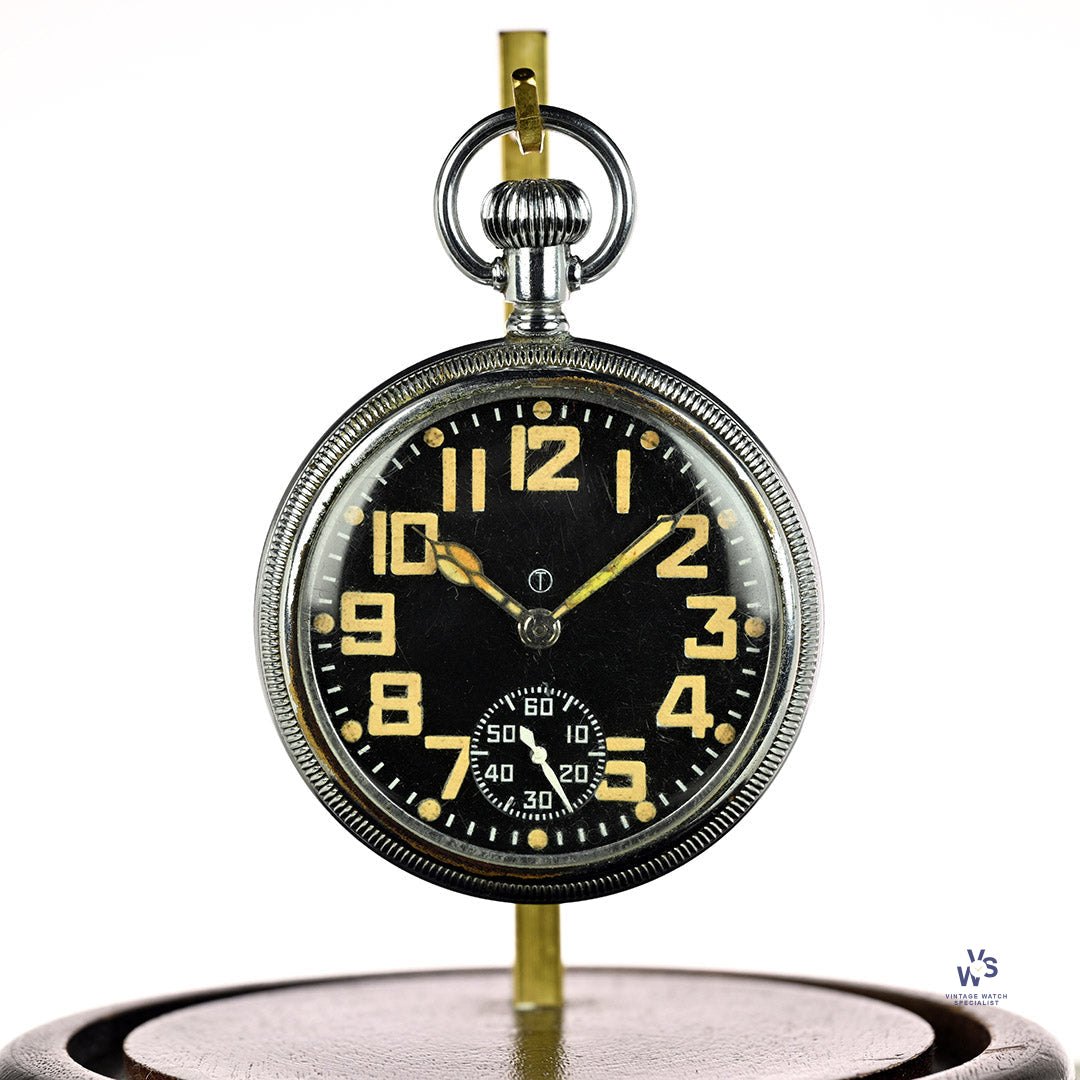
Waltham British Military issued Pocket Watch, Military, Marked 0552, circa 1950s
- Maker / attribution
- Waltham (maker)
- Date
- c. 1950s
- Historical period
- Modern Mechanical Horology (1945 – 1969)
- Country of origin
- United States
- Object type
- Pocket watch
- Stock no.
- vws3742
- Credit line
- Dealer listing, Vintage Watch Specialist (vws3742)
- Catalogue title (original)
- Waltham British Military issued Pocket Watch - Military - Marked 0552 - c.1950s (English)
View the source record (dealer listing) ↗ (opens another website in a new tab)Suggest a correction
Record summary
Catalogued by Vintage Watch Specialist (dealer), United Kingdom (stock number vws3742), this is a pocket watch by Waltham, made in United States, dated c. 1950s. The Atlas places it in the Modern Mechanical Horology period (1945 – 1969) of its Pocket Watches collection. The record is illustrated with 6 photographs.
Assembled from the source record's structured fields. Dates and attributions are given as the source states them; where a field is missing the Atlas leaves it blank rather than estimating.
Catalogue description
Dealer description — Vintage Watch Specialist
Waltham British Navy Issued Pocket Watch in Original Condition with Military Markings and Beautiful Pumpkin Lume Founded in 1850 in Massachusetts, Waltham Watch Company revolutionised timekeeping as the first to mass-produce watches using interchangeable parts. Renowned for precision, Waltham supplied pocket watches and wristwatches to the U.S. military during both World Wars, including cockpit chronographs and navigation timepieces for pilots. Their reliability under pressure earned them a reputation as essential military instruments. Today, vintage Waltham watches are cherished not only for their role in horological history but also for their proud service heritage. What's on offer This authentic Royal Navy-issued Waltham pocket watch, engraved with the NATO code 0552, is a rare and highly collectible military timepiece. Supplied to the Royal Navy in the post-war era, it would have been used for navigation and deck duties where absolute precision and legibility were essential. The black dial features bold Arabic numerals with tritium lume, now aged to a rich pumpkin tone, and the “T” mark at its centre confirms its luminous material. Oversized hands and a recessed sub-seconds dial add to its functional clarity. Housed in a stainless steel case with a finely milled edge and robust onion-style crown, it was purpose-built for harsh maritime environments. While wristwatches dominated by the 1950s and 60s, pocket watches like this remained invaluable to the Navy for timing and navigational tasks, making this an evocative link to a transitional era in military horology. A true piece of naval history and an exceptional find for the military collector.
Historical context
Modern Mechanical Horology (1945 – 1969)
Tool watches for divers, pilots and astronauts; electric watches anticipate the electronic age.
After 1945 the pocket watch became a niche product — presentation and railway watches, inexpensive pin-lever watches, and commemorative pieces — while most innovation moved to the wrist.
Read the period in the timelineMore pocket watches from this periodEarlier: Golden Age of Mechanical Watchmaking
Atlas type guide
Pocket watches
The pocket watch was the dominant personal timekeeper from the late seventeenth century until the First World War. Its development tracks the history of the escapement: verge watches with fusees until the late eighteenth century; Thomas Mudge's lever escapement (c. 1755) and the cylinder escapement popularised by George Graham and later by Swiss makers; and the Swiss and English lever watches of the nineteenth century. Lépine's bar-bridge calibre and keyless winding made watches thinner and easier to use.
Industrialisation transformed the trade: American factories such as Waltham (from 1850) and Elgin produced interchangeable parts by machine, and Swiss makers responded with their own mechanisation after the 1876 Philadelphia Exhibition. By 1900 a reliable watch was affordable to millions; the finest makers continued to produce complications and precision watches.
What to look for
- The escapement: verge (crown wheel), cylinder, duplex, English or Swiss lever.
- Key winding (a square arbor in dial or back) or keyless crown winding.
- Signatures and serial numbers on the movement, dial and inside case back.
- Hallmarks, case maker's marks and gold or silver standards stamped in the case.
- Dial material: enamel, silver, gold, later printed metal.
Dating clues
- Verge watches dominate before c. 1800; cylinder watches c. 1770–1900; lever watches after c. 1820.
- Keyless winding: increasingly common after c. 1860.
- Manufacturer serial number lists exist for Waltham, Elgin, Longines, Omega, Patek Philippe and others.
General guidance written by the Atlas editors about this kind of object. It is not a statement about this particular piece; for that, rely on the source record above and on physical examination.
Read next:Verge escapementDetached lever escapementFuseeIdentification Centre
Related records
Pocket Watches · 1910s
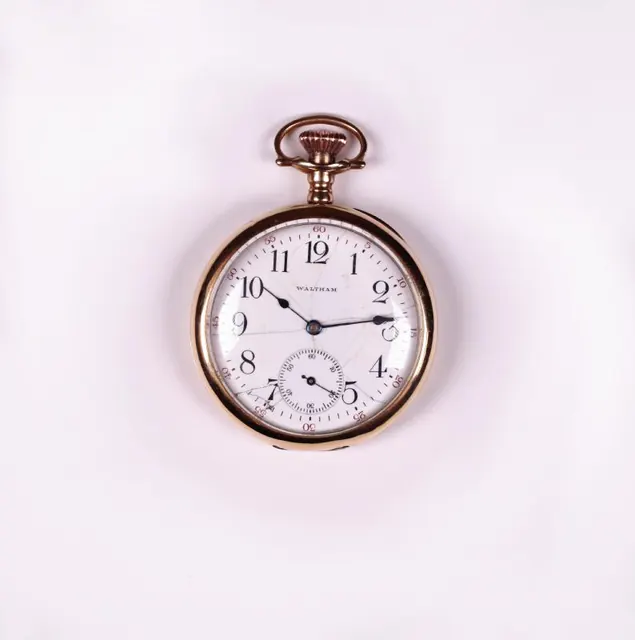
Pocket watch by Waltham, United States, 1910s
Suomen Urheilumuseo
Pocket Watches · 1902
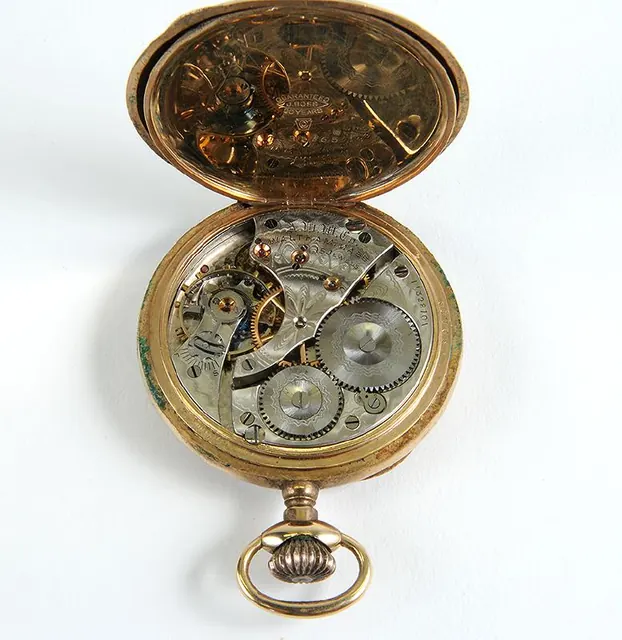
Pocket watch by Waltham, United States, 1902
Turun kaupunginmuseo
Instruments · c.1938
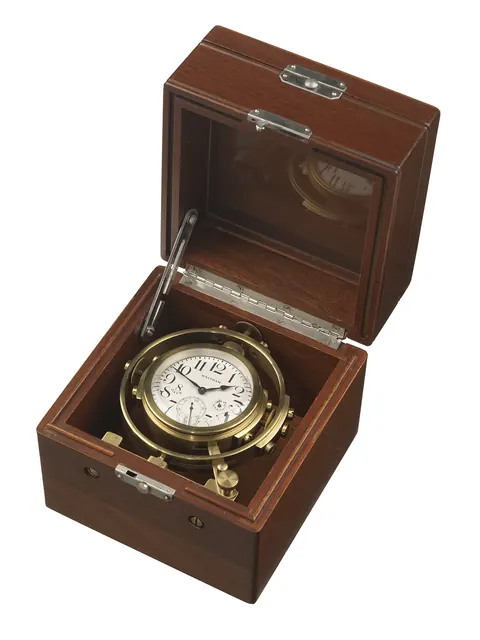
Marine chronometer watch no. 30683313 by Waltham
Royal Museums Greenwich
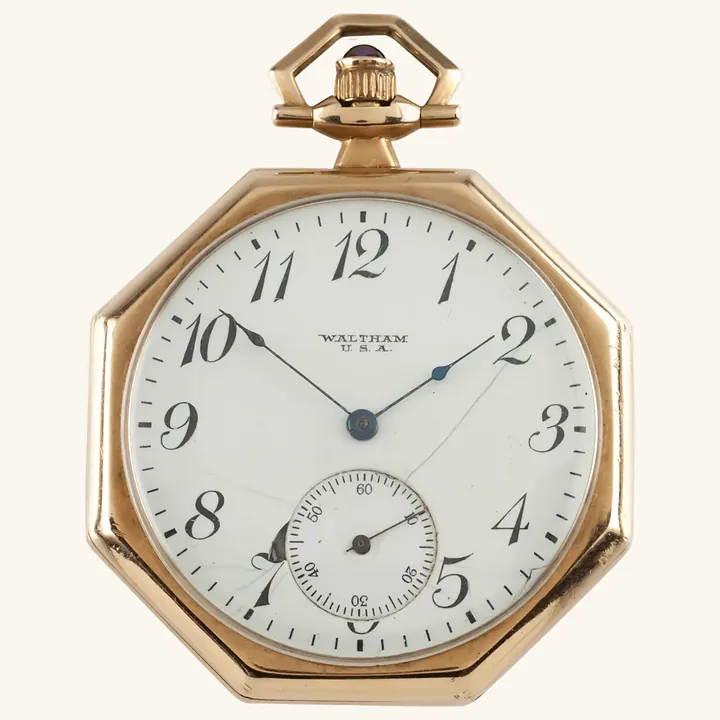
Pocket Watches · 1917
Waltham Octagon14 Karat Pocket Watch Jewel, 1917
WatchMuseum.org shop
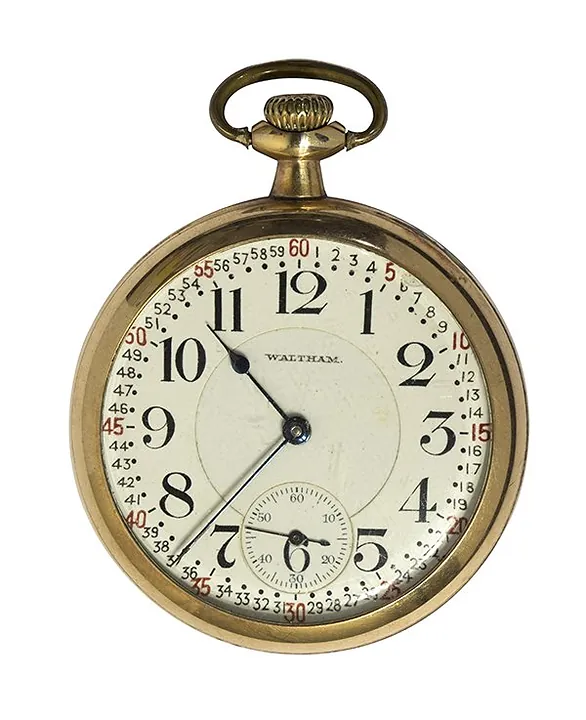
Pocket Watches · c. 1950
Waltham railroad openface pocket watch, circa 1950
LiveAuctioneers auction archive
Pocket Watches · 1934–1962
Pocket watch, Sweden, 1934–1962
Gotland Defense Museum
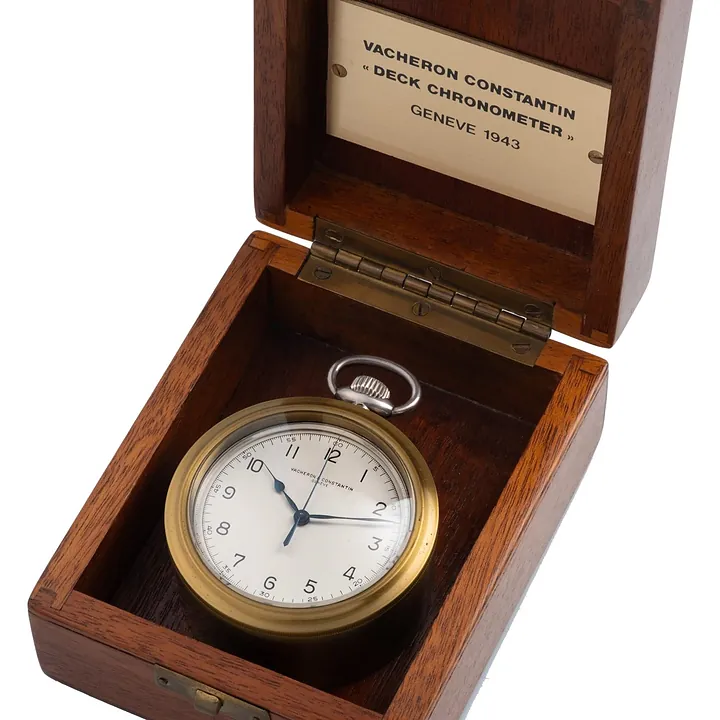
Pocket Watches · c. 1945
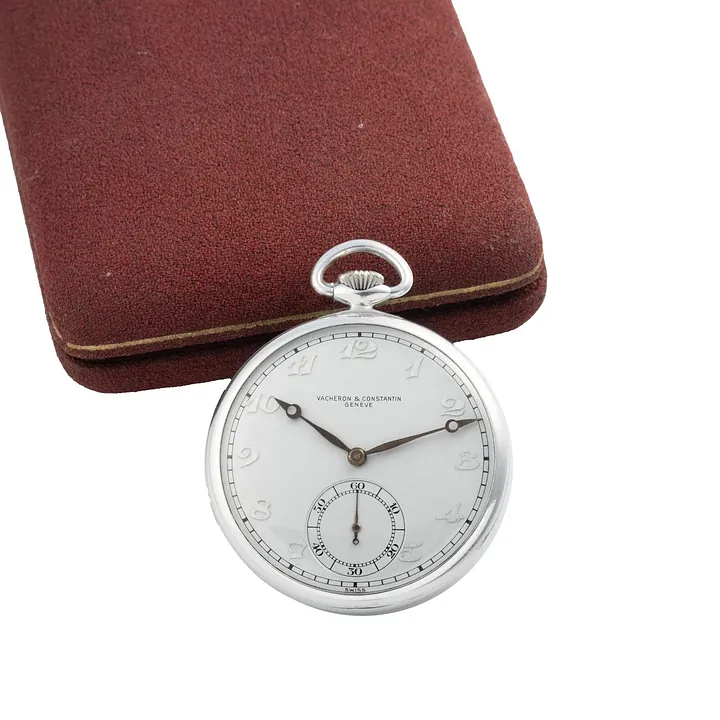
Vacheron Constantin pocket chronometer, c. 1945
Antiquorum auction archive, Geneva
Pocket Watches · c. 1945
Vacheron Constantin watch, c. 1945
Antiquorum auction archive, Geneva