
Clocks · Clock
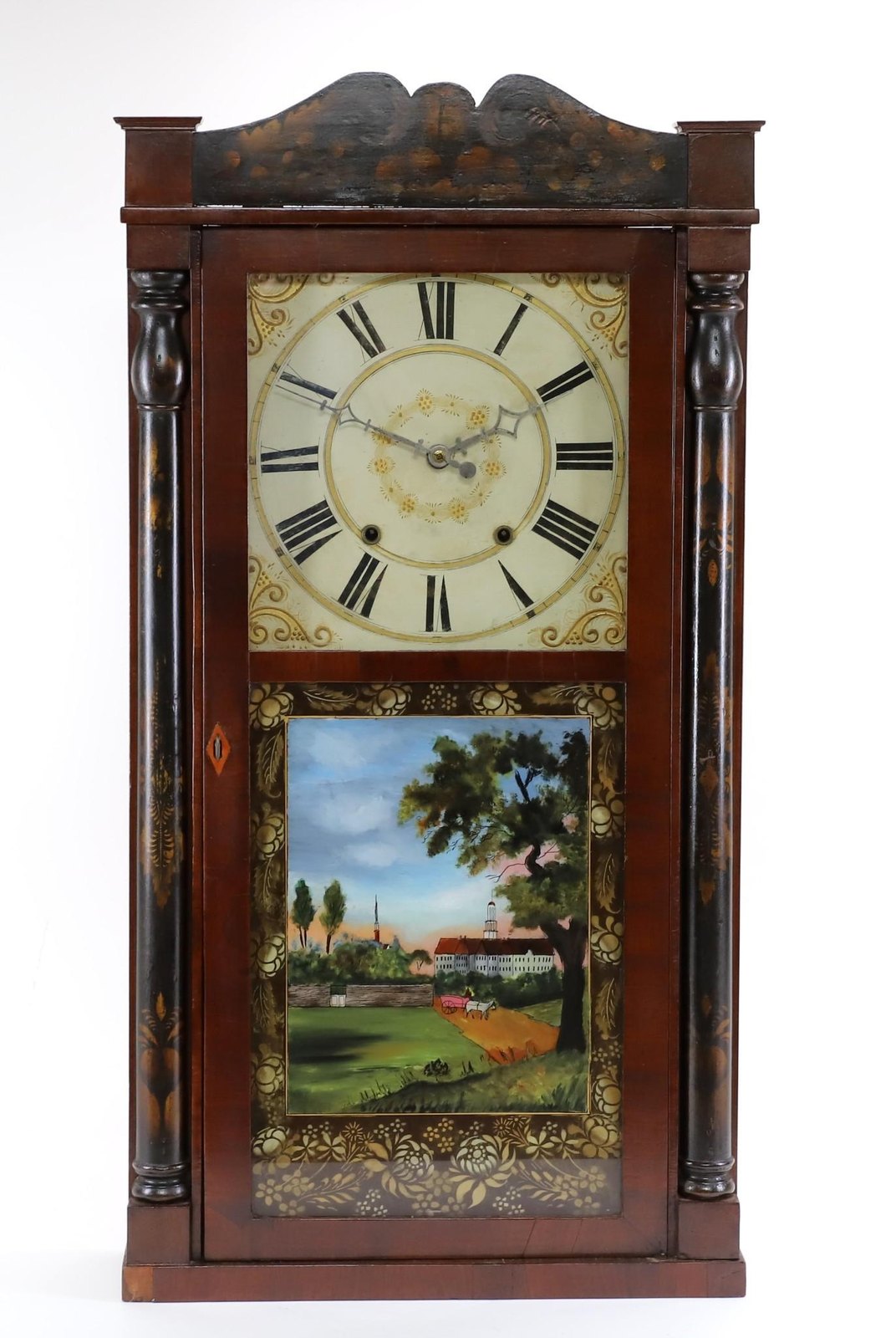
George Marsh Scroll and Pillar Clock, c. 1830
- Maker / attribution
- Unrecorded in source
- Date
- c. 1830
- Historical period
- Precision & Scientific Horology (1750 – 1850)
- Country of origin
- Unrecorded in source
- Object type
- Clock
- Materials / technique
- enamel, glass, mahogany, gilt
- Auction house
- LiveAuctioneers auction archive
- Lot
- Item 137355398
- Credit line
- Auction lot record: lot 1128, Collectors, Alderfer Auction (2022), via LiveAuctioneers
- Catalogue title (original)
- George Marsh Scroll and Pillar Clock (English)
View the source record (auction lot) ↗ (opens another website in a new tab)Suggest a correction
Record summary
Catalogued by LiveAuctioneers auction archive (lot Item 137355398), this is a clock, dated c. 1830. The Atlas places it in the Precision & Scientific Horology period (1750 – 1850) of its Clocks collection. Materials and techniques recorded by the source: enamel, glass, mahogany, gilt. The record is illustrated with 4 photographs.
Assembled from the source record's structured fields. Dates and attributions are given as the source states them; where a field is missing the Atlas leaves it blank rather than estimating.
Catalogue description
Lot description — Alderfer Auction
Mahogany clock with stencil decorated pillar and crest, reverse painted glass panel depicting Yale University, label to the interior, circa 1830. Roman numeral gilt enamel dial over wooden clockworks. Includes pendulum, weights, locking key and winding keys (2). There are some detached parts, and the clock is not in working order. 33"h x 16.5"w x 4.5"d **Please Note: This item is NOT eligible for in-house shipping. Please refer to the terms and conditions of this auction for recommended shippers.
Historical context
Precision & Scientific Horology (1750 – 1850)
Harrison solves longitude; Mudge invents the lever; Breguet's Paris workshop defines the modern watch.
The age of the deadbeat escapement, compensated pendulums and observatory regulators. Domestic clocks spread through the middle classes: English longcase and bracket clocks, French gilt-bronze mantel clocks, Viennese Biedermeier wall clocks, Black Forest painted-shield clocks, and the first American shelf clocks.
Read the period in the timelineMore clocks from this periodEarlier: Early Modern Horology
Atlas type guide
Japanese clocks (wadokei)
Mechanical clocks reached Japan with European missionaries in the sixteenth century. During the Edo period (1603–1868) Japanese makers adapted them to the native system of unequal temporal hours: daylight and night were each divided into six hours whose length changed with the seasons. Clockmakers solved this with movable hour numerals, double foliots (one for day, one for night) or, on pillar clocks, sliding hour plaques along a vertical scale.
Common forms include the lantern-style yagura-dokei on a pyramidal stand, the bracket-like makura-dokei, and the narrow shaku-dokei (pillar clock) whose weight-driven pointer descends a scale. The temporal system was abolished in 1873 when Japan adopted Western time reckoning, and wadokei production ceased soon after.
What to look for
- Hour numerals in the twelve zodiac animal signs or numbers nine to four.
- Movable hour plaques or a dial with adjustable hour markers.
- Double foliot balances at the top of the movement.
- Brass movements with fine engraving and lacquered wooden cases.
Dating clues
- Double foliots appear from the late seventeenth century.
- Pillar clocks are typical of the eighteenth and nineteenth centuries.
- Production ended after the 1873 calendar reform.
General guidance written by the Atlas editors about this kind of object. It is not a statement about this particular piece; for that, rely on the source record above and on physical examination.
Read next:FoliotVerge escapement
Related records
Clocks · c. 1780
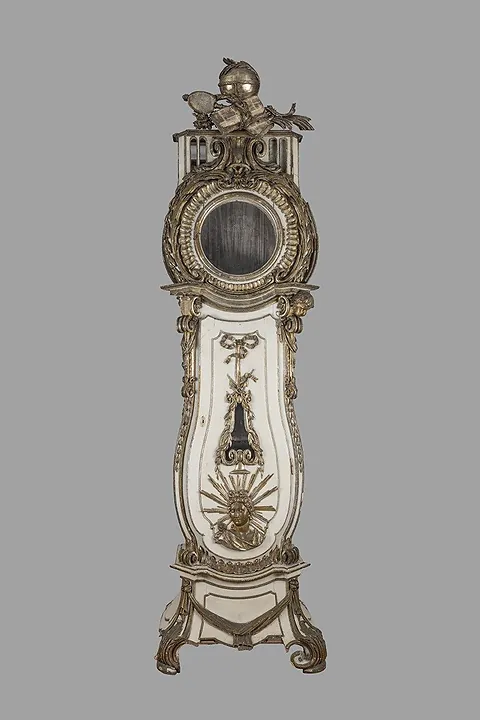
Longcase clock by Louis George, Eberswalde, c. 1780
Museum Eberswalde
Clocks · 1780s (inferred: the museum dates the style to the 1780s and the music includes Gluck's Iphigénie en Tauride of 1779)
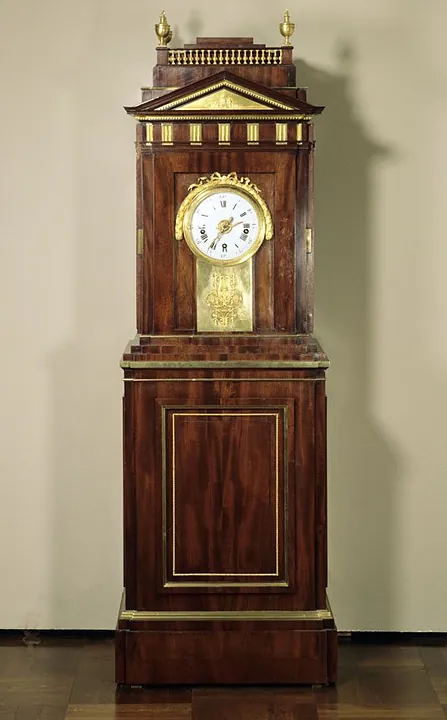
Musical longcase clock, Roentgen workshop, Neuwied, 1780s
Badisches Landesmuseum Karlsruhe
Clocks · 1740–1760
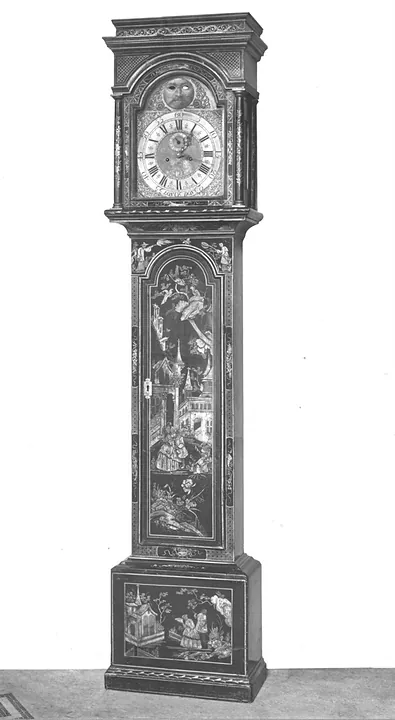
Longcase clock, English, 1740–1760, japanned wood, John Ellicott
Victoria and Albert Museum, London
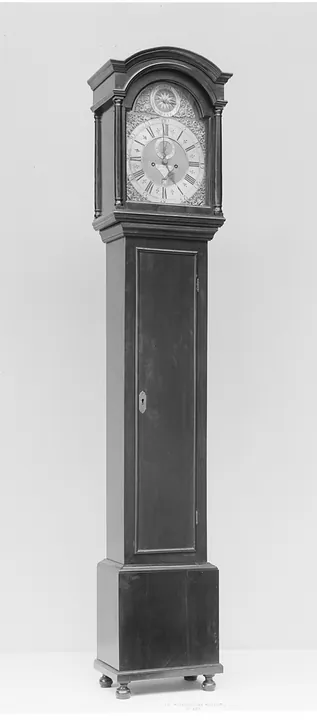
Clocks · 1740–60
Tall clock by Samuel Bagnall, United States, 1740–60
The Metropolitan Museum of Art, New York
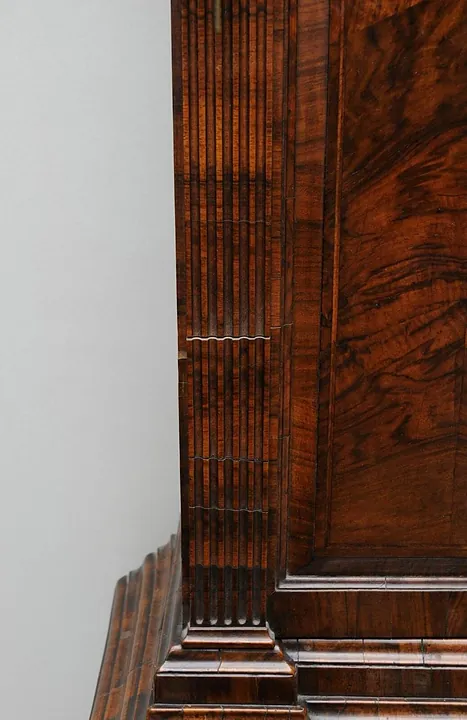
Clocks · c.1750
Long-case clock, English, ca. 1750, by Richard Peyton of Gloucester
Victoria and Albert Museum, London
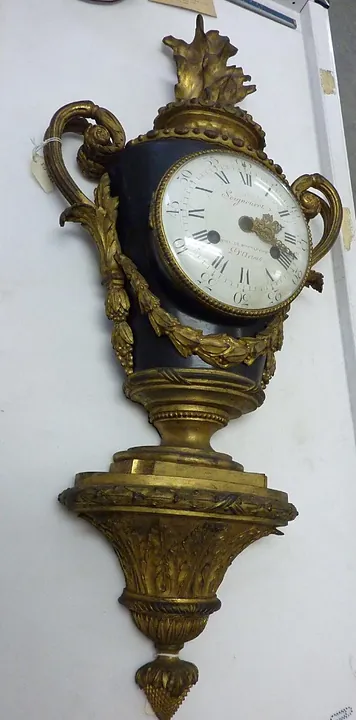
Clocks · 1750–1800
Bracket clock in metal case with scroll handles and flamed-shaped top signed by Pierre Seignoret, Clockmaket to the the Comte d'Artois
Victoria and Albert Museum, London
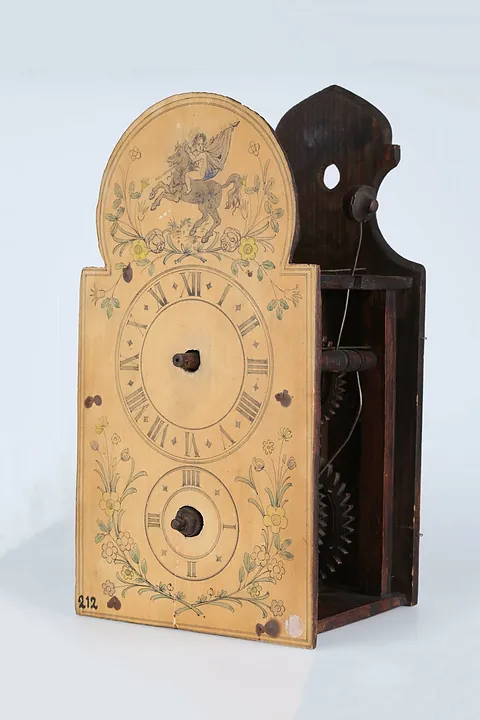
Clocks · c. 1750
Clock by Georg Gfell, Germany, c. 1750
German Clock Museum
Clocks · 1750–1799
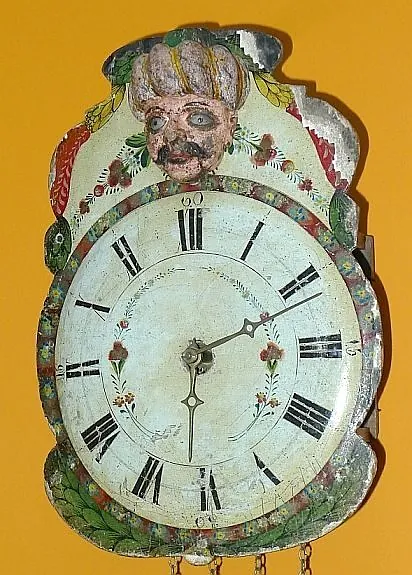
Cuckoo / black forest clock, Germany, 1750–1799
Badisches Landesmuseum Karlsruhe