
Clocks · Cartel wall clock
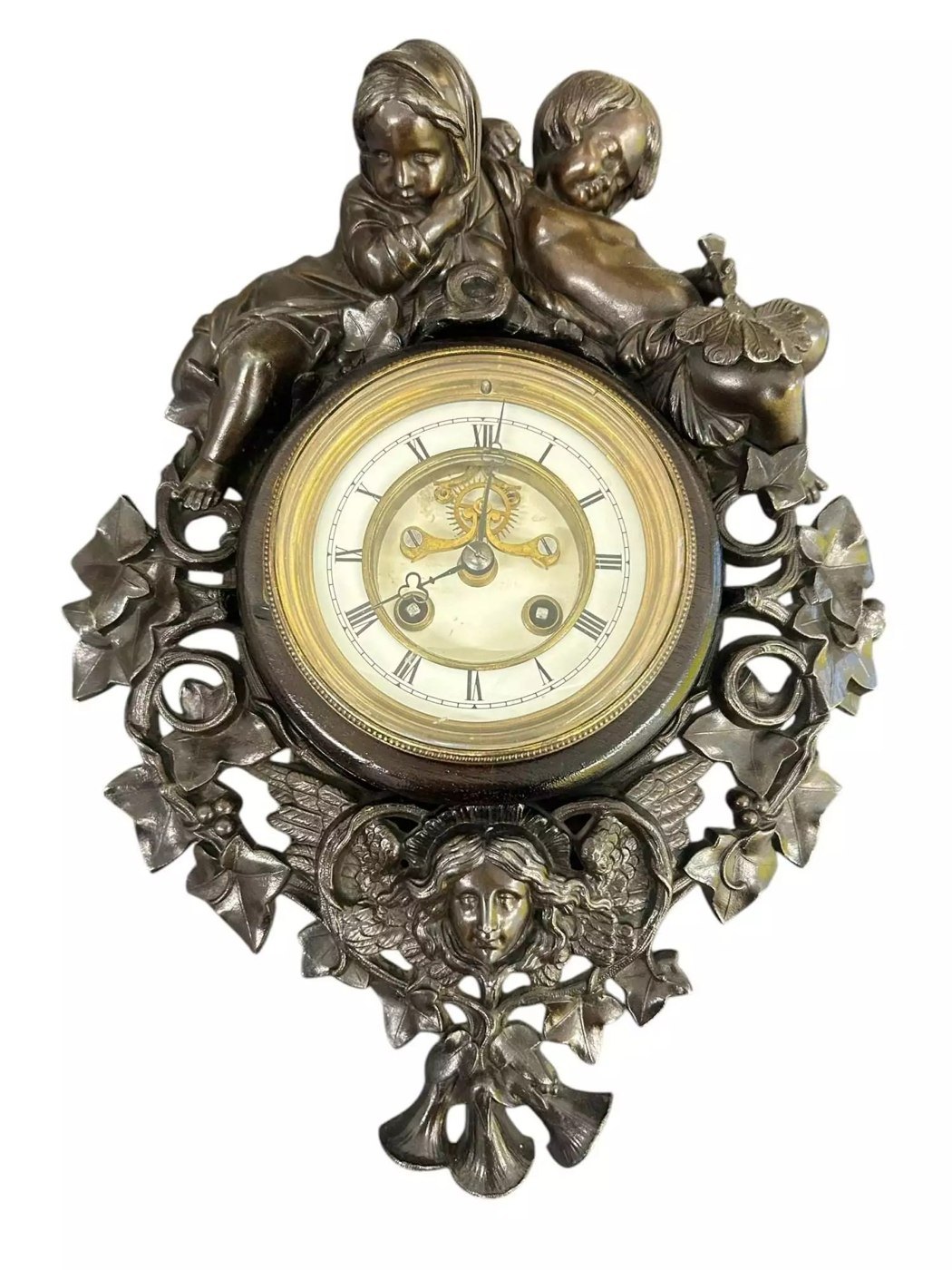
French Figural Cartel Wall Clock
- Maker / attribution
- Japy Frères (source attribution)
- Date
- c. 1890
- Historical period
- Industrial Revolution (1850 – 1900)
- Country of origin
- France
- Object type
- Cartel wall clock
- Holding institution
- Zamanito
- Accession / object no.
- french-figural-cartel-wall-clock-985c5a4a9b
- Credit line
- Zamanito
- Catalogue title (original)
- Fabulous French Figural Cartel Wall Clock – ca1890 (English)
View the source record ↗ (opens another website in a new tab)Suggest a correction
Record summary
Held and catalogued by Zamanito (object number french-figural-cartel-wall-clock-985c5a4a9b), this is a cartel wall clock attributed to Japy Frères, made in France, dated c. 1890. The Atlas places it in the Industrial Revolution period (1850 – 1900) of its Clocks collection. The record is illustrated with 1 photograph.
Assembled from the source record's structured fields. Dates and attributions are given as the source states them; where a field is missing the Atlas leaves it blank rather than estimating.
Catalogue description
Original object description
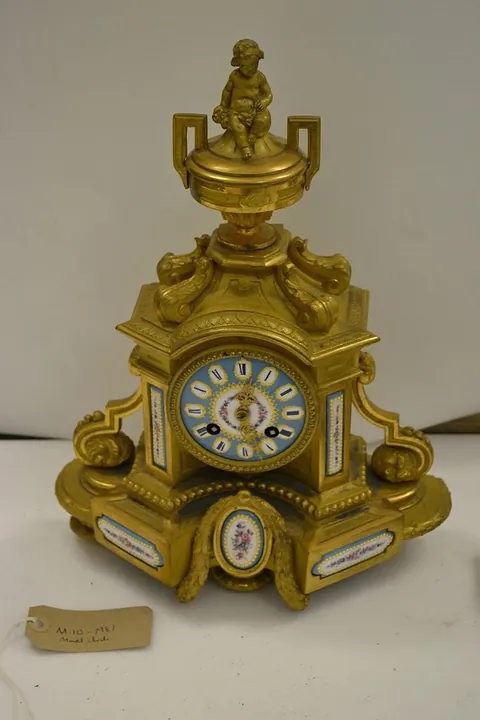
Crafted circa 1890, this French figural cartel wall clock consists of a sculptural case finished in a bronze hue and enveloped in scrolling leaf ornament. The upper pediment features two seated cherubic figures, while the lower apron terminates in a winged cherub mask. Roman numerals demarcate the dial, which has an open center exposing portions of the interior mechanism. An eight-day movement made by Japy Frères drives the hands and is wound through two front-facing arbors. Retaining its essential original components, the timepiece is recorded in good, period-commensurate condition showing minor handling wear, though recent mechanical servicing remains undocumented.
Case and Aesthetic Design
Rendered with a bronze-toned patina, the cartel housing blends sculptural forms into its architectural structure. Dense carvings of foliage and acanthus frame the dial perimeter. A pair of juvenile figures crowns the apex of the frame, whereas the sculpted face of a winged angel anchors the lower pendant.
Dial and Movement
Hours are indicated by Roman chapters encircling an exposed central section that reveals the internal clockwork. Winding squares penetrate the dial at two locations to service the eight-day movement supplied by Japy Frères.
Condition and Authenticity
The timepiece preserves its primary historic parts and exhibits a sound, age-appropriate state with slight physical traces of use. Documentation of recent clockwork maintenance is absent. Prospective examiners are directed to inspect the bronze-like finish, verify the mainsprings, and confirm the presence of the Japy Frères maker's mark on the movement backplate.
Historical context
Industrial Revolution (1850 – 1900)
American interchangeable-parts manufacture; railroad time standards; Swiss and German factory systems.
Factory production transformed the clock into an everyday object. American makers (Seth Thomas, Ansonia, Waterbury) and German factories (Junghans, Gustav Becker, Lenzkirch) sold millions of shelf, wall and alarm clocks worldwide; France produced standardised Paris movements and carriage clocks; electric time distribution began.
Read the period in the timelineMore clocks from this periodEarlier: Precision & Scientific Horology
Atlas type guide
Mantel and French pendule clocks
The mantel clock — the French pendule de cheminée — is as much decorative art as timekeeper. From the late seventeenth century Parisian clockmakers worked with cabinet-makers, bronze founders and gilders (ciseleurs-doreurs) to create cases in Boulle marquetry, gilt bronze and marble, while the movements were often supplied by specialist makers. Clocks of the Louis XIV, Louis XV and Louis XVI periods, and Empire clocks with allegorical figures, set fashions copied across Europe.
The nineteenth century industrialised the type. The 'Paris movement', a standardised round movement with silk-thread or Brocot suspension and count-wheel striking, was made in huge numbers by firms such as Japy and Vincenti, and fitted into cases of every style and material.
What to look for
- Round 'Paris' movements with makers' stamps (e.g. Japy Frères, Vincenti, S. Marti) and medal marks from exhibitions.
- Suspension type: silk thread (earlier) or Brocot adjustable suspension (after c. 1840).
- Visible Brocot escapement on the dial in later clocks.
- Fire-gilt (mercury) gilding on bronzes versus later electro-gilding.
- Signed dials naming a retailer rather than the movement maker.
Dating clues
- Silk-suspension Paris movements: c. 1800–1850.
- Brocot suspension and visible escapements: after c. 1840.
- Exhibition medal stamps on movements give dates after the medal year.
General guidance written by the Atlas editors about this kind of object. It is not a statement about this particular piece; for that, rely on the source record above and on physical examination.
Read next:Anchor (recoil) escapement
Related records
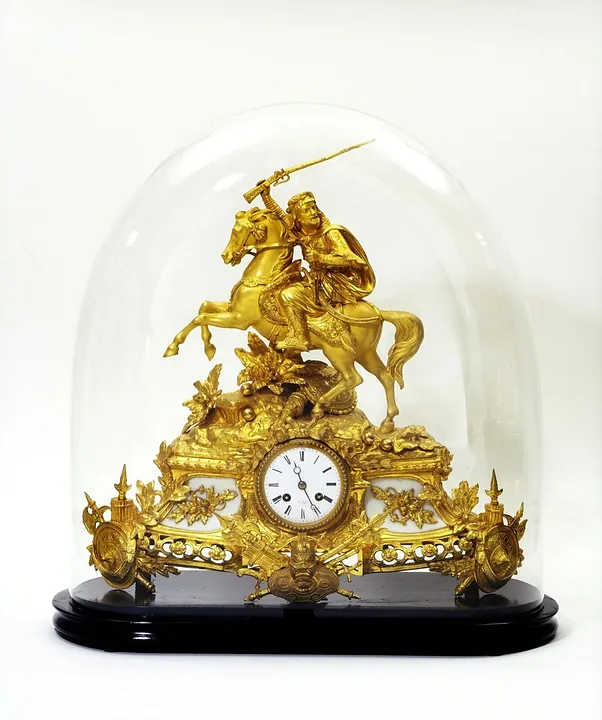
Clocks · c. 1860
[*] French Clock under glass dome
Victoria and Albert Museum, London
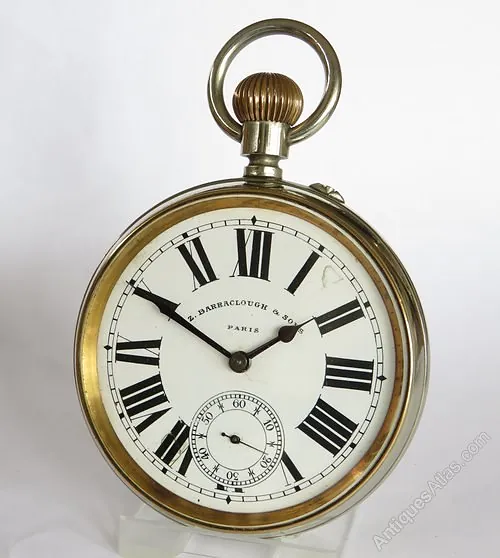
Pocket Watches · 1910s
Japy Frères Goliath pocket watch
The Vintage Wrist Watch Company / Antiques Atlas
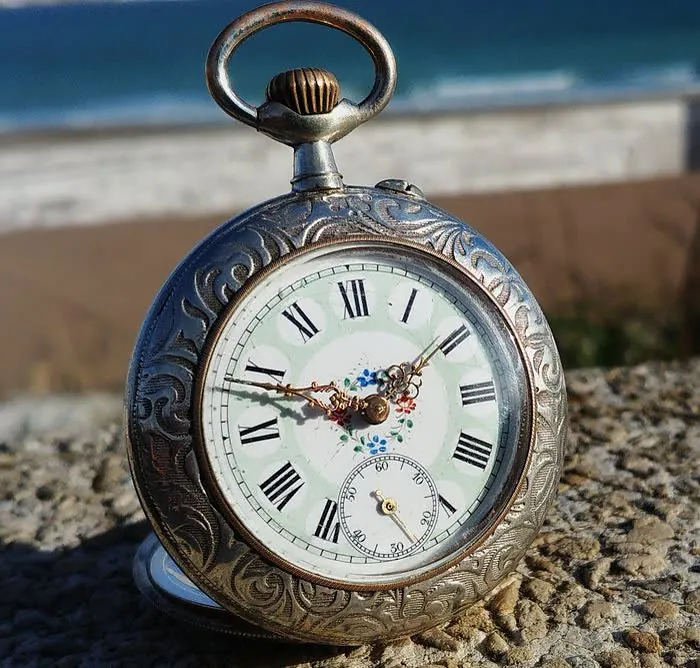
Pocket Watches · 1850–1900
Japy Frères pocket watch
Catawiki
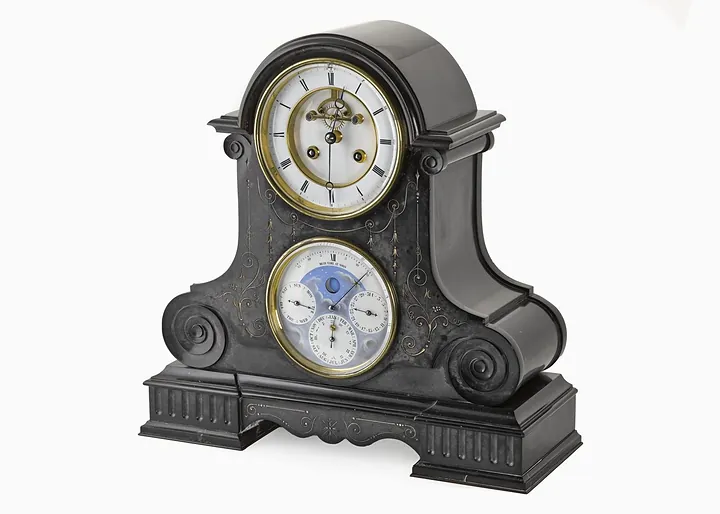
Clocks · 1840–1878
Mantel clock by A. Brocot, France, 1840–1878
Science Museum Group, London
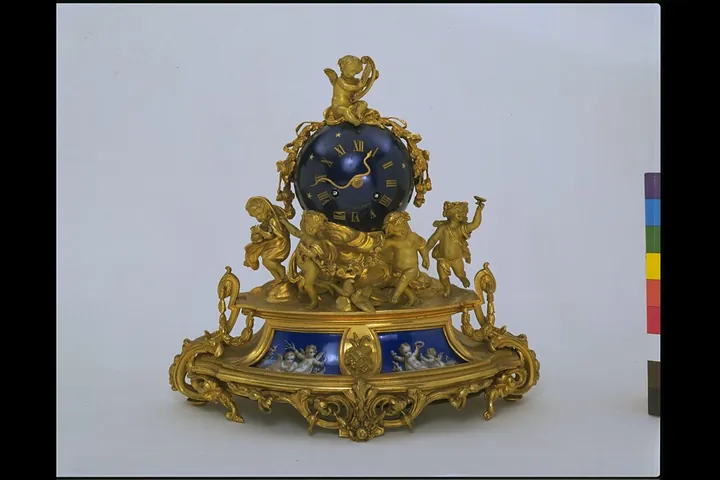
Clocks · c. 1855
Ormolu and enamel clock, Paris, ca.1855, made by Lévy Frères.
Victoria and Albert Museum, London
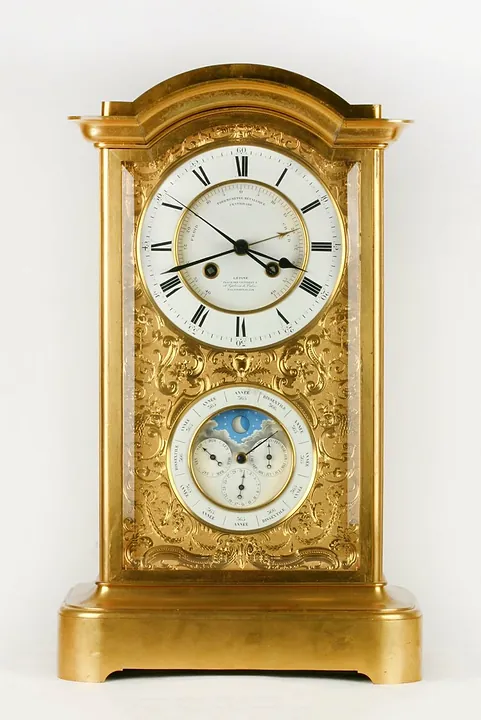
Clocks · c. 1850
Table clock, France, c. 1850
German Clock Museum
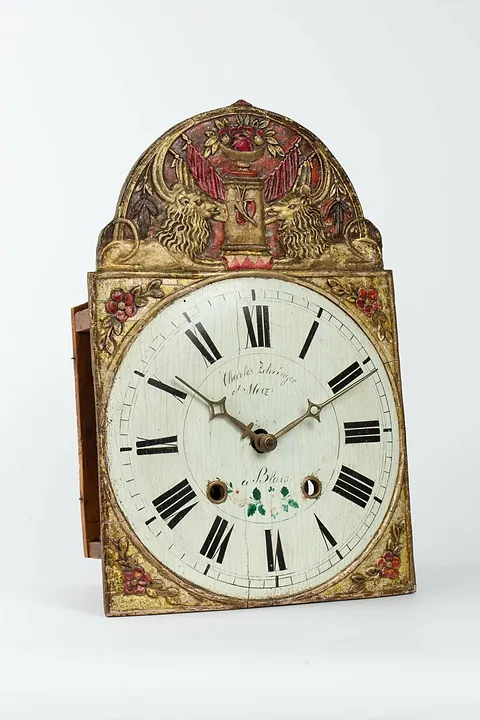
Clocks · c. 1850
Wall clock by Charles et Merz Zehringer, France, c. 1850
German Clock Museum
Clocks · c. 1860
Mantel clock, French, c. 1860
Victoria and Albert Museum, London