
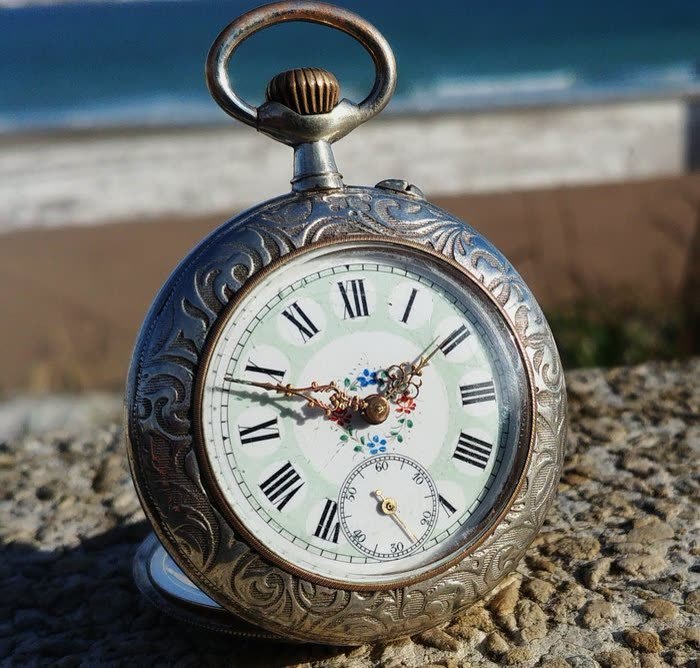
Pocket Watches · Open-face pocket watch
Japy Frères pocket watch
- Maker / attribution
- Japy Frères (source attribution)
- Date
- 1850–1900
- Historical period
- Industrial Revolution (1850 – 1900)
- Country of origin
- France
- Object type
- Open-face pocket watch
- Holding institution
- Catawiki
- Accession / object no.
- 54083385
- Credit line
- Catawiki
- Catalogue title (original)
- Armbanduhren im Angebot in Online Auktion - Catawiki (English)
View the source record ↗ (opens another website in a new tab)Suggest a correction
Record summary
Held and catalogued by Catawiki (object number 54083385), this is an open-face pocket watch attributed to Japy Frères, made in France, dated 1850–1900. The Atlas places it in the Industrial Revolution period (1850 – 1900) of its Pocket Watches collection. The record is illustrated with 1 photograph.
Assembled from the source record's structured fields. Dates and attributions are given as the source states them; where a field is missing the Atlas leaves it blank rather than estimating.
Catalogue description
Original object description
Catalogued under lot number "Nr. 54083385" as a men's open-face pocket watch, this timepiece is attributed to "Japy Freres" and assigned a date of "1850-1900". Its metal casing features relief-carved scrolling foliage around the bezel and edge, along with a top winding crown, bow, and pendant, accompanied by a pin-set pusher near 1 o'clock for setting the hands. The polychrome dial displays a painted floral centerpiece encircled by a light green chapter ring with bold Roman numerals, pierced ornamental hands, and a recessed subsidiary seconds dial above the 6 o'clock mark. Neither movement imagery, mechanical specifications, serial numbers, nor case hallmarks are provided, making both the maker attribution and the estimated date range assertions of the cataloguer.
Historical context
Industrial Revolution (1850 – 1900)
American interchangeable-parts manufacture; railroad time standards; Swiss and German factory systems.
Machine production with interchangeable parts, pioneered by Waltham (1850s) and adopted by Elgin, Longines, Omega and others, made reliable lever watches widely affordable. Keyless winding became standard, railroad watch standards were introduced (1890s), and Swiss and American industries competed globally.
Read the period in the timelineMore pocket watches from this periodEarlier: Precision & Scientific Horology
Atlas type guide
Hunter, half-hunter and open-face watches
In the nineteenth century the pocket watch case settled into a few standard forms. The hunter (French savonnette) has a hinged front lid protecting the crystal — reputedly for riders who could not risk broken glass — and is opened by pressing the crown or a push-piece. The half-hunter has a small window in the lid so the hands can be read when closed. The open-face (lépine) watch has no front cover, with the crown at 12; hunters normally carry the crown at 3.
Case types also changed with winding: key-wound watches gave way to keyless (stem-wound) mechanisms after Adrien Philippe's and others' designs of the 1840s, with pendant setting or lever setting.
What to look for
- Crown position relative to the seconds dial: at 3 for hunters, at 12 for open-face watches.
- Spring-loaded front cover with a push-piece in the pendant.
- Half-hunter chapter ring enamelled on the lid.
- Key holes in the inner dome (cuvette) versus keyless winding.
Dating clues
- Keyless winding spread after c. 1850 and became standard by c. 1890.
- English hallmarks inside gold and silver cases give the year of assay.
General guidance written by the Atlas editors about this kind of object. It is not a statement about this particular piece; for that, rely on the source record above and on physical examination.
Read next:Detached lever escapement
Related records
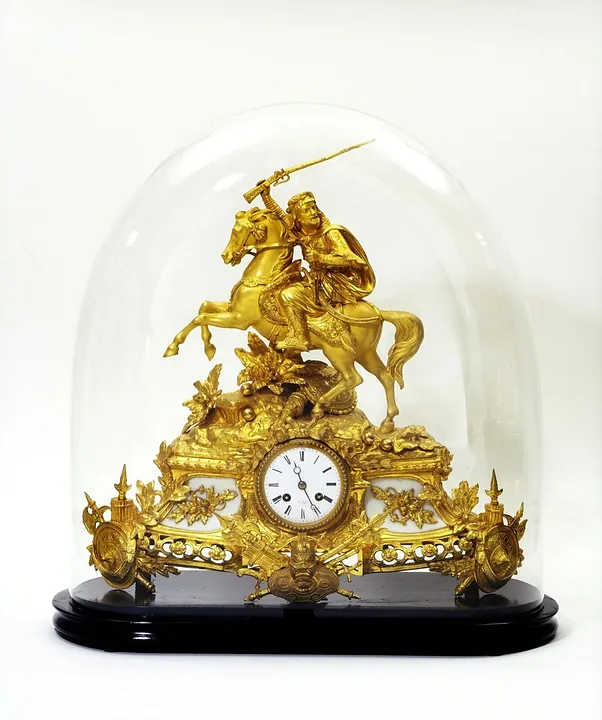
Clocks · c. 1860
[*] French Clock under glass dome
Victoria and Albert Museum, London
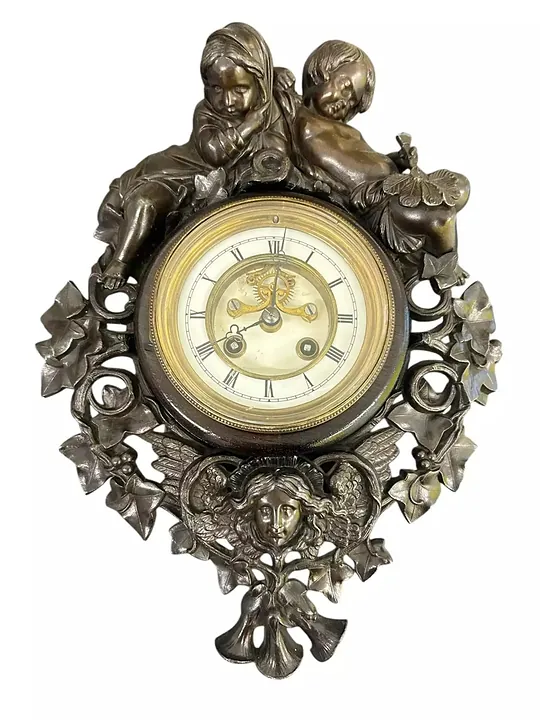
Clocks · c. 1890
French Figural Cartel Wall Clock
Zamanito
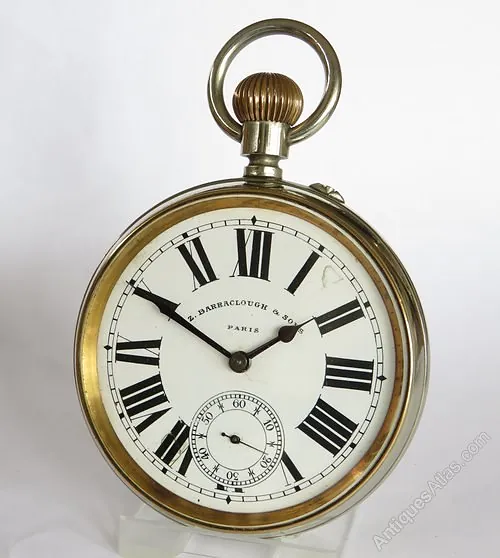
Pocket Watches · 1910s
Japy Frères Goliath pocket watch
The Vintage Wrist Watch Company / Antiques Atlas
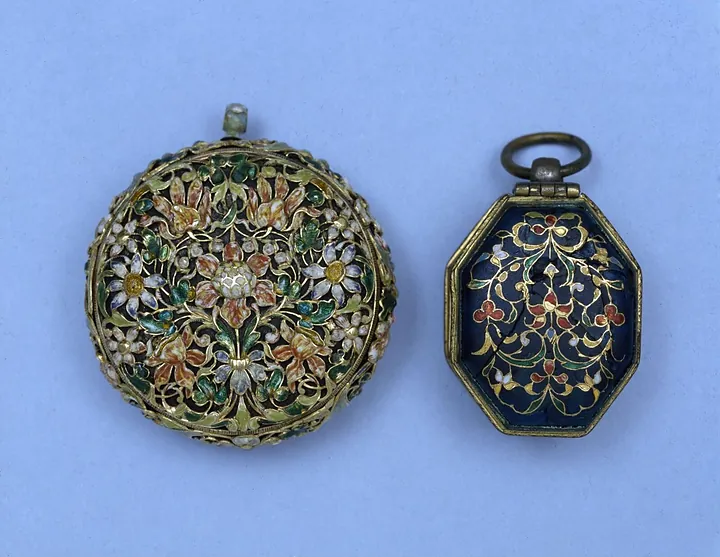
Pocket Watches · mid 19th century
Watch, enamelled gilt brass of floral design, signed 'A Bloys.', France, in an early 17th century style but possibly mid 19th century
Victoria and Albert Museum, London
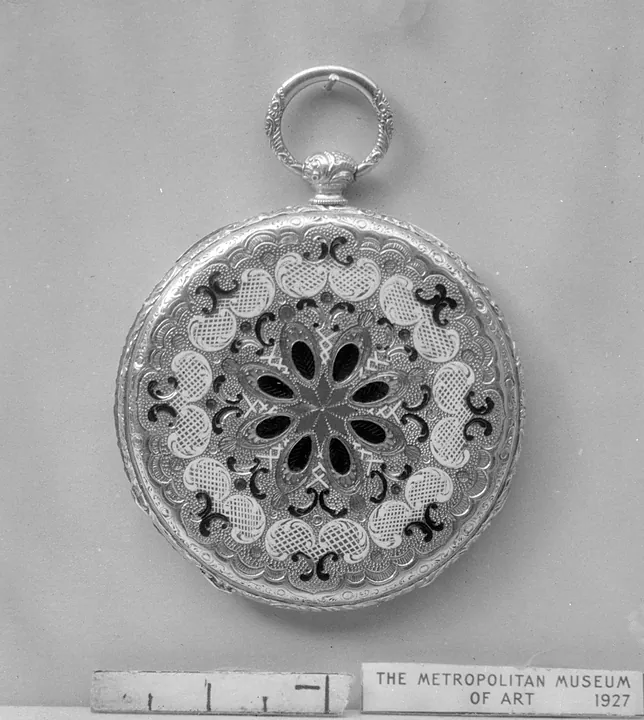
Pocket Watches · c. 1840–60
Watch by Callaud, c. 1840–60
The Metropolitan Museum of Art, New York
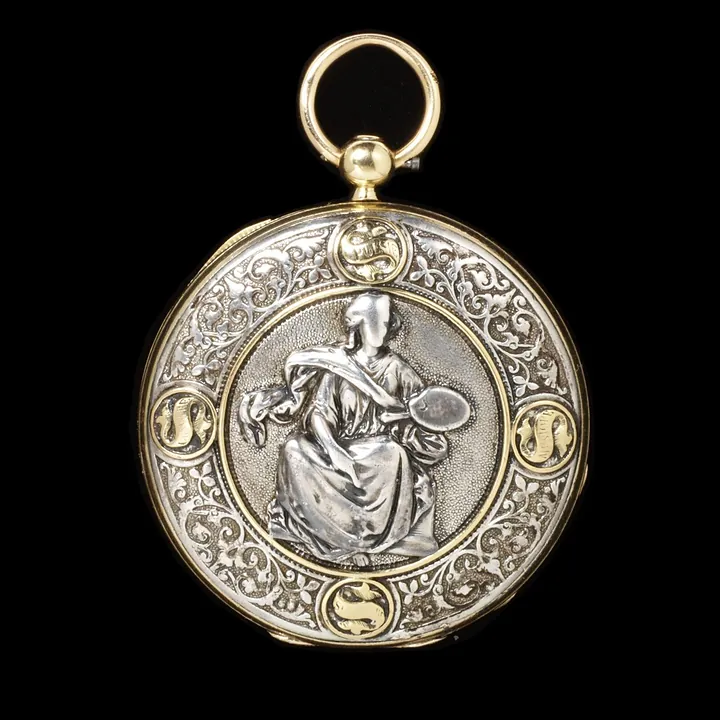
Pocket Watches · 1867
Watch by Froment-Meurice, France, 1867
Victoria and Albert Museum, London
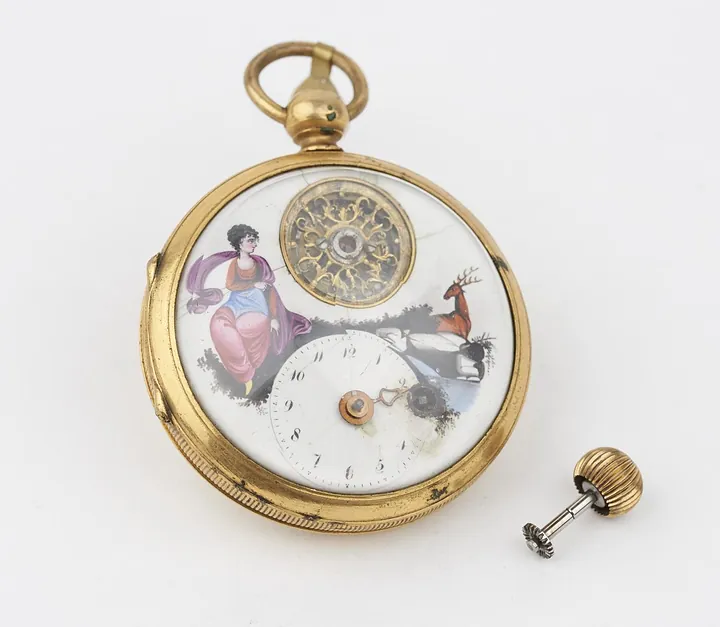
Pocket Watches · 1870–1910
Watch (French or Swiss) with balance wheel visible through a window in the dial
Science Museum Group, London
Pocket Watches · c. 1875
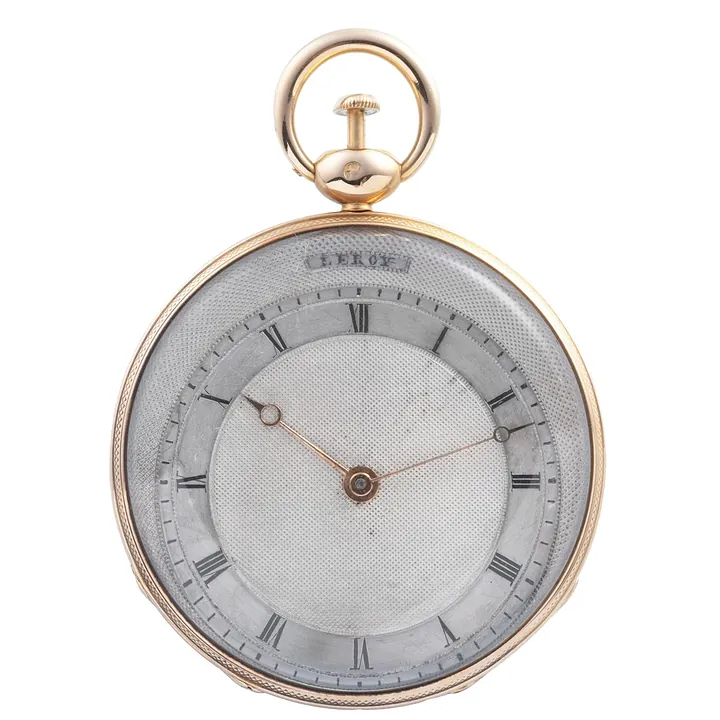
Leroy & Fils pocket watch, c. 1875
Antiquorum auction archive, Geneva