Pocket Watches · Pocket watch
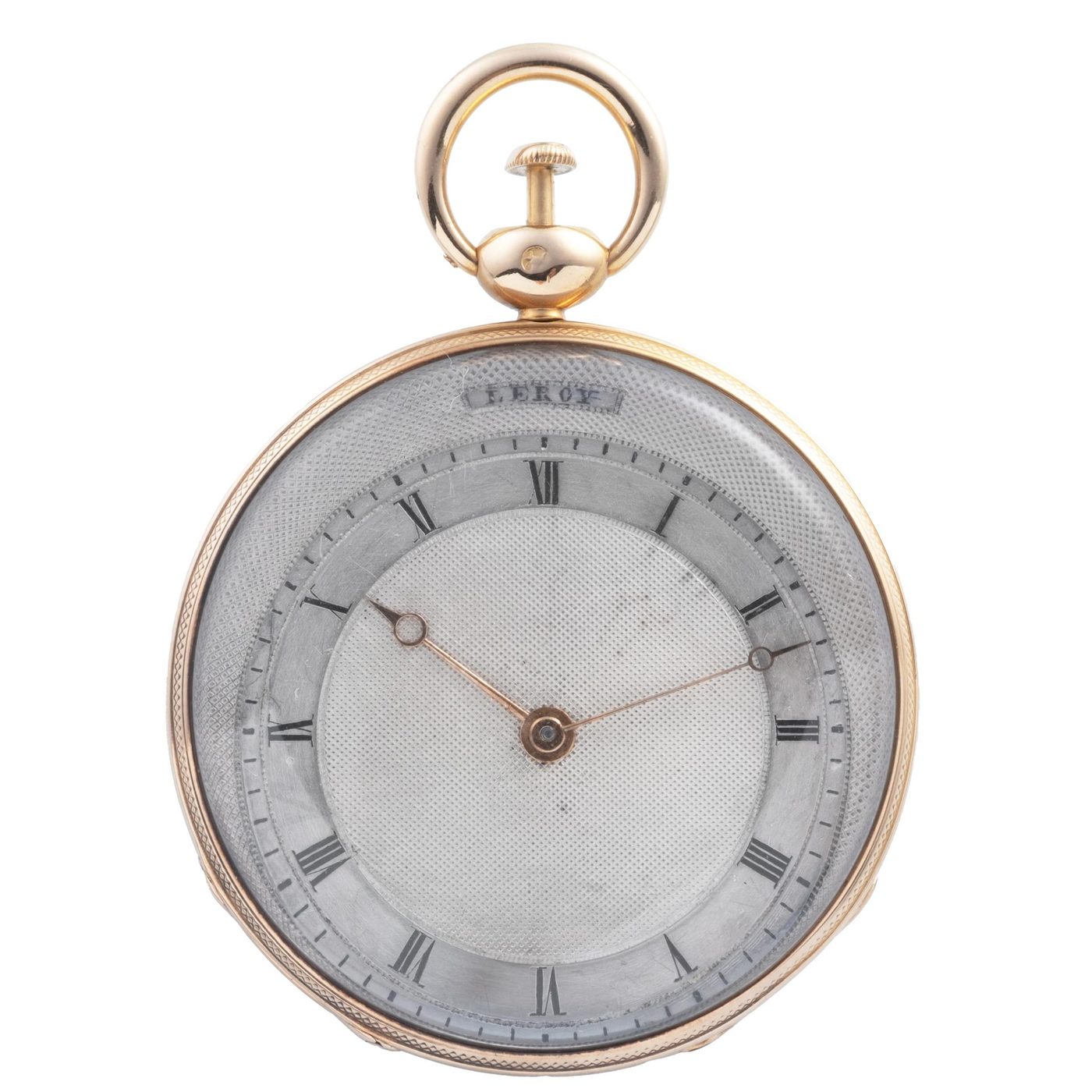
Leroy & Fils pocket watch, circa 1875
- Maker / attribution
- Leroy & Fils (brand / maker)
- Date
- circa 1875
- Historical period
- Industrial Revolution (1850 – 1900)
- Country of origin
- France
- Object type
- Pocket watch
- Materials / technique
- 18k pink gold
- Dimensions
- 39 mm. ; weight 43 gr.
- Auction house
- Antiquorum auction archive, Geneva
- Lot
- Lot 390-133
- Credit line
- Auction lot record: LOT 133
- Catalogue title (original)
- LEROY & FILS, FRANCE, SMALL QUARTER-REPEATER, 18K PINK GOLD
Record summary
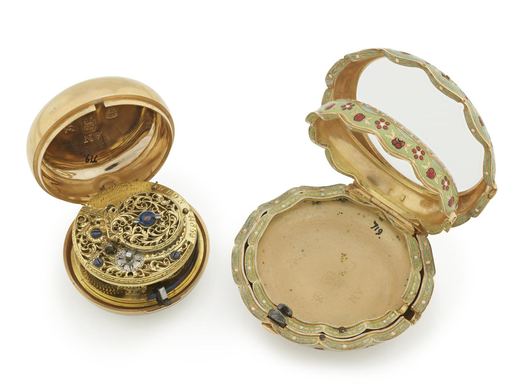
Catalogued by Antiquorum auction archive, Geneva (lot Lot 390-133), this is a pocket watch by Leroy & Fils, made in France, dated circa 1875. The Atlas places it in the Industrial Revolution period (1850 – 1900) of its Pocket Watches collection. Materials and techniques recorded by the source: 18k pink gold. Recorded dimensions: 39 mm. ; weight 43 gr. The record is illustrated with 2 photographs.
Assembled from the source record's structured fields. Dates and attributions are given as the source states them; where a field is missing the Atlas leaves it blank rather than estimating.
Catalogue description
Antiquorum catalogue description
A fine, 18k pink gold, manual wind open-face, key-winding quarter repeating pocket watch. Bezel and band engraved, case back decorated with engine-turning and an engraved family crest. Hinged gold cuvette. Silvered dial with black radial Roman numerals, outer minute track and gold Breguet hands.
Lot specifications (Antiquorum)
Caliber: 31 mm., matte-gilt movement, 23 jewels, straight-line lever escapement, plain three-arm balance, Breguet balance spring and index regulator. Repeating on gongs by means of two polished steel hammers.; Signature: Dial and case
Historical context
Industrial Revolution (1850 – 1900)
American interchangeable-parts manufacture; railroad time standards; Swiss and German factory systems.
Machine production with interchangeable parts, pioneered by Waltham (1850s) and adopted by Elgin, Longines, Omega and others, made reliable lever watches widely affordable. Keyless winding became standard, railroad watch standards were introduced (1890s), and Swiss and American industries competed globally.
Read the period in the timelineMore pocket watches from this periodEarlier: Precision & Scientific Horology
Atlas type guide
Repeating watches
Before electric light, telling the time in the dark was a real problem. Repeating watches strike the time on demand when a slide or push-piece is operated: quarter repeaters sound hours and quarters, minute repeaters hours, quarters and minutes. Edward Barlow and Daniel Quare disputed the invention in London in the 1680s. Early repeaters struck on a bell inside the case; Abraham-Louis Breguet introduced the gong (a coiled steel wire) around 1780, allowing thinner watches.
Repeaters require a separate train with racks, snails and a governor to control the striking speed, and are among the most demanding complications to make and adjust. Swiss makers of the Vallée de Joux specialised in repeating ébauches in the nineteenth century.
What to look for
- A slide on the case band or a push-piece through the pendant.
- Gongs encircling the movement (after c. 1780) or a bell in the case (earlier); pierced case for sound.
- The racks, snails and governor visible under the dial or on the movement.
- Terms such as 'Minutes', 'Quarts' or 'Répétition' on the dial or cuvette.
Dating clues
- Bell-striking quarter repeaters: c. 1690–1800.
- Gong repeaters and dumb repeaters (striking on the case): after c. 1780.
- Minute repeaters became more common after c. 1830 with Vallée de Joux ébauches.
General guidance written by the Atlas editors about this kind of object. It is not a statement about this particular piece; for that, rely on the source record above and on physical examination.
Read next:Minute repeaterMinute repeater
Related records
Pocket Watches · 1801-1900
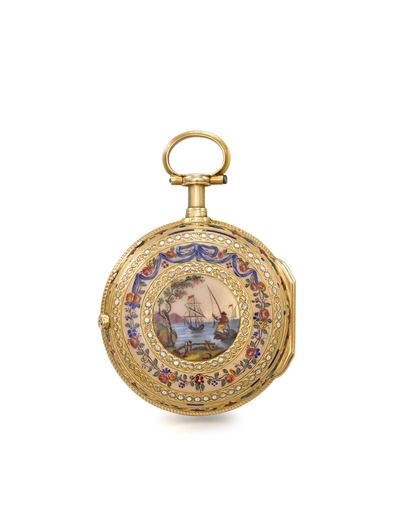
Pocket watch by L'Epine, Jean Antoine, France, 1801-1900
Science Museum Group, London
Pocket Watches · mid 19th century
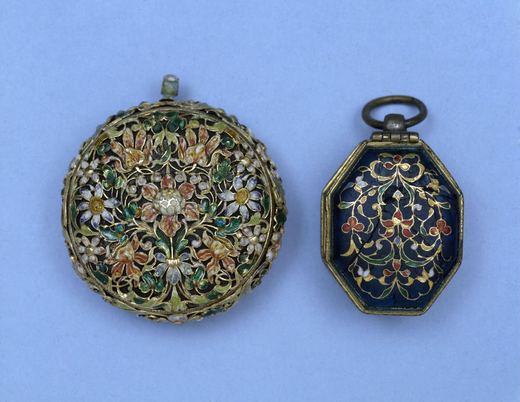
Watch, enamelled gilt brass of floral design, signed 'A Bloys.', France, in an early 17th century style but possibly mid 19th century
Victoria and Albert Museum, London
Pocket Watches · 1867
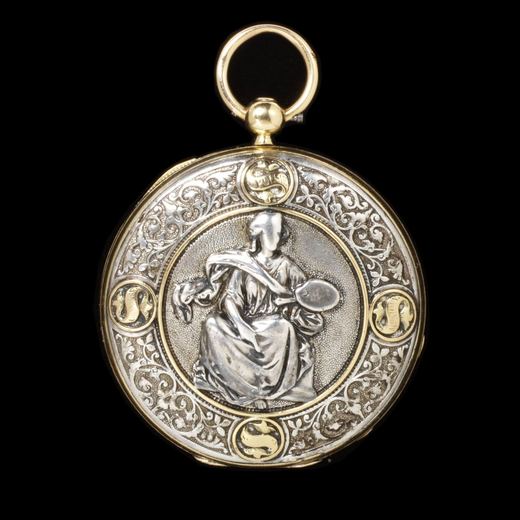
Watch by Froment-Meurice, France, 1867
Victoria and Albert Museum, London
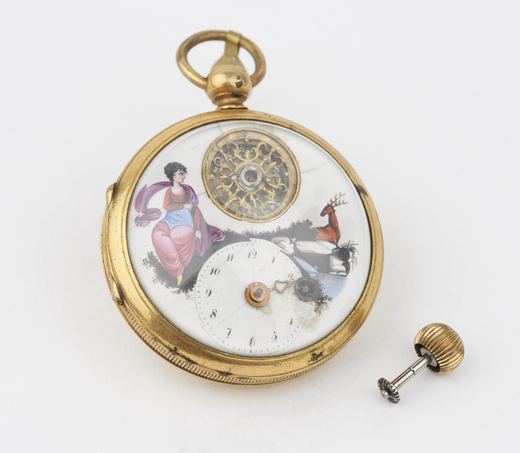
Pocket Watches · 1870-1910
Watch (French or Swiss) with balance wheel visible through a window in the dial
Science Museum Group, London
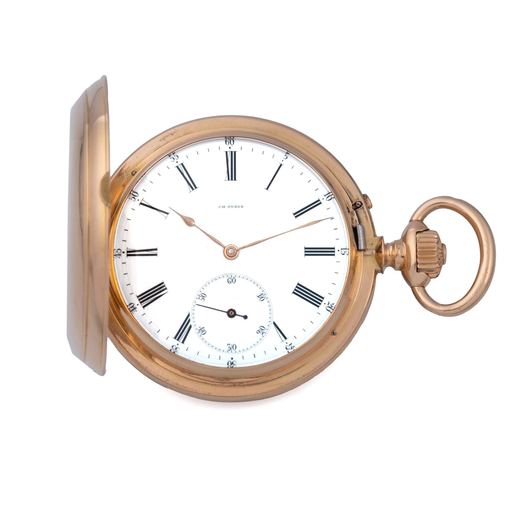
Pocket Watches · circa 1890
Charles Oudin pocket watch, circa 1890
Antiquorum auction archive, Geneva
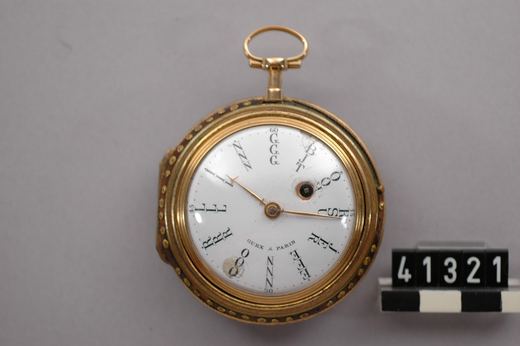
Pocket Watches · 1898
Pocket watch by Guex, France, 1898
Swedish National Museum of Science and Technology
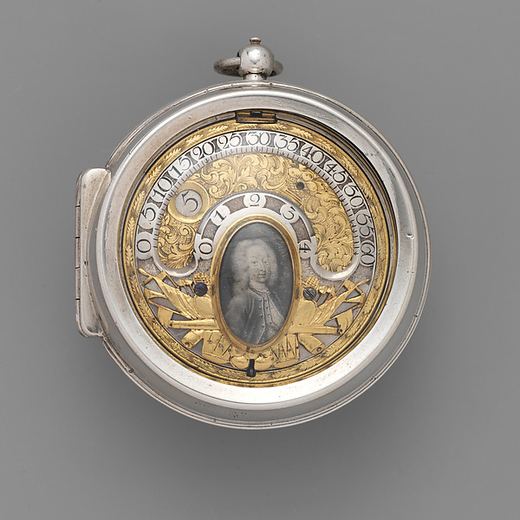
Pocket Watches · 19th or 20th century, in the style of 16th–early 17th century
Watch by Thomas Tompion, United Kingdom, 1800–1917
The Metropolitan Museum of Art, New York
Pocket Watches · 1801-1900
Pocket watch by Markwick, Markham; Perigal family, England, 1801-1900
Science Museum Group, London