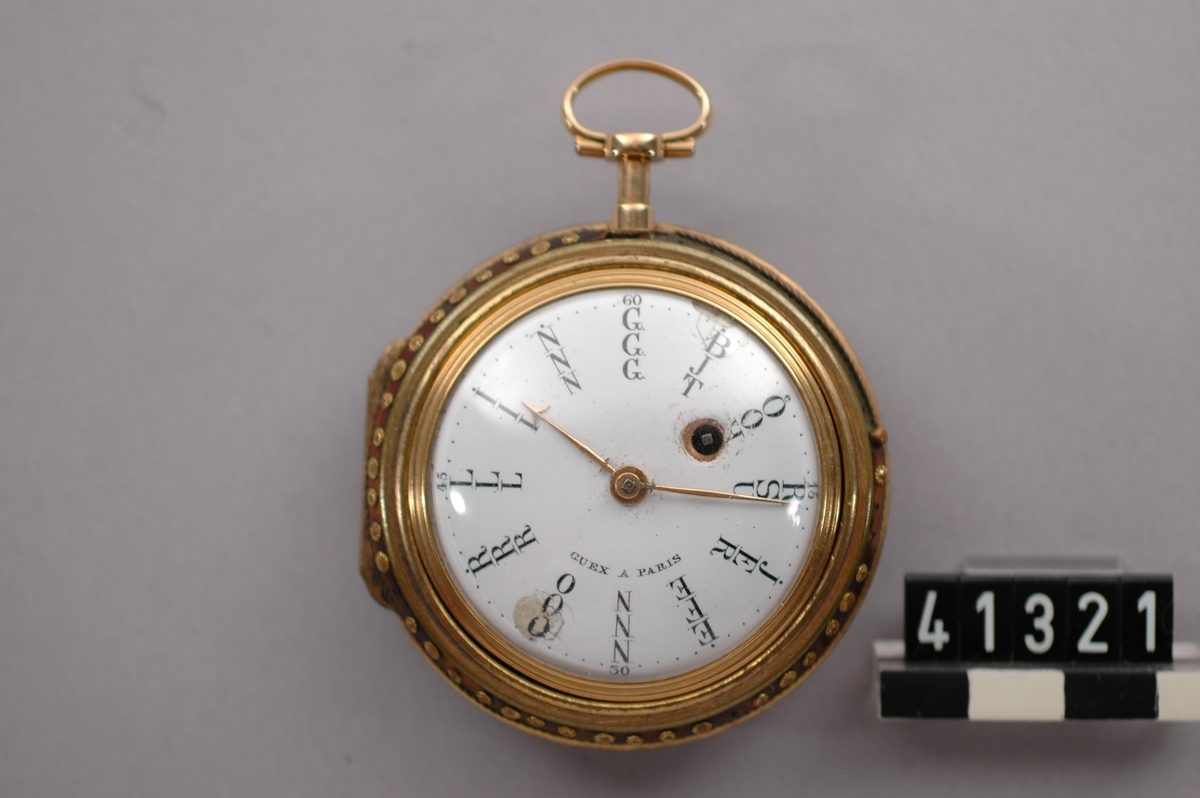
Pocket Watches · Pocket watch
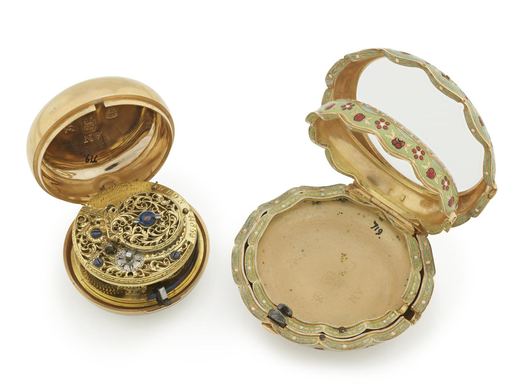
Pocket watch by Guex, France, 1898
- Maker / attribution
- Guex (creator)
- Date
- 1898
- Historical period
- Industrial Revolution (1850 – 1900)
- Country of origin
- France
- Object type
- Pocket watch
- Holding institution
- Swedish National Museum of Science and Technology
- Accession / object no.
- S_TEK_object_TEKS0044261
- Catalogue title (original)
- Repeterspindelur, i guldboett
Record summary
Held and catalogued by Swedish National Museum of Science and Technology (object number S_TEK_object_TEKS0044261), this is a pocket watch by Guex, made in France, dated 1898. The Atlas places it in the Industrial Revolution period (1850 – 1900) of its Pocket Watches collection. The record is illustrated with 1 photograph.
Assembled from the source record's structured fields. Dates and attributions are given as the source states them; where a field is missing the Atlas leaves it blank rather than estimating.
Catalogue description
Catalogue description from Swedish National Museum of Science and Technology (Swedish)
Repeterspindelur i guldboett med ytterboett av sköldpadd. Sign Guex á Paris No 6289. Klangskålen saknas. Ytterboett av mässing och sköldpadd. Vit emaljtavla med små skador. I stället för timsiffror står minutsiffror 15, 30, 45, 60. BÖRJE NORLING JOSEF NORLING THURE NORLING Bottenlapp med text: "Denna klocka har tillhört bagaren Börje Norling och sedermera enligt hans bestämmelse den yngste i slägten, först hans yngste son Johan Norling, sedan hans brorson Thure Norling och sedan af hans yngste son KGG Norling 1898."
Shown in the original language of the source catalogue. An editor-reviewed English translation has not yet been published; we do not publish machine translations as authoritative text.
Historical context
Industrial Revolution (1850 – 1900)
American interchangeable-parts manufacture; railroad time standards; Swiss and German factory systems.
Machine production with interchangeable parts, pioneered by Waltham (1850s) and adopted by Elgin, Longines, Omega and others, made reliable lever watches widely affordable. Keyless winding became standard, railroad watch standards were introduced (1890s), and Swiss and American industries competed globally.
Read the period in the timelineMore pocket watches from this periodEarlier: Precision & Scientific Horology
Atlas type guide
Verge and pair-cased watches
After Christiaan Huygens and Robert Hooke applied the balance spring around 1675, the verge watch became a reasonably reliable timekeeper and the minute hand became standard. Through the eighteenth century the typical English watch was a pair-cased verge: a fusee movement with a pierced, engraved balance cock, housed in an inner case and a separate protective outer case, often of repoussé gold, shagreen, tortoiseshell or enamel.
French watches of the same period were thicker 'oignons', later replaced by elegant thinner watches following Jean-Antoine Lépine's bar-bridge calibre of c. 1770. Dutch, Swiss and German makers supplied international markets, and verge watches were made until the mid-nineteenth century as cheaper alternatives to the cylinder and lever.
What to look for
- The pierced balance cock on the backplate: winged (continental) or with a foot (English); its style dates the watch.
- Fusee and chain visible through the movement; key winding through the dial (early) or case back.
- Hallmarks inside English silver or gold cases, which give a date letter.
- Maker's name and serial number engraved on the backplate; watch papers inside outer cases.
- Enamel dials (after c. 1720) versus earlier champlevé metal dials.
Dating clues
- Champlevé dials: c. 1680–1730; white enamel dials thereafter.
- English case hallmarks give the year of assay to within a year.
- Verge watches persisted in cheap production until c. 1850.
General guidance written by the Atlas editors about this kind of object. It is not a statement about this particular piece; for that, rely on the source record above and on physical examination.
Related records
Pocket Watches · 1801-1900
Pocket watch by L'Epine, Jean Antoine, France, 1801-1900
Science Museum Group, London
Pocket Watches · mid 19th century
Watch, enamelled gilt brass of floral design, signed 'A Bloys.', France, in an early 17th century style but possibly mid 19th century
Victoria and Albert Museum, London
Pocket Watches · 1867
Watch by Froment-Meurice, France, 1867
Victoria and Albert Museum, London
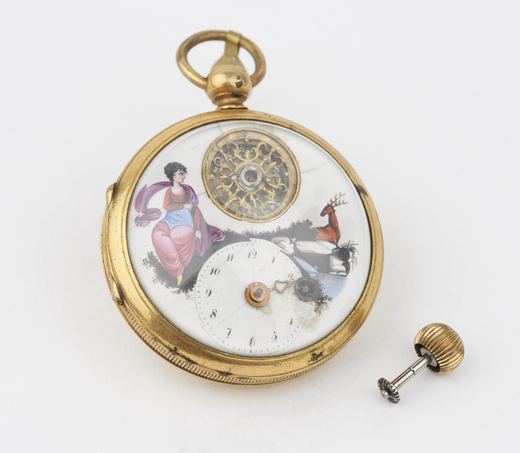
Pocket Watches · 1870-1910
Watch (French or Swiss) with balance wheel visible through a window in the dial
Science Museum Group, London
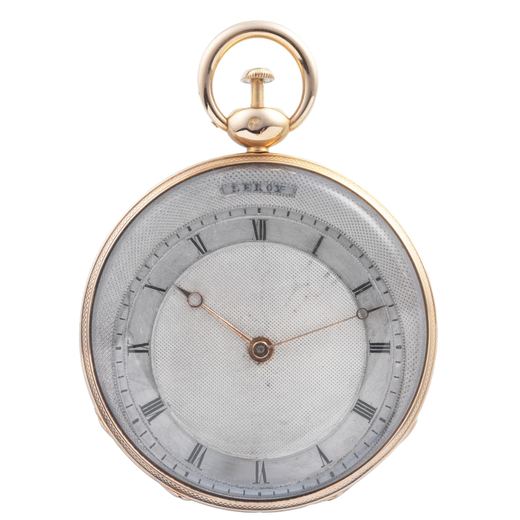
Pocket Watches · circa 1875
Leroy & Fils pocket watch, circa 1875
Antiquorum auction archive, Geneva
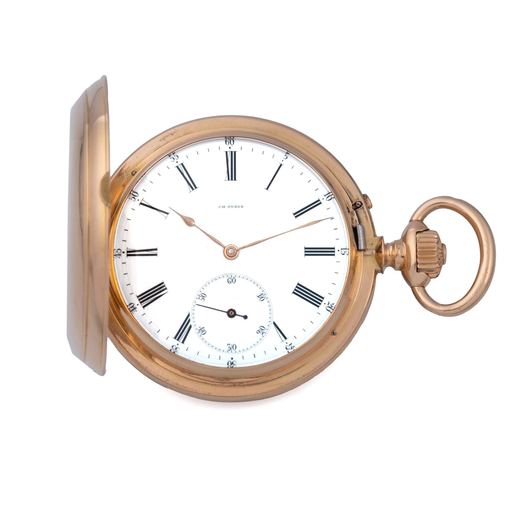
Pocket Watches · circa 1890
Charles Oudin pocket watch, circa 1890
Antiquorum auction archive, Geneva
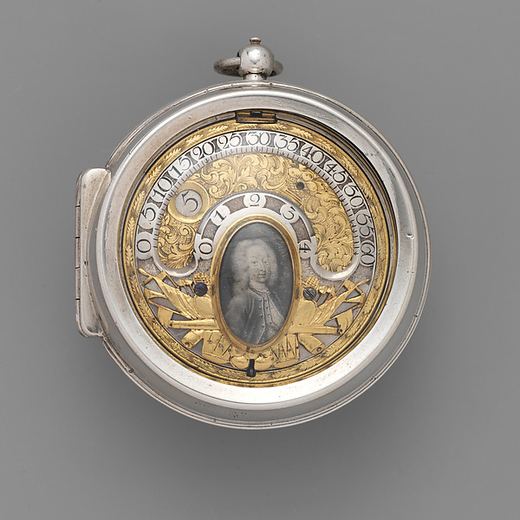
Pocket Watches · 19th or 20th century, in the style of 16th–early 17th century
Watch by Thomas Tompion, United Kingdom, 1800–1917
The Metropolitan Museum of Art, New York
Pocket Watches · 1801-1900
Pocket watch by Markwick, Markham; Perigal family, England, 1801-1900
Science Museum Group, London