
Clocks · Skeleton clock
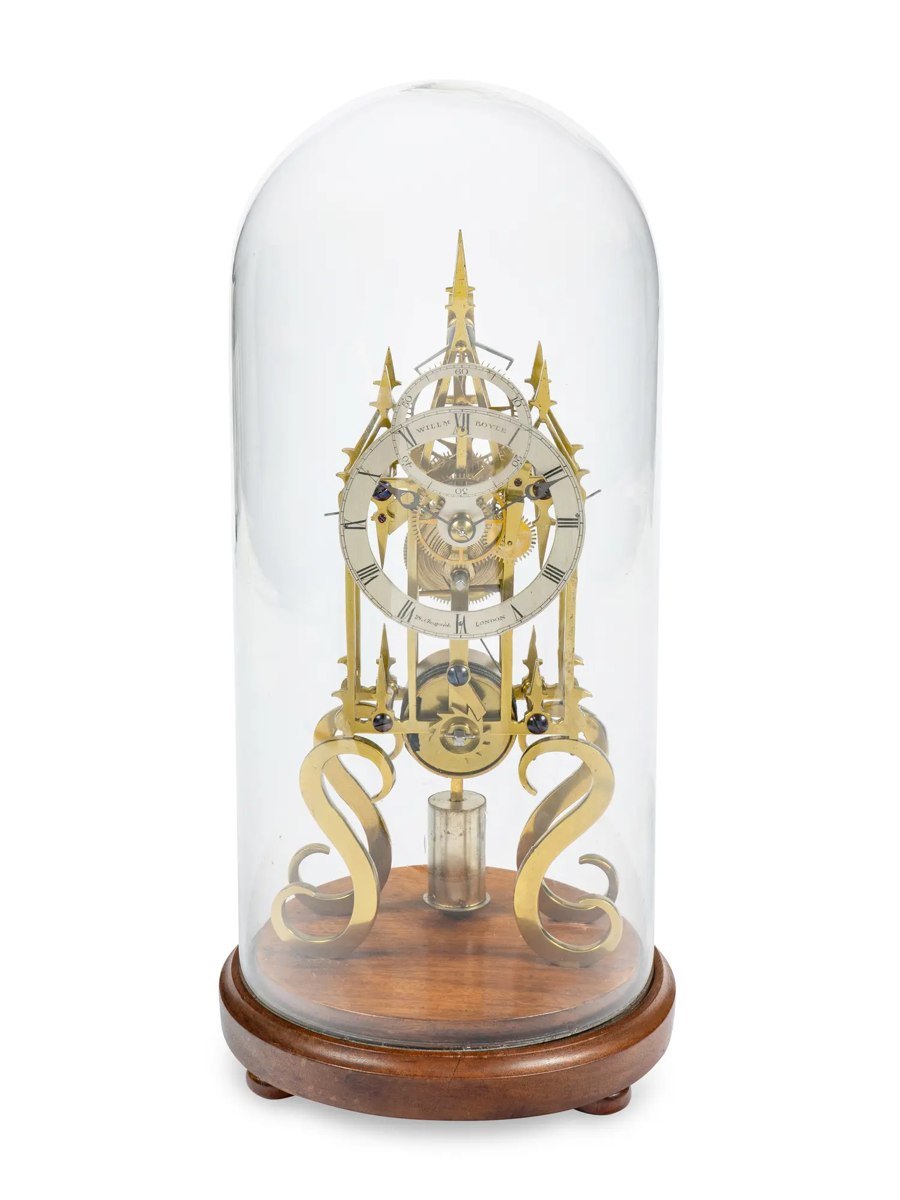
English Brass Fusée Skeleton Clock by William Boyle
- Maker / attribution
- William Boyle (source attribution)
- Date
- 19th Century
- Historical period
- Precision & Scientific Horology (1750 – 1850)
- Country of origin
- England
- Object type
- Skeleton clock
- Auction house
- Freeman's
- Lot
- 350
- Credit line
- Freeman's
- Catalogue title (original)
- An English Brass Fusée Skeleton Clock | Freeman's (English)
View the source record (auction lot) ↗ (opens another website in a new tab)Suggest a correction
Record summary
Catalogued by Freeman's (lot 350), this is a skeleton clock attributed to William Boyle, made in England, dated 19th Century. The Atlas places it in the Precision & Scientific Horology period (1750 – 1850) of its Clocks collection. The record is illustrated with 1 photograph.
Assembled from the source record's structured fields. Dates and attributions are given as the source states them; where a field is missing the Atlas leaves it blank rather than estimating.
Catalogue description
Original object description
Auction documentation credits this 19th-century English brass skeleton clock to the London clockmaker William Boyle. Powered by a fusée, the openwork mechanism is supported by prominent S-scroll legs and framed with pierced Gothic-style spires and pinnacles, all anchored to a tiered round wooden base. An openwork silvered chapter ring with Roman numerals provides the time, topped by a subsidiary seconds chapter ring bearing the clockmaker's engraved name; no seconds hand is recorded as being fitted. The movement reaches a height of 13 inches, extending to 17 inches when covered by its tall cylindrical glass dome. The clock is fitted with a pendulum and runs when set in motion, seeming to keep time, though its exact accuracy and power reserve duration remain untested. Documented wear includes an age crack running through the top of the wooden plinth and small chips present along the bottom lip of the glass dome.
Historical context
Precision & Scientific Horology (1750 – 1850)
Harrison solves longitude; Mudge invents the lever; Breguet's Paris workshop defines the modern watch.
The age of the deadbeat escapement, compensated pendulums and observatory regulators. Domestic clocks spread through the middle classes: English longcase and bracket clocks, French gilt-bronze mantel clocks, Viennese Biedermeier wall clocks, Black Forest painted-shield clocks, and the first American shelf clocks.
Read the period in the timelineMore clocks from this periodEarlier: Early Modern Horology
Atlas type guide
Skeleton clocks
A skeleton clock displays its movement: the plates are pierced to a minimum so that wheels, escapement and fusee can be seen, usually under a glass dome. French makers produced fine skeleton clocks in the late eighteenth century; in Victorian England they became popular showpieces, with frames in the shapes of cathedrals and famous buildings.
What to look for
- Pierced brass plates in scroll or architectural shapes.
- A glass dome and wooden or marble base.
- Fusee movements and sometimes passing strike on a bell.
Dating clues
- French skeleton clocks: c. 1780–1830.
- English cathedral-style skeleton clocks: c. 1840–1890.
General guidance written by the Atlas editors about this kind of object. It is not a statement about this particular piece; for that, rely on the source record above and on physical examination.
Read next:Anchor (recoil) escapement
Related records
Clocks · 1740–1760
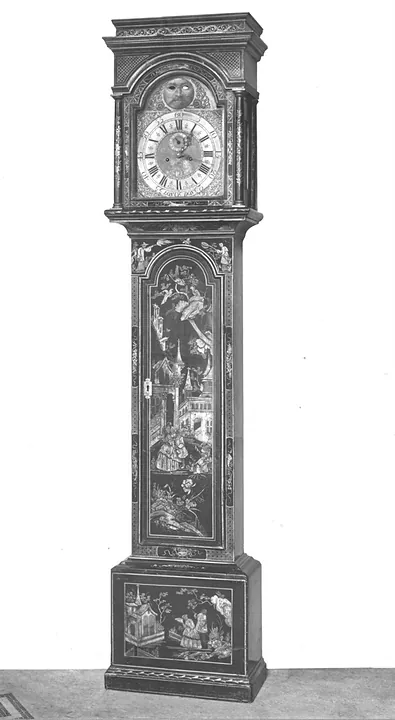
Longcase clock, English, 1740–1760, japanned wood, John Ellicott
Victoria and Albert Museum, London
Clocks · c.1750
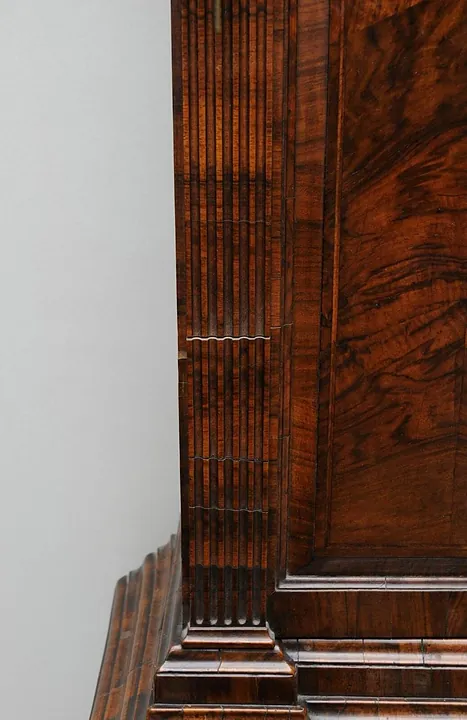
Long-case clock, English, ca. 1750, by Richard Peyton of Gloucester
Victoria and Albert Museum, London
Clocks · 1751
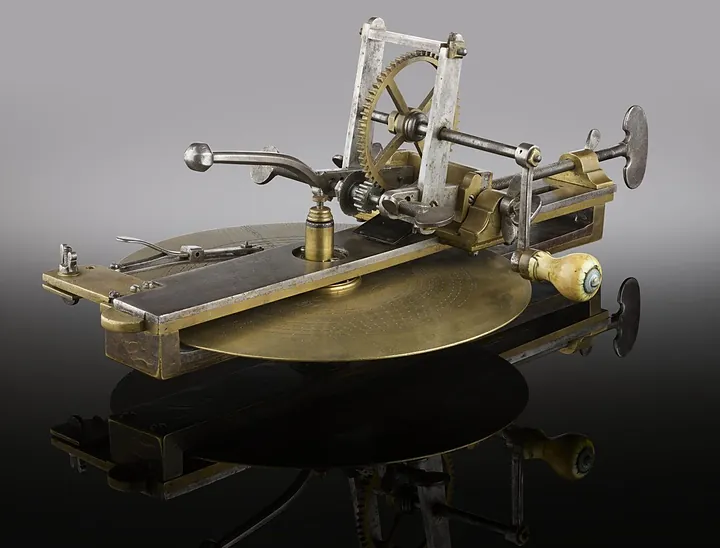
Large wheel engine, signed and dated "John Tipping, Whildon Green, 1751".
Science Museum Group, London
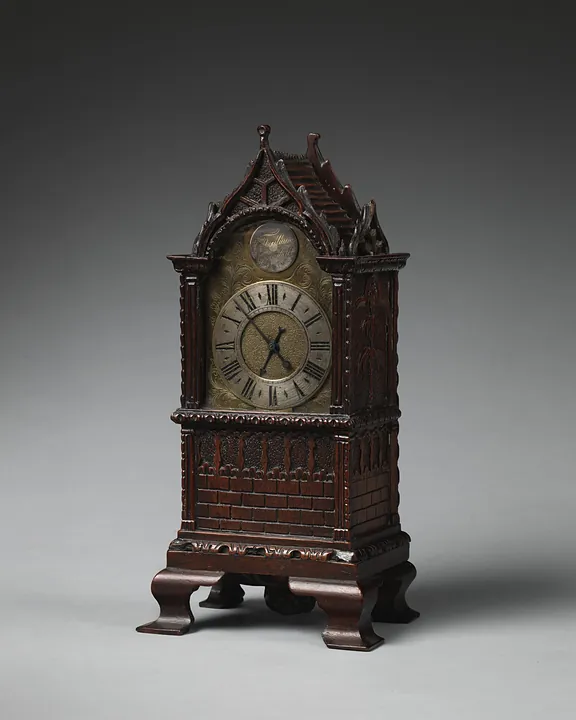
Clocks · 1755
Bracket clock by John Fordham, England, 1755
The Metropolitan Museum of Art, New York
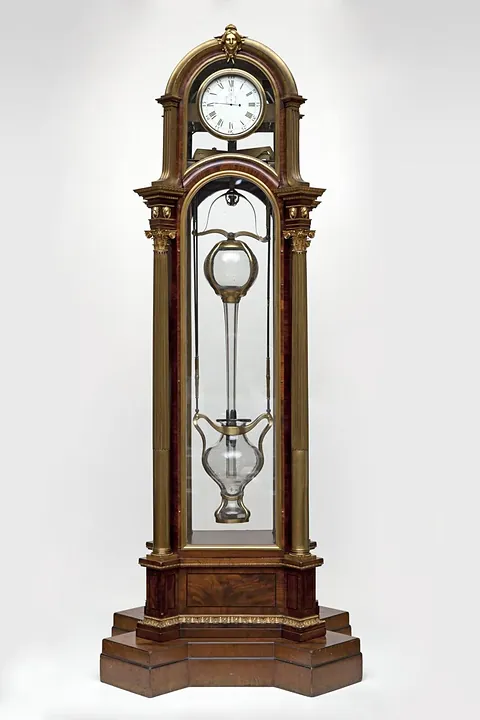
Clocks · c. 1760
Longcase clock by James Cox, England, c. 1760
Victoria and Albert Museum, London
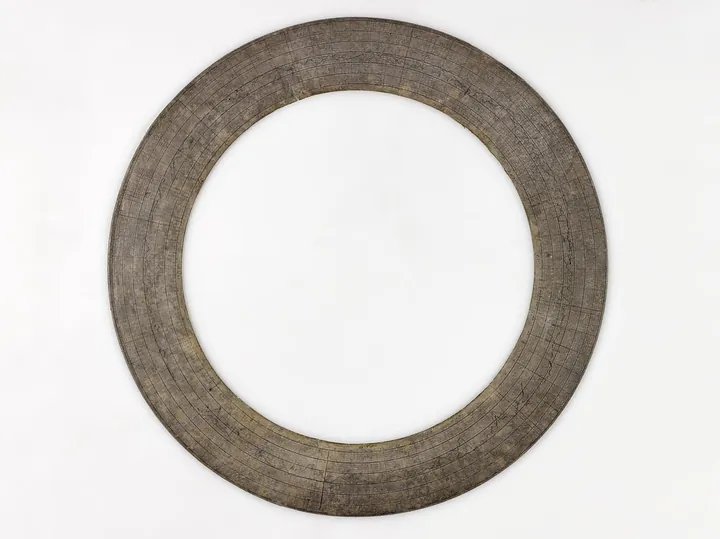
Clocks · 1766
Clock by Alexander Cumming, England, 1766
Science Museum Group, London
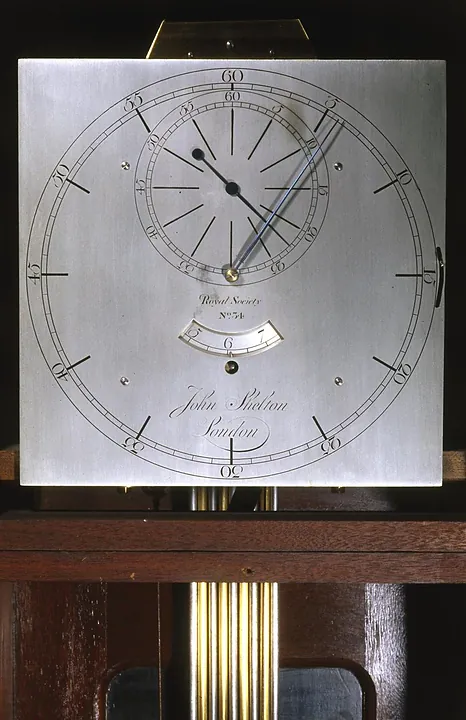
Clocks · 1768–1769
Regulator clock by John Shelton, England, 1768–1769
Science Museum Group, London
Clocks · c. 1775
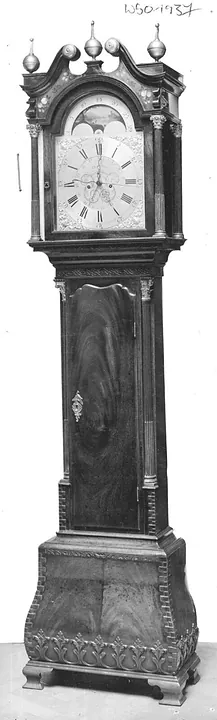
Longcase clock, England, c. 1775
Victoria and Albert Museum, London