
Clocks · Skeleton clock
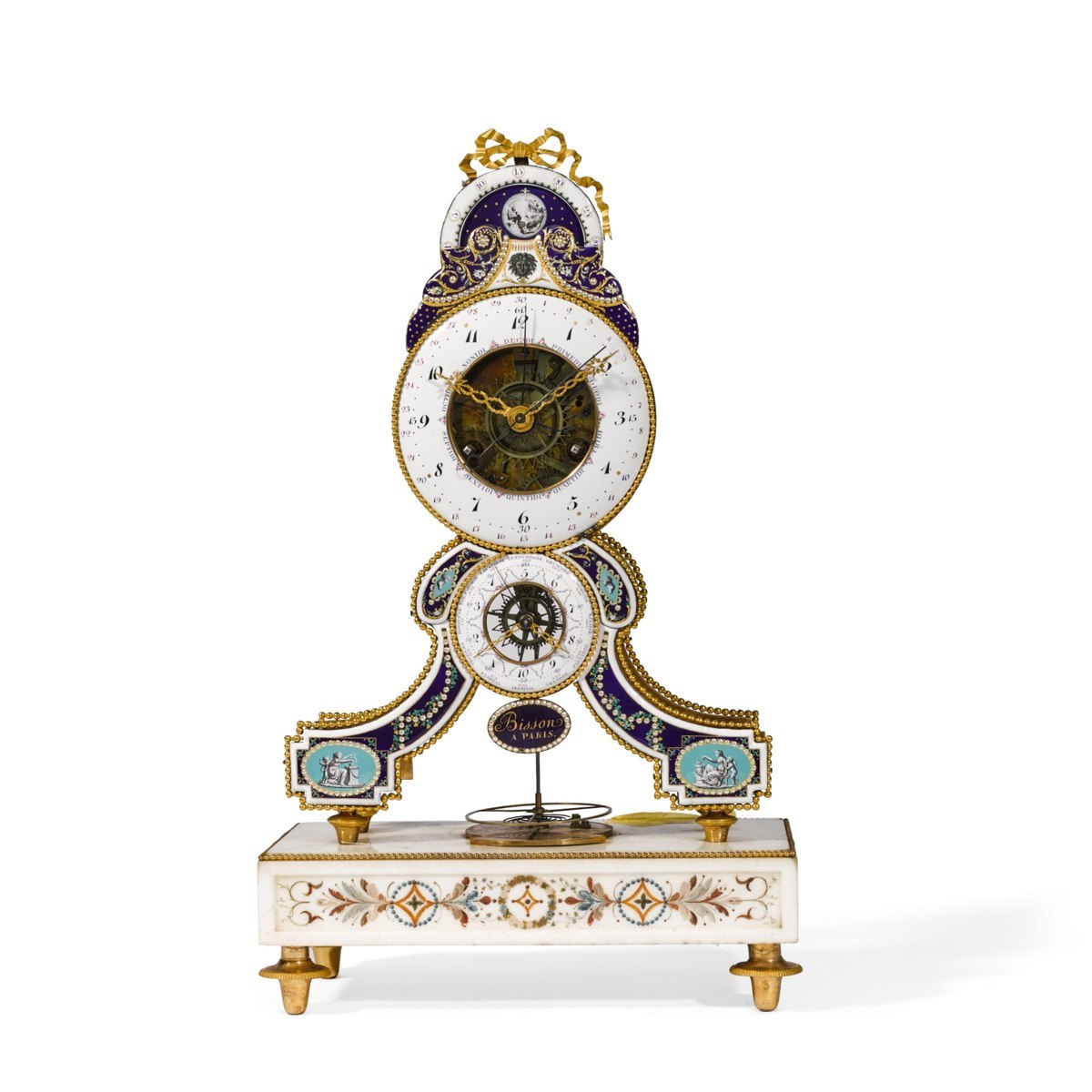
Directoire gilt-bronze, enamel and white marble skeleton clock
- Maker / attribution
- Bisson (source attribution)
- Date
- c. 1795
- Historical period
- Precision & Scientific Horology (1750 – 1850)
- Country of origin
- France
- Object type
- Skeleton clock
- Auction house
- Sotheby's
- Lot
- 104
- Credit line
- Sotheby's
- Catalogue title (original)
- A rare Directoire gilt-bronze, enamel and white marble skeleton clock (English)
View the source record (auction lot) ↗ (opens another website in a new tab)Suggest a correction
Record summary
Catalogued by Sotheby's (lot 104), this is a skeleton clock attributed to Bisson, made in France, dated c. 1795. The Atlas places it in the Precision & Scientific Horology period (1750 – 1850) of its Clocks collection. The record is illustrated with 1 photograph.
Assembled from the source record's structured fields. Dates and attributions are given as the source states them; where a field is missing the Atlas leaves it blank rather than estimating.
Catalogue description
Original object description
Dating to circa 1795 in France, this Directoire period skeleton clock is attributed to the clockmaker Bisson of Paris. The pierced gilt-bronze construction is enlivened with painted, jewelled, and beaded enamel embellishments recorded as the creation of Joseph Coteau. Elevating the framework is a painted white marble plinth ornamented with botanical motifs, which rests upon gilt toupie feet; when standing on its own, the timepiece measures 44 cm (17¼ in.) in height, increasing to 51 cm (20 in.) when housed under its glass dome with giltwood stand (neither shown in the principal image). Crowning the superstructure is a tied-ribbon crest set over a lunar arch. The openwork movement features a five-inch primary dial with an open center, chased gilt hands for standard hours and minutes, and a blued steel center-seconds hand. This dial reconciles the Gregorian and French Revolutionary systems by presenting standard hours and minutes, concentric dates, and Revolutionary days of the week. Below it, a secondary enamel dial records decimal time (decimal hours and minutes) alongside the months across both the French Revolutionary and Gregorian calendars. Positioned above a horizontal three-arm balance wheel is an enamel cartouche inscribed "Bisson A Paris", bearing the signature "Coteau" on its reverse. Hidden from a direct frontal aspect are the rear-plate pin-wheel escapement and an exterior count wheel regulating the bell-striking train. Formerly held in the Parisian collection of Pascal Izarn, the clock is illustrated on page 324 of Pierre Kjellberg's 1997 study 'Encyclopédie de la Pendule Française du moyen age au XXe siècle' and featured in the 2013 publication 'Les plus belles pendules françaises' by Wannenes (page 299 and cover).
Historical context
Precision & Scientific Horology (1750 – 1850)
Harrison solves longitude; Mudge invents the lever; Breguet's Paris workshop defines the modern watch.
The age of the deadbeat escapement, compensated pendulums and observatory regulators. Domestic clocks spread through the middle classes: English longcase and bracket clocks, French gilt-bronze mantel clocks, Viennese Biedermeier wall clocks, Black Forest painted-shield clocks, and the first American shelf clocks.
Read the period in the timelineMore clocks from this periodEarlier: Early Modern Horology
Atlas type guide
Skeleton clocks
A skeleton clock displays its movement: the plates are pierced to a minimum so that wheels, escapement and fusee can be seen, usually under a glass dome. French makers produced fine skeleton clocks in the late eighteenth century; in Victorian England they became popular showpieces, with frames in the shapes of cathedrals and famous buildings.
What to look for
- Pierced brass plates in scroll or architectural shapes.
- A glass dome and wooden or marble base.
- Fusee movements and sometimes passing strike on a bell.
Dating clues
- French skeleton clocks: c. 1780–1830.
- English cathedral-style skeleton clocks: c. 1840–1890.
General guidance written by the Atlas editors about this kind of object. It is not a statement about this particular piece; for that, rely on the source record above and on physical examination.
Read next:FuseeAnchor (recoil) escapement
Related records
Clocks · 1750–1800
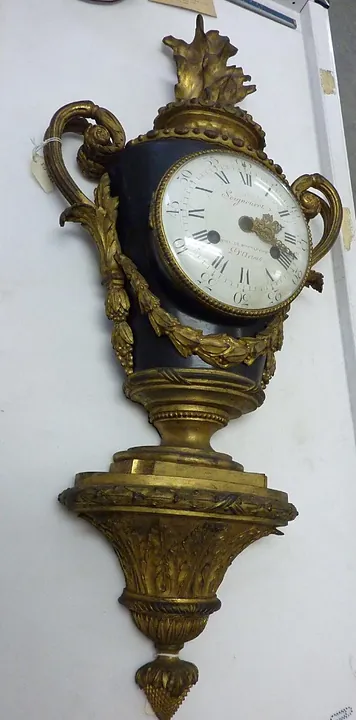
Bracket clock in metal case with scroll handles and flamed-shaped top signed by Pierre Seignoret, Clockmaket to the the Comte d'Artois
Victoria and Albert Museum, London
Clocks · 1756
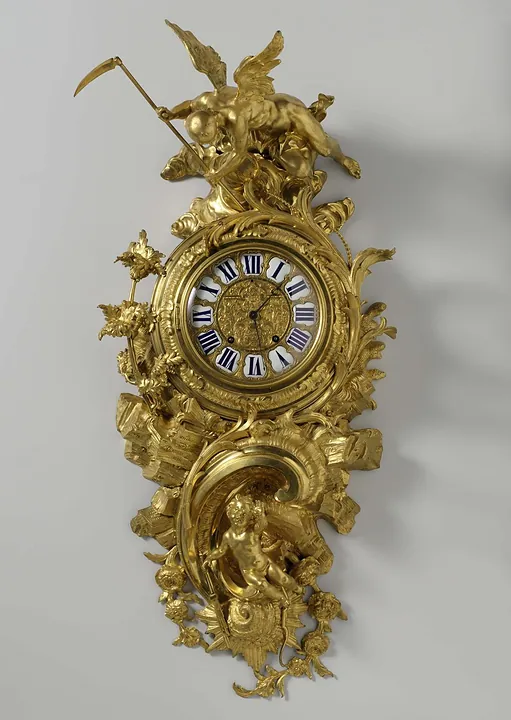
Mantel clock, France, 1756
Rijksmuseum
Clocks · c. 1764–70
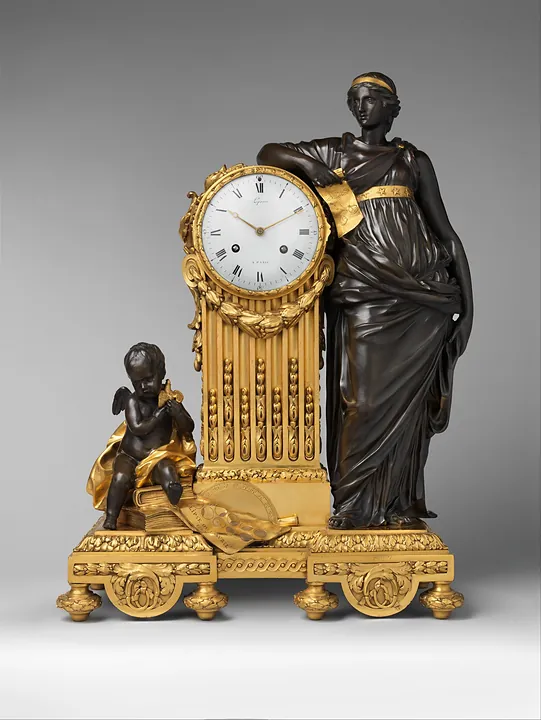
Mantel clock by Jean-André Lepaute, France, c. 1764–70
The Metropolitan Museum of Art, New York
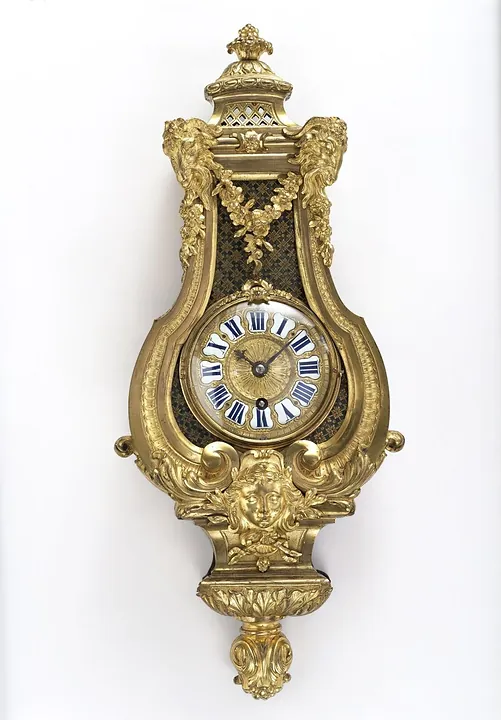
Clocks · 1760–1860
'Pendule d'alcove' wall clock, gilt-bronze and boulle marquetry, Paris, 1760-1860
Victoria and Albert Museum, London
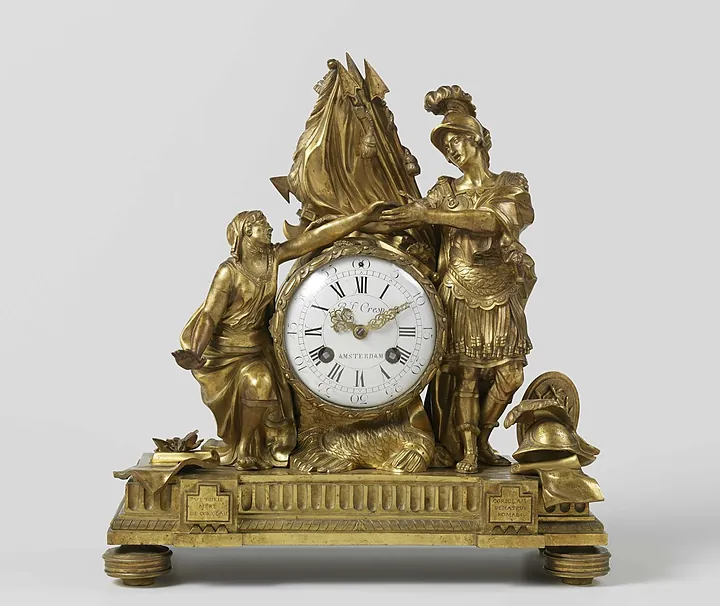
Clocks · 1760
Mantel clock, France, 1760
Rijksmuseum
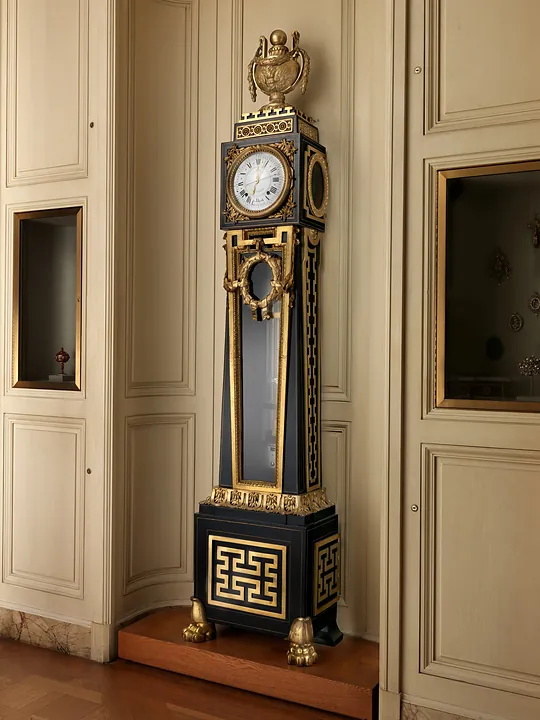
Clocks · c. 1768–70
Longcase astronomical regulator by Ferdinand Berthoud, France, c. 1768–70
The Metropolitan Museum of Art, New York
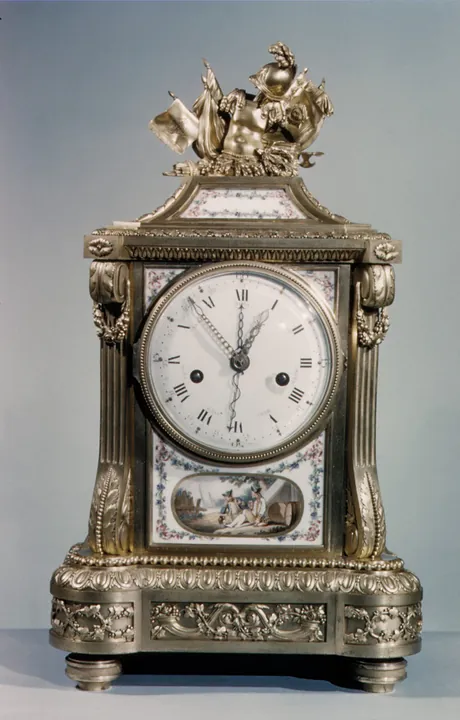
Clocks · c. 1775
Clock by Porcelain plaques by Sèvres Manufactory, France, c. 1775
The Metropolitan Museum of Art, New York
Clocks · 1770–1775
Longcase clock (régulateur) by Robert Robin, France, 1770–1775
Victoria and Albert Museum, London