
Wristwatches · Automatic wristwatch with power reserve
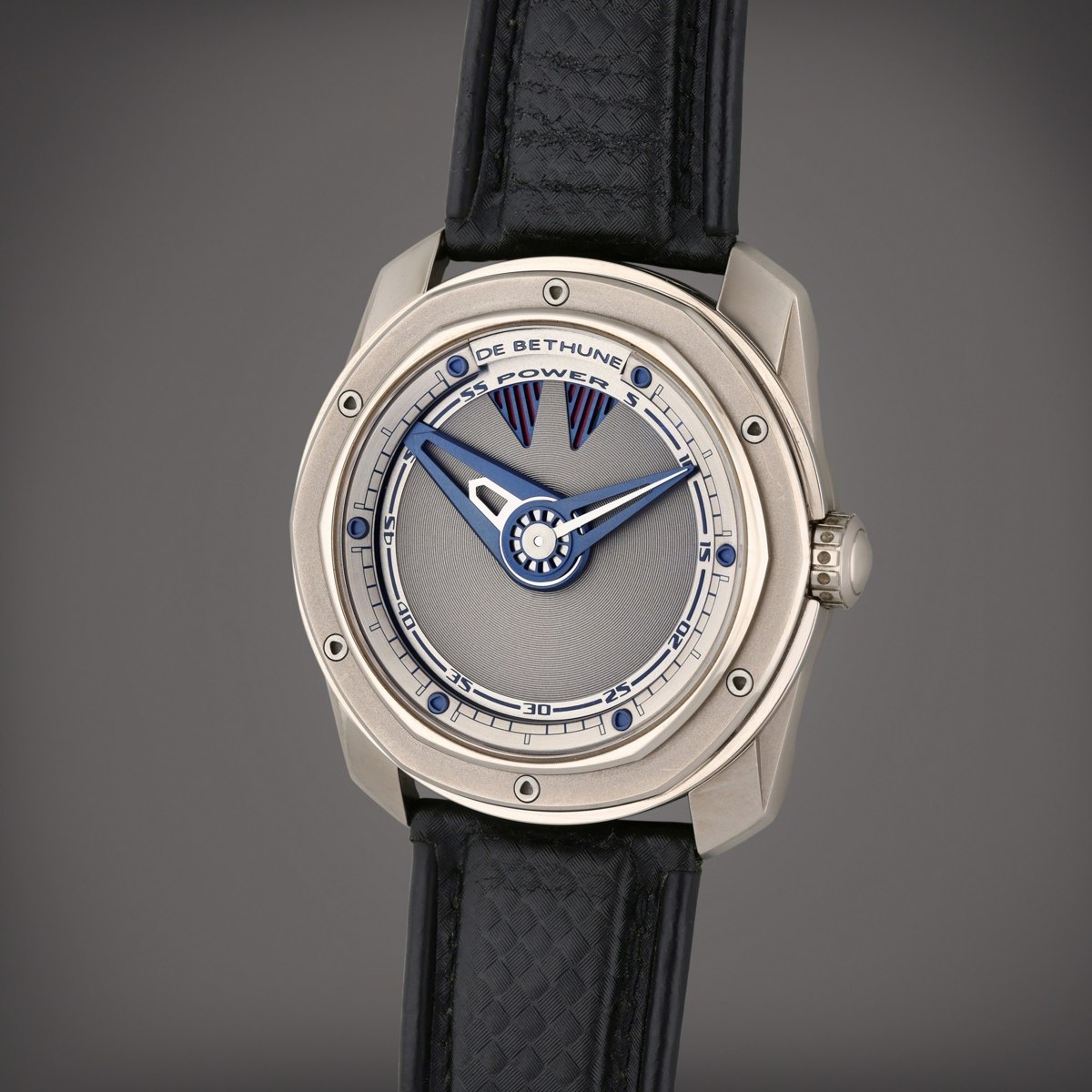
De Bethune Reference DB22 Limited Edition Wristwatch
- Maker / attribution
- De Bethune (source attribution)
- Date
- c. 2007
- Historical period
- Mechanical Renaissance (1990 – 2010)
- Country of origin
- Switzerland
- Object type
- Automatic wristwatch with power reserve
- Auction house
- Sotheby's
- Lot
- 5
- Credit line
- Sotheby's
- Catalogue title (original)
- De Bethune | Db22 | A limited edition white gold wristwatch with (English)
View the source record (auction lot) ↗ (opens another website in a new tab)Suggest a correction
Record summary
Catalogued by Sotheby's (lot 5), this is an automatic wristwatch with power reserve attributed to De Bethune, made in Switzerland, dated c. 2007. The Atlas places it in the Mechanical Renaissance period (1990 – 2010) of its Wristwatches collection. The record is illustrated with 1 photograph.
Assembled from the source record's structured fields. Dates and attributions are given as the source states them; where a field is missing the Atlas leaves it blank rather than estimating.
Catalogue description
Original object description
Originating circa 2007, this De Bethune DB22 automatic watch is numbered 05/50 from a limited issue. The 48 mm 18k white gold case is defined by a multi-sided, quasi-hexagonal bezel secured with recessed perimeter screws, together with an exhibition case back fastened by six screws. Operating inside is the 49-jewel caliber DB2024 automatic movement, marked with movement number 268. The dial is fashioned from titanium, featuring central blued, skeletonized hands on a complex hub, an outer track dotted with blue spherical markers, and an aperture below 12 o'clock displaying red and blue segments for the power reserve. Fitted with integrated-style lugs, the watch is worn on a textured black strap of leather or composite material, secured by an 18k white gold pin buckle marked with the brand name. The case, dial, and movement are documented as signed, though the movement and rear sapphire window cannot be observed in the reference photo. Accompanying items include a De Bethune presentation box with outer sleeve, an instruction manual, an August 21, 2007 sales invoice, and a Certificate of Origin dated August 23, 2007.
Inscriptions & marks
268
Historical context
Mechanical Renaissance (1990 – 2010)
Mechanical watches return as cultural objects; independent watchmaking flourishes.
Mechanical watches returned as cultural and luxury objects. Complications, tourbillons and new materials proliferated; independent watchmakers such as George Daniels, F.P. Journe and Philippe Dufour revived artisanal watchmaking; collecting vintage watches became a major field.
Read the period in the timelineMore wristwatches from this periodEarlier: Quartz Revolution
Atlas type guide
Automatic (self-winding) watches
Self-winding watches use the wearer's motion to wind the mainspring. Abraham-Louis Perrelet and Breguet made 'perpétuelle' pocket watches with oscillating weights in the late eighteenth century, but the principle only became practical in the wristwatch. John Harwood patented a bumper automatic in 1923; Rolex's Perpetual rotor (1931) winding in one direction, and later bidirectional rotors (Eterna, Felsa Bidynator), established the modern form. Micro-rotors (Universal Genève, Buren) and peripheral rotors made automatic watches thinner.
What to look for
- A semicircular rotor turning 360° over the movement, or a 'bumper' weight that rebounds between springs.
- 'Automatic', 'Perpetual' or 'Self-winding' on the dial.
- A sealed screw-back case, since automatic watches are wound less often by the crown.
Dating clues
- Bumper automatics: 1923–c. 1955.
- Full rotors: from 1931 (Rolex); widespread after c. 1950.
- Micro-rotors: from 1954–1958.
General guidance written by the Atlas editors about this kind of object. It is not a statement about this particular piece; for that, rely on the source record above and on physical examination.
Related records
Wristwatches · c. 2015
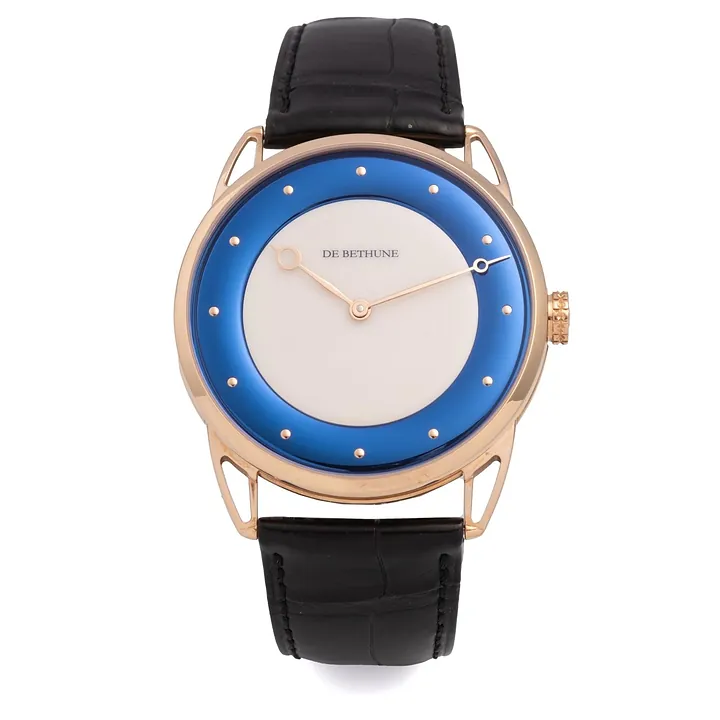
De Bethune White Night, ref. DB 25 XPA Rv3, c. 2015
Antiquorum auction archive, Geneva
Wristwatches · c. 2002
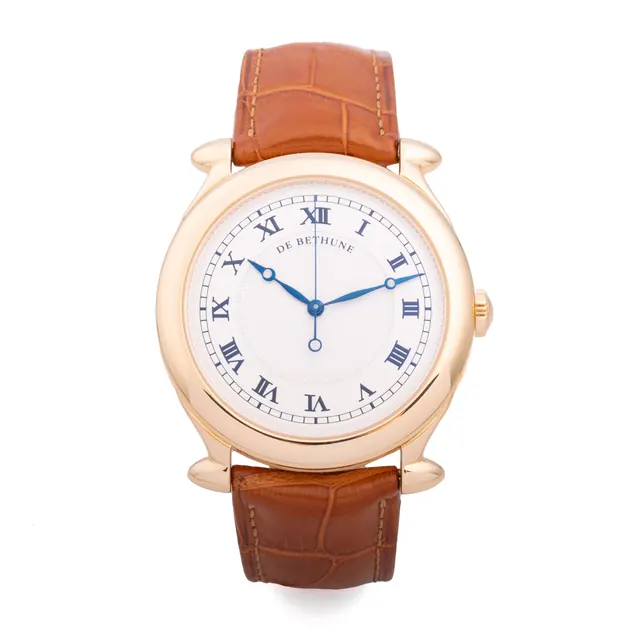
De Bethune wristwatch, ref. DB5RT, No. 007, circa 2002
Antiquorum auction archive, Geneva
Wristwatches · 2008
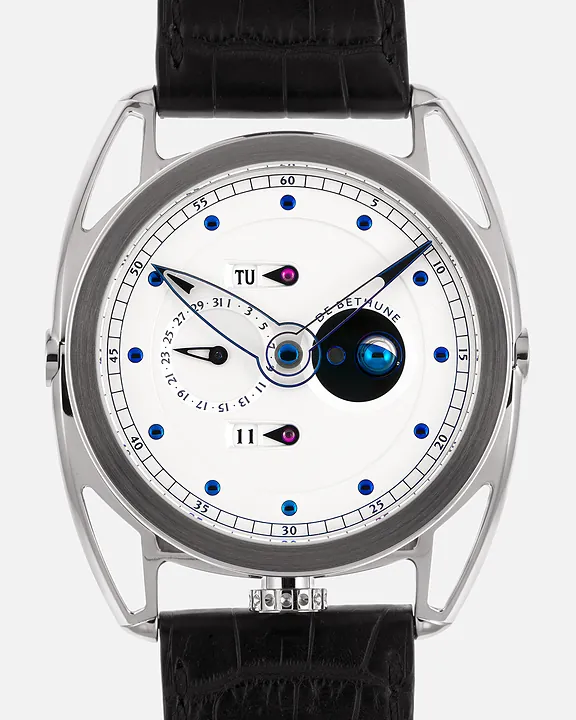
De Bethune DB26 Perpetual Calendar Moonphase DB26WS1, 2008
S.Song Watches (dealer), Seattle
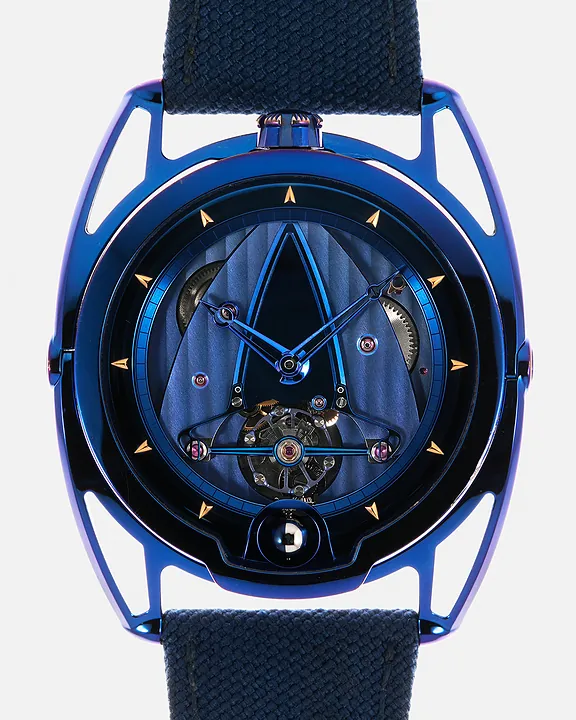
Wristwatches · 2019
De Bethune DB28 Kind Of Blue, 2019
S.Song Watches (dealer), Seattle
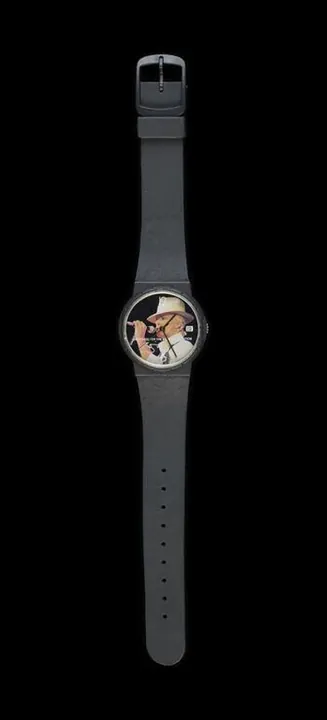
Wristwatches · 1991
Limited edition watch designed by Eta relating to David Bowie's Serious Moonlight live tour, 1991
Victoria and Albert Museum, London

Wristwatches · 2008
Wristwatch by Breitling?, 2008
Museum Rotterdam

Wristwatches · c. 1990s
Audemars Piguet Bamboo, c. 1990s
Antiquorum auction archive, Geneva

Wristwatches · c. 1990
Audemars Piguet Huitieme Perpetual Calendar, ref. 25696PT, c. 1990
Antiquorum auction archive, Geneva