
Clocks · Clock
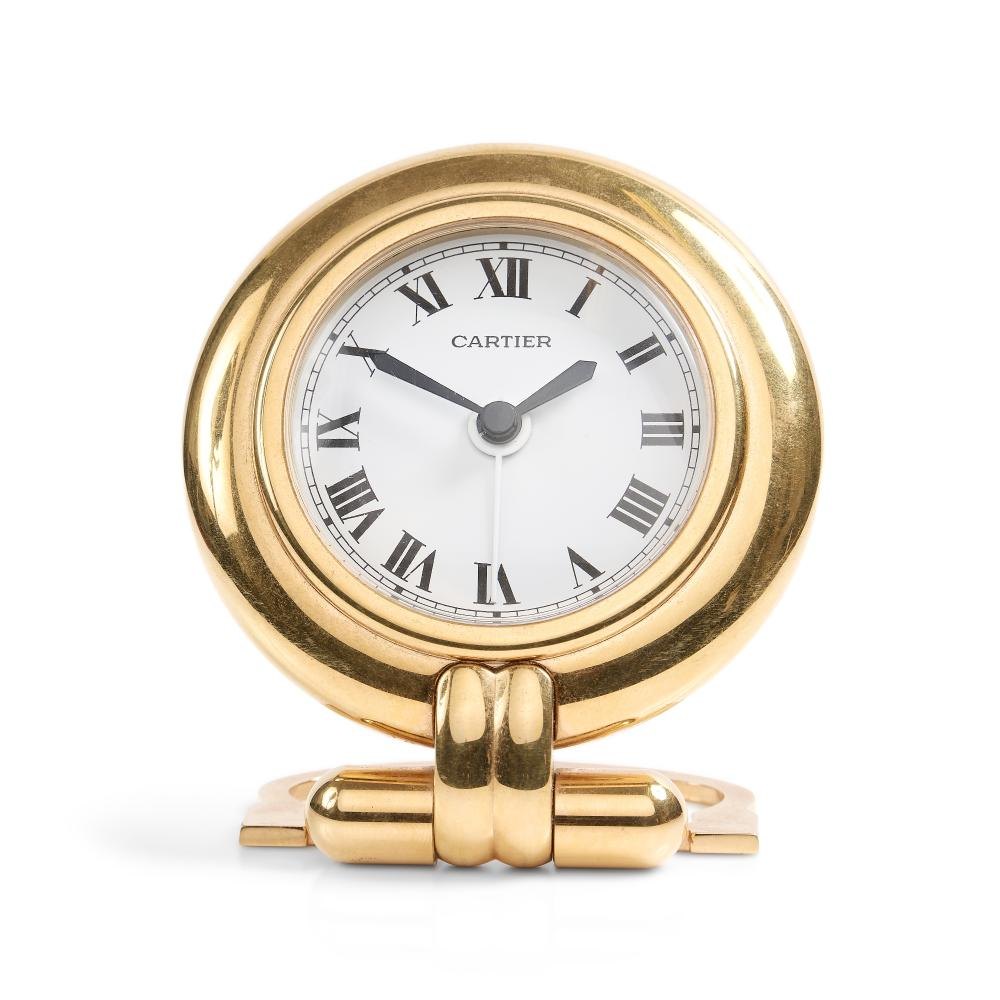
Cartier: a Gilt-Metal 'Colisee' Alarm Clock, 1990s
- Maker / attribution
- CARTIER (maker)
- Date
- 1990s
- Historical period
- Mechanical Renaissance (1990 – 2010)
- Country of origin
- Unrecorded in source
- Object type
- Clock
- Materials / technique
- gilt
- Auction house
- Invaluable auction listings
- Lot
- Lot F790E0A9F8
- Credit line
- Auction lot record: lot 191, European Works of Art, Objects & Silver, Olympia Auctions (2026), via Invaluable
- Catalogue title (original)
- CARTIER: A GILT-METAL 'COLISEE' ALARM CLOCK, 1990s (English)
View the source record (auction lot) ↗ (opens another website in a new tab)Suggest a correction
Record summary
Catalogued by Invaluable auction listings (lot Lot F790E0A9F8), this is a clock by CARTIER, dated 1990s. The Atlas places it in the Mechanical Renaissance period (1990 – 2010) of its Clocks collection. Materials and techniques recorded by the source: gilt. The record is illustrated with 2 photographs.
Assembled from the source record's structured fields. Dates and attributions are given as the source states them; where a field is missing the Atlas leaves it blank rather than estimating.
Catalogue description
Lot description — Olympia Auctions
quartz movement, white signed Roman dial, rounded circular case on a double ribbed support to a shaped openwork and sprung hinged easel stand, case back secured by three screws and with two blue cabochon capped crowns, signed Cartier / Paris and numbered AL1002540, case 7.8cm diameter, with instruction manual and a gilt stamped ' Cartier ' red suedette pouch
Historical context
Mechanical Renaissance (1990 – 2010)
Mechanical watches return as cultural objects; independent watchmaking flourishes.
Mechanical clocks returned as luxury and craft objects, alongside radio-controlled and designer quartz clocks. Independent makers and restorers revived traditional techniques, and museums increasingly documented industrial and electric clocks as heritage.
Read the period in the timelineMore clocks from this periodEarlier: Quartz Revolution
Atlas type guide
Alarm clocks
Alarm work is among the oldest clock functions: monastic clocks woke monks for night prayers, and Renaissance table clocks often carried an alarm disc set by a pin. A separate spring or weight is released at the set time and drives a hammer against a bell. Some early alarms also lit a candle by striking a flint — the 'tinder pistol' alarm.
The cheap, mass-produced alarm clock arrived in the second half of the nineteenth century. American firms such as Seth Thomas and Westclox (the 'Big Ben' of 1910) and German makers such as Junghans and Kienzle made millions of drum-shaped alarms with pin-pallet escapements. Electric, quartz and digital alarm clocks followed in the twentieth century.
What to look for
- A separate alarm-setting dial or disc and an extra winding key.
- Twin bells on top (common after c. 1920) or a bell enclosed in the base.
- Pin-pallet escapements in inexpensive factory alarms.
- Trademarks and patent dates on dial or back.
Dating clues
- Renaissance alarm table clocks: sixteenth to seventeenth centuries.
- Drum alarm clocks: from the 1870s.
- Luminous dials with radium paint: c. 1910–1960.
General guidance written by the Atlas editors about this kind of object. It is not a statement about this particular piece; for that, rely on the source record above and on physical examination.
Related records
Wristwatches · 1990s
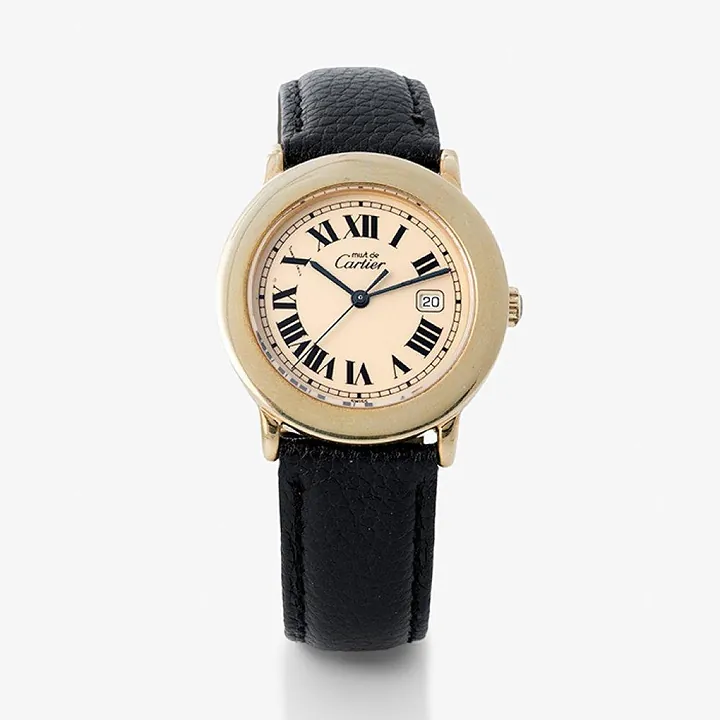
Cartier Must Ronde watch, ref. 1800, serial no. 0066XX, from the 1990s
Invaluable auction listings
Wristwatches · 1980s
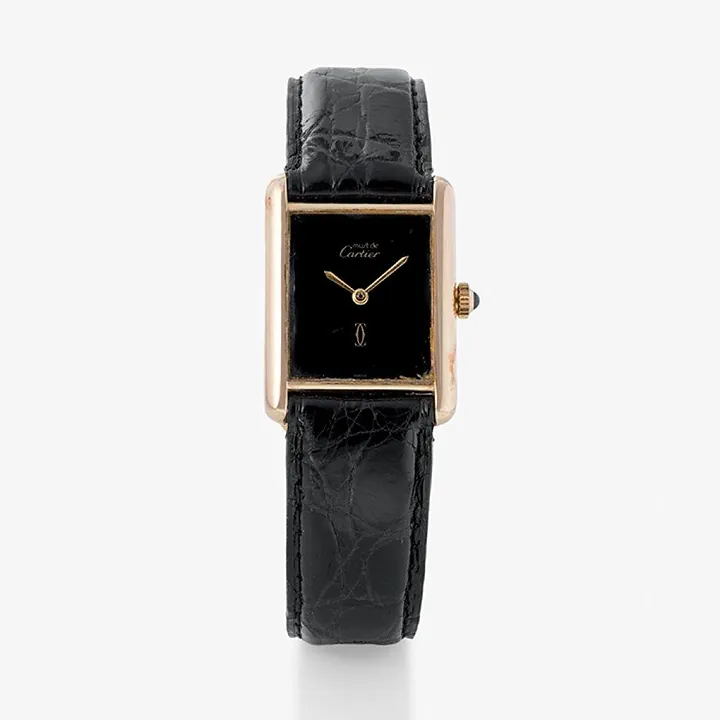
Cartier Must Tank watch, ref. 6 119550, late 1980s
Invaluable auction listings
Wristwatches · c. 2004
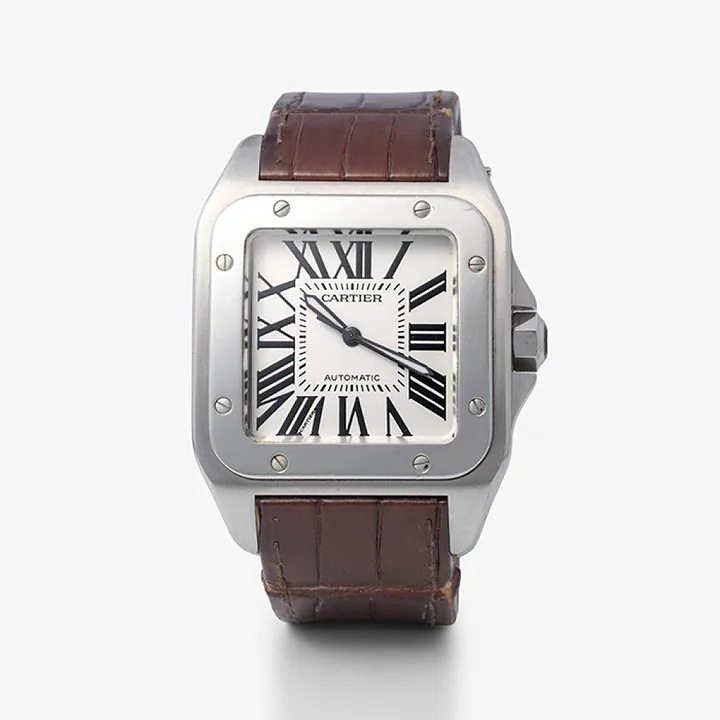
Cartier Santos 100 XL watch, 1904-2004 commemorative edition, ref. 2656
Invaluable auction listings
Clocks · c. 1990
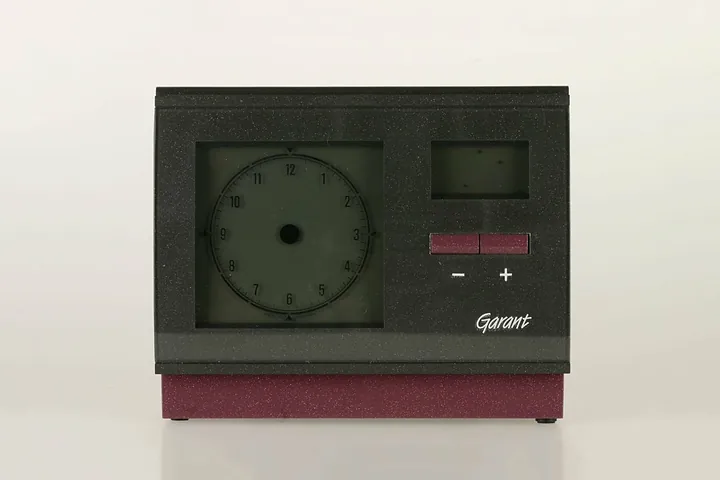
Alarm clock by Andreas GmbH und Co. Haller, Germany, c. 1990
German Clock Museum

Clocks · c. 1990s
Audemars Piguet Royal Oak, c. 1990s
Antiquorum auction archive, Geneva

Clocks · c. 1990s
Breitling clock, c. 1990s (Antiquorum Lot 389-18)
Antiquorum auction archive, Geneva
Clocks · c. 1990s
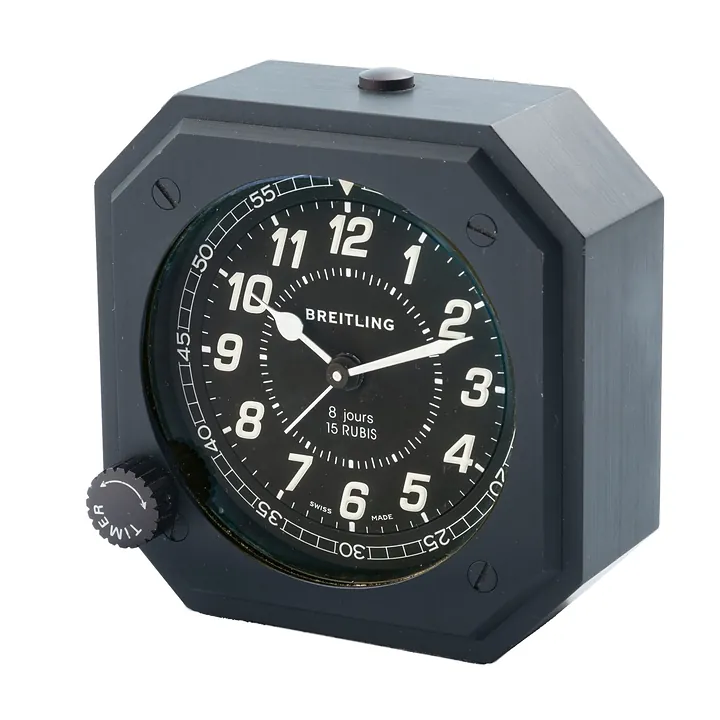
Breitling clock, c. 1990s (Antiquorum Lot 389-20)
Antiquorum auction archive, Geneva
Clocks · c. 1995
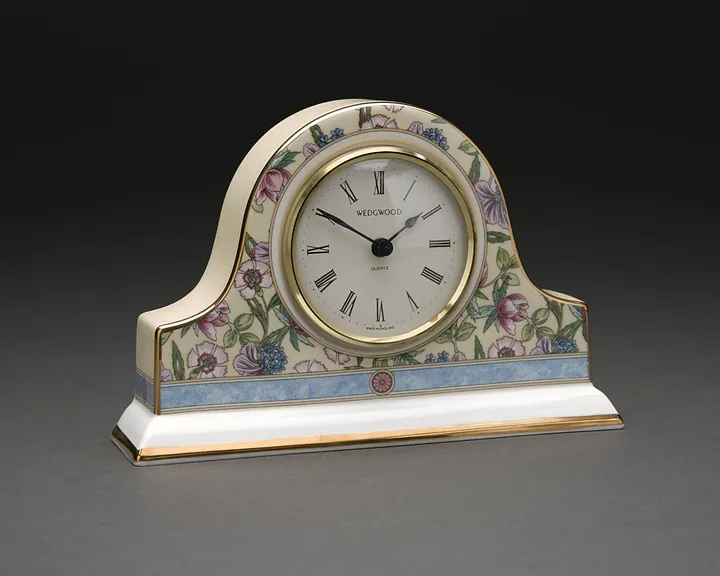
Clock, Bone China with transfer printing, Josiah Wedgwood and Sons, Barlaston, c. 1995 (V&A WE.18792-2014)
Victoria and Albert Museum, London