
Clocks · Clock
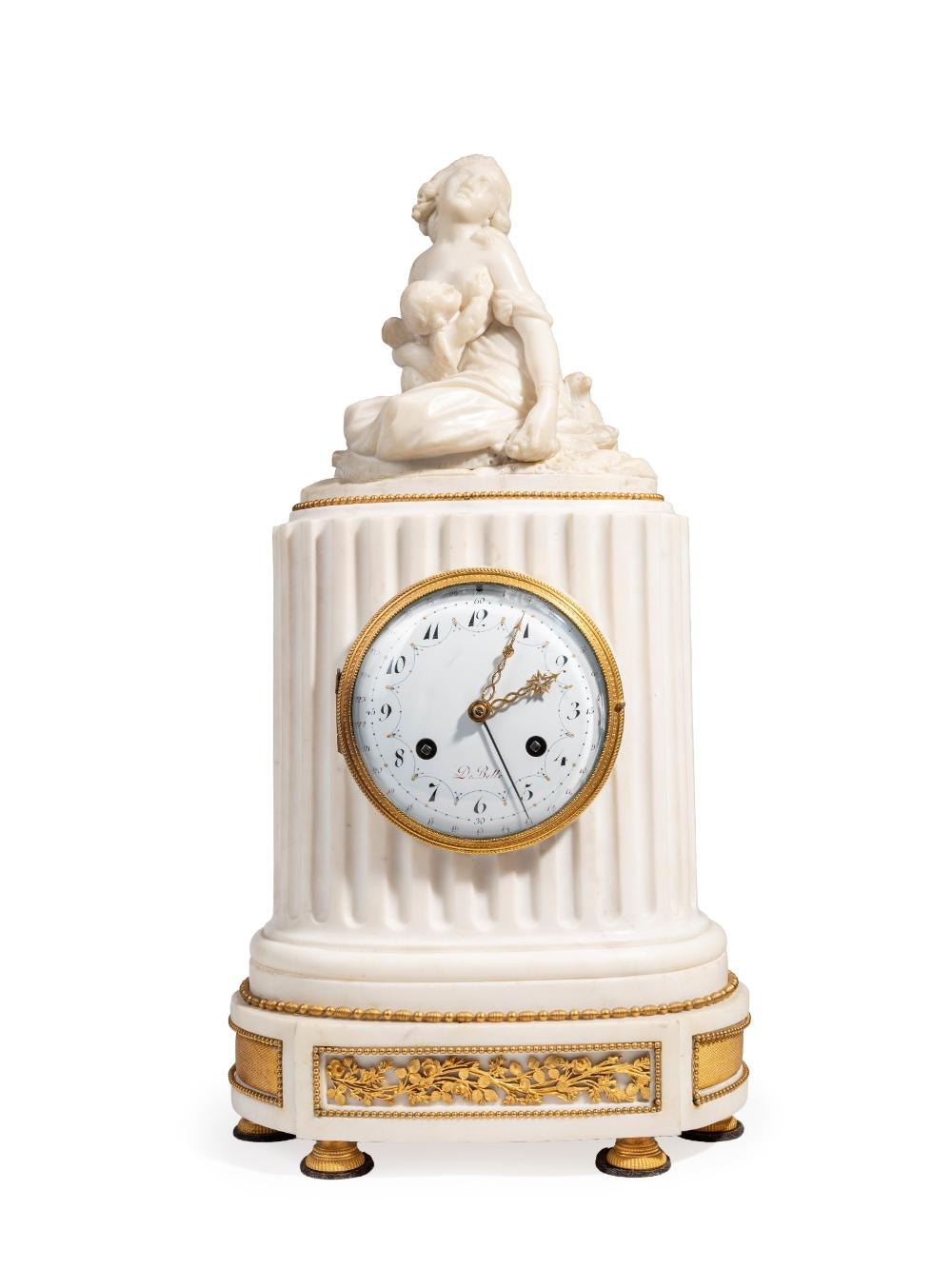
Calendar Mantel Clock, France, 1810
- Maker / attribution
- Unrecorded in source
- Date
- 1810
- Historical period
- Precision & Scientific Horology (1750 – 1850)
- Country of origin
- France
- Object type
- Clock
- Materials / technique
- bronze, gilt, marble, porcelain
- Auction house
- Invaluable auction listings
- Lot
- Lot D523DBBCBD
- Credit line
- Auction lot record: lot 183, Wunderkammer & Objets de Vertu | Historical Clocks & Timepieces | An Old Masters Print Collection, Marcopolo Auctions Milano (2026), via Invaluable
- Catalogue title (original)
- CALENDAR MANTEL CLOCK, FRANCE, 1810 (English)
View the source record (auction lot) ↗ (opens another website in a new tab)Suggest a correction
Record summary
Catalogued by Invaluable auction listings (lot Lot D523DBBCBD), this is a clock, made in France, dated 1810. The Atlas places it in the Precision & Scientific Horology period (1750 – 1850) of its Clocks collection. Materials and techniques recorded by the source: bronze, gilt, marble, porcelain. The record is illustrated with 4 photographs.
Assembled from the source record's structured fields. Dates and attributions are given as the source states them; where a field is missing the Atlas leaves it blank rather than estimating.
Catalogue description
Lot description — Marcopolo Auctions Milano
h cm 54 x l cm 28 x w cm 16, The white marble case depicting a lady and a child, embellished with finely chased mercury-gilt bronze mounts. The porcelain dial, painted with floral motifs and signed “De Belle”, features time indications and a 31-day calendar. The movement strikes the hours and half-hours and features a silk-thread pendulum suspension.
Historical context
Precision & Scientific Horology (1750 – 1850)
Harrison solves longitude; Mudge invents the lever; Breguet's Paris workshop defines the modern watch.
The age of the deadbeat escapement, compensated pendulums and observatory regulators. Domestic clocks spread through the middle classes: English longcase and bracket clocks, French gilt-bronze mantel clocks, Viennese Biedermeier wall clocks, Black Forest painted-shield clocks, and the first American shelf clocks.
Read the period in the timelineMore clocks from this periodEarlier: Early Modern Horology
Atlas type guide
Mantel and French pendule clocks
The mantel clock — the French pendule de cheminée — is as much decorative art as timekeeper. From the late seventeenth century Parisian clockmakers worked with cabinet-makers, bronze founders and gilders (ciseleurs-doreurs) to create cases in Boulle marquetry, gilt bronze and marble, while the movements were often supplied by specialist makers. Clocks of the Louis XIV, Louis XV and Louis XVI periods, and Empire clocks with allegorical figures, set fashions copied across Europe.
The nineteenth century industrialised the type. The 'Paris movement', a standardised round movement with silk-thread or Brocot suspension and count-wheel striking, was made in huge numbers by firms such as Japy and Vincenti, and fitted into cases of every style and material.
What to look for
- Round 'Paris' movements with makers' stamps (e.g. Japy Frères, Vincenti, S. Marti) and medal marks from exhibitions.
- Suspension type: silk thread (earlier) or Brocot adjustable suspension (after c. 1840).
- Visible Brocot escapement on the dial in later clocks.
- Fire-gilt (mercury) gilding on bronzes versus later electro-gilding.
- Signed dials naming a retailer rather than the movement maker.
Dating clues
- Silk-suspension Paris movements: c. 1800–1850.
- Brocot suspension and visible escapements: after c. 1840.
- Exhibition medal stamps on movements give dates after the medal year.
General guidance written by the Atlas editors about this kind of object. It is not a statement about this particular piece; for that, rely on the source record above and on physical examination.
Read next:Anchor (recoil) escapement
Related records
Clocks · 1750–1800
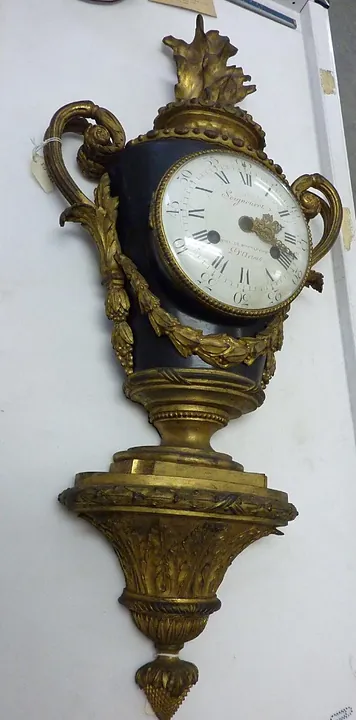
Bracket clock in metal case with scroll handles and flamed-shaped top signed by Pierre Seignoret, Clockmaket to the the Comte d'Artois
Victoria and Albert Museum, London
Clocks · 1756
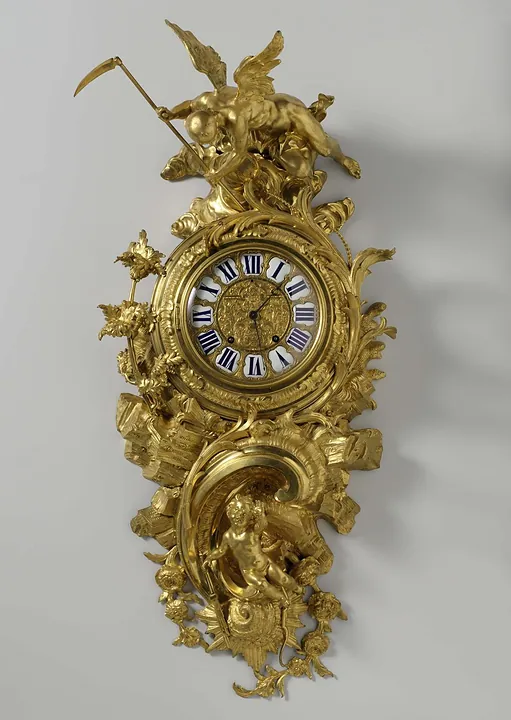
Mantel clock, France, 1756
Rijksmuseum
Clocks · c. 1764–70
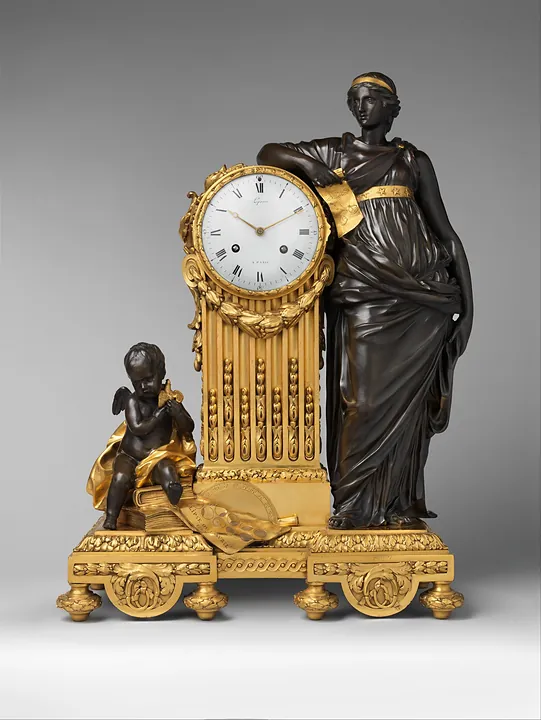
Mantel clock by Jean-André Lepaute, France, c. 1764–70
The Metropolitan Museum of Art, New York
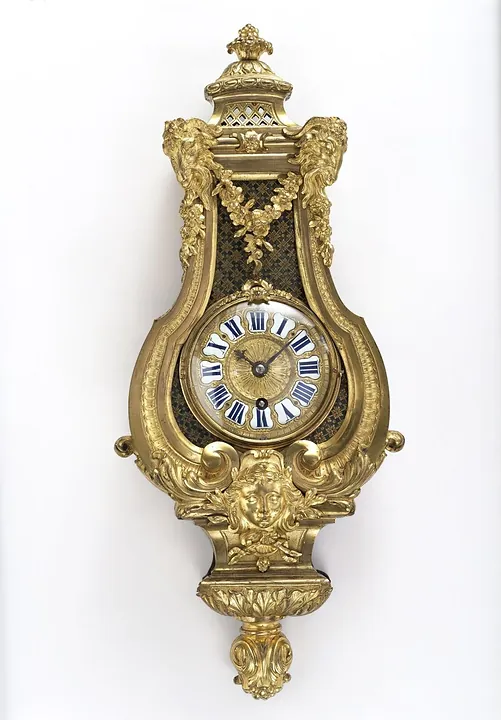
Clocks · 1760–1860
'Pendule d'alcove' wall clock, gilt-bronze and boulle marquetry, Paris, 1760-1860
Victoria and Albert Museum, London
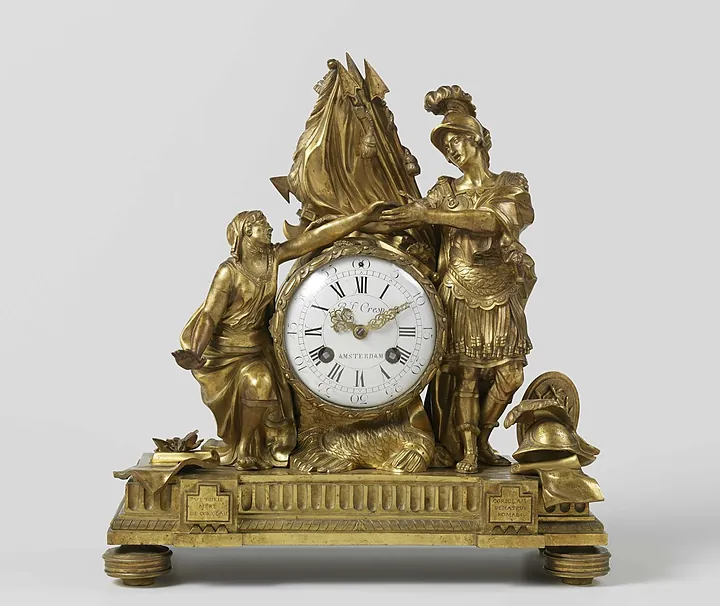
Clocks · 1760
Mantel clock, France, 1760
Rijksmuseum
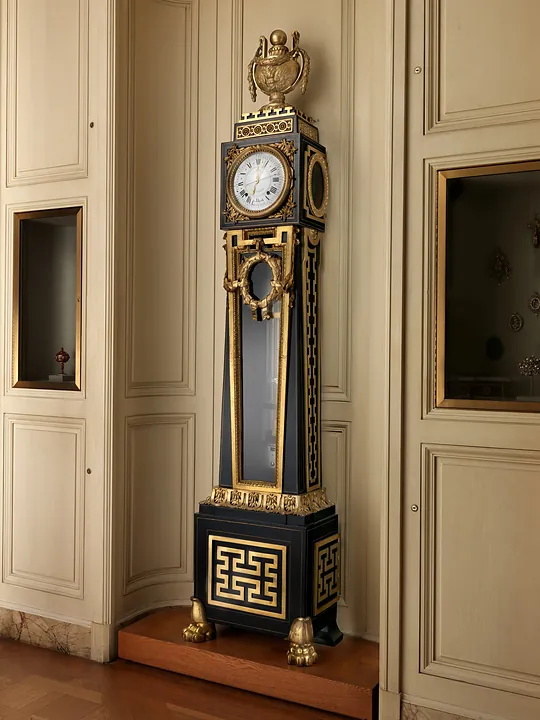
Clocks · c. 1768–70
Longcase astronomical regulator by Ferdinand Berthoud, France, c. 1768–70
The Metropolitan Museum of Art, New York
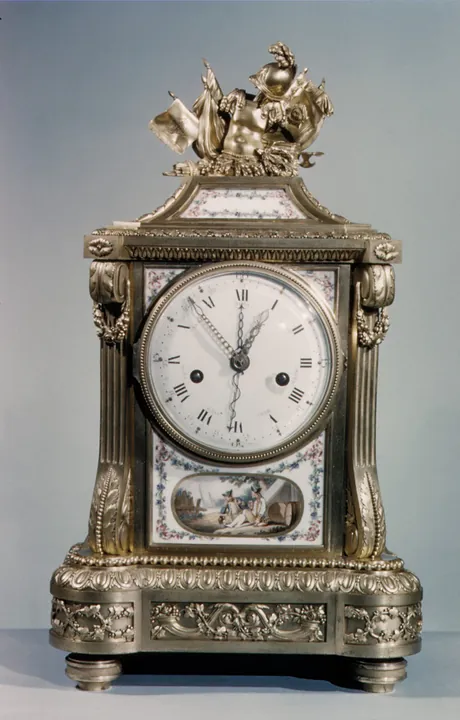
Clocks · c. 1775
Clock by Porcelain plaques by Sèvres Manufactory, France, c. 1775
The Metropolitan Museum of Art, New York
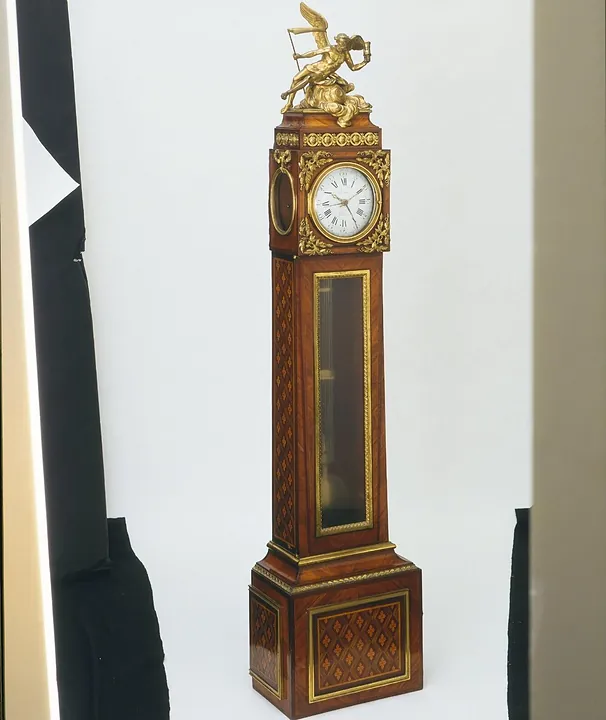
Clocks · 1770–1775
Longcase clock (régulateur) by Robert Robin, France, 1770–1775
Victoria and Albert Museum, London