
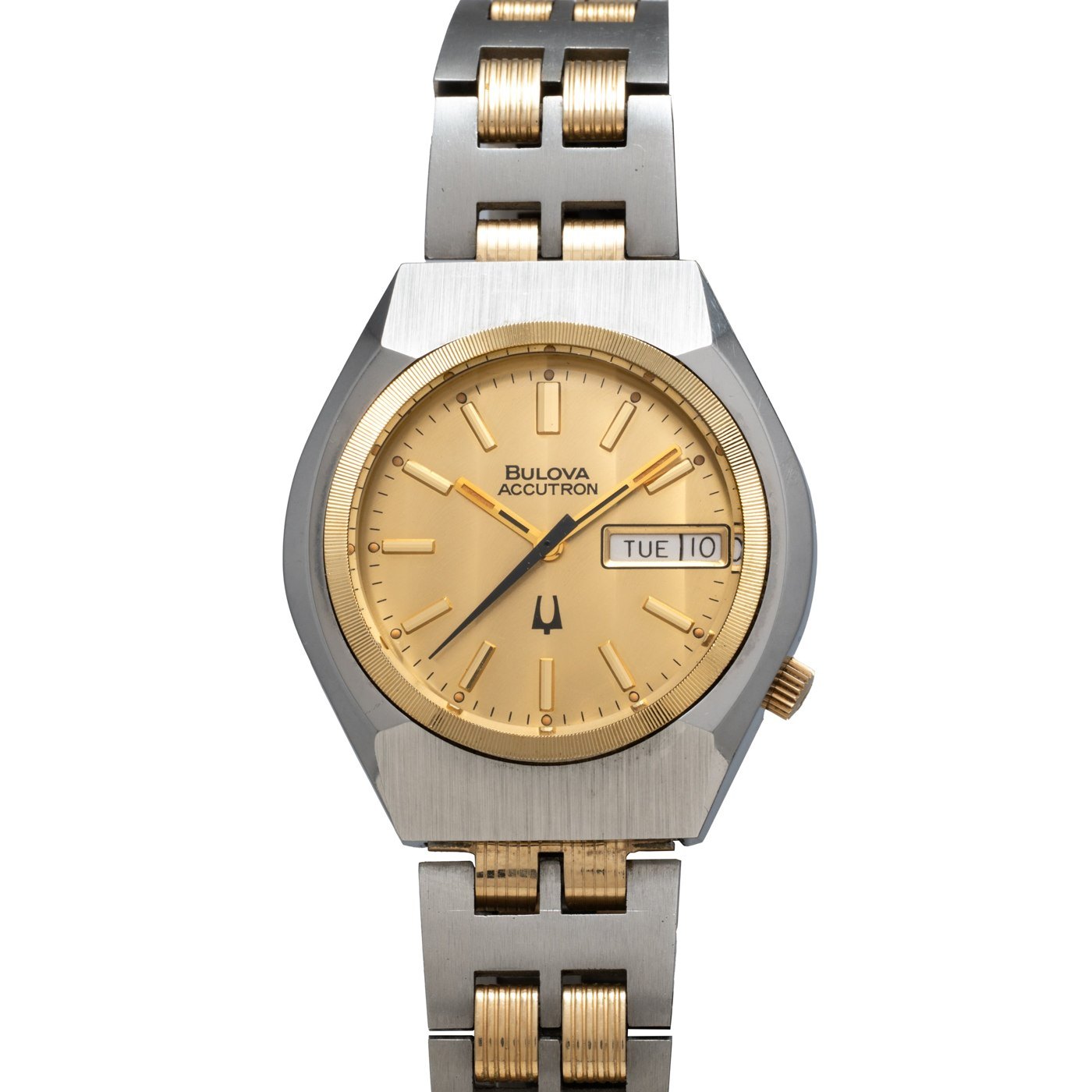
Pocket Watches · Day-Date electronic tuning fork watch
Bulova Accutron Day-Date 'Holographic'
- Maker / attribution
- Bulova (source attribution)
- Date
- 1976
- Historical period
- Quartz Revolution (1969 – 1990)
- Country of origin
- United States
- Object type
- Day-Date electronic tuning fork watch
- Holding institution
- Analog Shift
- Accession / object no.
- bulova-accutron-day-date-holographic-84651e2b8d
- Credit line
- Analog Shift
- Catalogue title (original)
- ساعت Bulova Accutron Day-Date مدل Holographic (English)
View the source record ↗ (opens another website in a new tab)Suggest a correction
Record summary
Held and catalogued by Analog Shift (object number bulova-accutron-day-date-holographic-84651e2b8d), this is a day-date electronic tuning fork watch attributed to Bulova, made in United States, dated 1976. The Atlas places it in the Quartz Revolution period (1969 – 1990) of its Pocket Watches collection. The record is illustrated with 1 photograph.
Assembled from the source record's structured fields. Dates and attributions are given as the source states them; where a field is missing the Atlas leaves it blank rather than estimating.
Catalogue description
Original object description
Bearing the production stamp "N6" on its caseback, this 1976 Bulova Accutron Day-Date features a bold geometric case accompanied by a two-tone bracelet in gold and silver shades. The champagne-toned "Holographic" dial is finished with applied markers, a day-and-date complication at 3 o'clock, and an offset adjustment crown situated at 4 o'clock. Internal regulation is provided by the battery-operated Caliber 218 electronic movement, which uses a 360 Hz tuning fork rather than a balance wheel to deliver a continuous sweep of the seconds hand, with the maker having claimed precision within one minute per month.
Historical context
Quartz Revolution (1969 – 1990)
Seiko's Astron begins mass quartz timekeeping; traditional industries contract sharply.
Quartz pocket watches and inexpensive novelty watches appeared, while traditional mechanical pocket watches survived mainly as collectibles and gifts.
Read the period in the timelineMore pocket watches from this periodEarlier: Modern Mechanical Horology
Atlas type guide
Calendar, moon-phase and perpetual calendar watches
Calendar complications range from a simple date to the perpetual calendar, which automatically allows for months of different lengths and leap years until 2100. Pocket watches with perpetual calendars were made in the eighteenth and nineteenth centuries; Patek Philippe made the first perpetual calendar wristwatch in 1925, and series production followed in 1941. The annual calendar (Patek Philippe, 1996) needs correction only once a year.
Moon-phase displays use a disc with two moons and 59 teeth advanced daily, approximating the 29.5-day lunation; more precise trains reduce the error to one day in over a century.
What to look for
- Apertures or subsidiary dials for day, date, month and leap year.
- Moon disc under a 'bosom' shaped aperture.
- Recessed correctors on the case band for setting the calendar.
Dating clues
- Triple-date wristwatches: popular c. 1940–1955.
- Perpetual calendar wristwatches: from 1925 (unique) and 1941 (series).
General guidance written by the Atlas editors about this kind of object. It is not a statement about this particular piece; for that, rely on the source record above and on physical examination.
Related records
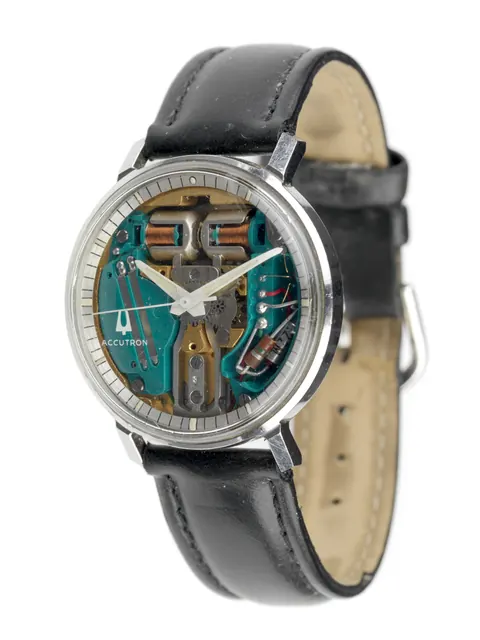
Wristwatches · c. 1969
Bulova 'Accutron' tuning-fork wristwatch by Bulova
Royal Museums Greenwich
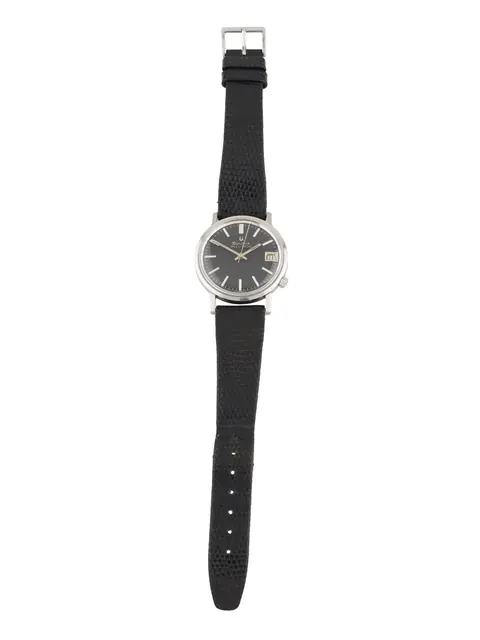
Wristwatches · c. 1965
Wristwatch Accutron by Knud Geelmuyden Bull
Royal Museums Greenwich
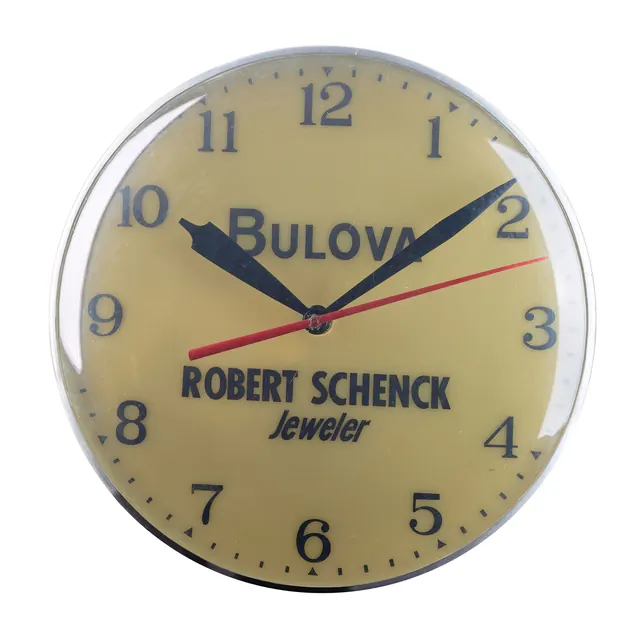
Clocks · c. 1960s
Bulova wall clock, Lighted Advertising Wall Clock for Robert Schenck Jeweler, circa 1960s
Antiquorum auction archive, Geneva
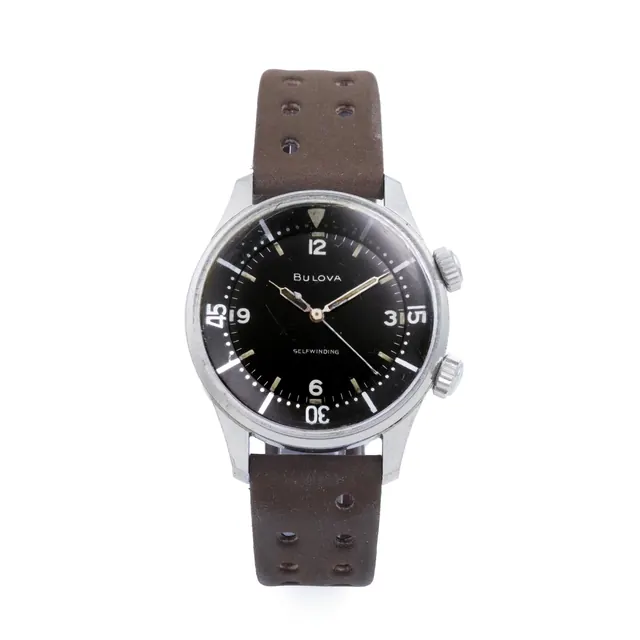
Wristwatches · 1963
Bulova wristwatch, ref. 314, Diver Super Compressor, 1963
Antiquorum auction archive, Geneva
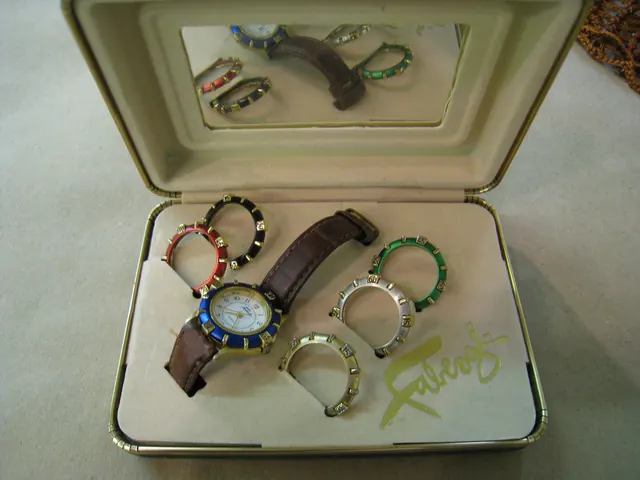
Pocket Watches · c. 1970
Watch by M.Z. Berger and Co., Inc
Yale University Art Gallery, New Haven
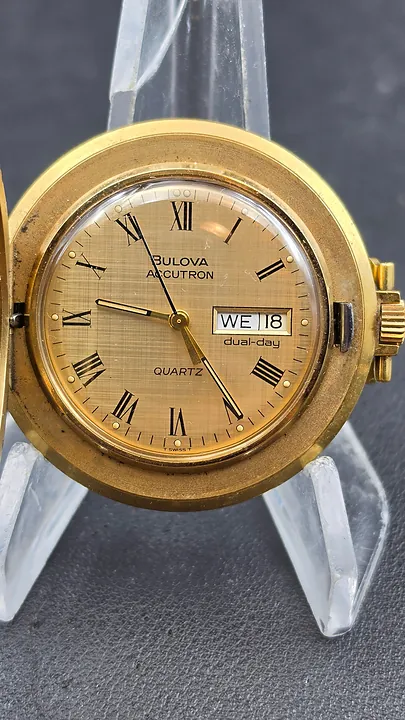
Pocket Watches · c. 1978
Bulova Accutron Dual-Day Quartz Pendant Pocket Watch, Gold-Tone, circa 1978
LiveAuctioneers auction archive
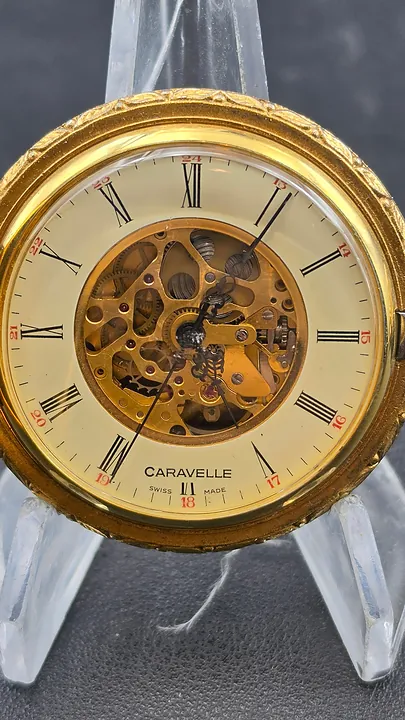
Pocket Watches · c. 1980
Caravelle (Bulova) Full Hunter Skeleton Pocket Watch, 17 Jewels, circa 1980
LiveAuctioneers auction archive
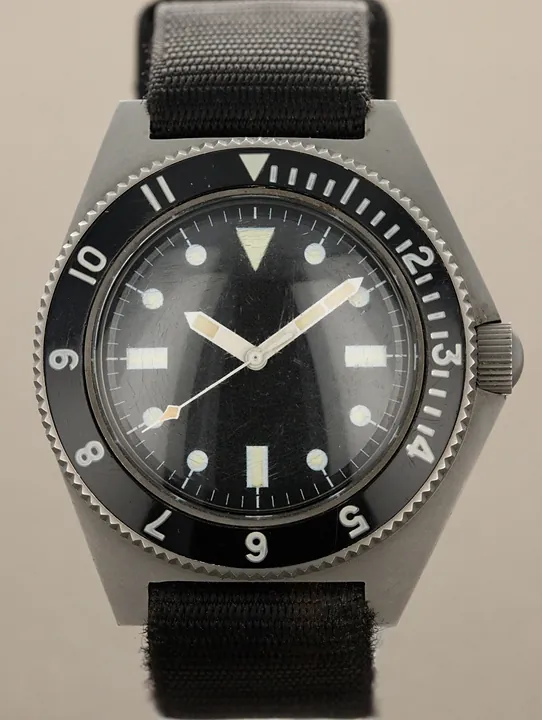
Pocket Watches · c. 1979
Benrus Type I Class A Military Dive Watch
Oliver & Clarke